

 Mathan Allington
Behavioural Science in Hiring: What Actually Works in 2026
 Compono
How behavioural science in hiring actually works, and why structured interviews and work-sample tests predict performance better than CVs.

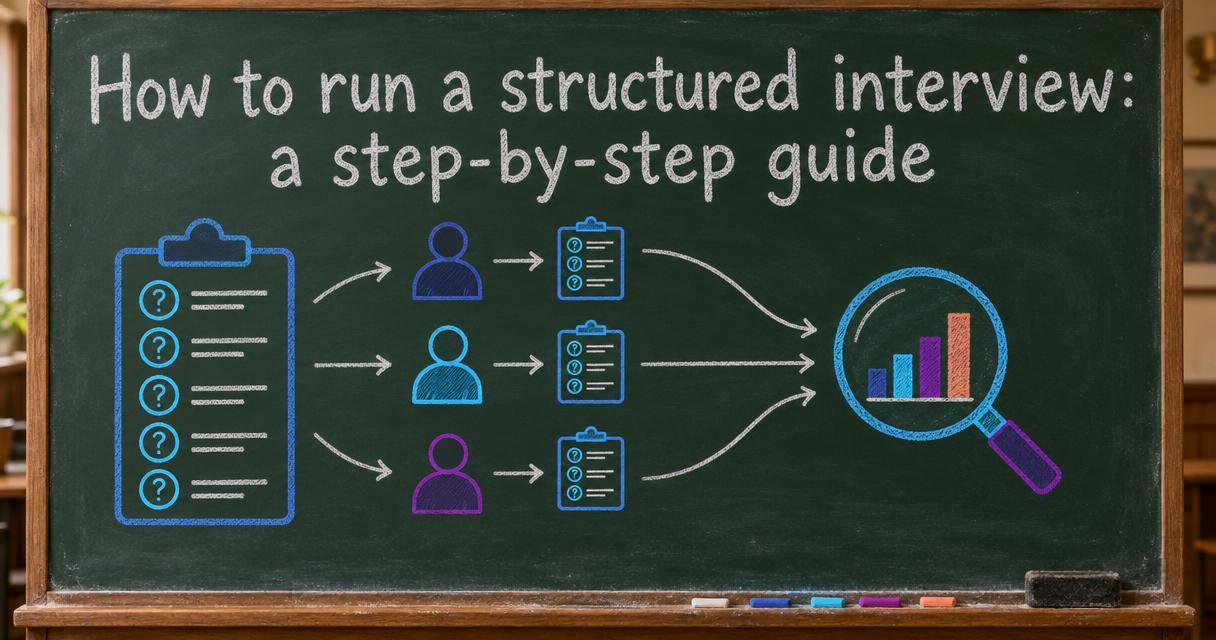
To run a structured interview, you must ask every candidate the exact same vetted questions in the same order and score their answers against a standardised rating rubric.
Last reviewed November 2026
Key takeaways
- Define the core competencies and behaviours required for the role before you write any questions.
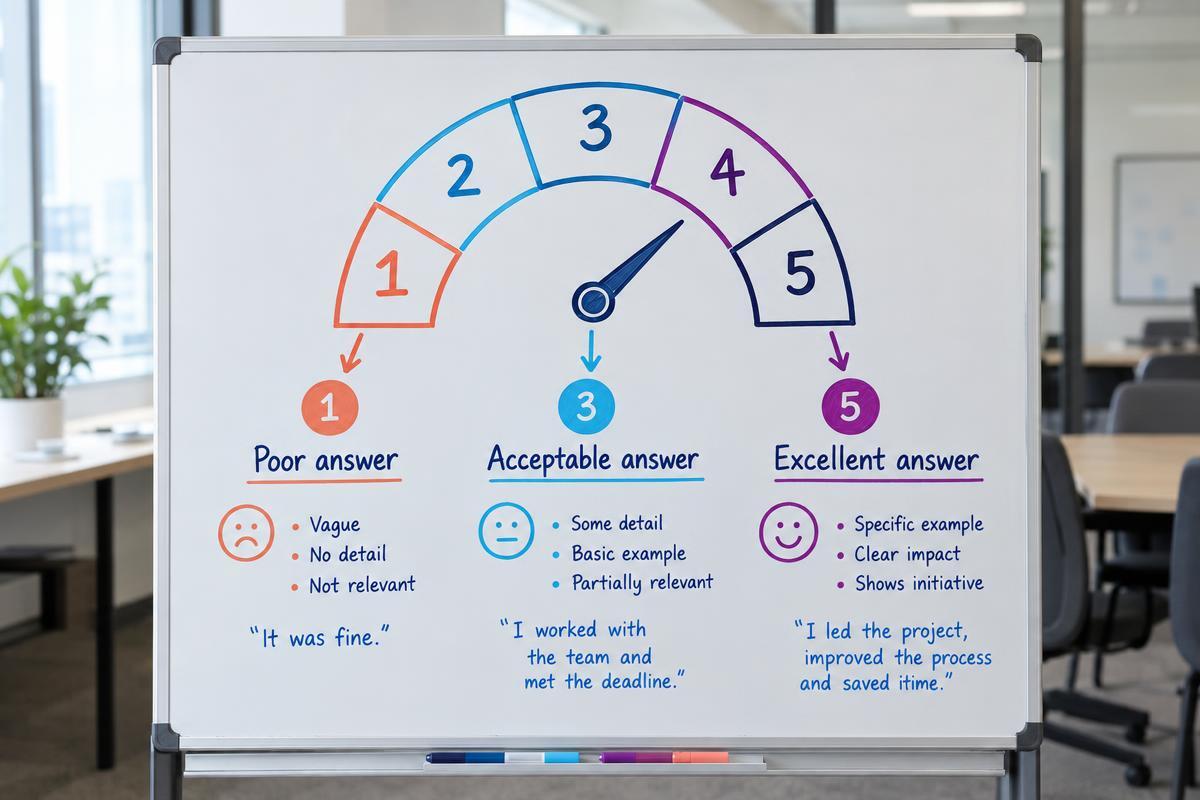
- Use behaviourally anchored rating scales to define exactly what poor, acceptable and excellent answers look like.
- Train your interview panel to take comprehensive notes and score candidates independently before discussing them.
- Keep the conversation natural but stick to the script to ensure every candidate gets a fair and equal opportunity.
Most job interviews are just casual conversations disguised as professional assessments. A hiring manager looks at a resume, asks a few spontaneous questions about past experience and decides if they like the person sitting across from them. This unstructured approach feels natural but invites massive hiring bias into your organisation. We end up selecting candidates who share our hobbies or communication styles instead of those who can actually do the work. The result is a workforce chosen on affinity rather than capability.
When you rely on gut feel, you are guessing. You might occasionally hire a high performer, but you will also hire people who look great on paper and clash violently with your team culture. Structured interviews fix this problem by replacing subjective opinion with objective evidence.
The movement toward structured interviewing is driven by hard data rather than HR trends. A recent synthesis published by Noon AI, citing Sackett et al., reports structured interviews at 0.42 validity versus 0.19 for unstructured interviews. This indicates a substantially stronger relationship with later job performance.
When you rely on an unstructured chat, your predictive power drops by more than half. Structured interviews have a mean predictive validity of 0.42 for job performance based on a large 2022 reanalysis of personnel-selection research published in the Journal of Applied Psychology. This makes them one of the most reliable selection methods available to modern hiring teams.
Large organisations already know this. According to Google re:Work, their structured-interview framework uses four core practices: vetted role-relevant questions, comprehensive answer notes, standardized scoring rubrics, and interviewer training. The data proves that evaluating every candidate on a level playing field produces better hires.
You cannot run a fair interview if you do not know exactly what you are looking for. Before you schedule a single candidate, you need to break down the role into specific, measurable competencies. Understanding exactly what is a structured interview starts with job analysis.
Look beyond the technical skills listed in the job description. Identify the behaviours and work styles required to succeed in your specific environment. Does the role require independent problem solving or high-frequency collaboration? Do they need to manage ambiguity or follow strict regulatory processes? Choose four to six core competencies to assess during the interview.
Once you have your competencies, write a clear definition for each. If you are assessing leadership, define what leadership means for this specific role. It might mean mentoring junior staff, or it might mean making unpopular decisions during a crisis. Clear definitions prevent interviewers from applying their own personal interpretations.
Every question you ask must map directly to one of your defined competencies. Do not ask brainteasers or hypothetical puzzles. Stick to behavioural and situational prompts.
Behavioural questions ask candidates to describe how they handled a specific situation in the past. Situational questions present a hypothetical scenario relevant to the job and ask the candidate how they would respond. To get the best results, you need a mix of competency based interview questions and answers tailored to the seniority of the role.
Writing the questions is only half the job. You also need a way to measure the answers. The same research from Google re:Work shows that behaviourally anchored rating scales are more predictive than unstructured interviewer judgments.
A behaviourally anchored rating scale uses specific examples of behaviour to define each score on a scale. When you build an interview scoring rubric template, you remove the guesswork for your hiring managers.
| Score | Definition | Example behaviour for problem solving |
|---|---|---|
| 1 | Poor | Gives up easily, blames others, requires constant direction. |
| 3 | Acceptable | Identifies the root cause and proposes standard solutions. |
| 5 | Excellent | Anticipates problems, designs able to grow fixes and shares knowledge. |
Even the best questions and rubrics fail if your interviewers do not know how to use them. You must train your hiring managers on how to conduct the interview and apply the scoring scale consistently.
Panel calibration is the process of ensuring all interviewers rate candidates against the same standard. Before conducting real interviews, have your panel conduct a mock interview or review a recorded response. Ask each interviewer to score the response independently and then discuss their ratings. If one person scores a three and another scores a five, you have a calibration problem you need to resolve.
Training also helps interviewers recognise their own blind spots. Learning how to reduce hiring bias requires conscious effort. Interviewers naturally favour candidates who went to the same university or share similar interests. Training helps them separate these affinity signals from actual evidence of capability.
Many hiring managers worry that structured interviews feel robotic or cold. They picture themselves reading off a clipboard like a machine. You can maintain structure while still delivering a warm and engaging candidate experience.
Start the interview with a standard introduction. Explain the structured format to the candidate upfront. Tell them you will be asking specific questions, taking detailed notes, and looking for examples of past behaviour. Setting this expectation puts the candidate at ease when you break eye contact to write things down.
Ask the questions exactly as written. If a candidate misunderstands the question, you can repeat it or use a pre-planned probing question like "Can you give me a specific example of that?" Do not feed them the answer or change the question entirely.
Take comprehensive notes during the interview. Do not rely on your memory. Write down what the candidate actually says, not your interpretation of it. If a candidate says they increased sales by twenty percent, write that down. Do not write "strong sales skills" because that is a judgement, not evidence.
The interview is not over when the candidate leaves the room. Interviewers must score their notes immediately while the evidence is fresh. Crucially, they must do this independently. Do not discuss the candidate in the hallway or compare notes before everyone has logged their scores.
Once all independent scores are submitted, hold a consensus meeting. The hiring manager or a designated facilitator should lead this discussion. Review the scores competency by competency.
If the panel is aligned, the decision is easy. When there is a significant difference in scores, rely on the rubric. Ask the outlier to share the specific evidence from their notes that led to their score. The goal is not to pressure anyone into changing their mind, but to ensure all scores are grounded in factual evidence gathered during the interview.
Running this process on spreadsheets and printed documents is painful. When you are hiring for one role, manual rubrics are manageable. When you are scaling a company or managing high-volume recruitment, the administration overhead will break your process.
Modern teams build structured interviewing directly into their software. Compono Hire is an applicant tracking system that bakes your rubrics, questions and scoring directly into the interviewer experience. The platform automatically aggregates independent scores and highlights misaligned ratings before your wash-up meeting.
Using the right system ensures your hiring managers actually follow the structured process you designed. It turns good intentions into a repeatable standard across every department in your organisation.
A structured interview process is only as good as the system you use to enforce it. Compono Hire gives your hiring managers the exact questions to ask and the rubrics to score them against, ensuring every candidate gets a fair and accurate evaluation based on evidence, not bias.
A structured interview asks every candidate the same predetermined questions and scores their answers against a standardised rubric. An unstructured interview is an open-ended conversation where the interviewer asks spontaneous questions based on the candidate's resume or how the chat flows.
They do not have to. You can still be warm, build rapport at the start of the meeting, and let your personality show. The structure simply ensures that the core assessment questions remain consistent for every applicant, giving everyone a fair chance to present their skills.
You can gently interrupt them by redirecting back to the question. Because you established the format at the beginning of the interview, candidates understand that you have a set list of questions to get through. A polite reminder to focus on a specific example keeps the interview on track.
Disagreements are a normal part of the wash-up meeting. When scores differ, return to the behaviourally anchored rating scale. Ask each interviewer to share the exact quotes or examples from their notes that justify their score. The discussion must rely on evidence, not feelings.

How behavioural science in hiring actually works, and why structured interviews and work-sample tests predict performance better than CVs.

How structured interview software improves hiring accuracy and reduces bias, which features matter, and how to run structured interviews at scale.
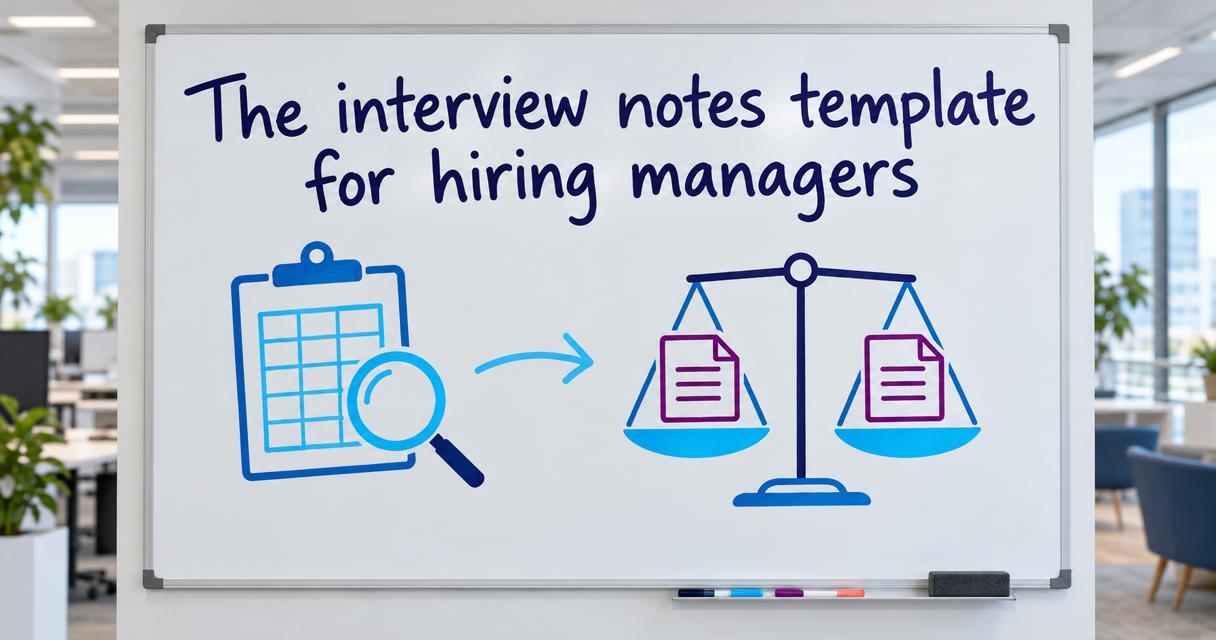
Learn what to include in your interview notes template for hiring managers, how structure predicts job performance, and why accurate scorecards...
 Mathan Allington