
Skip to the main content.

Free team culture survey: The culture your team has.
And the one it desires.

A culture survey for one team: everyone places where work is now and where it should be on 12 culture dimensions, then rates the company and their work. The report shows the biggest shifts.

  • Your team's current and desired culture
  • How the team rates the company and its work
  • Anonymous, about five minutes a person

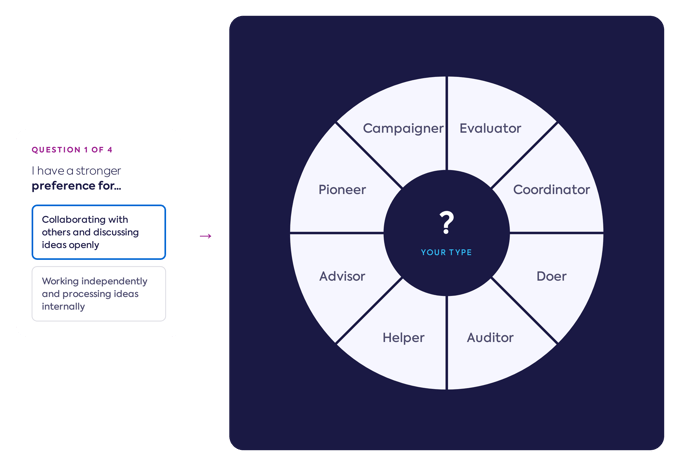
New to these tools? Start with team personality, about two minutes each.
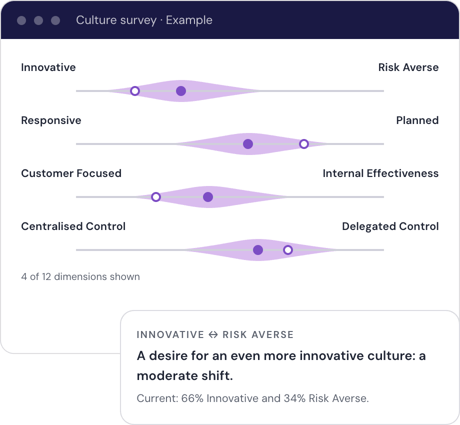
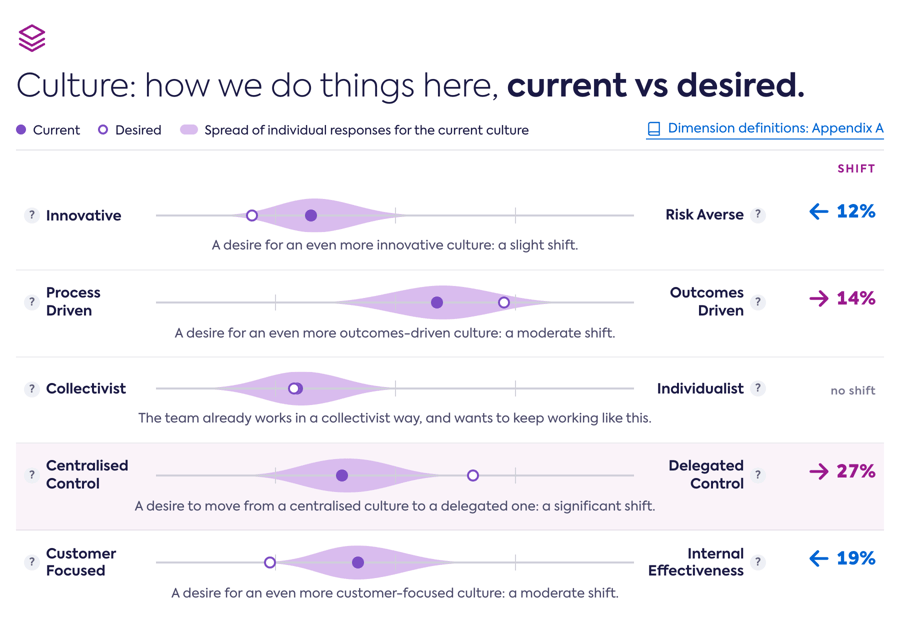
An example culture survey: four of the twelve culture dimensions, current and desired, with one dimension's shift in the report's words.

Twelve dimensions, current and desired. The shift is the finding.

Personality and culture.
And they're linked.

  1. Work Personality™

    The types of work that naturally motivate each person and the team as a whole.

    Team personality

  2. Culture

    How we do things around here: the work environment we have today versus the one we want to achieve our goals.

    Team culture

  3. How people feel

    Workplace atmosphere (climate) reflects how people feel about their current work environment and the way things get done.

    Team culture

  4. Performance and outcomes

    How people feel shapes their behaviour and performance, ultimately influencing organisational outcomes.

Start with either report and add the other when you're ready.

Company culture drifts quietly.
The gap shows you where.

Every team has a way it works now and a way it should work. When the two drift apart, people stop speaking up long before they leave.

One short culture survey shows the gap while it's still easy to close.

A leader talking a small group through a plan at a whiteboard

12 culture dimensions.
Place the team on each one.

These are the culture survey questions. Everyone places the team twice on each line: where it is now, and where it should be. Hover over a line to see what each end means.

There's no good or bad end to any line. What works depends on what your business is trying to achieve.
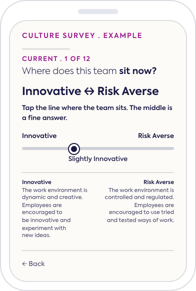
  • InnovativeThe work environment is dynamic and creative. Employees are encouraged to be innovative and experiment with new ideas.Risk AverseThe work environment is controlled and regulated. Employees are encouraged to use tried and tested ways of work.
  • Process DrivenThe work environment places high importance on performing work in the correct manner, even if deadlines are missed or profits are constrained.Outcomes DrivenThe work environment places high importance on achieving results, even if shortcuts are taken.
  • Task CenteredThe work environment emphasises task accomplishment over the personal and social needs of workers.People CenteredThe work environment emphasises the personal and social needs of workers over task accomplishment.
  • CollectivistThe work environment emphasises group or team achievements over individual achievements. Recognition and rewards are allocated to groups or teams as a whole.IndividualistThe work environment emphasises individual achievements over team or group achievements. Individuals are singled out for recognition or rewards.
  • Centralised ControlThe work environment restricts decision-making authority to management. Employees do not have autonomy to make business decisions.Delegated ControlThe work environment empowers employees at any level to make business decisions. Decision-making authority is widespread.
  • Hierarchical StructureThe work environment has many layers of management.Flat StructureThe work environment has few or no layers of management.
  • ResponsiveThe work environment places emphasis on dealing with day-to-day or recent issues over longer-term strategic goals. It is important that all problems are responded to quickly.PlannedThe work environment places emphasis on achieving longer-term strategic goals. When recent events and problems are discussed it is usually in terms of their impact on the long-term strategy.
  • ConformityThe work environment requires employees to follow rules and procedures.IndividualityThe work environment gives employees personal freedom. They are not required to follow rules and procedures.
  • AcceptingThe work environment requires employees to do as they are told and not question management directives.QuestioningThe work environment encourages employees to speak-up and challenge management directives.
  • CooperationThe work environment emphasises team spirit and collaboration. Team members are considered as trusted colleagues in a common cause.CompetitionThe work environment emphasises competition between peers. Team members are considered competitors for scarce resources or customers.
  • Customer FocusedThe work environment emphasises customer satisfaction and service quality over the improvement of internal processes or cost reductions.Internal EffectivenessThe work environment emphasises the improvement of internal processes or cost reductions over customer satisfaction and service quality.
  • FormalThe work environment has many formal policies and procedures to help justify decision making and action taking.InformalThe work environment has relatively few or no formal policies and procedures to help guide decision-making and action taking.
The culture survey on a phone: one dimension at a time, placed by a tap on the line.
One line at a time, on any phone.

A culture assessment in one report.
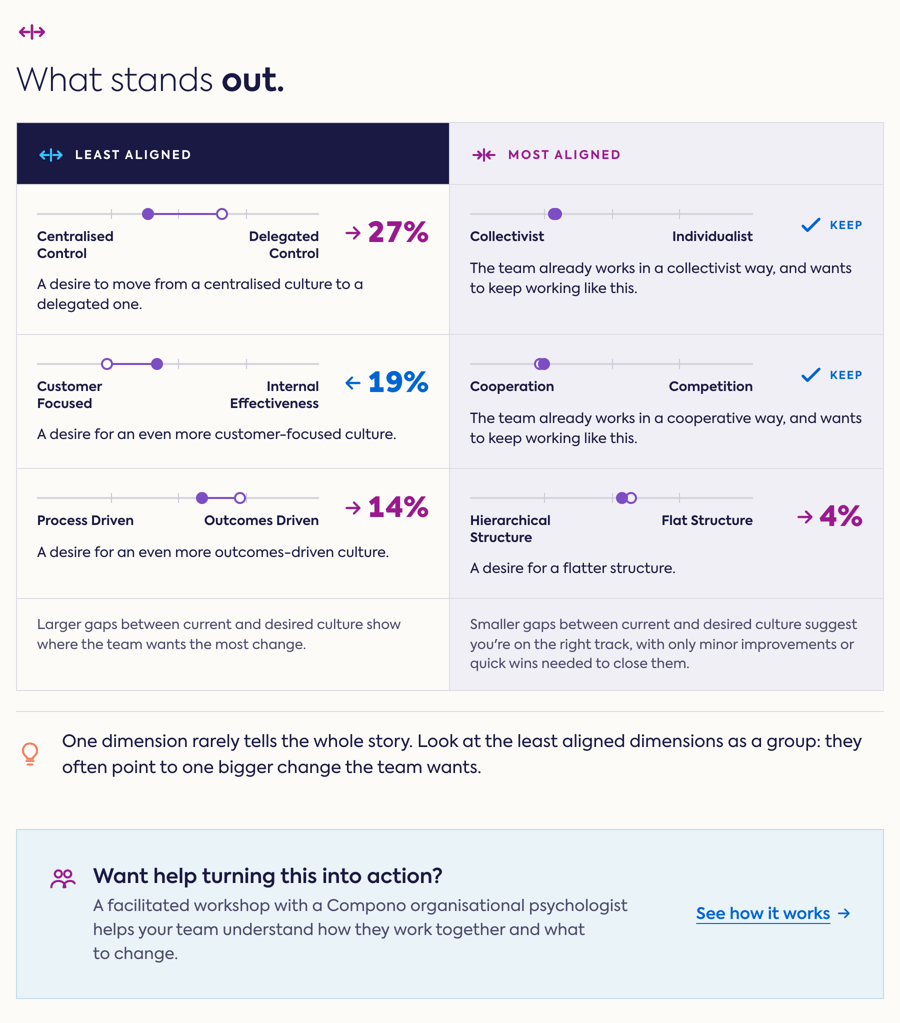
What stands out.

Least and most aligned

The team's biggest desired shifts, and where it's already on the right track.

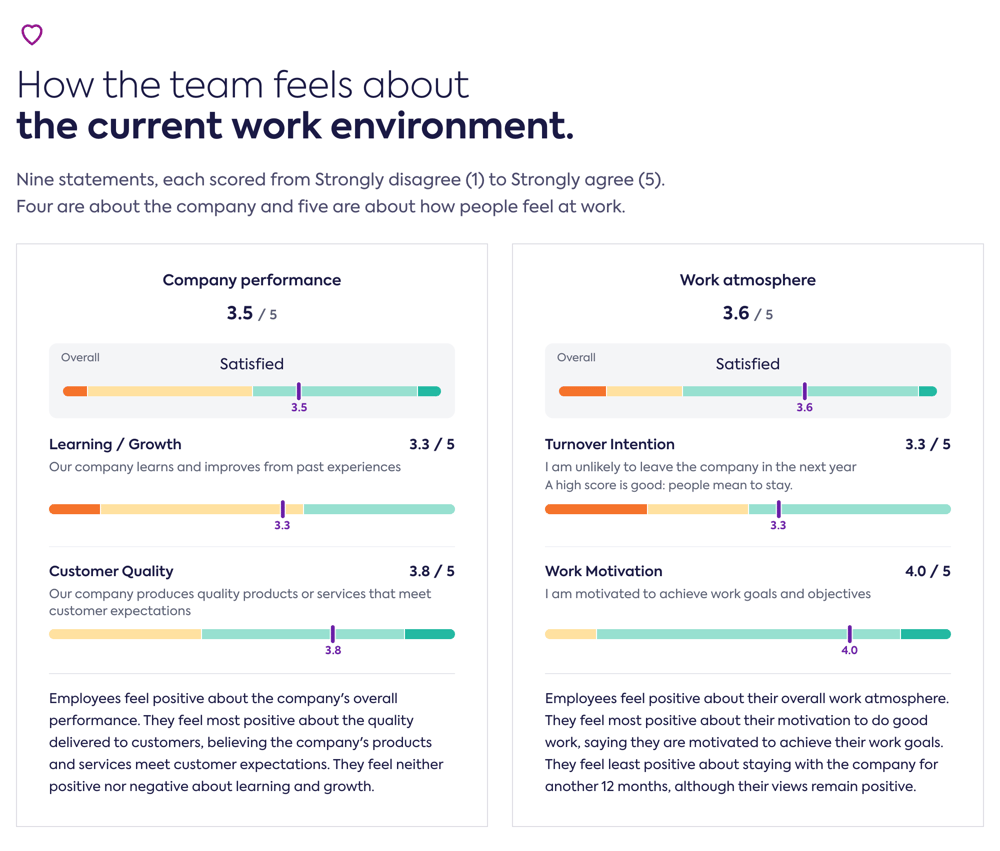
How the team feels

How the company is performing and how people feel at work, out of 5.

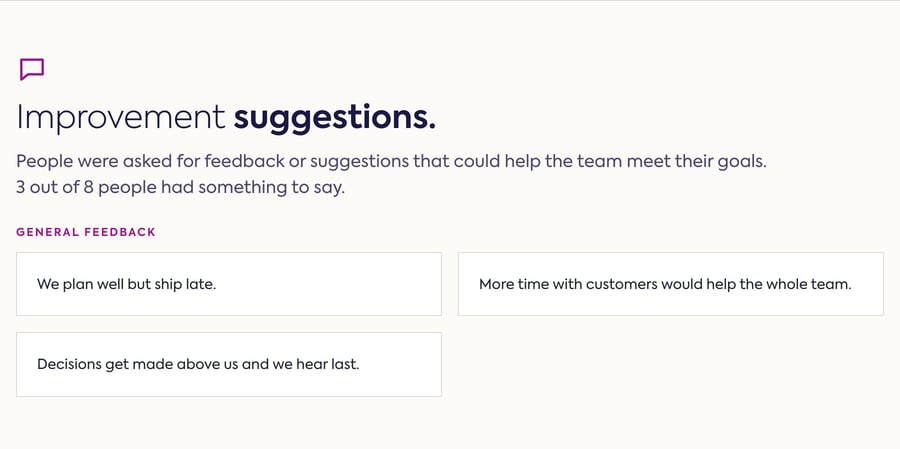
Improvement suggestions

What people wrote, as written, without names.

What your culture survey report looks like.

The biggest shifts,
and how people feel.

The report opens with the biggest desired shifts and two scores out of 5.
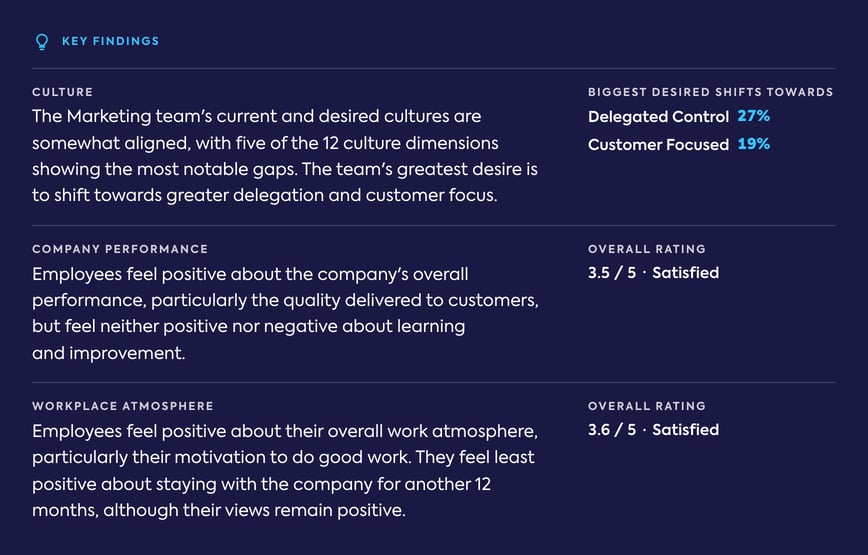
The culture report's key findings for an example team: the biggest desired shifts, and how people feel about the company and their work.

This is a preview. Get started with your own team.

Get started

Teams often know the shift they need.
It may not come naturally to the people in it.

Move people between teams

Put people where the way the team works suits them.

Change how you manage

Build habits that make the shift happen, even when it doesn't come naturally.

Five minutes each.
One report for everyone.

  1. 1

    Start the survey

    Your email and first name. The team name is optional.

  2. 2

    Answer it first

    You go first, then share one link with your team.

  3. 3

    Send one link

    A ready-made message goes with it, to copy or open in your email app.

  4. 4

    Read your report

    Everyone who answered gets it by email when the survey closes, if three people have answered.

Example
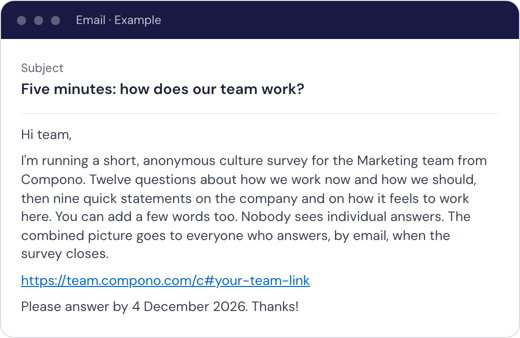
The ready-made message the app writes for your team, with the link and the date to answer by.
The note your team gets, written by the app.

Anonymous by design.

  1. No name on any answer

    No name or email sits with anyone's answers.

  2. Kept apart

    Each person gives a first name and email before sending, stored apart from the answers.

  3. Answers combine

    Below five answers, only the team's position shows.

  4. Everyone sees the team

    The combined results and the suggestions people wrote, never a person's line.

Names and emails are used to send the report and follow up, never shown in it.

Four colleagues of different ages working through printed pages together around a meeting table

Free, and here is why.

The free culture survey covers one team, at one point in time. Compono Engage shows which culture gaps matter most and how urgent they are, and Compono Hire weighs every candidate's culture fit.

We can show you culture across every team and subculture, with practical insight right across the business.

Talk to us 

Free, for one team

  • One team, at one point in time
  • Both reports, on screen and as a PDF
  • Secure, with access via a verified email

In the Compono platform

  • Every team, location and function in one place
  • Compared with each other, and over time
  • Hiring for culture fit, and Compono Assist

One team is a start.
Hire for your desired culture.

Compono Engage

Which culture gaps matter most across the organisation, and how urgent they are.

Compono Hire

Every candidate's culture fit checked, so new hires suit the culture the team asked for.

Compono Develop

A learning management system (LMS) that builds the capability each person needs for their role.

Team personality

The free personality report for the same team.

Compono Assist: ask anything about a report in plain words.

Compono Engage
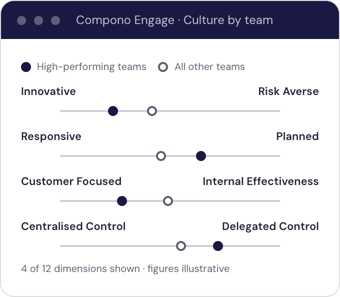
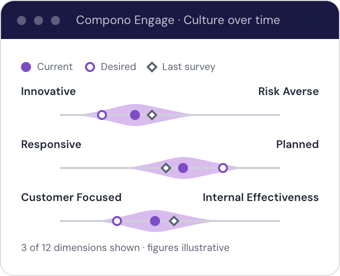
Inside Compono Engage: your high-performing teams compared with the rest on the culture dimensions.
Learn from your best teamsSee what your high-performing teams do differently.
Inside Compono Engage: a team's culture against its last survey.
Benchmark your cultureTrack how your culture moves from one survey to the next.
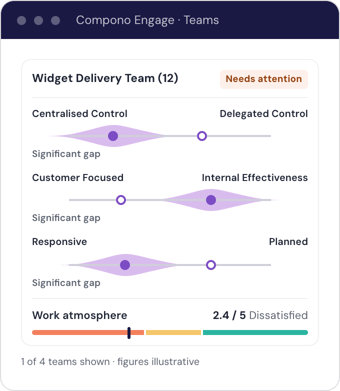
Inside Compono Engage: the teams that need attention first.
Know where to act firstSee which teams need attention now.

See how it works 

See your team's current and desired culture.

See it with your own team before you talk to anyone. About five minutes a person, anonymous by design.

Were you sent this link? What happens when you open it Already started a team? Sign in Need the score on its own? the employee engagement survey 
Colleagues walking together through a bright office atrium

Common questions.

A short, anonymous survey on how your team works now and how it should work, on 12 culture dimensions. The report shows where the current and desired culture sit furthest apart.

Twelve culture dimensions, each a line between two ends, such as Centralised Control and Delegated Control. Everyone places the team twice on each line, then scores nine statements on the company and their work. A few words of improvement suggestions are optional.

Yes, for one team. It's a free culture assessment of your current and desired culture, with one report for everyone who answers. Assessing every team and comparing them over time is what the Compono platform does.

Ask the people who work in it. This culture survey asks each person where the team is now and where it should be on 12 dimensions, then combines the answers anonymously. The gap between the two shows where to start.

No. Keep the tools you have. This is a different lens: it reads how your team feels beside how it works now and how it should work.

Run it with your team first and bring your results to the conversation. After a demo, it's an easy way to show the rest of your team what the platform reads.

No answer has a name or email on it. Each person's name and email are kept apart from their answers, and scores show only combined. Below five answers the report shows the team's position only.

So each person answers once, gets the report when the survey closes, and so we can help or follow up. It is stored apart from the answers and never appears in the report.

The twelve lines above, the same twelve dimensions Compono measures inside the platform, with each end defined in the survey.

No. A culture works when it suits what the business is trying to achieve. The point is building your own high-performing way of working, not copying the company down the road.

The gap between how work gets done now and how it should be done is the finding. Large gaps show the team's biggest desired shifts; small gaps show where it's on the right track.

Only the improvement suggestions. The twelve dimensions and the nine statements are the survey.

You see how many have answered while it's open. It closes when you close it, or 14 days after you start. Then everyone who answered gets the report by email, if three people have answered. From five answers it also shows the spread on each line.

A large gap with good energy in the team is a strong position for change, provided it starts before frustration builds.

It includes one: nine statements on how the company is performing and how people feel about their work, each scored out of 5. The Compono platform reads the same statements by group and over time.

Yes, up to 200 people. Past 20, the report says it's several cultures in one survey, where a gap in one group can hide behind calm in another. Finding hotspots by team and division is the Compono platform's job.

Add the survey to that team from your dashboard. One email, one team at a time. Once this team's reports have ended you can start a new team, which takes the old one off your dashboard, so keep the PDF.