

 Mathan Allington
Choosing an applicant tracking system for superannuation funds
 Compono
How to choose an applicant tracking system for superannuation funds that meets strict compliance duties and still finds strong talent.

Interviewer training for hiring managers equips your leaders with the structured frameworks and behavioural questioning techniques required to make objective, defensible hiring decisions.
Last reviewed November 2026
Key takeaways
- Untrained managers often default to unstructured conversations that introduce bias and reduce predictive hiring validity.
- Effective training teaches hiring managers how to use standardised scoring rubrics and structured behavioural questions.
- Training must cover legal compliance to ensure managers understand anti-discrimination laws and avoid inappropriate questions.
- Active simulation and role-play exercises are the most effective ways to build practical interviewing skills.
- Post-interview debrief workflows force immediate evaluation before memory fades and biases take over.
Most organisations promote leaders based on their functional expertise. A brilliant software engineer becomes an engineering manager, or a top sales representative takes over the regional team. These individuals are rarely evaluated on their ability to interview and select talent.
When you ask untrained managers to conduct interviews, they default to what feels natural. They have unstructured conversations, look for shared interests, and hire people they personally like. This approach feels comfortable but fails to predict actual job performance.
The data highlights a significant gap in corporate readiness. A 2025 survey by Rapport found that 24 percent of non-HR hiring stakeholders receive no training before interviewing candidates. The same survey revealed that 57 percent of these stakeholders admit they need better training to assess skills effectively.
Leaving managers to guess their way through the recruitment process creates severe people insight risk. It leads to inconsistent candidate experiences, increased hiring bias, and ultimately costly mis-hires that damage team performance.
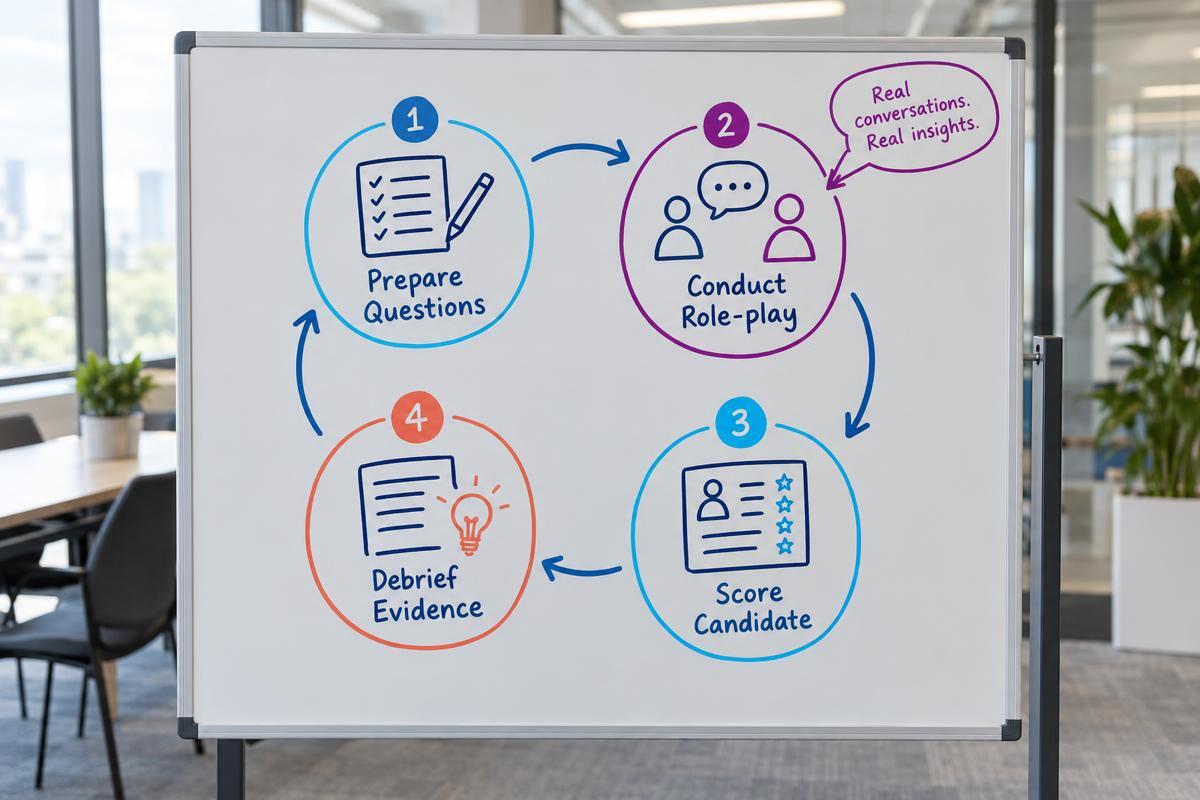
The foundation of effective interviewer training is teaching managers to abandon the casual chat. You need to replace gut-feel decisions with a structured interview process.
Structured interviewing means asking every candidate the same core questions in the same order. It requires evaluating their answers against a predetermined scoring rubric. This method removes the noise of personal chemistry and focuses the evaluation on specific, job-relevant competencies.
| Unstructured interviews | Structured interviews |
|---|---|
| Managers ask whatever comes to mind based on the resume. | Managers ask a set list of behavioural and situational questions. |
| Evaluation relies on an overall impression or "vibe". | Evaluation uses a standardised 1–5 scoring rubric for each competency. |
| Candidates are compared against each other. | Candidates are compared against the requirements of the role. |
| High risk of affinity bias and legal exposure. | Low bias risk and creates a defensible paper trail. |
Training programs must show managers how to write and deliver behavioural questions using the STAR method (Situation, Task, Action, Result). Managers need to learn how to probe for specifics when a candidate gives a vague or hypothetical answer.
Every hiring manager acts as a legal representative of your organisation during an interview. If they ask an inappropriate question, the company carries the liability. Interviewer training must explicitly cover the boundaries set by the Fair Work Act and the Australian Human Rights Commission.
Managers need clear instructions on protected attributes. They cannot ask about a candidate's age, marital status, pregnancy plans, religion, or physical disabilities unless the question directly relates to the inherent requirements of the role. A simple mistake during small talk can expose the business to discrimination claims.
Legal compliance is only one side of the coin. Training must also address unconscious bias. Awareness alone is not enough to change behaviour. You have to change the environment where decisions are made.
A 2025 systematic review summary by behavioural Team found that structured interviews, scoring rubrics, and changes to the decision environment produced strong effects in roughly 78 percent of studies. In contrast, individual bias-awareness workshops alone were effective only about 39 percent of the time. You can read more about building these systems in our bias-free hiring guide.
Reading a slide deck about interviewing does not make someone a good interviewer. Managers need to practise their skills in a safe environment before they sit in front of a real candidate. Active role-play is the most reliable way to build muscle memory.
Set up mock interviews where HR professionals or experienced leaders play the candidate. Give the trainee manager a specific job description and a set of structured questions. Have them conduct a 15-minute interview while observers take notes.
During the simulation, the "candidate" should intentionally test the manager. They might give an answer that completely avoids the question, or provide a right textbook response with no real-world examples. The goal is to see if the manager knows how to redirect the conversation and dig for actual evidence.
After the simulation, provide immediate feedback. Discuss their pacing, their use of probing questions, and how well they stuck to the scoring rubric. This practical application bridges the gap between theory and execution.
The rise of generative AI has changed how candidates prepare for interviews. Some candidates use AI to script right answers, while others might use real-time tools during remote technical assessments. Hiring managers need specific training to handle this new reality.
You cannot rely solely on polished delivery anymore. Interviewer training must teach managers how to evaluate original thought and practical application. If a candidate provides an answer that sounds suspiciously like a textbook definition, the manager must know how to break the script.
Teach your managers to ask for the "why" and the "how". If a candidate lists a right technical architecture, the manager should ask them to explain a time that specific architecture failed in production. AI can generate flawless code and theory, but it cannot generate authentic lived experience.
For technical and case interviews, shift the focus from getting the right answer to explaining the problem-solving process. Managers should evaluate how the candidate responds to new constraints introduced halfway through the discussion. This approach quickly separates candidates who understand the material from those who memorised an output.
Panel interviews are notorious for creating a poor candidate experience when poorly managed. Without alignment, three different managers might ask the exact same questions, leaving other critical competencies completely untested.
Interviewer training must cover cross-functional coordination. Before the interview, the panel needs to meet and divide the core competencies. One manager might focus exclusively on technical capability, while another focuses on stakeholder management and values alignment.
This division of labour ensures a comprehensive assessment and respects the candidate's time. It also prevents the loudest voice in the room from dominating the evaluation. When each panellist has a specific mandate, they bring unique, structured data to the final hiring decision.
The interview does not end when the candidate leaves the room. The evaluation phase is where most unstructured processes fall apart. If managers wait three days to write down their thoughts, they will only remember the first impression and the last answer.
"It is important to promote post-interview reflection," including completing scorecards immediately after each interview while evidence is still fresh, notes Annelise Pretorius of AIHR. Your training program must enforce this discipline.
Provide managers with clear, downloadable scorecards that outline concrete pass and fail criteria for each competency. A score of 3 should have a specific behavioural definition, not just mean "average". A systematic review by F1000Research in 2025 confirms that explicit bias-mitigation practices, including standardised scoring and post-interview reflection, significantly improve interview quality.
Once the scorecards are complete, run a calibration meeting. Managers should present their scores and the specific evidence that supports them. If one manager gave a 5 and another gave a 2, they must debate the evidence, not their feelings. You can find strategies to improve hiring accuracy by standardising this step across your organisation.
When you mandate structured scorecards through a platform like Compono Hire, you force alignment. This creates a single hiring standard across the business. We saw this firsthand when we helped a major hospitality brand deploy The Coffee Club's recipe for hiring success. By keeping managers aligned to a consistent standard across more than 400 outlets, they built a reliable process that helped drive 8 percent lower turnover.
Compono Hire provides the structure your managers need to make defensible, objective hiring decisions without creating extra administrative work.
Effective training should cover structured interview techniques, the STAR behavioural questioning method, legal compliance and anti-discrimination rules, and how to use scoring rubrics. It should also include practical role-play exercises to build confidence.
A comprehensive foundational program typically takes a half-day session, followed by shorter practical role-play workshops. We recommend running annual refresher courses to ensure managers stay updated on legal changes and internal process updates.
Awareness of bias does not stop it from happening in the moment. To actually reduce bias, you must change the environment where decisions are made. Structured interviews and standardised scorecards force objective evaluation, which is far more effective than awareness training alone.
You can track the success of your training by monitoring your first-year turnover rates, time-to-hire metrics, and candidate experience scores. A well-trained management team will make faster, more accurate hiring decisions that lead to higher retention.
While HR professionals are expert interviewers, they cannot assess the specific technical requirements or team changing as well as the direct hiring manager. Training your managers ensures the people who will actually work with the candidate own the hiring decision.

How to choose an applicant tracking system for superannuation funds that meets strict compliance duties and still finds strong talent.
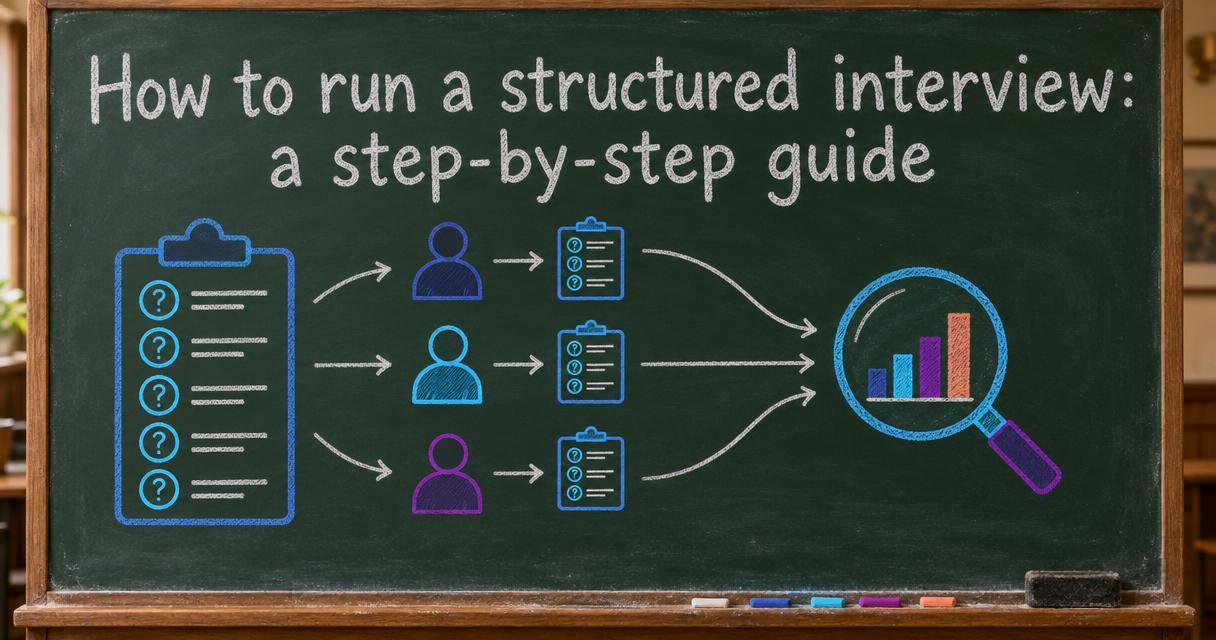
To run a structured interview that reduces hiring bias and accurately predicts job performance. Discover how to build rubrics and score candidates...
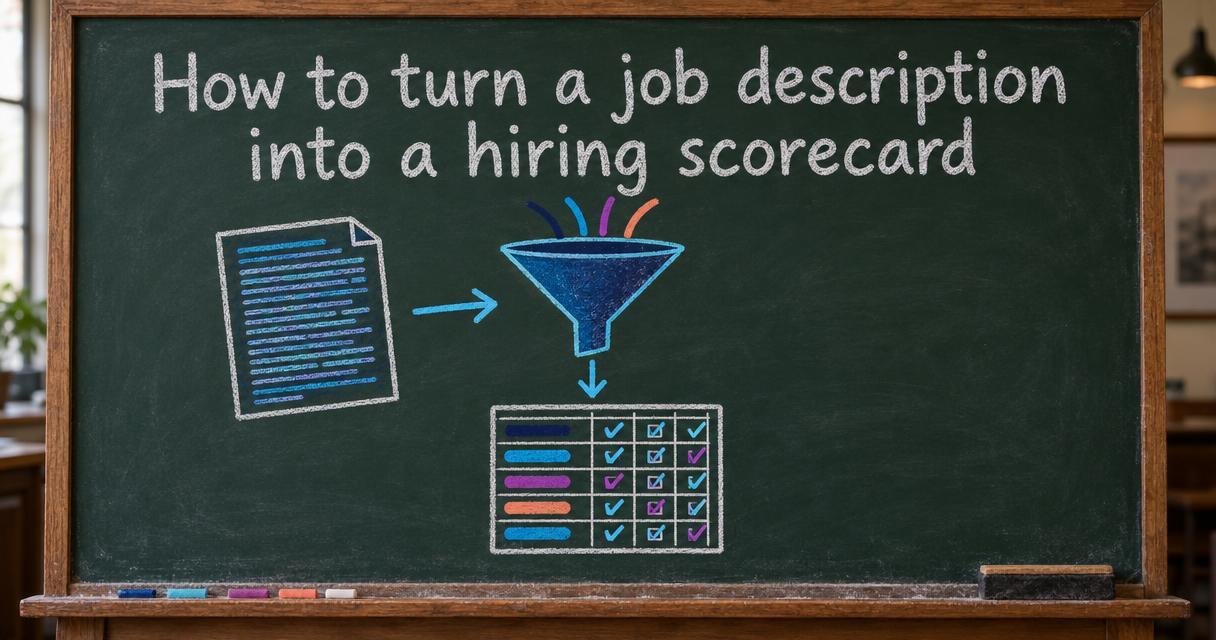
To turn a job description into a hiring scorecard to remove bias, standardise interviews, and make better recruitment decisions.
 Mathan Allington