

.webp)

 Mathan Allington


1 min read
Interview ideas to find top talent in 2026
 Mathan Allington
The best creative interview ideas put candidates into real work instead of rehearsed question and answer: collaborative problem-solving sessions,...
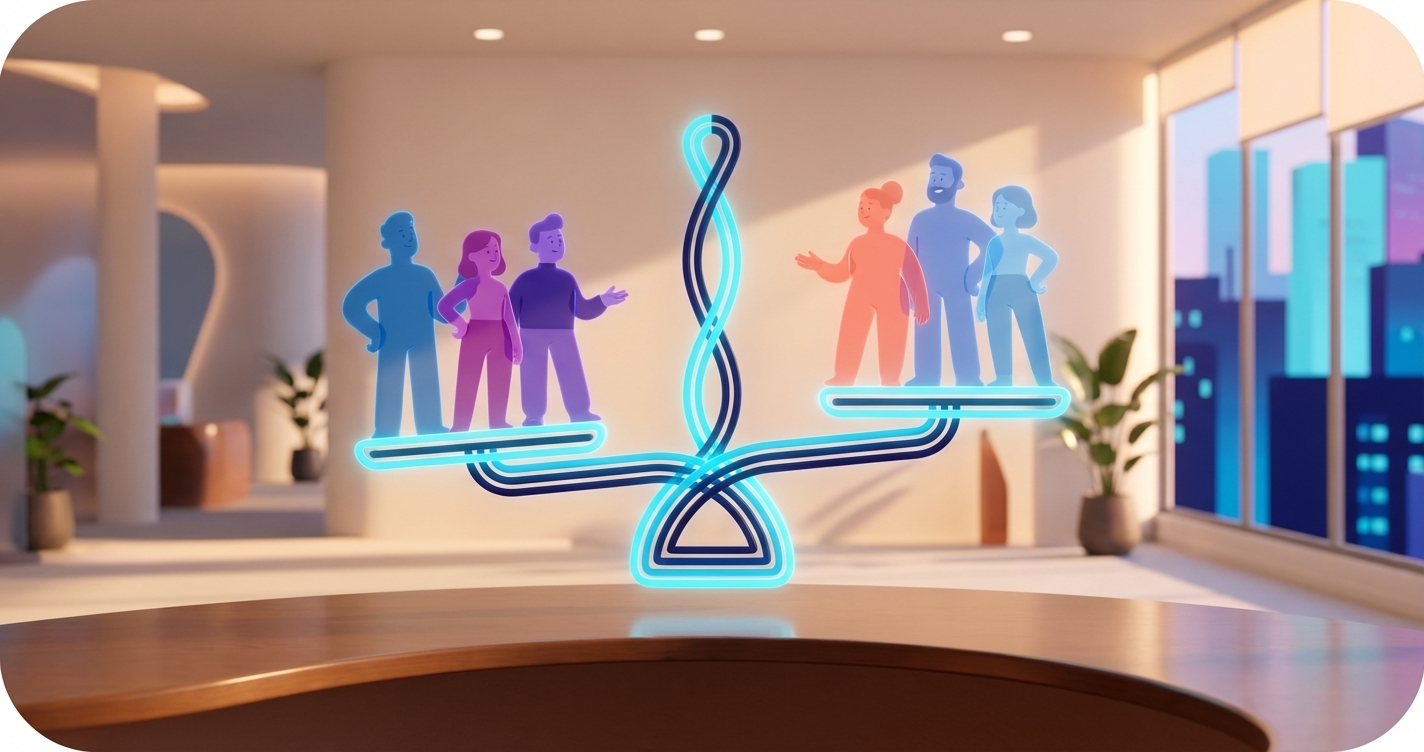
Bias free hiring means designing your recruitment process so decisions rest on objective evidence instead of mental shortcuts. The core moves: audit job ads for exclusionary language, screen resumes anonymously, run structured interviews with scoring rubrics, add validated work personality assessments, and train hiring managers to notice their own snap judgements.
Last reviewed July 2026.
We like to think we are logical decision-makers, especially when the stakes are as high as growing a business. Research consistently shows otherwise: traditional recruitment runs on subjective gut feel. Affinity bias makes us favour the candidate who went to the same university. The halo effect lets one impressive trait outshine everything else. Each shortcut skews the playing field before a single skill has been assessed.
For mid-market organisations the cost is twofold. You miss high-performing people who do not fit a familiar mould, and you quietly build a homogenous culture without the diversity of thought needed to solve hard problems. Bias free hiring is about fairness, and it is equally about building a more capable, resilient team.
Bias cannot be willed away. It has to be designed out, with systems that protect decisions from the shortcuts every brain takes.
Bias takes root at the first touchpoint: the job description. Gendered language ("competitive", "dominant" versus "supportive", "collaborative") subtly discourages qualified candidates from applying. Strip the fluff and describe the core competencies the role actually requires.
Anonymised resume screening is the next lever. Removing names, ages, and locations forces the hiring team to assess skills and experience alone. It sounds simple, and it works, because it silences the part of the brain that makes identity-based snap judgements.
Objective data at the start sets the standard for everything after it. Centralising recruitment in a platform like Compono Hire means every candidate moves through the same objective workflow from the moment they apply.
The free-flowing interview feels friendly, but it makes fair comparison impossible. One candidate spends thirty minutes on a shared love of cricket while another gets grilled on technical detail. There is no honest way to decide between them afterwards.
Structured interviews ask every candidate the same predetermined questions in the same order, scored against a standardised rubric. The focus stays on the quality of the answer rather than the charisma of the speaker. Adding a mixed panel dilutes any individual interviewer's blind spots further.
Different work personalities strengthen the panel in different ways. An Evaluator's preference for logic and evidence keeps scoring honest. A Helper makes sure every candidate feels comfortable enough to show their best. A Coordinator keeps the process consistent from first interview to last.

A resume tells you what someone has done. It rarely tells you how they work or how they will fit the team they are joining. Validated psychometric and work personality assessments give you a data-driven view of a candidate's natural tendencies and motivations.
Discovering that a candidate is a natural Pioneer, someone who thrives on new ideas and unconventional thinking, is worth more than knowing they spent three years at a particular company. It lets you hire for the specific gaps in your team's current makeup instead of duplicating the personalities you already have.
Compono's Culture, Engagement & Performance Model formalises this: assess the work personalities in the current team, identify what is missing, and hire the trait that lifts the whole unit.
Systems and software matter, but the people using them have to be on board. Unconscious bias training is not about fixing anyone. It gives hiring managers the tools to notice when their brain is taking a shortcut.
Teach the panel one question: "Why do I like this candidate?" If the answer is "they just feel like a good fit", push for detail. Is it the required skills, or is it that the candidate reminds the manager of themselves? That habit of reflection is what separates a modern process from the biased models it replaced.
Bias free hiring is an ongoing practice, not a one-off fix. Combining human empathy with objective evidence produces a recruitment experience that is fairer for candidates and measurably more effective for the organisation.
Compono Hire runs every candidate through the same structured, evidence-based workflow, with validated culture-fit prediction.
Talk to usA recruitment approach that uses objective data, structured processes, and standardised assessments to reduce the influence of unconscious bias, so candidates are evaluated on their skills and potential rather than on identity or familiarity.
Start by standardising job descriptions and moving to structured interviews. Asking every candidate the same questions in the same order, scored against the same rubric, immediately makes comparisons fairer.
Yes. Removing personal details like names and ages forces hiring managers to focus on qualifications and experience, which significantly reduces the impact of initial snap judgements.
Validated work personality assessments give an objective read on a candidate's work style. That moves the conversation away from subjective "culture fit" toward measurable team contribution.

1 min read
The best creative interview ideas put candidates into real work instead of rehearsed question and answer: collaborative problem-solving sessions,...
1 min read
Science-backed hiring means using objective data, validated psychological assessments and structured interviews to predict how a candidate will...

1 min read
Job analysis follows five steps: define the purpose and scope, collect data about the role, analyse the duties and requirements, write the job...