

 Mathan Allington
The Complete Guide to Behavioural Assessment for Hiring (2026)
 Mathan Allington
How a behavioural assessment for hiring predicts job performance, reduces bias, and helps you build teams that work well together.

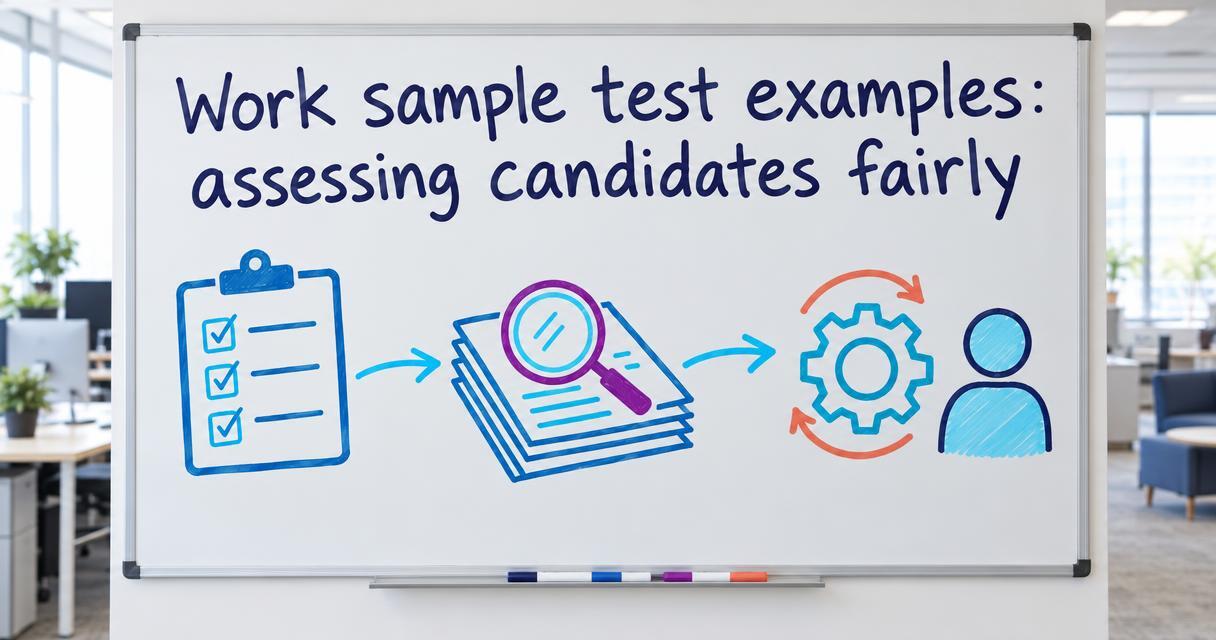
Work sample test examples include reviewing source materials to write a summary, resolving calendar conflicts, or triaging customer support tickets to prove you can do the actual job.
Last reviewed November 2026
Key takeaways
- Work samples are highly predictive of job performance because they mirror real tasks.
- The most effective assessments are realistic, time-bound and standard across all applicants.
- Organisations must set clear policies for how candidates can use generative artificial intelligence during testing.
- Extensive take-home assignments should be compensated to respect candidate time and avoid free labour.
Most traditional recruitment processes test how well someone interviews rather than how well they work. A candidate with a polished artificial intelligence generated résumé and strong conversational skills can easily charm their way through an unstructured interview. When you hire based on charisma and keyword matching, you risk bringing in someone who clashes with the team or struggles with the core responsibilities.
Many HR leaders are shifting their focus to evidence-based assessment methods to close this gap. A 2025 survey by TestGorilla found that 76 percent of employers reported using skills tests, making them the most popular skills-based hiring method. Assessing real capability helps organisations find the right balance between keywords and fit.
The goal is to gather objective data on a candidate before making an offer. This shifts the hiring process from a guessing game into a measurable decision, helping you manage both process risk and people insight risk.
A work sample is exactly what it sounds like. It requires an applicant to perform a task that mirrors the daily activities of the role. When you use this method, you stop relying on past achievements and start observing present capability.
According to the U.S. Office of Personnel Management, work sample tests have a reported validity coefficient of .54 for predicting job performance, compared with .51 for structured interviews and .48 for job-knowledge tests. This high content validity exists because the tasks are highly representative of actual job duties. Despite this predictive power, research summarised by Cogn-IQ shows only 22 percent of organisations use work samples or simulations as a pre-employment assessment.
To design an effective assessment, you must ensure the task is standardised. Every candidate must receive the same instructions, the same materials and the same time limit. This consistency is what allows you to compare performance fairly and defend your hiring decisions.
The best assessments are specific to the daily realities of the position. Common formats include simulated customer calls, responding to customer emails, entering and checking records, resolving calendar conflicts, triaging case notes, and summarising datasets into recommendations, as noted in a recent guide on assessment formats by the U.S. Office of Personnel Management.
If you are hiring for an administration or executive assistant role, you might ask candidates to organise a chaotic travel itinerary or draft a polite email declining a meeting request on behalf of a manager. This tests attention to detail and written communication.
For technical and analytical roles, the tasks should reflect deep work. A realistic analyst work sample can ask candidates to review source materials and produce a written report summarising findings and conclusions within a set time limit. For a software engineer, you might provide a broken piece of code and ask them to debug it while explaining their thought process.
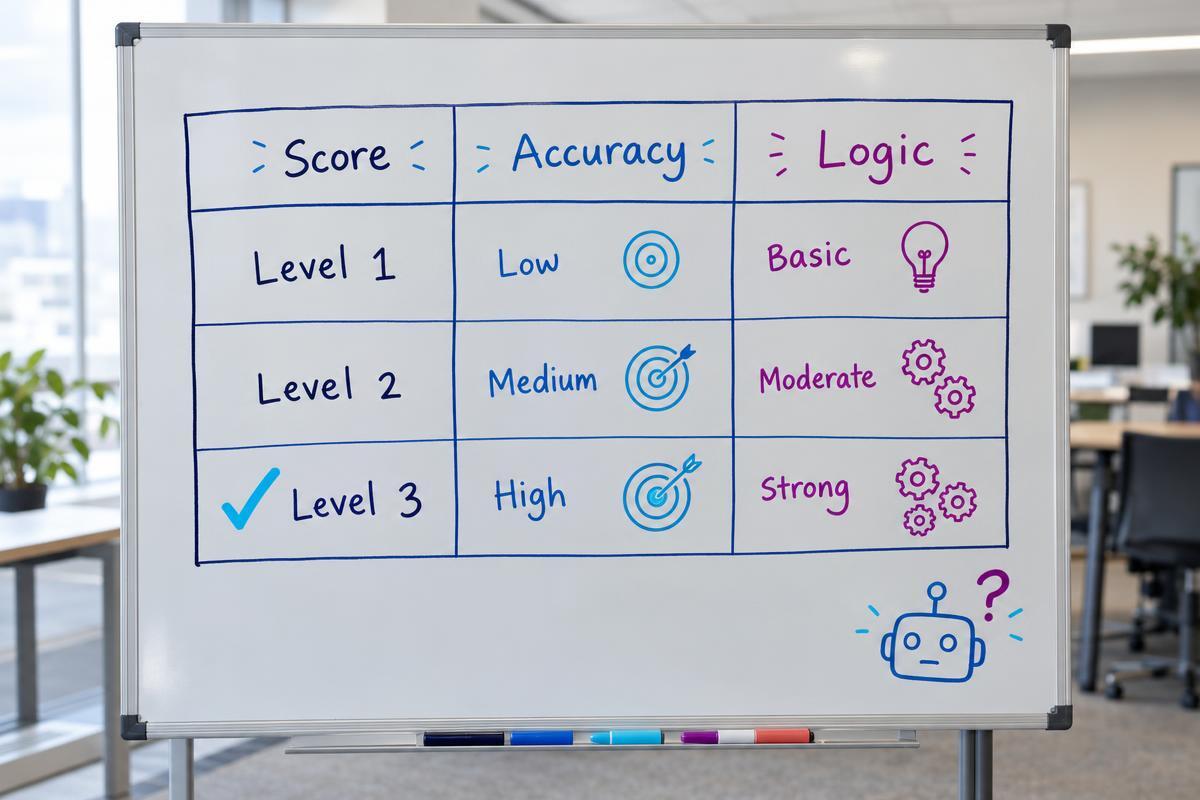
A great test is useless without a clear scoring system. If you rely on gut feeling to grade a candidate, you introduce the very bias the test was meant to eliminate. You must evaluate candidates against a structured interview scoring rubric.
| Score | Technical accuracy | Communication style | Problem-solving logic |
|---|---|---|---|
| Strong fit (3) | Flawless execution with no errors. | Clear, concise and empathetic tone. | Identified the root cause immediately. |
| Moderate fit (2) | Minor errors but overall acceptable. | Understandable but lacks polish. | Solved the problem but took unnecessary steps. |
| Poor fit (1) | Failed to complete the core task. | Confusing or inappropriate tone. | Could not explain their approach. |
You also need a clear policy on generative artificial intelligence. Banning tools like ChatGPT is often impractical because modern employees use them daily. Instead, tell candidates explicitly whether they can use these tools. If the role requires them to draft content quickly using artificial intelligence, assess their prompting skills and how well they edit the output. If the role requires original critical thinking, design a unique scenario that generic language models cannot solve accurately.
Work samples require effort from candidates, and employers must respect that time. Asking a candidate to spend 10 hours creating a full marketing strategy for your business crosses the line into unpaid labour. This practice damages your employer brand and causes top talent to withdraw their applications.
Keep early-stage assessments under 60 minutes. If you require a deep, time-consuming assignment for a senior executive role, compensate the candidate for their time. Paying candidates for extensive work samples shows respect and builds trust before day one.
When you scale these structured hiring practices across multiple locations, the results speak for themselves. The Coffee Club case study shows how applying one hiring standard across more than 400 stores resulted in an 8 percent lower turnover rate. Defensible, structured decisions lead to better retention.
While a work sample proves a candidate has the skills, it only tells you half the story. You still need to know how they behave under pressure, how they communicate with peers, and what environment they need to thrive. This is where choosing hiring assessment tools becomes a strategic choice rather than a tick-box exercise.
Combining a skills test with a Work Personality assessment gives you the complete picture. The work sample shows you they can do the job. The personality insight shows you they will enjoy the work and fit your culture. If you are comparing options, exploring the most affordable personality tests can help you build this dual-assessment process without breaking your budget.
Compono Hire is an applicant tracking system that matches candidates to culture, not just keywords. With built-in assessment tools and structured evaluation frameworks, you can measure both capability and fit in one place. Rated 4.8 out of 5 on Capterra, our platform helps mid-market teams build objective, defensible hiring processes.
A skills test measures specific knowledge, such as typing speed or understanding software shortcuts. A work sample test simulates a complete, real-world task, like drafting a response to an angry customer or debugging a piece of code. Work samples test the application of skills in context.
For most mid-level roles, a work sample test should take between 30 and 60 minutes. If the assessment requires several hours of dedicated deep work, you should compensate the candidate for their time to avoid exploiting their labour.
You should align your artificial intelligence policy with the realities of the job. If the employee will use language models daily to speed up their work, allow it during the test and assess how well they refine the output. Always set clear rules before the assessment begins so all candidates have the same expectations.

How a behavioural assessment for hiring predicts job performance, reduces bias, and helps you build teams that work well together.
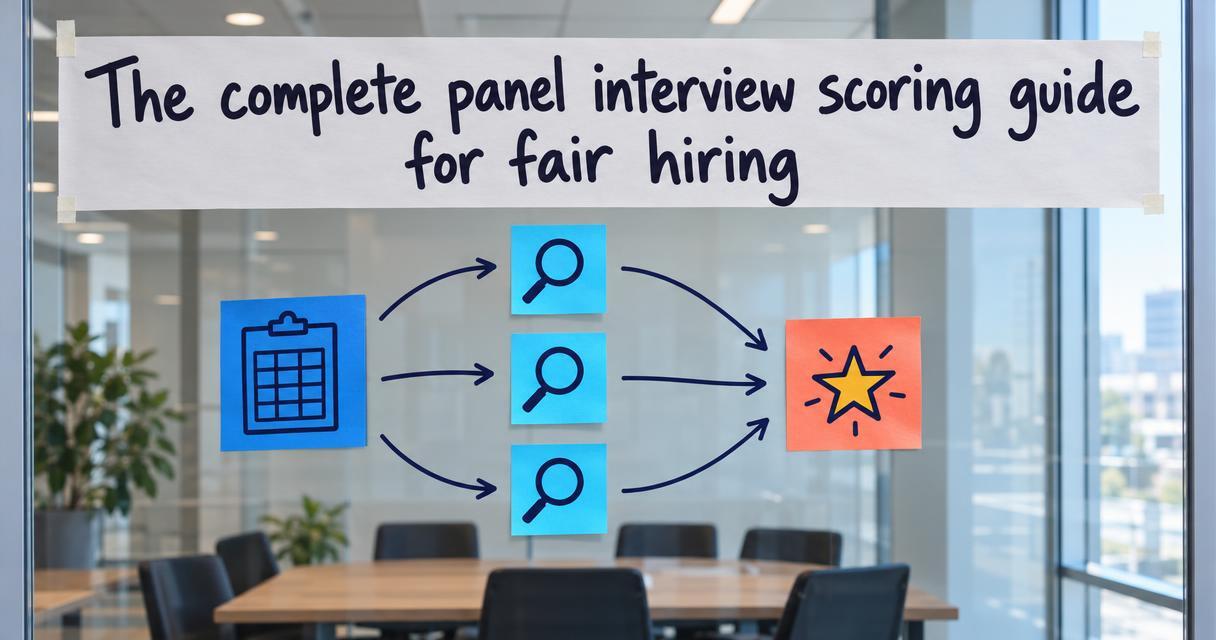
A practical panel interview scoring guide to align your hiring team, resolve conflicting scores, reduce bias and make legally defensible recruitment.
Hiring process best practices for finding the right talent, refining your recruitment strategy and building teams that perform.
 Compono