

 Mathan Allington
How to run a structured interview: a step-by-step guide
 Mathan Allington
To run a structured interview that reduces hiring bias and accurately predicts job performance. Discover how to build rubrics and score candidates...

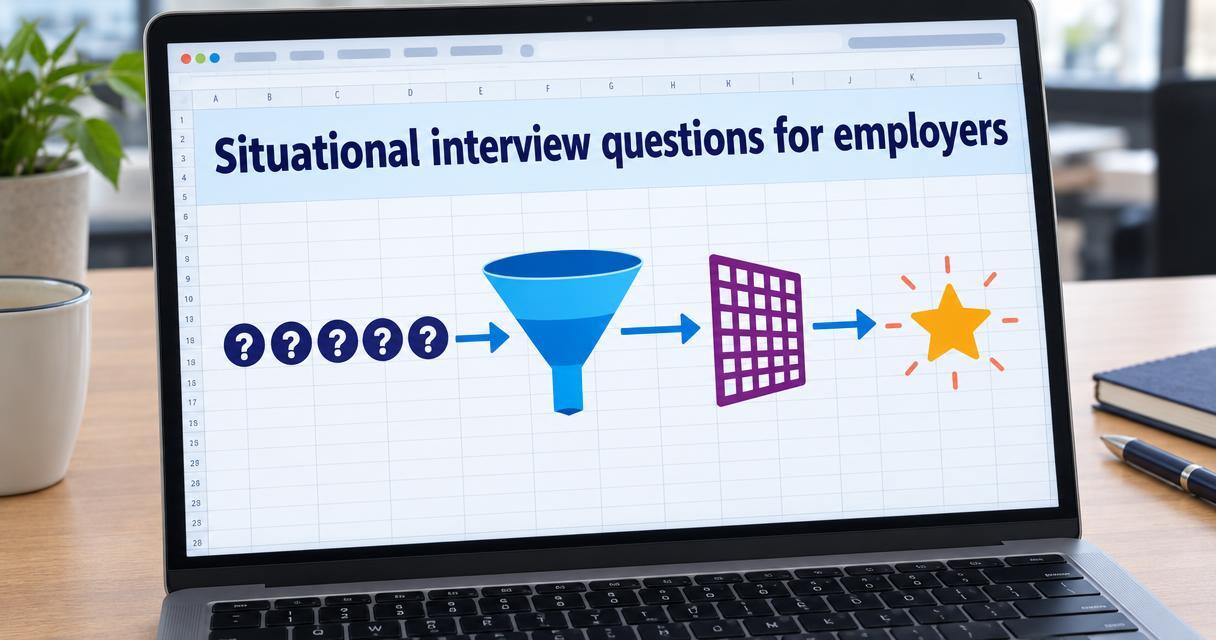
Situational interview questions for employers evaluate how a candidate handles hypothetical workplace scenarios by asking them to predict their future actions.
Last reviewed November 2026
Key takeaways
- Situational questions ask candidates what they would do in a hypothetical scenario, while behavioural questions ask what they did in the past.
- Unstructured interviews predict job performance poorly, making a structured scoring rubric essential for evaluating candidate answers objectively.
- Strong candidate responses outline a logical problem-solving process and consider multiple stakeholders rather than jumping straight to an immediate solution.
- Follow-up probing questions help hiring managers separate rehearsed theories or AI-generated responses from genuine capability.
Most hiring decisions still rely heavily on intuition. An interviewer asks an open-ended question, listens to a polished answer and makes a judgement call on how the candidate might perform in the role. This approach is highly unreliable. According to research by Sackett et al. in 2022 cited by Pin, unstructured interviews have a predictive validity of just 0.19. Relying on casual conversation leaves your hiring outcomes largely to chance.
When you replace unstructured chats with structured interviews, the predictive validity rises to 0.42, making it one of the strongest common predictors of job performance. A structured interview requires all candidates to answer the exact same questions and be scored against the exact same rubric. When asking situational questions, this structure stops interviewers from being swayed by charisma and focuses the evaluation entirely on how the person actually thinks.
Hiring managers often confuse situational and behavioural questions. They serve different purposes and tell you different things about a candidate. Behavioural questions look backward. They ask for real examples of past behaviour on the premise that past performance predicts future performance. Situational questions look forward. They present a theoretical challenge and ask the candidate to walk you through their response.
Both methods are valuable. Situational questions level the playing field for candidates who might lack years of senior experience but possess excellent critical thinking skills and adaptability.
| Feature | Situational questions | Behavioural questions |
|---|---|---|
| Time focus | Future (hypothetical scenarios) | Past (historical events) |
| Typical opening | "What would you do if..." | "Tell me about a time when..." |
| Primary goal | Assess problem-solving logic and adaptability | Validate experience and past results |
| Best used for | Testing reactions to unknown or unexpected challenges | Measuring proven competencies and track record |
Every hypothetical scenario you present must tie directly to the competencies the role requires. Generic brain teasers waste time and alienate good candidates. Instead, focus on scenarios involving conflict, prioritisation, ethics and adaptability.
To test conflict resolution, ask the candidate what they would do if a key stakeholder outright rejected their proposed project plan on the day of delivery. A poor answer focuses on arguing or immediately giving up. A strong answer involves stepping back, asking the stakeholder to clarify their concerns, identifying the root cause of the resistance and finding a workable compromise.
To evaluate prioritisation, ask how they would handle two urgent deadlines from two different managers falling on the exact same afternoon. You want to hear a logical framework for triaging work. Good candidates will mention assessing the business impact of each task and proactively communicating with both managers to renegotiate timelines.
You must also ensure your scenarios respect local employment laws and avoid triggering discriminatory biases. If you are unsure where the line sits, use our free checker for interview questions you cannot ask in Australia to review your scripts before the interview panel meets.
Asking the right question is only half the process. You need a reliable way to score the answer. Research by the Talent Board in 2024 cited by Pin shows that approximately two-thirds of employers now use structured evaluation in their interview processes.
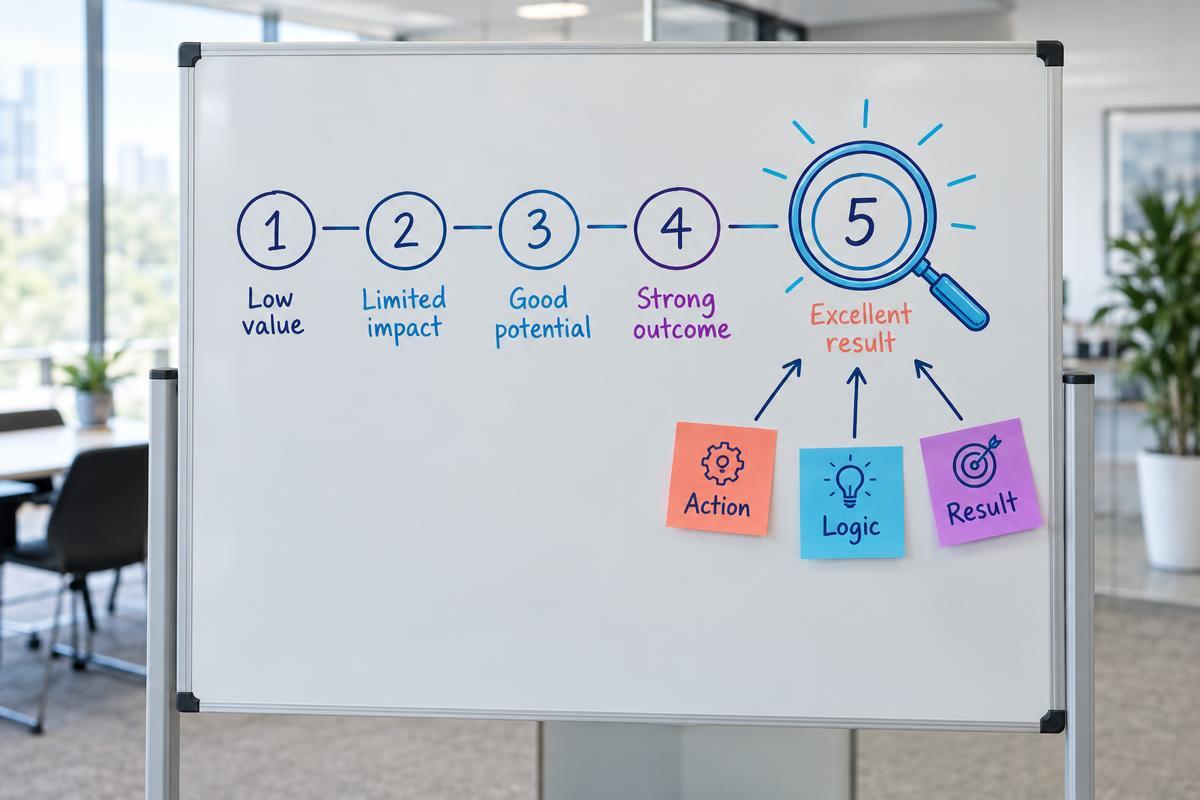
The STAR method (Situation, Task, Action, Result) is widely used by candidates to structure their answers. Hiring teams can flip this framework into a scoring rubric. Since the situation and task are provided by you, grade the candidate strictly on their proposed action and their anticipated result.
Give the answer a score from one to five based on specific evidence. A low score might mean the candidate gave a brief, one-step solution without considering side effects. A mid-range score shows they solved the immediate problem but missed the broader business context. A top score indicates they explained their thought process, anticipated potential roadblocks, communicated with stakeholders and proposed a solution that aligned with the company culture.
You can build on this foundation by crafting interview questions with Work Personality insights. This helps you score whether a candidate's natural working style matches the role's specific demands.
Candidates prepare extensively for interviews. Many use generative AI to write right responses to common scenarios. A rehearsed answer sounds flawless but often lacks depth. You can spot the difference by asking targeted probing questions immediately after their initial response.
If a candidate gives a textbook answer about resolving a team dispute, change the variables. Ask them how their approach would change if the person they were disagreeing with was the company founder. If they outline a right project management process, ask them what their absolute first step would be if their budget was suddenly cut in half.
Probing questions force the candidate off their script and back into active problem-solving. This is where you see their real capability. To make this standard practice, look for ATS features that reduce hiring bias by enforcing consistent evaluation frameworks across your entire hiring panel. When every interviewer scores candidates the same way, the data becomes reliable.
When you combine structured interviews with cognitive-ability tests, the overall predictive validity reaches approximately 0.63, according to selection-method research cited by Cogn-IQ. Furthermore, research by Google People Analytics cited by OLL Academy shows that a single structured interview conducted by one interviewer provides validity comparable to three to four unstructured interviews. Process discipline saves your team time and prevents bad hires.
Compono Hire is an applicant tracking system (ATS) that matches candidates to culture, not just keywords. It helps you build structured feedback forms and coordinate panel interviews so your hiring decisions rely on evidence rather than gut feel. The Coffee Club uses Compono Hire to deliver consistent hiring standards across 400 outlets, driving an 8% lower turnover rate.
Situational interview questions ask candidates to respond to hypothetical workplace scenarios. They are designed to evaluate problem-solving skills, critical thinking and how a candidate might behave when faced with challenges they have not encountered before.
The best way to answer is by walking the interviewer through your logical process. You should explain what factors you would consider, who you would consult and what steps you would take to resolve the issue while minimising disruption to the business.
Situational questions focus on future, hypothetical scenarios to test logic and adaptability. Behavioural questions ask for specific examples of past experiences to validate a candidate's track record and proven skills.
Employers use them to see how candidates think on their feet. They are especially useful for evaluating candidates who might have less direct experience but possess strong analytical skills and the ability to handle unexpected pressure.
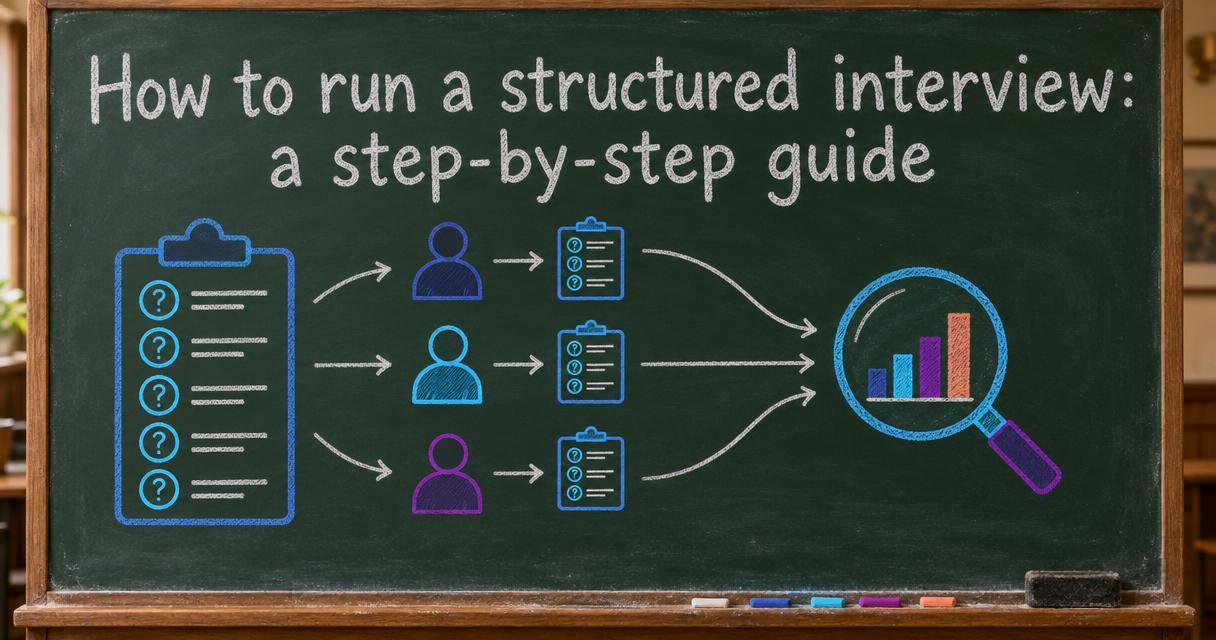
To run a structured interview that reduces hiring bias and accurately predicts job performance. Discover how to build rubrics and score candidates...
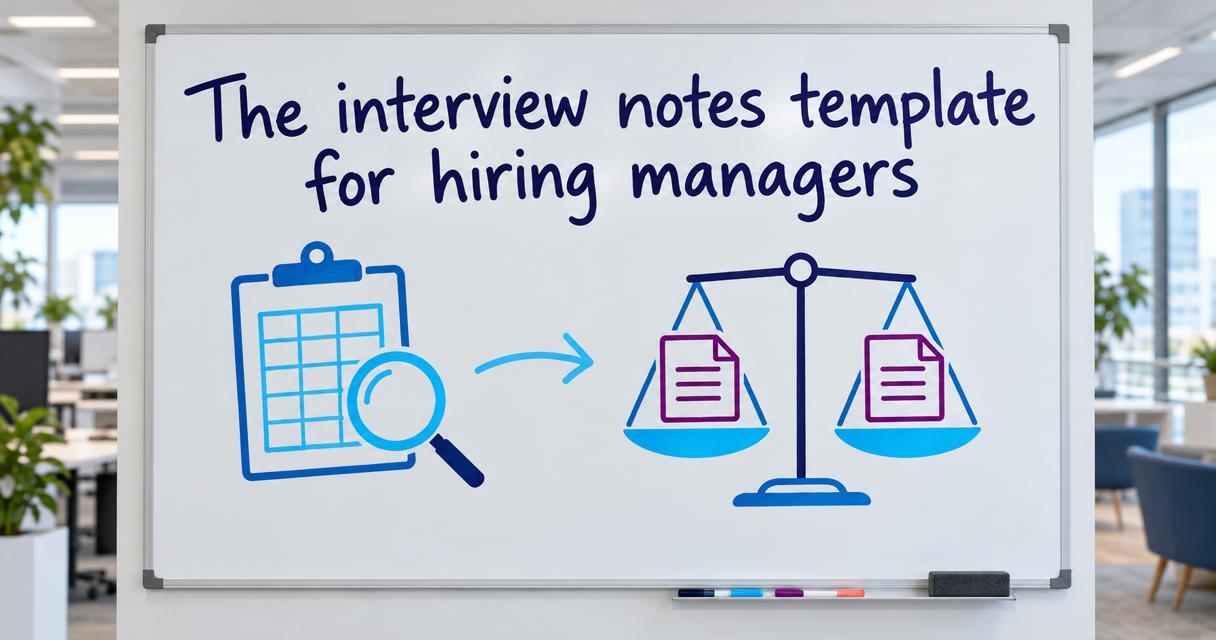
Learn what to include in your interview notes template for hiring managers, how structure predicts job performance, and why accurate scorecards...

How structured interview software improves hiring accuracy and reduces bias, which features matter, and how to run structured interviews at scale.