

.webp)

 Mathan Allington


SaaS HR platform: why modern teams need more than just software
 Mathan Allington
What a SaaS HR platform covers, where most stop at admin, and how connecting hiring, engagement and development turns people data into decisions.

People management tools are software that helps managers and HR teams run the whole employee relationship: hiring, onboarding, development, engagement, performance and exit. Most stacks handle the administrative half well and the human half barely at all, which is how organisations end up with immaculate records and almost no insight into how their people actually work together.
Last reviewed September 2026.
This guide covers what these tools do, the categories worth knowing, how a people management system differs from an HRIS, which tools matter to HR managers compared with team leaders, and how to run a shortlist without buying six products that overlap.
Strip the category back and there are two jobs. The first is keeping a business out of trouble: employment records, contracts, leave balances, pay, training currency, the paper trail that proves you did what you said you did. The second is helping a manager make a better call about a person: who to hire, who is ready for more, who is quietly checking out, why a team that looks strong on paper keeps missing its dates.
Almost every product on the market is excellent at the first job. Very few are any good at the second, and that imbalance is worth naming before you compare anything, because a shortlist built only on features will steer you towards more admin coverage you probably already have.
A practical way to think about it: process risk is the risk of getting the admin wrong, and people insight risk is the risk of getting the person wrong. A missed superannuation payment is expensive and fixable. A hire who never fits the team is expensive for years and rarely gets diagnosed properly.
Vendors blur these lines constantly, and several products sit across two or three categories. Knowing the underlying category still helps, because it tells you what the tool was built to be good at and where it will quietly disappoint you.
| Category | What it handles | Who uses it daily | What it will not tell you |
|---|---|---|---|
| Core HR and payroll (HRIS) | Employee records, contracts, leave, pay, compliance reporting | HR administrators and payroll | Whether the person in the record is in the right role |
| Applicant tracking (ATS) | Job ads, applications, screening, interview scheduling, offers | Recruiters and hiring managers | How a candidate will behave once the job actually starts |
| Learning management (LMS) | Course delivery, compliance training, capability and completion records | Learning teams and compliance leads | Whether the training changed anything on the job |
| Engagement and survey | Pulse surveys, eNPS, sentiment tracking, action planning | HR and senior leaders | Why a score moved, or who it moved for |
| Performance and goals | Review cycles, objectives, continuous feedback, calibration | People managers | Whether a rating reflects the role or the rater |
| Workforce intelligence | Work personality, team composition, culture and role fit, capability mapping | HR leaders and people managers | Nothing about payroll, leave or statutory reporting |
Most mid-sized organisations already own something in the first three rows. The gap usually sits in the last row, which is also the row that explains the results the other five are reporting.
The terms get used interchangeably in sales conversations, so it pays to be precise about what you are buying.
An HRIS is the system of record. It holds the employee data, and everything else is expected to sync with it. A people management system is a broader term, usually meaning the set of tools a manager touches to run their team, which can include recruitment, learning, engagement and performance alongside the record keeping. HR software is the loosest term of all and covers any of the above.
The practical question is not which label a vendor uses, it is which system owns the employee record and how the other tools read from it. If you are weighing whether recruitment belongs inside the record system or beside it, the trade-offs are set out in our guide to choosing between an ATS and an HRIS.
These two groups are shopping for different things, and a lot of failed rollouts trace back to buying for one and expecting the other to use it.
HR managers need the system view. Headcount and cost across the organisation, compliance status, recruitment pipeline health, turnover by team and tenure, engagement trends they can take to an executive meeting. They care about reporting, integrations, permissions and audit trails, because they are accountable for the whole population.
Team leaders need the individual and team view, and they need it in under two minutes. Who is in my team, what is each person naturally good at and drained by, who is due a conversation, what is the one thing I should change this fortnight. A tool that makes a line manager click through four screens to answer that will be abandoned inside a quarter, no matter how well it demos.
When you assess HR tools for teams, ask to see the manager experience first and the HR admin experience second. The admin experience will always look impressive. The manager experience is the one that decides whether anyone uses the thing.
An organisation can have an ATS, an LMS, a survey tool and a performance module and still be unable to answer a basic question: why does this team keep struggling with the same problem?
The missing layer is data about how people prefer to work. Compono's research maps that to eight work personalities, and a healthy team covers all of them somewhere in the mix: Doer, Auditor, Helper, Advisor, Pioneer, Campaigner, Evaluator and Coordinator. A team stacked with Pioneers and Campaigners generates ideas at pace and finishes very little, and from the outside that reads as a focus problem or a motivation problem. It is neither. It is a coverage gap, and it is fixable by moving responsibilities around or hiring for the missing shape.
The same data explains survey results. A dip in employee engagement means something different if it is concentrated among the people who need structure and certainty than if it is concentrated among the people who need autonomy. Without the personality layer, all you have is a lower number and a workshop.
Compono is a workforce intelligence platform built for that layer, covering hiring, engagement, capability and competency in one place. It is the wrong fit if what you need is a payroll engine or a system of record, and it works alongside those rather than replacing them.
Start by writing down the decisions you cannot currently make with confidence. Not the features you want, the decisions. "I cannot tell which of our three site managers is at risk of leaving" is a requirement. "Advanced analytics" is not.
Then work through the practical checks. What does it integrate with, and is that integration native or a paid connector? Who owns the data if you leave? How long until a manager gets value without training? What happens to the price at your next headcount band? Can you see the actual product on real data rather than a curated demo tenant?
If you are building a requirements list from scratch, the HR tech requirements builder will get you to a defensible shortlist faster than a blank spreadsheet. And when you reach the stage of comparing specific products feature by feature, our guide to comparing HR software features sets out what actually separates the options once the marketing language is removed.
One last thing worth saying plainly. Buying a sixth tool rarely fixes a people problem. Buying the one layer your current five are missing sometimes does.
Compono maps work personality, culture and engagement across your whole team, so every hiring and development call is one you can defend.
Talk to usSoftware that helps managers and HR teams handle the employee relationship end to end, from recruitment and onboarding through development, engagement and performance. Basic tools handle records and admin. Better ones add insight into how individuals and teams actually work.
A people management system is the set of connected tools a manager uses to run their team, usually built around a single employee record. It can be one product covering several areas or several products syncing with a core HR system.
An HRIS is the system of record for employee data, pay and compliance. People management tools is the broader term, taking in recruitment, learning, engagement, performance and workforce insight, which may or may not live inside the same product.
Usually the system of record first, then the area causing the most expensive mistakes. For most growing businesses that is hiring, because every bad hire costs months of salary, management time and team momentum before anyone calls it.
Pricing is almost always per employee per month, often with module-based tiers and a minimum headcount. Ask for pricing at your current size and at the size you expect to be in two years, because the jump between bands is where budgets get caught out.
No. They remove the repetitive parts of the job and give HR leaders better evidence for the parts that matter. The coaching, the judgement calls and the difficult conversations stay human.
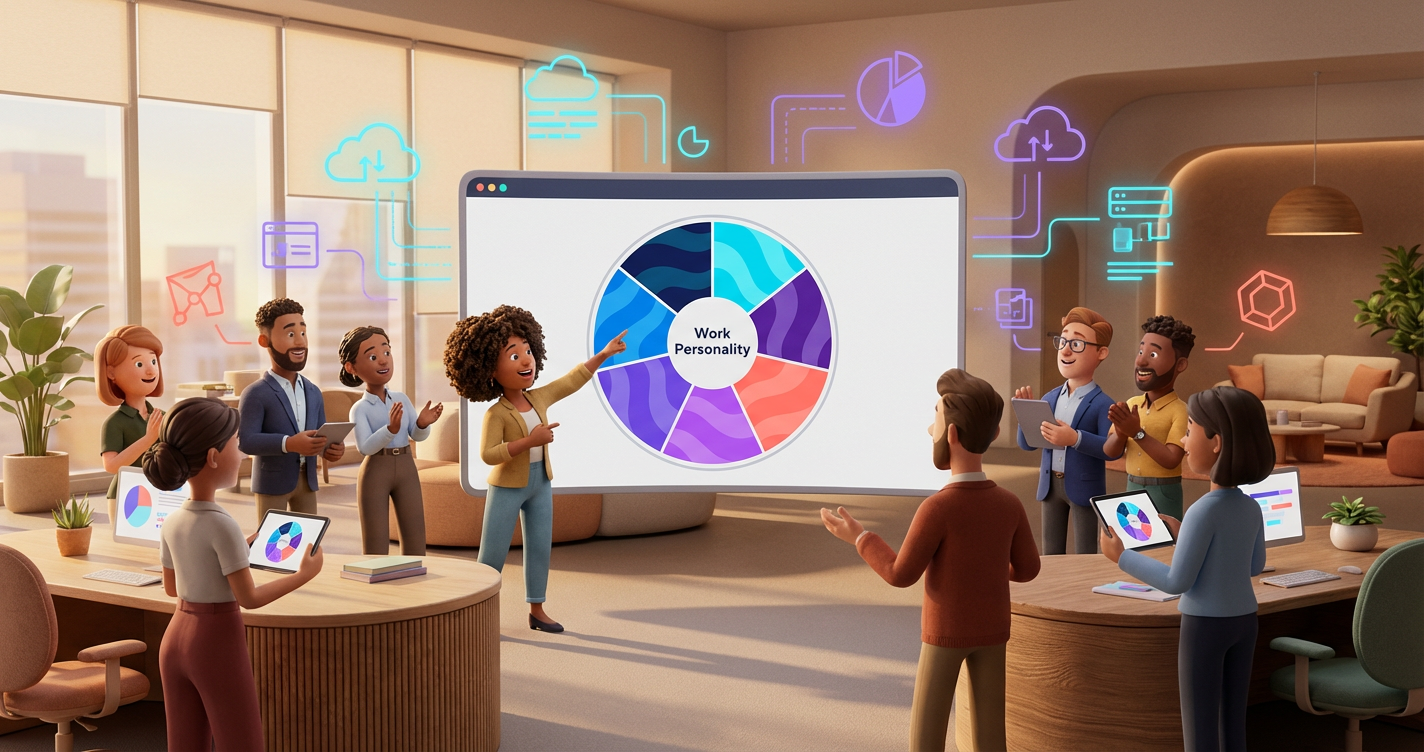
What a SaaS HR platform covers, where most stop at admin, and how connecting hiring, engagement and development turns people data into decisions.
HR insights are the conclusions you draw from people data: who to hire, where teams are unbalanced, where culture slips. How a platform delivers them.
People analytics turns workforce data into hiring, engagement and retention calls. The measures worth tracking, and the ethics that keep staff onside.