


 Rudy Crous

How to build a defensible assessment strategy for fairer hiring
 Compono
A defensible assessment strategy protects your organisation, reduces bias and lets you hire on objective evidence. How to build one properly.

This is Part 7 of the 'Better Assessment Design Series:
Why Good Tests Are About More Than Questions and Scores.'
Click here for more in the series.
Giving everyone the same assessment does not automatically make the assessment fair.
Fairness means people have a proper opportunity to demonstrate the knowledge, skill, judgement or capability being assessed.
That matters because assessments can include hidden barriers. These barriers might come from complex language, cultural assumptions, inaccessible technology, irrelevant examples, unclear scoring criteria, or background knowledge that was never meant to be assessed.
Good assessment design is not about lowering the standard.
It is about making sure the standard is measured properly.
Fairness does not mean making an assessment easy.
It does not mean reducing the required standard.
It does not mean giving everyone the same result.
Fairness means removing irrelevant barriers so the assessment measures the intended capability as cleanly as possible.
If someone fails because they do not understand the content, that is meaningful.
If someone fails because the question was written in unnecessarily complex language, that is a design problem.

Some people worry that fair assessments need to be generic.
That is not true.
Good assessments should often be contextual.
A driving assessment should include road-based scenarios.
A science assessment should include scientific examples.
A health assessment should include relevant health situations.
A technical assessment should include authentic technical tasks.
The issue is not context.
The issue is irrelevant barriers.
The context should help measure the intended outcome, not distract from it.
Bias can enter through:
These issues can change what the assessment is really measuring.
Instead of measuring the intended capability, the assessment may start measuring familiarity, confidence, literacy, access or background experience.
When reviewing an assessment for fairness, ask:
Where appropriate and lawful, results should also be reviewed by relevant groups or cohorts.
Fairness is not about lowering the bar.
It is about making sure the bar is being measured properly.
A fair assessment holds the standard while removing irrelevant barriers.
That is good measurement.
It is also good governance.
Read the next article in the series.
Rudy Crous is a corporate psychologist and the co-founder and CEO of Compono, a people and culture platform that brings hiring, engagement, learning and credentialling together in one place, adding behavioural science to the processes most HR tools only track.

A defensible assessment strategy protects your organisation, reduces bias and lets you hire on objective evidence. How to build one properly.

How to design bias out of recruitment: inclusive job ads, anonymous screening, structured interviews and validated work personality assessments.
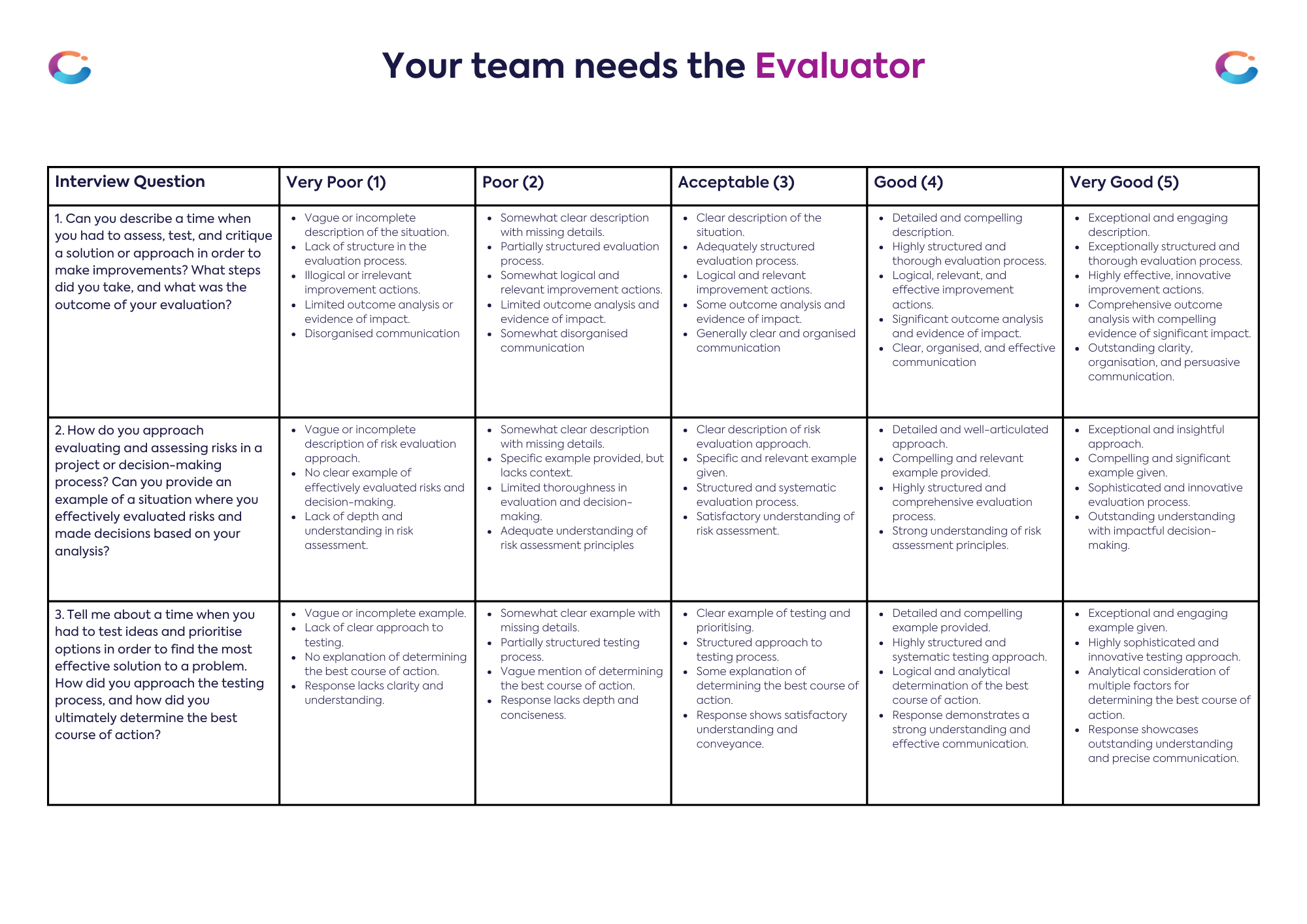
A scoring key rates every candidate against the same weighted criteria. How to build one with work personality insights, plus a free template.
 Mathan Allington