

.webp)

 Mathan Allington


Hiring at scale: how to grow your team without losing your culture
 Mathan Allington
How to hire at scale without losing quality: build a repeatable, evidence-based system that matches work personality to every role.
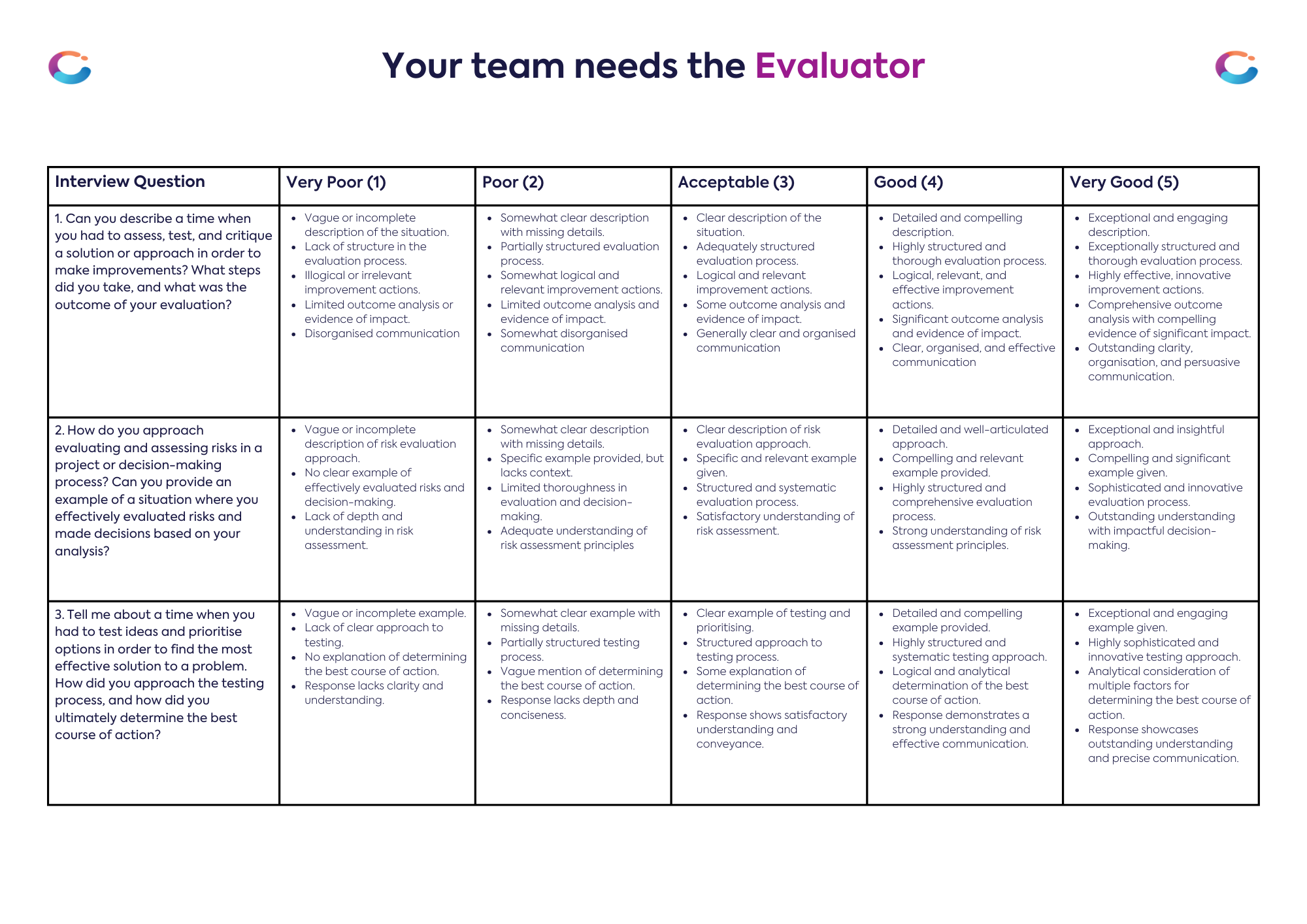
A scoring key is a documented framework that rates every candidate against the same weighted criteria, so hiring decisions rest on evidence rather than gut feel. To use one, define the traits that matter for the role, weight them by importance, score each interview on a five-point scale, then compare totals across candidates.
Last reviewed July 2026
People are complex, and instinct alone is an unreliable judge of how someone will actually perform in your team. A scoring key turns interviews from impressions into measurements, and when you build it around Work Personality insights, you get a fair, defensible way to compare candidates on the things that predict success.
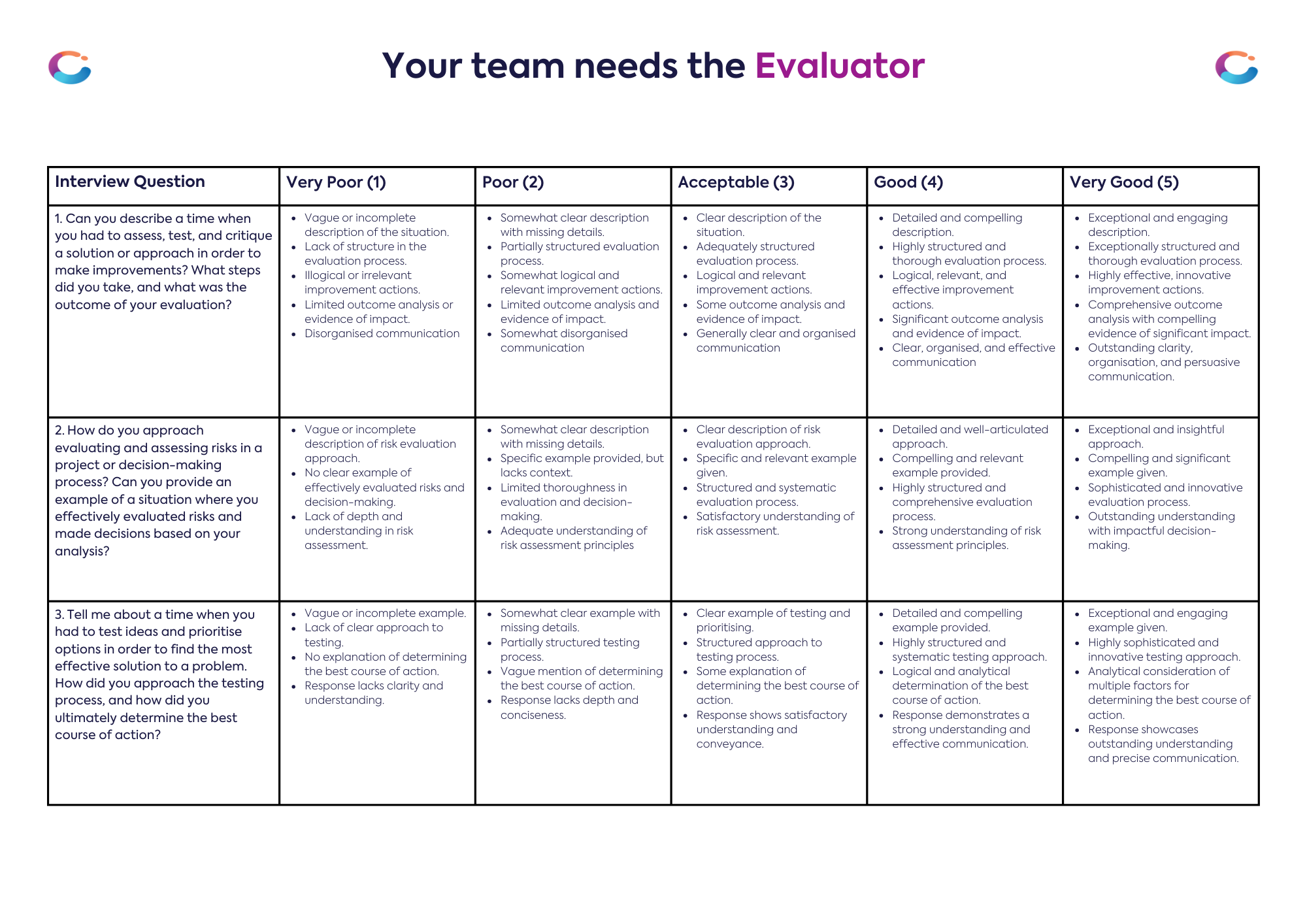
A scoring key is a documented framework for ranking candidates against specific traits and behaviours relevant to the role and team. Instead of relying on vague impressions, you assign measurable scores to each area, which keeps every interview consistent and every decision transparent.
Rather than guessing whether a candidate seems "right", you assess how closely they align with the needs of the role and the team using a structured, repeatable process. Paired with Work Personality insights (the traits and behaviours that shape how people work), it becomes a practical tool for reducing bias in hiring.
Think of it as the difference between wandering into the shops without a list and going in with a plan. A scoring key keeps you focused and consistent, and it protects you from hiring mistakes that stem from bias, unclear priorities or spur-of-the-moment calls.
Creating a scoring key from scratch sounds like a big job, but it breaks down into four steps.
Determine which traits and behaviours are critical for success in the role. Reflect on the demands of the position (is it highly collaborative, does it need a strong leader, or someone who thrives independently), your current team's Work Personality mix and any gaps in it, and organisational priorities like adaptability or resilience.
Then break those traits into categories that are easy to measure:
Not all traits are equal. For a management role, leadership might be crucial while technical depth matters less if an experienced team is already in place. Assign weightings that reflect what the role actually needs, for example:
Weighting stops you from over-scoring candidates on traits that matter less for this particular role.
Set a simple numerical scale for each trait. A five-point system works well:
1 = Poor alignment
2 = Below average
3 = Meets expectations
4 = Exceeds expectations
5 = Outstanding
Make the criteria for each score explicit. Under "Adaptability", a 3 might mean the candidate has shown they can adjust to change but could be more proactive, while a 5 demonstrates exceptional resourcefulness under pressure. Clear definitions keep scores consistent between interviewers.
Align your scoring key with specific, behaviour-based questions for each trait. The goal is to move past generic questions and draw out real-world examples:
Score during or immediately after each interview while the evidence is fresh, and share the scoring across your panel. If interviewers disagree, use examples from the interview itself to settle it rather than seniority or volume.
A scoring key does more than tidy up your interviews. It improves retention by aligning hires with long-term team and organisational goals, it reduces the stress of decision-making because every call is backed by data, and it strengthens cultural alignment because candidates are chosen for traits that fit the team's actual dynamics. Scoring traits tied to Work Personality also sets up stronger collaboration and engagement long after the start date.
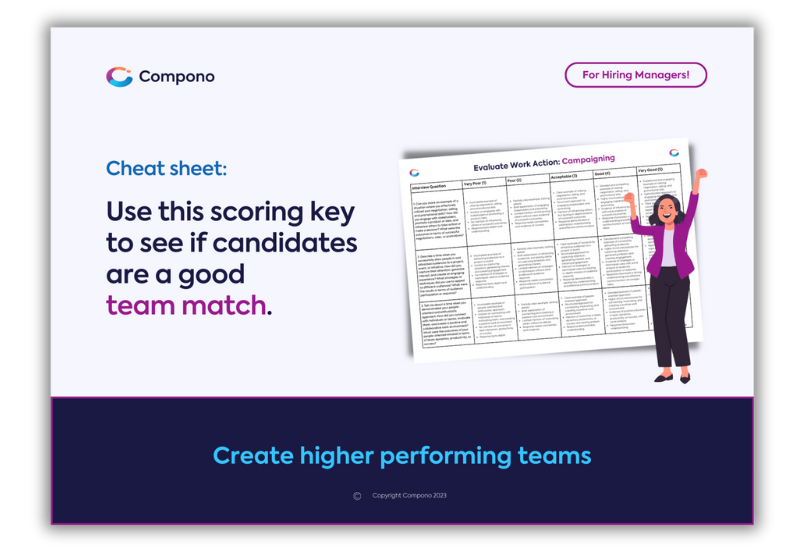
Unsure how to bring this together? We have built a free scoring key template so you can assess every candidate's answers fairly and objectively. Each Work Personality type comes with its own tailored scoring key, making it easy to measure how well candidates align with the role.
Beyond the template, Compono Hire evaluates candidates with scientifically validated assessments and helps you build scoring keys around your team's real gaps. It predicts culture fit, so the "will they thrive here" question gets an evidence-based answer before day one.
Compono Hire pairs structured scoring with validated Work Personality assessments, so every hiring decision is one you can defend.
Talk to usA scoring key is a documented framework that lists the traits a role requires, weights them by importance, and sets a numerical scale for rating candidates. Every interviewer scores against the same criteria, which keeps hiring decisions consistent, comparable and defensible.
A five-point scale is the most practical: 1 for poor alignment through to 5 for outstanding. The key is defining what each number means for each trait, so two interviewers watching the same answer land on the same score.
Yes. The value of a scoring key comes from consistency. Each panel member scores independently against the same criteria, then the panel compares scores and resolves differences using evidence from the interview itself.
No tool removes bias entirely, but a scoring key reduces it significantly. Predefined criteria and weightings make it harder for personal affinity to sway a decision, and the written record makes any remaining inconsistency visible and correctable.

How to hire at scale without losing quality: build a repeatable, evidence-based system that matches work personality to every role.

Resumes miss what drives success. See how work personality and culture fit data help you predict who will thrive before you make the offer.
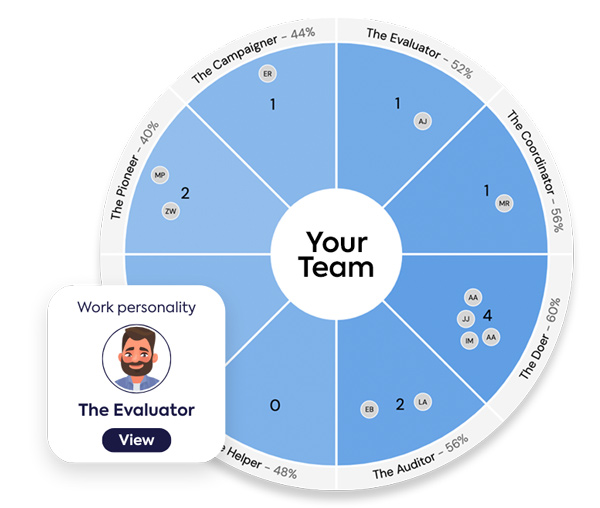
How work personality insights explain team dynamics, shape sharper interview questions and give you scoring keys for objective hiring decisions.