

.webp)

 Rudy Crous


The Forgotten Half of Assessment Design: Designing for the Data You Actually Need
 Rudy Crous
Unlock the potential of assessment design by focusing on the data needed for meaningful insights. Learn how to create assessments that drive...
This is Part 8 of the 'Better Assessment Design Series:
Why Good Tests Are About More Than Questions and Scores.'
Click here for more in the series.
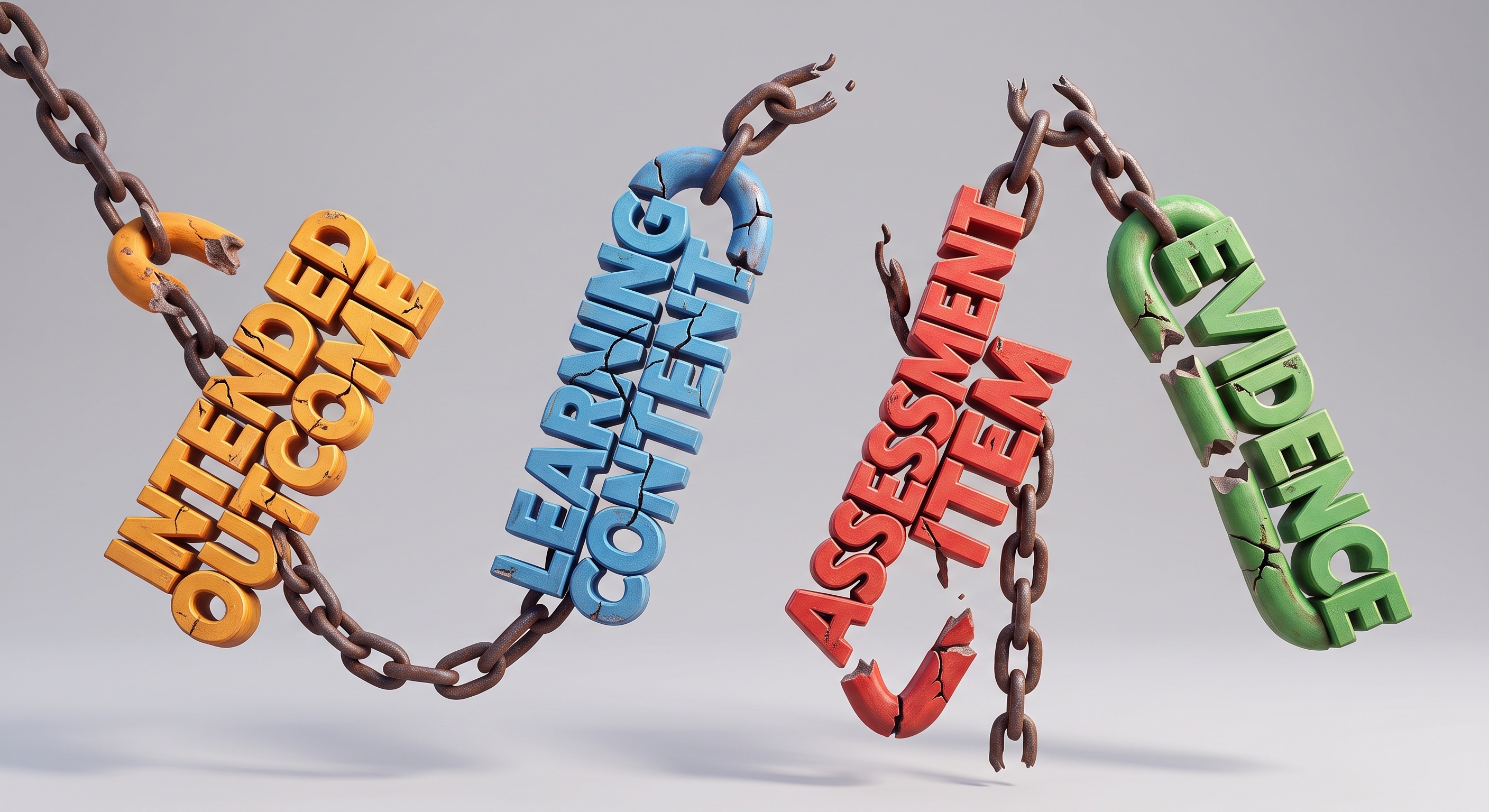
Many assessments fail because the learning, the assessment and the intended outcome do not line up.
The course may teach one thing. The assessment may test another. The final report may show a score, but not clearly explain what the person has actually demonstrated.
That creates a validity problem.
Good assessment design needs alignment. The intended outcome, the learning content, the assessment item and the evidence should all connect.
Good assessment design is not just about asking questions at the end of learning.
It is about making sure the assessment genuinely tests what the learning was meant to develop.
Many systems track completion.
Completion is useful, but it is not enough.
It tells us that someone finished an activity.
It does not necessarily tell us that they understood it, can apply it, or have reached the required standard.
This is why alignment matters.
If the intended outcome is:
Apply safe behaviour at controlled intersections.
Then the learning should teach safe intersection behaviour.
The assessment should test whether the person can apply that knowledge.
It should not only ask:
What shape is a stop sign?
That may be related, but it does not prove safe behaviour.
A better assessment item would place the person in a relevant scenario and ask them to make a safe decision.
Good assessment design connects four things:
This creates a traceable chain:
Outcome → Learning → Assessment → Evidence → Decision
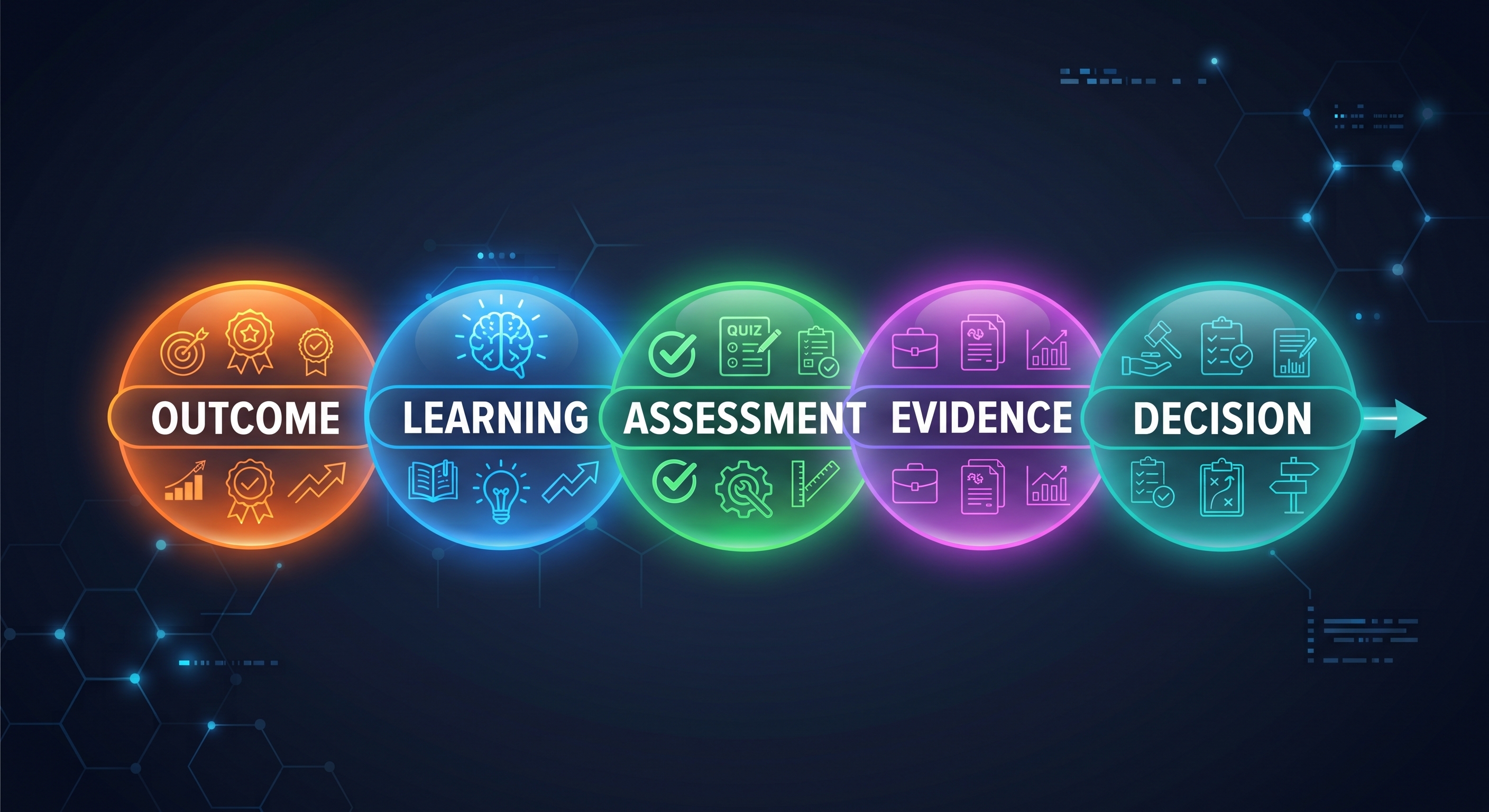
Without this chain, assessment results become difficult to interpret.
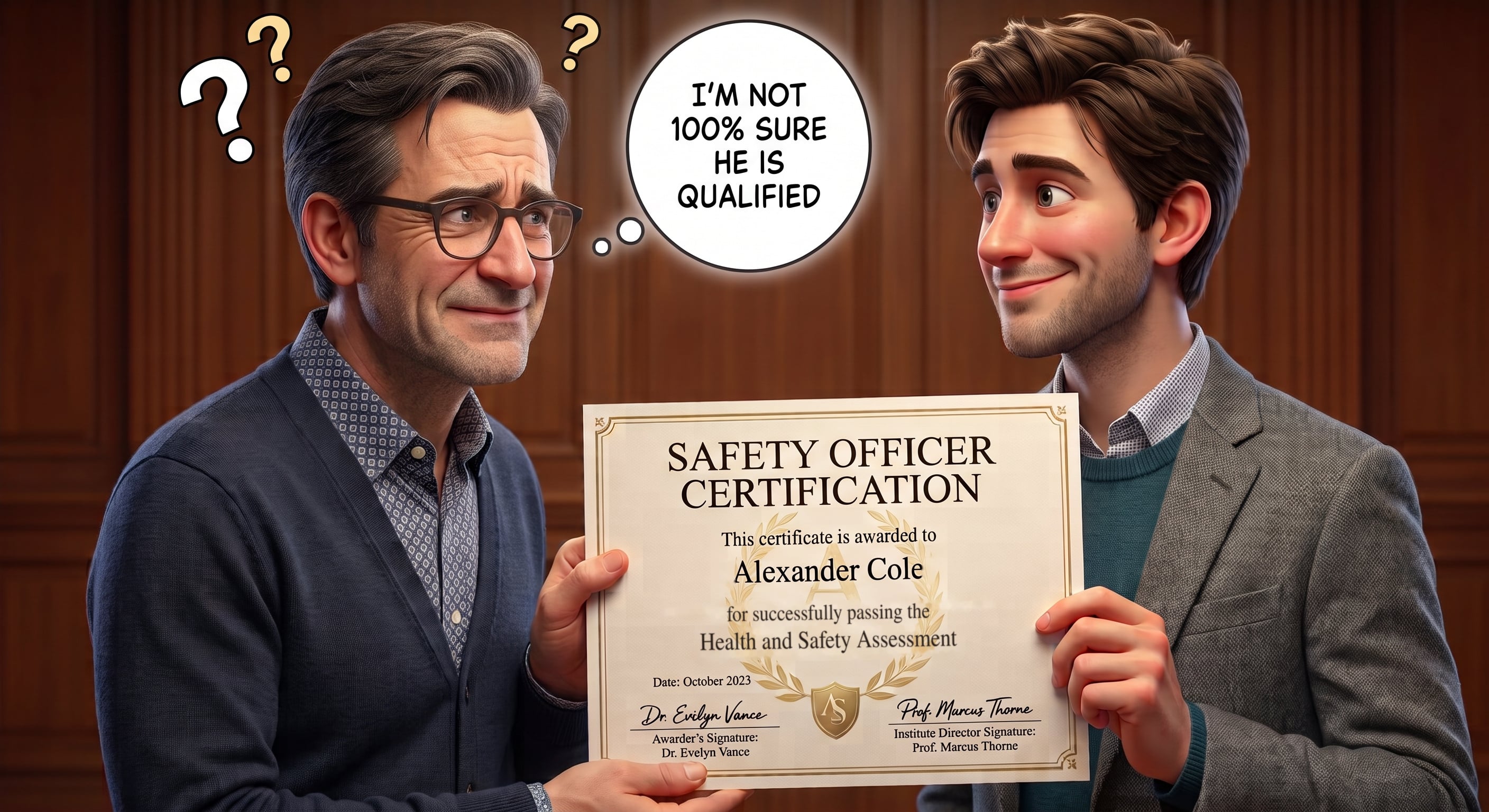
Someone may pass, but what have they actually demonstrated?
Someone may fail, but what support do they need?
A group may perform poorly, but is the problem the learners, the content, the assessment, the standard or the teaching?
Alignment helps answer those questions.
Use a traceability map.
|
Intended outcome |
Learning content |
Assessment item |
Evidence |
Follow-up action |
|
Stop safely at controlled intersections |
Stop sign rules and school zone risks |
Scenario near school crossing |
Person selects safe action and explains why |
Further learning on hazard awareness |
Every learning objective should connect to an intended outcome.
Every assessment item should connect to a learning objective.
Every result should provide evidence.
Every gap should inform a follow-up action.
Without alignment, assessments can become disconnected knowledge checks.
With alignment, assessments become evidence.
That is how assessment moves from activity to insight.
Read the next article in the series.
Rudy Crous is a corporate psychologist and the co-founder and CEO of Compono, a people and culture platform that brings hiring, engagement, learning and credentialling together in one place, adding behavioural science to the processes most HR tools only track.
Unlock the potential of assessment design by focusing on the data needed for meaningful insights. Learn how to create assessments that drive...
Discover why reliable assessments are crucial for accurate results. Learn how to design assessments that ensure consistency and trustworthiness.
Effective assessment design is crucial for making informed decisions. Learn how robust assessments provide meaningful evidence beyond just scores.