


 Rudy Crous

The Forgotten Half of Assessment Design: Designing for the Data You Actually Need
 Rudy Crous
Unlock the potential of assessment design by focusing on the data needed for meaningful insights. Learn how to create assessments that drive...
This is Part 9 of the 'Better Assessment Design Series:
Why Good Tests Are About More Than Questions and Scores.'
Click here for more in the series.
If you only design for a score, you usually only get a score.
That may be enough for some assessments. But often, a total score does not tell us what we really need to know.
Someone may score 78%, but what does that mean?
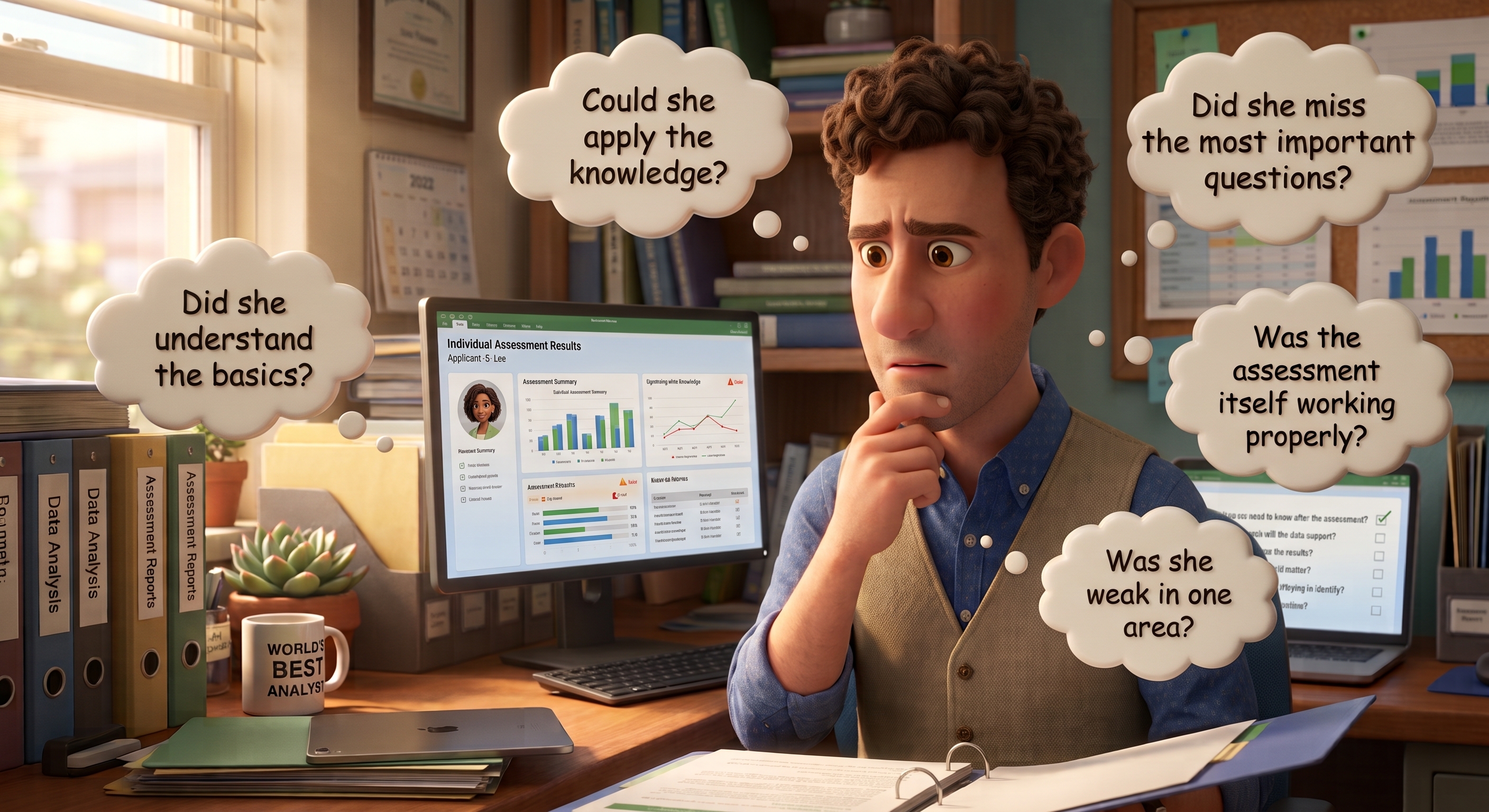
Did they understand the basics?
Could they apply the knowledge?
Did they miss the most important questions?
Were they weak in one area?
Was the assessment itself working properly?
Good assessment design starts with the end report in mind.
It is not just about collecting answers. It is about designing data that can support interpretation, improvement and action.
A total score can be useful.
But a score alone is rarely enough.
Imagine someone scores 78%.
What does that actually tell us?
It may not tell us:
A pass or fail result tells us whether someone crossed a threshold.
It does not always tell us what they are good at, where they struggled, what support they need, or whether the learning or assessment design is working.
Consider these two reports:
72% of participants passed.
That is useful, but limited.
Now compare it with:
Most participants understood stop sign rules, but 38% struggled to apply those rules in school zone hazard scenarios.
That second report is far more useful.
It tells us where the development need sits.
It also raises better questions:
Is the problem knowledge, understanding, application or judgement?
Is the issue with the learner, the learning content, the question or the standard?
Are certain groups struggling more than others?
Do we need to redesign the learning, rewrite the question, change the assessment structure or provide targeted support?
Good assessment data does not just describe what happened.
It helps decide what to do next.
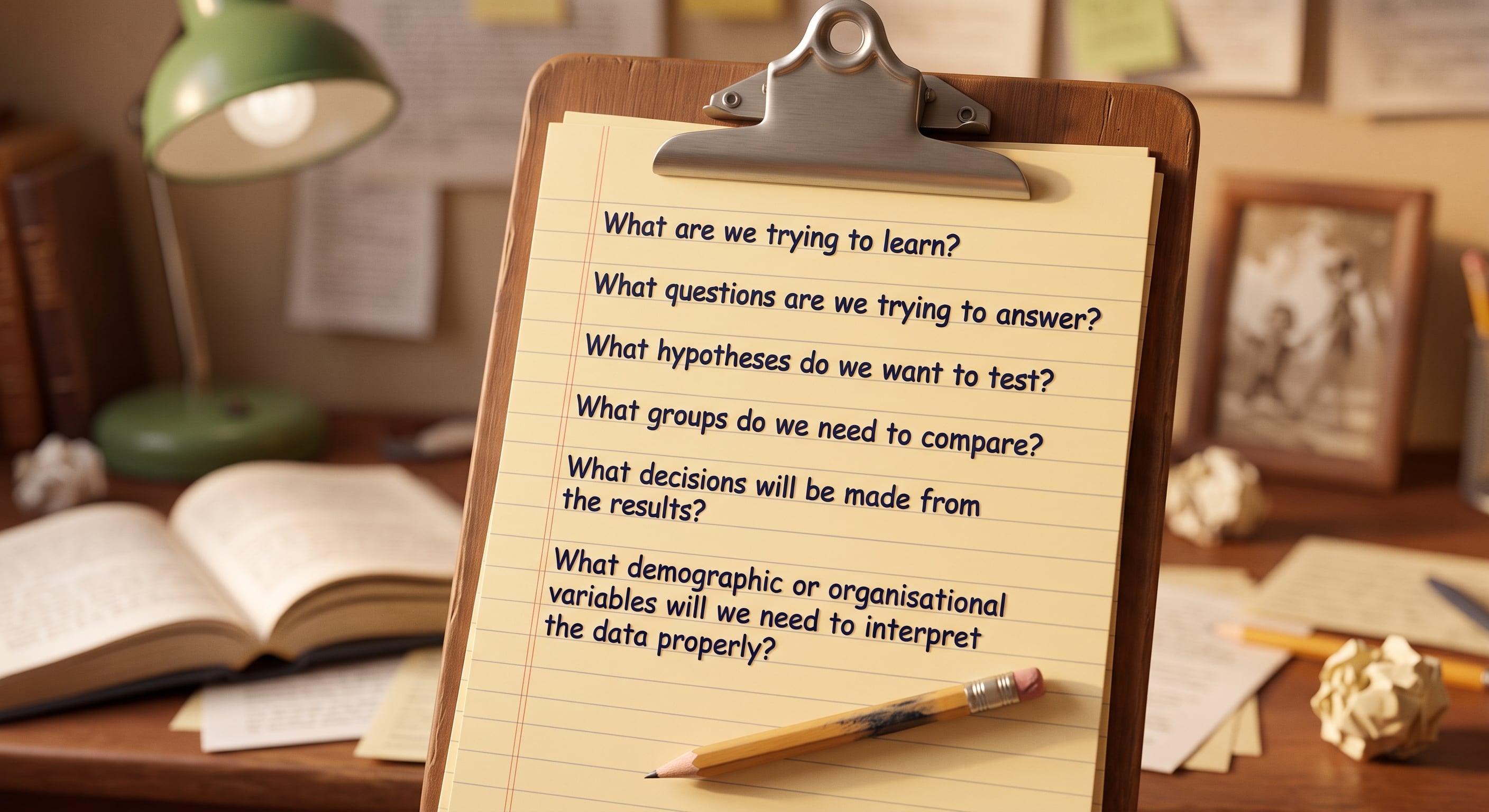
Before writing the assessment, ask:
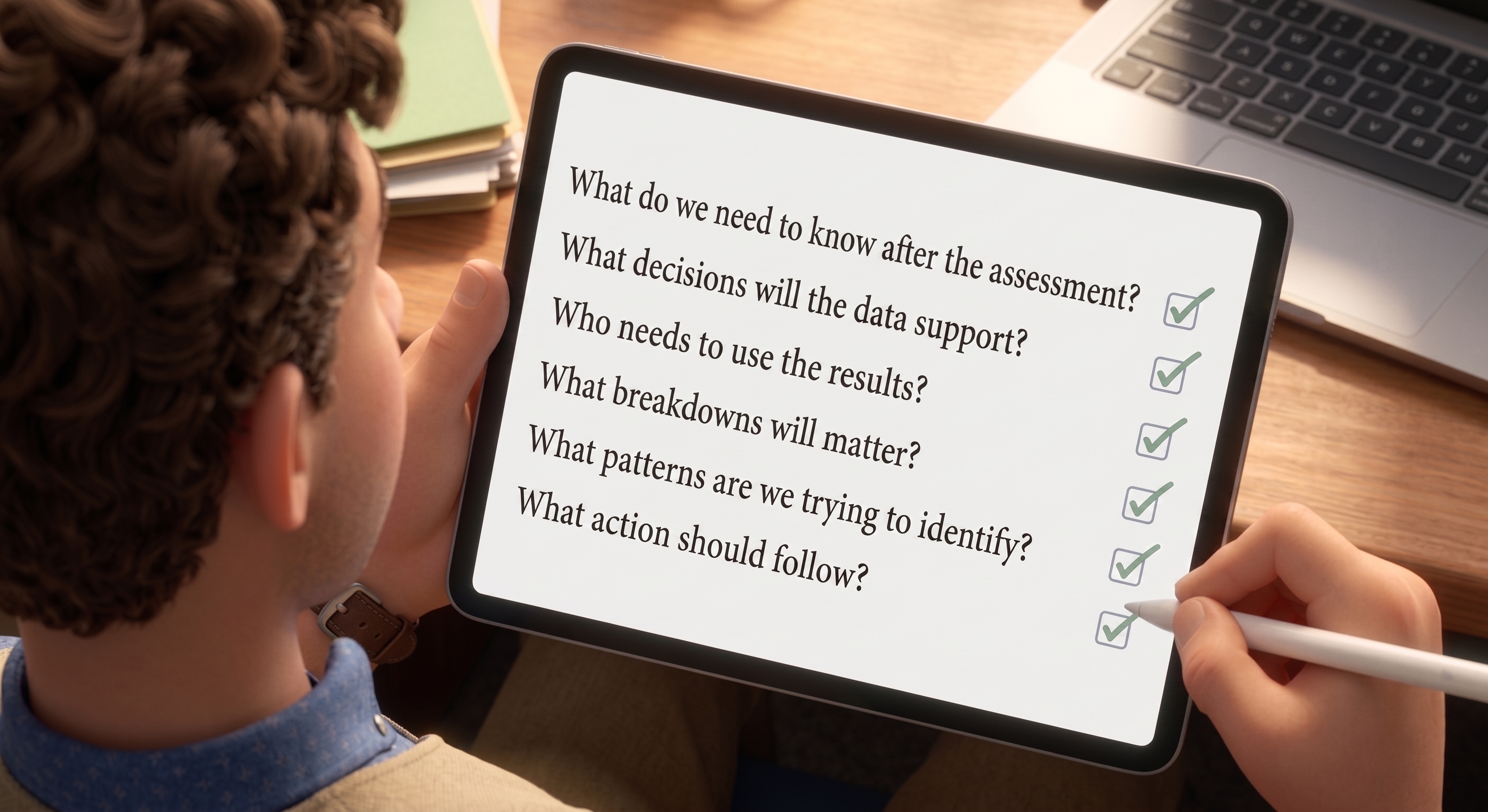
Then tag every question by:
This allows better reporting.
For example, results can show whether people are struggling with recall, understanding, application, judgement, a specific topic, a specific outcome or high-risk content.
Good assessment data does not only help the person taking the test.
It helps improve the test itself.
Once results come in, assessment designers can review:
This is how assessments improve over time.
The key message is simple:
Do not wait until the assessment is finished to think about the data.
By then, it may be too late.
Good data starts before the first question is written.
Read the next article in the series.
Rudy Crous is a corporate psychologist and the co-founder and CEO of Compono, a people and culture platform that brings hiring, engagement, learning and credentialling together in one place, adding behavioural science to the processes most HR tools only track.
Unlock the potential of assessment design by focusing on the data needed for meaningful insights. Learn how to create assessments that drive...

Effective assessment design is crucial for making informed decisions. Learn how robust assessments provide meaningful evidence beyond just scores.
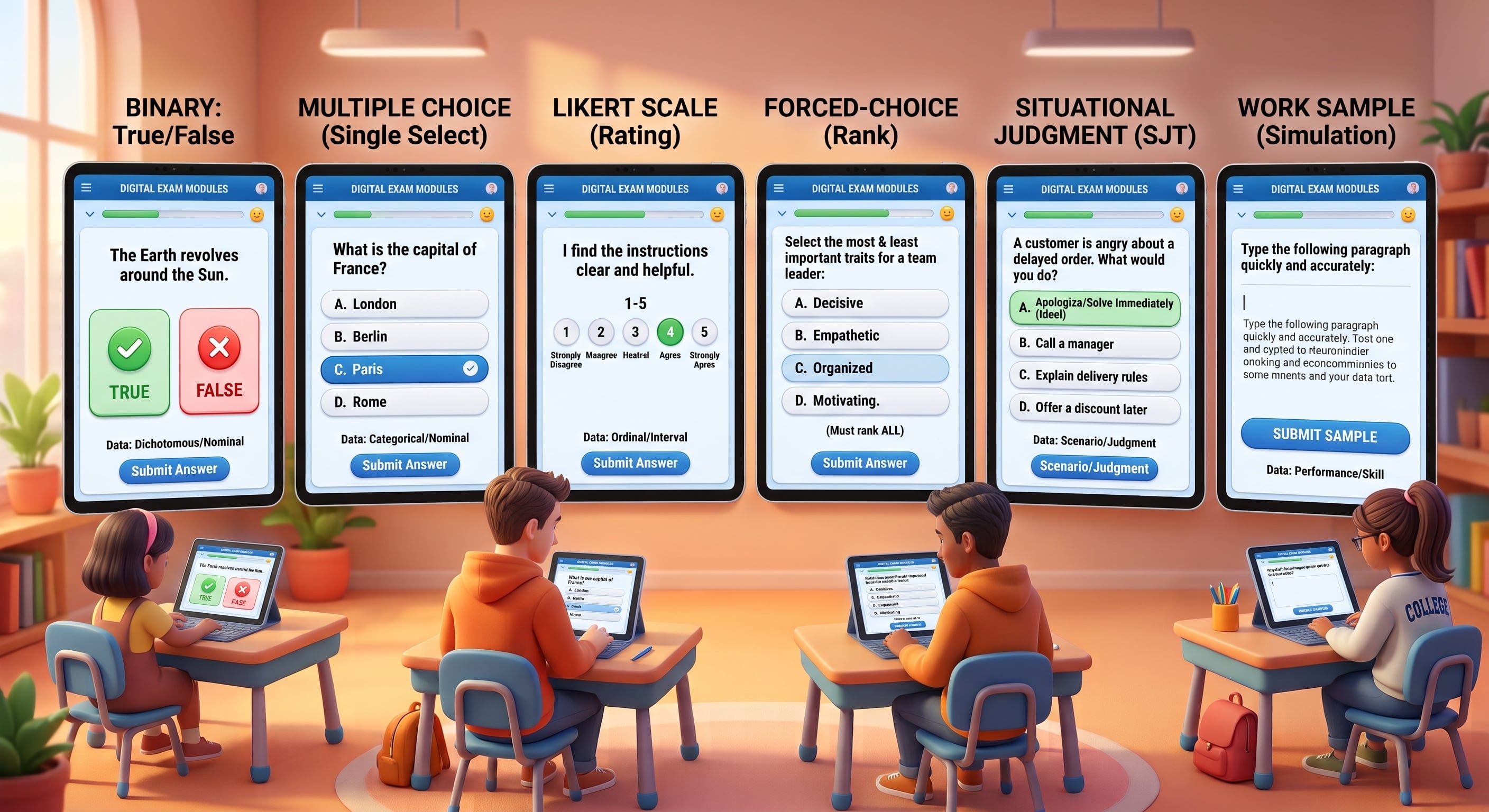
Discover how to choose the right question type for assessments to ensure valid decision-making and effective measurement of skills and attitudes.