

.webp)

 Mathan Allington


Does hiring software really work for modern teams
 Compono
Hiring software speeds up admin. Whether it improves your hires depends on what it measures. Here is how to tell the two apart before you buy.

Time to hire measures how fast you fill a seat. Quality of hire measures whether the person performs, fits the team and stays. Speed is a process metric; quality is a success metric. If you only track one, track quality, because a fast hire who leaves in six months costs more than a slower, considered one.
Last reviewed July 2026.
In traditional recruitment, the clock is the enemy. HR leaders have been conditioned to believe that the faster a candidate moves from application to offer, the more efficient the team. Time to hire became the primary yardstick for success. The trouble is that speed does not equal quality.

When you prioritise the clock over the person, you are playing musical chairs: more focused on getting a body into every desk than on whether that body belongs there. The Australian labour market in 2026 rewards stability. Candidates are looking for purpose, and businesses need people who stay. A fast hire who leaves after six months costs far more in lost productivity and re-recruitment fees than a considered process ever would.
Recruitment is a long-term investment, not a 100-metre sprint. If your applicant tracking system (ATS) only tells you how many days a role has been open, it is telling you half the story. The better standard is quality of hire: how well the person integrates, stays and performs in your team environment.
Time to hire tells you what happened in the past but says nothing about the future success of the employee. You can hire a software engineer in ten days, but if they clash with the lead developer on day eleven, that ten-day record is worthless.
The brilliant jerk problem makes this worse. These are candidates who look perfect on paper, with strong skills and impeccable qualifications, who then wreak havoc on workplace culture. An ATS that only parses resumes for keywords will help you hire these people faster. It will not help you hire better.
Around 74% of employers admit to hiring the wrong person at some point, and most of those mistakes happen because the pressure to close the role quickly overrode the need to assess cultural alignment. Shift the focus from the stopwatch to people-science and the real impact of hiring decisions on the bottom line becomes visible.

Quality of hire means looking beyond the resume to the whole person: how a candidate's work personality aligns with the existing team and whether their values match the company's mission.
It rests on three pillars: organisational fit, team fit and task motivation. A candidate might have the skills to do the job, but do they have the motivation to do it in your specific environment? This is where modern people analytics earn their keep.
Start by benchmarking your actual company culture with a platform like Compono Engage, so you understand the personality of your organisation before you post a job. When you know who you are, it is much easier to find people who belong. This is not slowing down for its own sake. It is moving with purpose and precision.
The cost of a bad hire in Australia is estimated at no less than 30% of the employee's first-year earnings. For a mid-market business that is a serious budget hit, and rushing the process to satisfy a time to hire target raises the odds of paying it.
Beyond the direct cost sits the cultural tax. A poor fit drains the team's energy, increases everyone else's workload, and can push your high performers out the door. You cannot build a stable, high-performing culture on a foundation of rushed, short-term hires.
A flipped recruitment model fixes this. Instead of sifting resumes for weeks and assessing fit at the very end, bring the fit data to the front. Compono Hire ranks candidates on their alignment with your culture and team needs before you have looked at a CV, so you stop spending time on the wrong candidates and invest it in the right ones.
Changing your recruiting metrics starts with educating leadership that a role staying open an extra week is a small price for a person who stays three years. Start measuring 90-day retention, manager satisfaction and team performance.
Your ATS should be an intelligence tool, not a digital filing cabinet. Explainable rankings that show why a candidate is a good match let your HR team act as strategic advisors rather than process administrators.
Candidate experience matters too. Candidates can tell when they are being rushed through a meat-grinder process. A thoughtful, data-backed approach shows you care about their success as much as your own, and that builds brand loyalty whether or not they get the job.
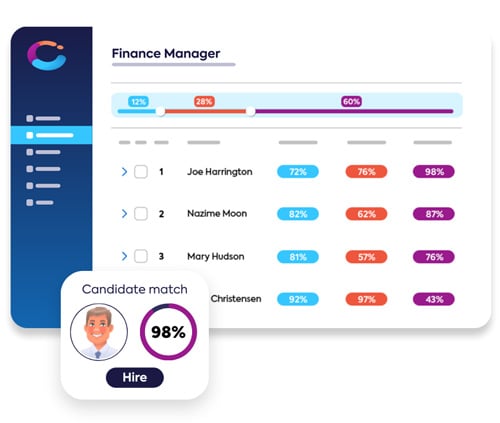
Compono Hire ranks every candidate on culture and team fit up front, so the fast choice and the right choice become the same one.
Talk to usTime to hire measures the days from application to offer. Quality of hire measures how well the new employee performs, fits the team and stays. The first tracks process efficiency; the second tracks hiring success.
Common measures include 90-day and 12-month retention, manager satisfaction scores, ramp-up time to full productivity, and team performance after the hire. Fit assessments taken before hiring give you a leading indicator to compare against.
Not necessarily. Assessing culture and team fit at the start of the funnel filters out poor matches early, so recruiters spend interview time only on candidates worth considering. Many teams find overall cycle time stays flat while outcomes improve.
In Australia, a bad hire is estimated to cost at least 30% of the employee's first-year earnings, before counting the cultural cost: drained team energy, extra workload for colleagues and the risk of losing high performers.

Hiring software speeds up admin. Whether it improves your hires depends on what it measures. Here is how to tell the two apart before you buy.

The quality of hire metric explained: the formula, the components to score, and the levers that lift it, including culture fit measured before you...

Quality of hire improves when you measure more than the CV. How hiring data and work personality cut bias in shortlisting and reduce early turnover.
 Mathan Allington