

.webp)

 Mathan Allington


1 min read
What does the predictive index measure in 2026?
 Mathan Allington
Behavioural assessments like the Predictive Index measure four core drives, dominance, extraversion, patience, and formality, alongside cognitive...

Predictive hiring software uses behavioural science, psychometric assessment and culture-fit data to forecast how a candidate will actually perform in a role, a team and an organisation before you hire them. Instead of ranking resumes, it ranks likelihood of success, which is the difference between managing a hiring process and making a defensible hiring decision.
Last reviewed July 2026.
If you have ever hired someone who looked perfect on paper but became a nightmare within six months, you know the gap this closes. You followed the process, ticked the boxes, and still got burnt, because your tools helped you move fast without helping you decide better. Traditional recruitment manages process risk: post the job, collect the resumes, schedule the interviews. It ignores the larger people insight risk, the risk of getting the human element wrong.
Most HR leaders are buried in admin while being held accountable for strategic outcomes. You are expected to build high-performing teams, yet you are handed tools that treat candidates like rows on a spreadsheet. These systems are incomplete because they solve for speed but ignore fit.
When a hire fails, it is rarely because the person lacked the technical skills on their CV. It is usually a misalignment in work behaviour, motivation or cultural values. Predictive hiring software changes the conversation by analysing human variability before the first interview, surfacing the behavioural patterns that predict success in a specific role.
At Compono, our view is that your people are not the problem. Your systems are. If gut-feel decisions keep producing turnover, the fix is intelligence, not more interviews.
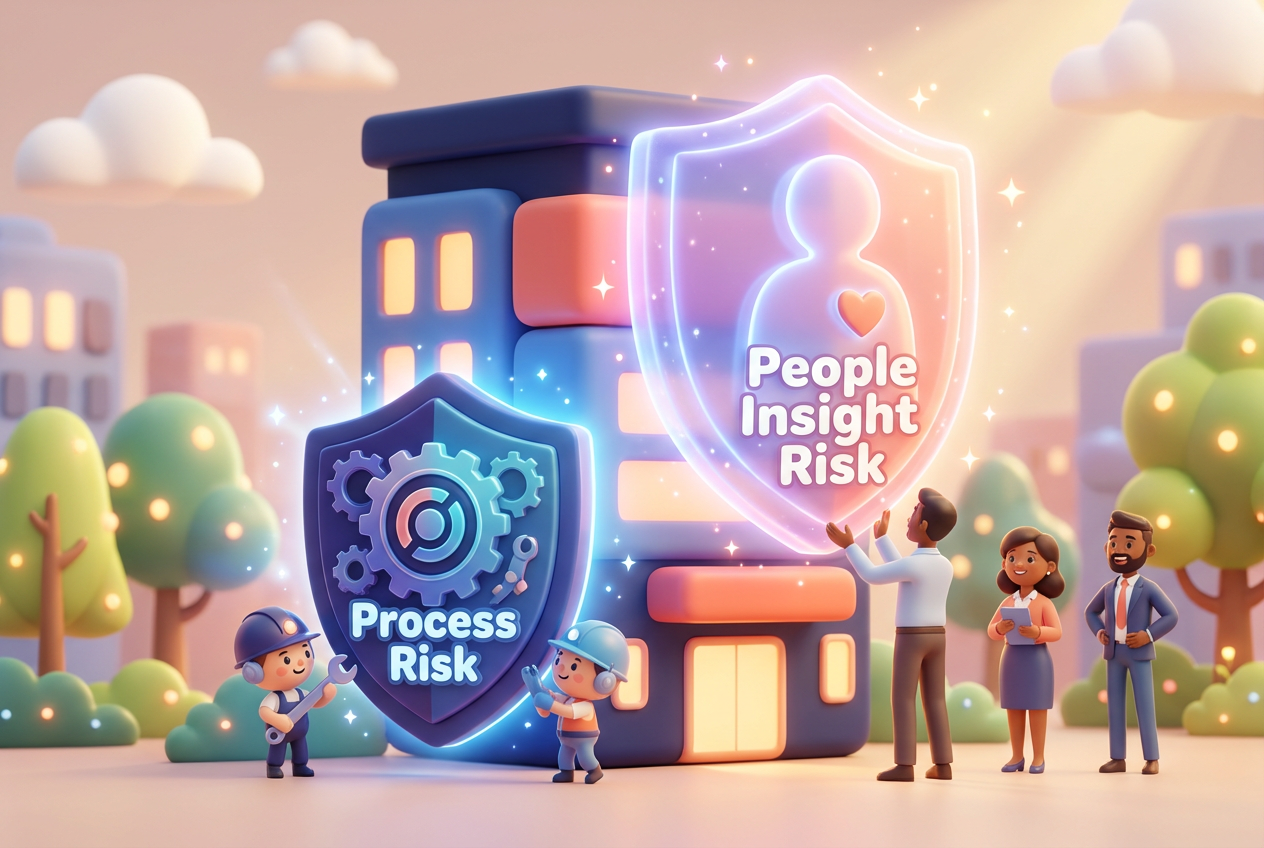
People insight risk is the uncertainty around how a person will perform and behave once they are in the job. Will they collaborate with the current team? Do they share the organisation's values? Are they naturally wired for the work the role demands? Predictive hiring software answers these questions with behavioural science rather than instinct.
Psychometric assessments and culture-fit mapping give you a defensible framework. Instead of a pile of resumes, you get a ranked shortlist of the candidates most likely to thrive. This does not eliminate human judgement. It informs it with data that standard interviews routinely miss.
Picture a mid-sized company hiring a department head. Three candidates have identical qualifications on paper. Predictive assessment can reveal that only one has the Campaigner work personality needed to sell a new vision, while the others are naturally suited to auditing or coordinating. Compono Hire applies this matching automatically against your company DNA and predicts culture fit.
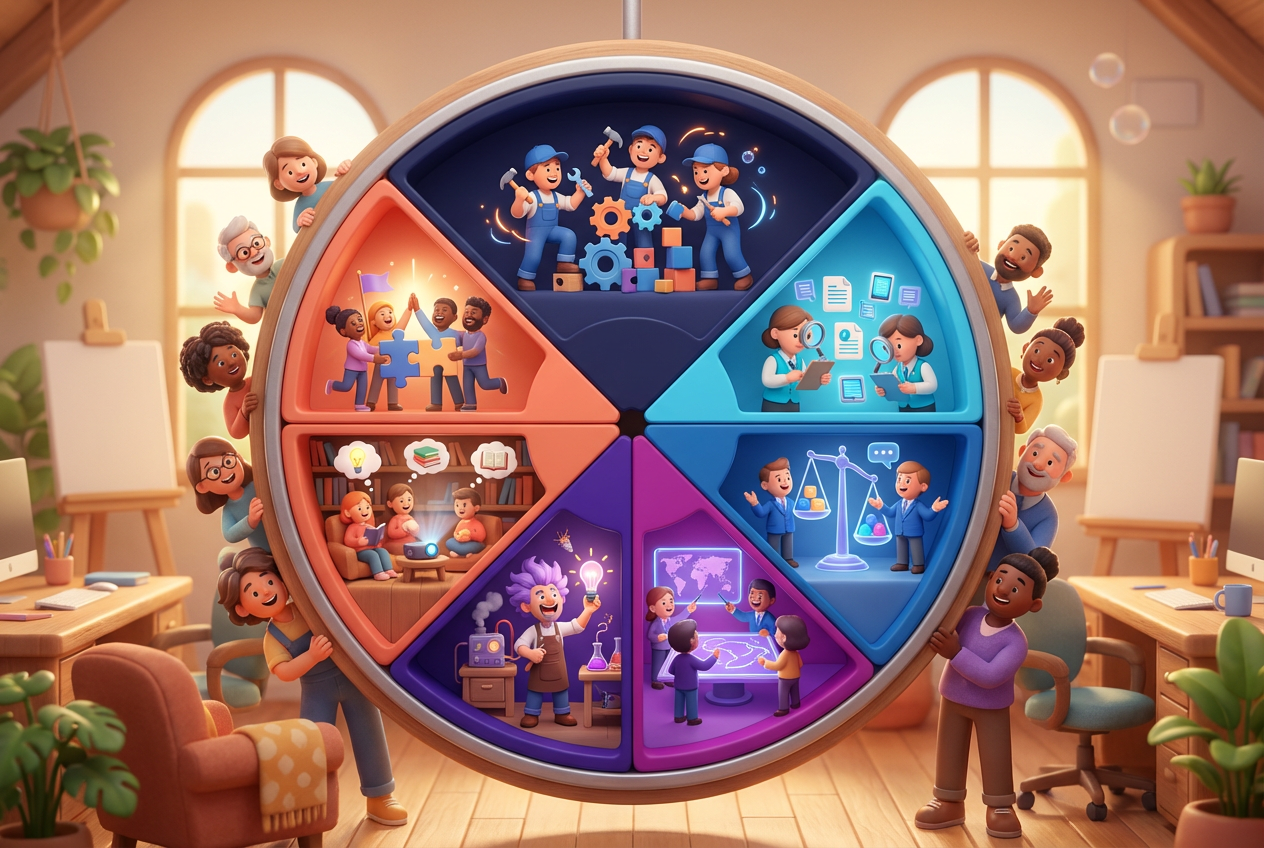
Many workplaces treat human variability as a problem to control with policy and standardisation. We take the opposite view: predicted, expected variability is your competitive advantage, provided you can see it and select for it.
High-performing teams are not made of identical people. They are made of complementary work personalities. Research identifies eight work activities every high-performing team must cover: Evaluating, Coordinating, Campaigning, Pioneering, Advising, Helping, Auditing and Doing. A hiring process that only screens skills can accidentally build a team of eight Doers with no one to pioneer new ideas or evaluate risks.
Predictive tools map your current team to expose those gaps. When you know you are missing an Evaluator, you can search for candidates who naturally lean toward logical analysis and objective critique. Recruitment shifts from filling a seat to architecting a team.
HR leaders often end up feeling like corporate police: enforcing rules, tracking compliance, managing the fallout of bad hires. Becoming a strategic advisor requires data you can stand behind in front of a board. When you can show a candidate was selected because their work motivations align with the role's success dimensions, you are no longer sharing an opinion. You are sharing evidence.
Mapping your organisational culture first, with a tool like Compono Engage, gives your predictive hiring a benchmark to measure against, so hiring strategy stays in sync with your broader people and culture goals. The underlying logic is set out in the Compono Culture, Engagement and Performance Model.
The global benchmark for hiring failure is confronting: nearly 70% of hires fail within the first 18 months. That is not a failure of talent. It is a failure of matching. The cost of each miss includes salary, lost productivity, damage to team morale, and the cost of restarting the search.
Assessing motivation and fit at the top of the funnel filters out the brilliant jerks who have the skills but erode your culture, and surfaces hidden gems whose resumes are imperfect but whose behavioural profiles are exactly what the team needs. That is how you build a workforce that is competent by design rather than by accident.
Compono Hire matches every candidate to your company DNA and predicts culture fit, so your next hire is a decision you can defend.
Talk to usPredictive hiring software is recruitment technology that uses data, behavioural science and psychometric assessments to predict how well a candidate will fit a role, a team and an organisation's culture. Unlike traditional systems that focus on resumes, it focuses on future performance potential.
It identifies people insight risk early. By matching a candidate's natural work preferences and motivations to the real requirements of the role and the culture of the company, it produces stronger person-organisation fit and higher long-term job satisfaction.
It substantially reduces it. Objective, science-backed assessments rank candidates on traits and motivations rather than names, backgrounds or schools, which levels the playing field and grounds decisions in performance potential.
No. It removes the manual burden of screening hundreds of resumes and gives recruiters deeper insight to ask better interview questions, making the human part of the process more strategic, not redundant.

1 min read
Behavioural assessments like the Predictive Index measure four core drives, dominance, extraversion, patience, and formality, alongside cognitive...

1 min read
Ever wondered why some teams just click and others seem to struggle, even if every individual is talented? The secret often lies in understanding...

1 min read
A cognitive ability test for employment measures general mental ability: how quickly a candidate learns new information, solves problems and makes...