

.webp)

 Mathan Allington


Best Testlify alternatives 2026: a buyer's guide for hiring
 Mathan Allington
Compare the best Testlify alternatives for 2026. Discover how top assessment platforms manage recruitment costs, evaluate skills, and measure culture...

Pre-employment assessment tools are digital platforms used by hiring teams to objectively evaluate a candidate's skills, work personality, and organisational fit before making a job offer.
In 2026, the hiring environment has fundamentally shifted. The traditional résumé is no longer a reliable indicator of future performance, largely because generative AI has made it effortless for any candidate to produce a flawless, keyword-improved application. As a result, talent acquisition teams are drowning in high volumes of applications that look perfect on paper but fail to translate into on-the-job success. To combat this, modern human resources departments are turning to sophisticated assessment platforms to uncover the real capabilities and behavioural tendencies of their applicants.
This comprehensive guide explores the state of candidate screening today, reviews the 15 core categories of assessment tools available, and provides a practical framework for implementing these systems in your organisation without damaging the candidate experience.
Key takeaways
- Pre-employment assessment tools provide objective data on a candidate's skills, work personality, and qualifications, reducing reliance on easily manipulated résumés.
- Nearly 88% of companies are now using some form of artificial intelligence in candidate screening, making objective assessments a baseline requirement for modern HR teams.
- Evaluating candidates on Organisation Fit, not just technical skills, is the most effective way to improve long-term retention and early performance.
- Implementing the right assessment software requires a careful balance between rigorous screening and a frictionless candidate experience.
- Modern pricing models for assessment tools in 2026 have largely shifted toward subscription-based platform access rather than pay-per-test models.
Before investing in any new human resources technology, it is critical to understand exactly where your current recruitment process is failing. Many organisations rush to purchase testing software without diagnosing the root cause of their hiring woes. If you do not know what you are trying to measure, even the most advanced platform will simply help you make the wrong decisions faster.
Today's hiring bottlenecks typically fall into one of three categories: volume, quality, or bias.
If your talent acquisition team is spending hours manually reviewing hundreds of applications for a single role, volume is your primary bottleneck. In this scenario, recruiters often suffer from decision fatigue, leading to inconsistent screening criteria. The right pre-employment assessment tools can act as an objective top-of-funnel filter, automatically surfacing candidates who possess the baseline competencies and behavioural traits required for the role, allowing recruiters to focus their human touch on the most promising individuals.
Perhaps you have no trouble moving candidates through the pipeline, but hiring managers are consistently disappointed by the people who show up for interviews, or worse, the people who show up on day one. When new hires fail to meet expectations, it is rarely due to a lack of technical skill. In fact, a closer look into why new hires fail reveals that the vast majority of early turnover is driven by a misalignment in work personality and organisational fit. If quality is your bottleneck, you need assessment tools that go beyond basic skills testing to evaluate how a candidate naturally prefers to work.
Human beings are naturally biased. We tend to hire people who look, think, and sound like us. If your organisation is struggling to build diverse, high-performing teams, your screening process may be overly reliant on unstructured interviews and pedigree-based résumé reviews. Objective assessments level the playing field by evaluating candidates purely on their verified capabilities and psychological fit for the role, stripping away the demographic noise that often clouds human judgement.
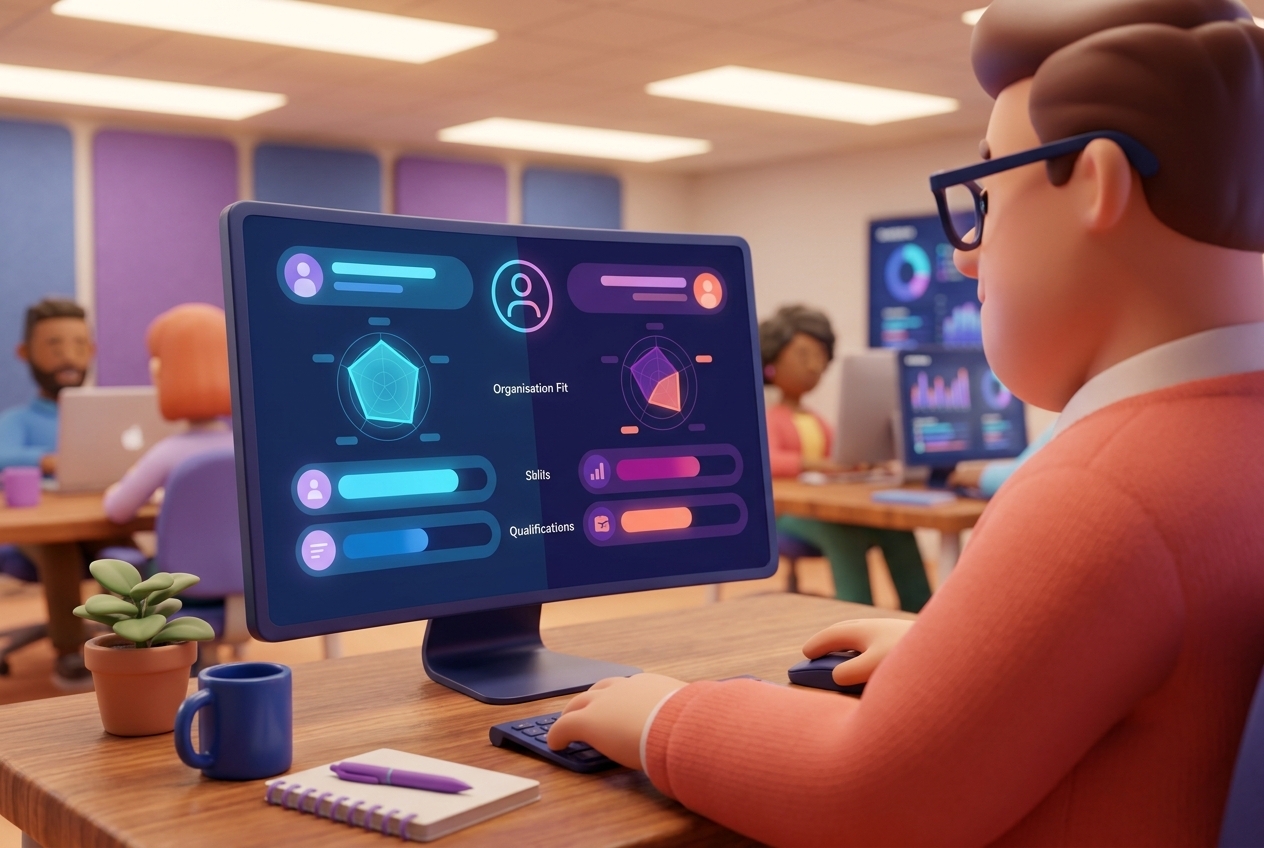
Rather than simply listing 15 brand names that may change or pivot, it is far more useful to understand the 15 categories of pre-employment assessment tools dominating the market in 2026. Understanding these categories will help you build a solid, multi-faceted screening process.
Cognitive ability tests measure a candidate's mental capacity, including problem-solving skills, logical reasoning, numerical comprehension, and verbal reasoning. These tools are highly predictive of a candidate's ability to learn new concepts quickly and adapt to complex environments. They are particularly useful for roles that require rapid decision-making and the synthesis of large amounts of information. However, they must be properly validated to ensure they do not introduce adverse impact against certain demographic groups.
Work personality assessments evaluate a candidate's natural behavioural preferences and tendencies in a professional setting. Unlike clinical psychological tests, these tools focus strictly on how an individual is likely to communicate, collaborate, and execute tasks. By understanding whether a candidate is naturally a 'Doer', an 'Evaluator', or a 'Pioneer', managers can predict how well they will integrate into the existing team dynamics and whether they will thrive in the company's specific culture.
Job knowledge tests are straightforward assessments designed to measure a candidate's mastery of specific, role-related information. For example, an accounting candidate might be tested on their knowledge of tax regulations, while an HR candidate might be tested on employment law. These tools are excellent for roles where immediate expertise is required and on-the-job training is minimal.
Situational Judgement Tests present candidates with hypothetical workplace scenarios and ask them to choose the most appropriate course of action from a multiple-choice list. SJTs are highly effective for assessing soft skills, conflict resolution, and customer service instincts. They provide hiring managers with a glimpse into a candidate's practical decision-making process without the pressure of a live interview.
For software engineering and IT roles, technical skill simulators have become indispensable. These platforms allow candidates to write, compile, and run code in a live environment, often automatically scoring their solutions based on efficiency, accuracy, and adherence to best practices. This category has evolved significantly, with modern tools now assessing how well a candidate interacts with AI co-pilots during the coding process.
In our increasingly globalised economy, verifying a candidate's ability to communicate effectively in a specific language is critical. Language proficiency tools use advanced voice recognition and natural language processing to assess a candidate's speaking, listening, reading, and writing abilities, providing an objective CEFR (Common European Framework of Reference) score.
Rather than asking a candidate if they know how to use a specific CRM or accounting software, simulation platforms drop the candidate into a sandbox environment and ask them to complete specific tasks. This provides undeniable proof of their software proficiency and significantly reduces the onboarding time required for new hires.
Emotional intelligence assessments measure a candidate's ability to perceive, understand, and manage their own emotions, as well as the emotions of others. High EQ is a critical predictor of success in leadership, sales, and customer-facing roles. These tools help identify candidates who can navigate workplace politics, handle stress, and build strong interpersonal relationships.
These platforms evaluate the alignment between a candidate's core values and the overarching values of the company. The best tools in this category do not look for a homogenous 'culture fit', which can breed groupthink, but rather a 'culture add', identifying candidates who share the company's foundational ethics but bring diverse perspectives and problem-solving approaches to the table.
Gamified assessments turn traditional psychometric testing into interactive, neuroscience-based games. As candidates navigate these short games, the software tracks thousands of data points, such as risk tolerance, impulsivity, and spatial awareness. These tools are highly engaging and are particularly popular for high-volume graduate and entry-level recruitment.
Integrity tests are designed to assess a candidate's propensity for honesty, reliability, and adherence to workplace rules. They are often used in retail, finance, and security sectors to mitigate the risk of theft, fraud, or counterproductive workplace behaviours. Modern iterations use sophisticated algorithms to detect socially desirable responding (faking).
As the market shifts away from traditional degrees, micro-credentialing platforms allow candidates to prove their capabilities through verified, bite-sized assessments. These tools focus heavily on practical application rather than theoretical knowledge, providing employers with a trusted ledger of a candidate's proven abilities.
These modern tools use conversational AI to simulate live interactions with customers or colleagues. A candidate might be asked to de-escalate a frustrated 'AI customer' or negotiate a contract with an 'AI vendor'. The platform then scores the candidate's communication style, empathy, and problem-solving skills in real time.
While not an assessment in the traditional sense, asynchronous video platforms allow candidates to record answers to pre-set questions on their own time. Hiring managers can then review these videos at their convenience. These tools are excellent for assessing communication skills and enthusiasm early in the process, though they must be used carefully to avoid introducing visual bias.
The most sophisticated option for modern businesses is an end-to-end workforce intelligence platform that combines several of the above categories into a single, unified system. For example, Compono Hire does not rely on a single metric. Instead, it evaluates candidates across three critical dimensions: Organisation Fit, Skills, and Qualifications. By looking at the whole person, including their work personality and practical capabilities, hiring managers gain a comprehensive, predictive view of a candidate's potential for long-term success.
The conversation around pre-employment assessment tools has shifted dramatically over the past two years. HR leaders are no longer debating whether to use assessments; they are focused on how to integrate them intelligently.
The disruption caused by artificial intelligence is a primary driver of this shift. According to recent legal analysis, nearly 88% of companies are already using some form of artificial intelligence (AI) in candidate screening, including pre-employment assessment tools (Employment Law Worldview, 2025). This widespread adoption means that candidates expect a tech-enabled hiring process, and companies that still rely solely on manual résumé screening are falling behind in the war for talent.
the criteria for a 'good hire' is evolving. Skills-based hiring is overtaking pedigree, with practical assessments and verified capabilities becoming the main criteria for candidate selection (Skima AI, Talent Acquisition Trends 2026). Employers are realising that a prestigious university degree does not guarantee on-the-job competency. By 2027, employers will standardise skills badges and micro-credentials to speed up matching and reduce reliance on degrees, increasing the use of verified pre-employment assessments (Skima AI, Talent Acquisition Trends 2026).
This shift is also changing how recruitment success is measured. Recruiting metrics are shifting from time-to-fill to quality-of-hire, emphasising early performance and retention, key outcomes measured by solid pre-employment assessments (Skima AI, Talent Acquisition Trends 2026). It is no longer enough to put a body in a seat quickly; HR leaders are being held accountable for the long-term impact and retention of the people they hire.
Finally, the sheer volume of entry-level hiring is changing. 66% of enterprises are reducing entry-level hiring due to AI, making pre-employment assessments critical for identifying high-potential candidates in a tighter pipeline (High5Test, AI and Automation Job Loss Statistics, 2024–2026). When you are hiring fewer people, the cost of a bad hire magnifies, making objective screening tools an absolute necessity.
With so many options on the market, evaluating pre-employment assessment tools can feel overwhelming. To cut through the marketing jargon, HR leaders should ask vendors the following critical questions during the procurement process.
A pre-employment test is only as good as its scientific foundation. Ask the vendor for their technical manual and validation studies. You need to know that the tool is reliable (it produces consistent results) and valid (it actually measures what it claims to measure). For instance, if you want to understand how Compono Hire assesses candidates, you will find that it is built on decades of peer-reviewed behavioural science, ensuring that the insights generated are both accurate and predictive of workplace behaviour.
Assessment tools should level the playing field, not reinforce existing inequalities. Ask the vendor how they test their algorithms for adverse impact against protected groups. A reputable vendor will continuously audit their assessments to ensure they do not disproportionately screen out candidates based on age, gender, or ethnicity.
In a competitive talent market, a clunky, overly long assessment will cause your best candidates to abandon the application process. Ask to take the assessment yourself. Is it mobile-friendly? Is the interface intuitive? Does it take 15 minutes or two hours? The ideal assessment provides deep insights without feeling like an interrogation.
An assessment tool that sits in a silo creates administrative headaches for your recruitment team. Ensure the platform integrates smoothly with your existing Applicant Tracking System (ATS) or Human Resources Information System (HRIS). The data should flow automatically, allowing recruiters to see assessment scores directly within the candidate profile.
Selecting the right pre-employment assessment tool is only half the battle. Implementing it effectively requires careful planning and change management. Follow this framework to ensure a smooth rollout.
Before testing candidates, you must define what success looks like for the role. Conduct a thorough job analysis to identify the specific skills, cognitive abilities, and behavioural traits required. If possible, test your current top performers to create a benchmark profile. This gives the assessment platform a clear target to match candidates against.
Hiring managers are often sceptical of new technology that changes their traditional interview process. Educate your stakeholders on the science behind the assessments and explain how the tools will save them time by filtering out unsuitable candidates early. Emphasise that assessments are designed to augment human decision-making, not replace it.
Never roll out a new assessment tool across the entire enterprise at once. Select one or two high-volume roles for a pilot program. Run the assessments alongside your traditional process for a few months to gather data, measure candidate completion rates, and gather feedback from the hiring managers involved.
Transparency is key to maintaining a positive employer brand. Clearly communicate to candidates why they are being asked to complete an assessment, how long it will take, and how the data will be used. Setting expectations upfront significantly reduces candidate anxiety and drop-off rates.
Implementation is not a set-and-forget process. You must continuously measure the performance and retention of the candidates you hire to ensure the assessments are accurately predicting success. By tracking post-hire data, you can continually refine and calibrate your assessment benchmarks for even greater accuracy over time.
Pricing models for HR technology have matured significantly. In the past, many assessment vendors charged on a 'per-candidate' or 'per-test' basis. While this seemed logical, it actively discouraged companies from testing candidates at the top of the funnel, forcing them to reserve assessments only for the final few interviewees, completely defeating the purpose of using assessments as an early screening tool.
In 2026, the industry standard has shifted heavily toward subscription-based models. Vendors typically charge an annual platform fee based on the size of your organisation (total employee headcount) or your annual hiring volume. This model allows recruitment teams to assess every single applicant without worrying about incremental costs, ensuring a fair and objective screening process for the entire talent pool.
When evaluating pricing, be sure to ask about hidden costs. Does the vendor charge extra for ATS integrations? Are there implementation or setup fees? Is customer support included, or is it a premium add-on? Understanding the total cost of ownership upfront will prevent nasty surprises when it comes time to renew your contract.
Key insights
- The volume of AI-generated résumés has rendered traditional screening methods obsolete, forcing HR teams to adopt objective assessment tools.
- A comprehensive screening strategy should evaluate candidates across multiple dimensions, including cognitive ability, practical skills, and work personality.
- Scientific validation and bias mitigation are non-negotiable features when selecting a pre-employment assessment vendor in 2026.
- Successful implementation requires benchmarking top performers, aligning stakeholders, and maintaining transparent communication with candidates.
- Modern pricing models favour unlimited testing via annual subscriptions, allowing organisations to assess candidates at the top of the hiring funnel.
Pre-employment assessment tools are no longer a luxury for enterprise organisations; they are a fundamental requirement for any team looking to build a high-performing, resilient workforce in 2026. By moving beyond the résumé and evaluating the whole person, you can dramatically improve your quality-of-hire and reduce costly early turnover.
Related reading
Pre-employment assessment tools are digital platforms that evaluate a job applicant's skills, cognitive abilities, and behavioural traits. They provide hiring managers with objective data to help predict how well a candidate will perform in a specific role, reducing reliance on subjective interviews and easily manipulated résumés.
No. Assessment tools are designed to augment human decision-making, not replace it. They act as an objective top-of-funnel filter, helping recruiters quickly identify the most promising candidates so they can spend their time conducting meaningful, high-quality interviews rather than manually screening paperwork.
To maintain a positive candidate experience, most modern pre-employment assessments take between 10 and 20 minutes to complete. If an assessment takes longer than 30 minutes, you risk a high drop-off rate, as top candidates may abandon the application in favour of companies with a more simplified process.
While candidates can attempt to answer questions in a way they think the employer wants (known as socially desirable responding), high-quality assessment tools use sophisticated algorithms and forced-choice question formats to detect and mitigate faking. work personality assessments are generally designed to have no 'right' or 'wrong' answers, making them harder to game.
Yes, provided they are scientifically validated, relevant to the job, and do not introduce adverse impact against protected demographic groups. It is crucial to partner with a reputable vendor that continuously audits their algorithms for bias and complies with local employment and data privacy laws.
Compare the best Testlify alternatives for 2026. Discover how top assessment platforms manage recruitment costs, evaluate skills, and measure culture...
Explore the top Maki People alternatives in 2026. Compare pricing, ATS integrations, and behavioural assessment capabilities for mid-market HR teams.
How pre-employment behavioural assessment tools help you evaluate candidates accurately, reduce hiring bias, and improve team retention.