


 Mathan Allington
Best ATS Australia 2026: The Complete Buyer's Guide
 Mathan Allington
Discover how to choose the best ATS in Australia for 2026. Learn about essential features, behavioural science in hiring, and how to evaluate...

When HR teams look for Maki People alternatives, they are usually searching for platforms with deeper applicant tracking system integrations, more transparent pricing, or tools that measure behavioural fit alongside technical skills.
Last reviewed October 2026
Key takeaways
- Alternative assessment platforms generally fall into three categories: enterprise video interviewing, chat-based screening, and complete workforce intelligence platforms.
- Evaluating a new testing tool requires looking beyond the question library to focus on candidate completion rates, mobile responsiveness, and workflow automation.
- Skills testing helps manage process and compliance risk, but it misses the behavioural drivers that predict how someone actually performs in a team.
- The strongest alternatives blend process management with deep people insight to lower turnover and speed up time to hire.
Maki People built a strong reputation in the HR technology space for skills testing and candidate screening. According to Europe Alternative, Maki People reports 92.4% positive candidate feedback. Their customers also reportedly experienced 45% faster hiring and 50% lower turnover. The platform offers a large library of tests and provides a solid foundation for assessing technical capabilities.
However, for mid-market HR leaders and busy recruitment teams, a standalone skills assessment tool often creates new problems. The most common issue is integration depth. When your assessment platform does not talk perfectly to your core HR stack, recruiters end up manually moving candidate data between systems. This breaks the workflow and slows down the hiring process.
There is also the cost factor. Transparent pricing is rare in HR tech. Total cost of ownership creeps up when platforms charge per assessment, per candidate, or per user seat. Growing companies need predictable costs, not pricing models that penalise them for attracting a high volume of applicants.
Finally, there is the fundamental limit of skills testing. Knowing a candidate can code in Python, use Excel, or write a marketing brief is necessary. It is simply not sufficient. If your technology only manages the process risk of verifying skills, you miss the people insight risk. You need to know if their work personality fits the team they are joining. Skills get candidates the interview, but behaviour dictates whether they stay and perform.
When you are choosing hiring assessment tools to replace an existing system, comparing feature lists is rarely enough. You need to look at how the software impacts the human beings using it. Here are the main criteria to consider during your evaluation.
Your recruiters spend their days in an applicant tracking system. If a new assessment tool forces them to open another tab, copy a link, email it to a candidate, and then manually check for the result, adoption will fail. The best alternatives integrate directly into the recruitment pipeline. Triggers should automatically send the assessment when a candidate reaches a specific stage, and the results should appear right on the candidate's profile.
A comprehensive test library means nothing if candidates abandon the application halfway through. Long, complex assessments frustrate job seekers. You need to evaluate the mobile responsiveness of the platform and the average completion time. An assessment should take minutes, not hours. High candidate Net Promoter Scores (NPS) correlate strongly with platforms that respect the applicant's time.
Regulators are paying closer attention to how AI makes hiring decisions. Laws like NYC Local Law 144 and GDPR mandates in Europe require strict auditing for algorithmic bias. Any platform you choose must provide clear documentation on how their models are trained, tested, and audited for fairness. If a vendor cannot explain how they prevent bias against minority candidates, they introduce severe compliance risk to your organisation.
Generative AI makes it incredibly easy for candidates to cheat on standard knowledge tests. Platforms must counter this with smart design. Features like time limits, randomised question banks, webcam proctoring, and tab-tracking help ensure the person taking the test is the person you intend to hire. However, proctoring must be balanced against candidate privacy concerns.
The market for candidate assessment software is broad. Different platforms serve very different needs, from high-volume retail hiring to complex enterprise engineering roles. Here is how the major alternatives stack up this year.
Sapia.ai focuses on high-volume recruitment using automated chat interviews. HeroHunt.ai notes that Sapia.ai offers text-based, structured conversational interviews positioned as a bias-free alternative to Maki’s voice-based screening. The platform removes resumes from the early stages of hiring, relying entirely on how candidates answer text prompts.
This approach works exceptionally well for retail, hospitality, and customer service roles where communication style matters more than a formatted CV. They report a starting price of around $1 per interview, with a minimum of 100 interviews per month (HeroHunt.ai). The downside is that text-based chat may not provide enough depth for senior technical or executive roles.
HireVue is the legacy giant in the assessment space, built primarily for massive global enterprises. For massive scale, HeroHunt.ai points out that HireVue combines AI-assisted video interviewing, game-based assessments, and coding assessments for enterprise hiring. They handle incredible volumes of data and offer deep integrations with enterprise systems like Workday and SuccessFactors.
The trade-off is complexity and cost. Implementing HireVue requires a significant investment of time and capital. For mid-market organisations with 100 to 1,000 employees, the platform often feels overly engineered and rigid. Some candidates also express discomfort with AI analysing their facial expressions or tone of voice during video interviews.
Ribbon targets smaller teams looking for straightforward skills testing without the enterprise price tag. If you want clear costs, HeroHunt.ai lists Ribbon pricing at $499 per month, making it one of the few Maki alternatives with transparent entry pricing.
Ribbon provides a clean interface and a reliable library of technical and cognitive tests. It is a solid choice for startups and small agencies. However, as your organisation scales, you may find its integration set of tools and behavioural science capabilities lacking compared to more mature workforce intelligence platforms.
Most HR tech only manages process risk. Compono manages process risk and people insight risk at the same time. Compono Hire is an applicant tracking system that matches candidates to culture, not just keywords. Instead of buying a separate ATS and a separate testing platform, you get a unified system that handles job posting, pipelines, and deep psychometric evaluation.
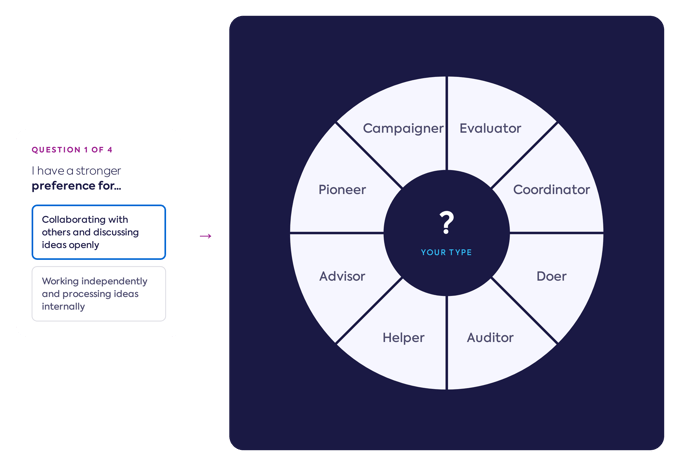
Our approach is built on Work Personality, a framework that identifies the behavioural drivers of every candidate. By understanding whether someone is a Doer, a Pioneer, or an Evaluator, you can predict how they will fit into your existing team changing. This removes the guesswork from cultural fit and protects your business from the high cost of a bad hire.
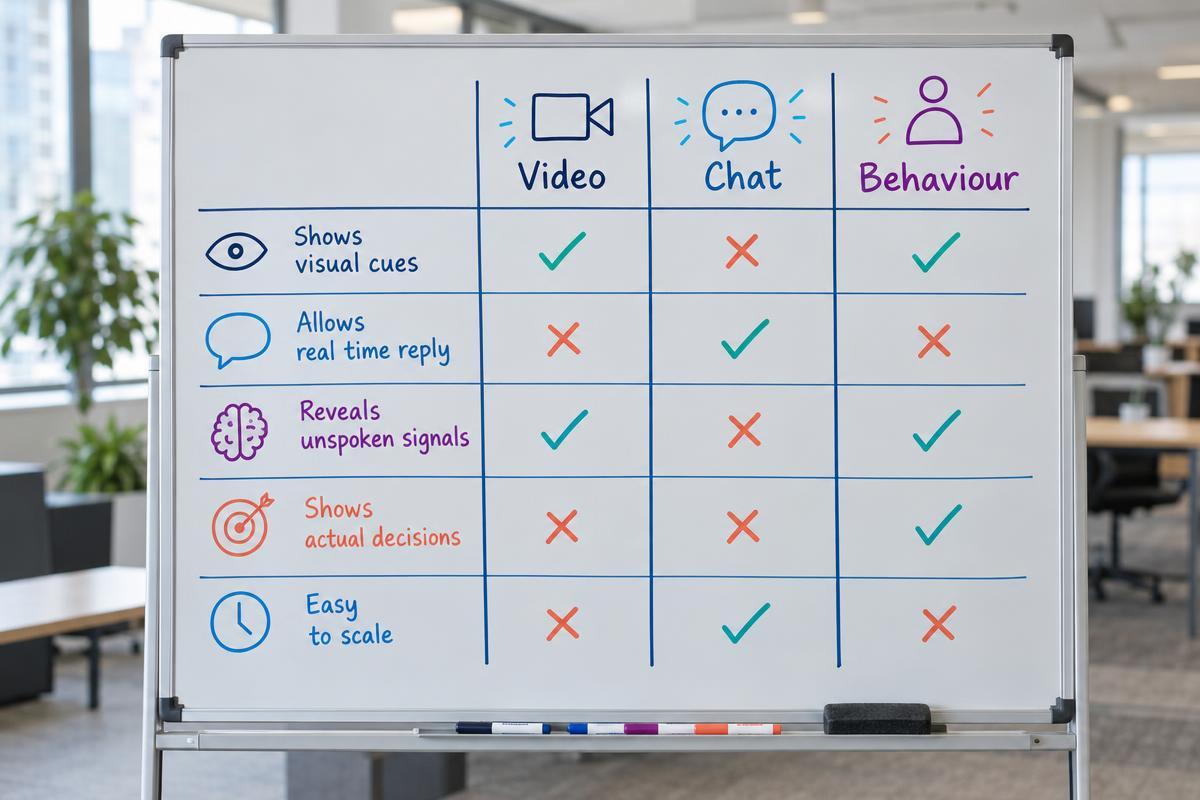
Comparing platforms side by side helps clarify which features are standard and which are genuine differentiators. Below is a breakdown of how the major categories of assessment tools handle core recruitment needs.
| Feature category | Video and enterprise tools (e.g. HireVue) | Chat-based screening (e.g. Sapia.ai) | Workforce intelligence (e.g. Compono) |
|---|---|---|---|
| Assessment type | Video interviews, games, coding | Text-based conversations | Work personality, culture fit, skills |
| Best for | Massive global enterprises | High-volume frontline hiring | Mid-market corporate and franchise |
| ATS integrations | Complex, custom enterprise APIs | Standard marketplace connectors | Built-in ATS or smooth connection |
| Candidate experience | Intense, time-consuming | Fast, mobile-native | Engaging, insight-driven |
| Pricing transparency | Opaque, custom quotes | Per interview or candidate | Transparent platform models |
The best Maki People alternative depends entirely on who you are hiring. A 45-minute coding assessment makes sense for a senior software engineer. Handing that same 45-minute test to a retail store manager will result in them abandoning the application completely. You must match the tool to the talent pool.
When you are hiring hundreds of customer-facing staff, speed is your primary metric. Candidates apply to multiple jobs simultaneously, and the first company to make an offer usually wins. For these roles, you need platforms that operate entirely via mobile phones. Chat-based screening tools excel here because they feel natural to young applicants and do not require quiet rooms or webcams. Your assessment should focus on reliability, basic customer service instincts, and availability.
Hiring developers, data scientists, and systems architects requires rigorous skills verification. You cannot gauge coding ability through a chat interface. In this scenario, you need platforms with extensive, up-to-date technical libraries that support multiple programming languages. Remote proctoring and plagiarism detection are vital here, as the incentive to use AI to generate code snippets is high. Platforms focused exclusively on technical screening are usually the best fit for these specific departments.
When hiring marketers, operations managers, HR professionals, or sales leaders, the calculation changes. These candidates usually have established track records and well-crafted resumes. The risk is rarely a lack of hard skills. The real risk is a lack of alignment. Will this sales director clash with the marketing team? Will this operations manager thrive in a fast-paced environment, or do they need rigid structure?
For mid-market corporate hiring, you need personality assessment in hiring that goes beyond the surface. You need tools that map values and working styles. A platform that combines an ATS with behavioural science gives you the complete picture of the candidate, reducing the chance of a costly cultural mismatch.
When evaluating pricing, the sticker price is only the beginning. Total cost of ownership often includes implementation fees, integration maintenance, and hidden penalties for volume. If a vendor charges per candidate assessed, you are effectively penalised for running a successful job advertising campaign.
You also need to calculate the cost of candidate drop-offs. If a clunky assessment platform causes 30% of your applicants to abandon the process, you have to spend more money on job boards and LinkedIn ads to fill the top of the funnel. A tool that boasts a low monthly fee but delivers a terrible candidate experience is actually incredibly expensive.
Finally, consider the cost of solving common hiring headaches caused by bad data. If an assessment tool fails to accurately predict performance, you pay the price in employee turnover. Replacing a mid-level manager costs thousands of dollars in lost productivity, recruitment fees, and onboarding time. Investing in a platform that provides deep people insight pays for itself the moment it prevents a single bad hire.
Once you hire a great candidate, the assessment journey should not end. Many organisations make the mistake of testing people during recruitment and then never looking at their data again. The intelligence you gather during the hiring phase should inform how you manage, train, and develop that employee.
If an assessment flags that a new hire struggles with public speaking but excels at detailed analysis, their manager should have that data on day one. Modern HR platforms connect the recruitment phase directly to learning and development. By using tools like Compono Assure, you can track competencies, manage compliance licensing, and build a continuous record of an employee's capability over time. This turns assessment from a one-off hurdle into a strategic advantage.
Your HR technology should not treat humans like data points on a spreadsheet. It should help you understand what drives them, how they learn, and where they belong. When you align your tools with the reality of human behaviour, you build stronger, more resilient teams.
Our platform combines your tracking process with deep behavioural science, so you never have to guess who will fit the team and who will disrupt it. We give you the tools to manage both the process risk and the people insight risk in one place.
Maki People primarily focuses on pre-employment skills testing and cognitive assessments. Compono provides a complete workforce intelligence platform that includes an applicant tracking system (ATS) built on behavioural science, allowing you to assess work personality and culture fit alongside standard skills.
No. Skills tests verify that a candidate can perform a specific task, which handles your process risk. However, they do not measure motivation, communication style, or cultural alignment. Behavioural assessments are required to predict how someone will actually perform within the changing of your specific team.
High drop-off rates mean you lose qualified candidates before you can interview them. This forces you to spend more on job advertising to refill the talent pool. Platforms with long, frustrating assessments directly increase your cost per hire and time to hire.
Most modern assessment platforms offer API integrations with major ATS providers. However, the depth of these integrations varies wildly. Poor integrations require manual data entry and tab-switching. It is often more efficient to use a unified platform that handles both the pipeline and the assessment natively.
Bias auditing involves testing an algorithm to ensure it does not unfairly disadvantage candidates based on protected characteristics like race, gender, or age. Vendors must provide transparency on their training data and submit their tools to independent third-party audits to comply with regional employment laws.

Discover how to choose the best ATS in Australia for 2026. Learn about essential features, behavioural science in hiring, and how to evaluate...

Discover which ATS integrates psychometric testing in 2026. Compare REST APIs, native connectors, and all-in-one platforms to optimise your hiring...

How to compare pre-employment assessment tools in 2026, and how to screen candidates for skills, behaviour and fit with your organisation.