


 Mathan Allington
Best Maki People alternatives for 2026: a buyer's guide
 Mathan Allington
Explore the top Maki People alternatives in 2026. Compare pricing, ATS integrations, and behavioural assessment capabilities for mid-market HR teams.
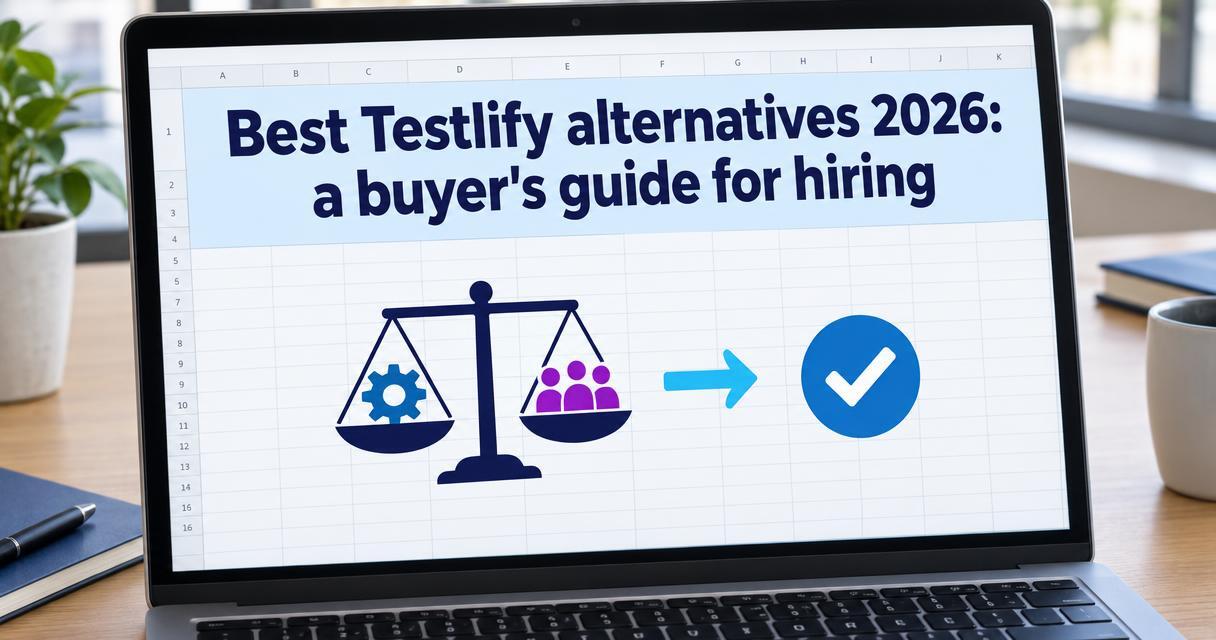
The best Testlify alternatives for 2026 include Compono Hire, TestGorilla, iMocha, and Vervoe, giving hiring teams better ways to assess skills, measure culture fit, and manage recruitment costs.
Last reviewed October 2026
Quick answer
- Price: Models range from $16.68 per credit to flat annual platform fees.
- Best for: Mid-market HR teams needing to consolidate skills testing, culture assessment, and applicant tracking.
- Verdict: Choose Compono Hire to measure both skills and culture fit, or iMocha for high-volume technical assessments across multiple languages.
Finding the right pre-employment testing software requires looking past basic feature lists. You need a tool that evaluates candidates accurately without alienating your talent pool.
| Platform | Best for | Key strength |
|---|---|---|
| Compono Hire | Mid-market teams wanting skills and culture fit | Integrated applicant tracking and psychometrics |
| TestGorilla | Broad skill testing across disciplines | Large test library |
| iMocha | Enterprise technical recruitment | AI interviewing capabilities |
| Vervoe | Job simulations | Practical task assessment |
| Toggl Hire | Fast initial screening | Quick time to complete |
| Xobin | High-volume campus hiring | Basic screening tools |
| Canditech | Interactive assessments | Video and practical responses |
Compono makes Compono Hire. We've included it and kept every entry's strengths and limits honest.
Testlify is a popular pre-employment testing platform. According to a 2026 industry review by The Cognitive, Testlify lists more than 3,500 skills tests, making it one of the broadest libraries among pre-employment assessment platforms.
However, relying on a vast library of skills tests leaves hiring teams exposed to people insight risk. Measuring hard skills is necessary but incomplete. When you hire based on a coding or typing test alone, you ignore the behavioural traits that dictate how someone collaborates with their team.
Pricing is another common trigger for teams seeking a change. Pricing models vary heavily across the market. For instance, Testlify’s Starter plan is listed at $1,668 annually for 100 credits, or $16.68 per credit. If you need additional capacity, Testlify’s Starter plan reportedly includes a seven-day free trial, while additional credits cost $21 each. For mid-market organisations hiring at scale, a per-candidate credit model quickly limits how many applicants you can afford to screen.
When researching the market, Testlify alternatives commonly compared in 2026 include TestGorilla, Vervoe, Toggl Hire, and Xobin. We evaluated these platforms against three practical criteria.
First, we looked at evaluation depth. Platforms scoring highly must assess more than just technical ability. They need to evaluate culture fit, communication style, and problem-solving approaches.
Second, we assessed the pricing structure and total cost of ownership. Tools that penalise you for testing more candidates score lower than platforms offering flat or predictable pricing.
Third, we reviewed candidate experience and drop-off rates. Long, generic assessments cause top talent to abandon their applications. We favoured platforms that deliver engaging, relevant assessments in reasonable timeframes.
Compono Hire is an applicant tracking system that matches candidates to your culture. Most recruitment platforms manage process risk through automated workflows and compliance checks. Compono Hire handles process risk while also managing people insight risk.
It evaluates candidates across organisation fit, skills, and qualifications. You see exactly how an applicant aligns with your team before the interview stage. This helps you identify people who will thrive in your specific environment.
The Coffee Club used Compono Hire to deliver consistent hiring across 400 outlets. By integrating behavioural insights directly into their hiring workflows, they maintained a high standard of candidate quality across a massive franchise network.
TestGorilla provides a massive library of cognitive, technical, and language tests. It allows HR teams to build custom assessments by combining different test modules into a single candidate experience.
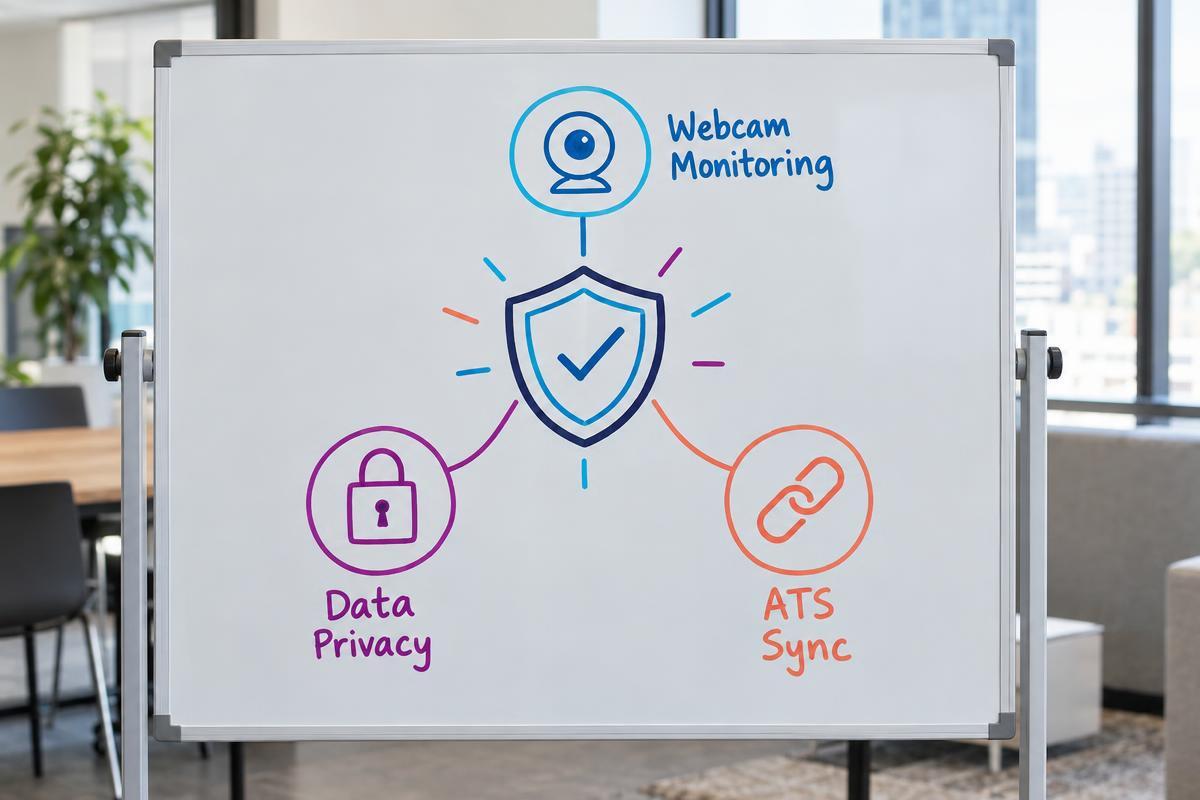
The platform includes reliable anti-cheating measures. It uses webcam snapshots and screen monitoring to ensure test integrity. This makes it a popular choice for remote hiring teams focused heavily on compliance.
While excellent for evaluating hard skills, teams often use TestGorilla alternatives when they need deeper behavioural insights connected directly to their applicant tracking system.
iMocha focuses heavily on technical and enterprise hiring. For global technical hiring, iMocha offers roughly 3,000 technical and nontechnical assessments and an AI interviewer supporting more than 100 languages.
The platform excels at assessing software engineering, cybersecurity, and data science skills. Its AI capabilities help score open-ended responses and code submissions quickly.
iMocha is a strong choice for large technology departments. It provides the deep technical validation that engineering managers require before advancing candidates to live interviews.
Vervoe replaces traditional multiple-choice tests with immersive job simulations. Candidates perform tasks they would actually do in the role, from drafting customer service emails to analysing data sets.
The platform uses AI to automatically score candidate submissions. This helps recruitment teams screen high volumes of applicants based purely on their practical output.
By focusing on performance over credentials, Vervoe helps organisations build diverse teams. It removes the bias often found in traditional resume screening processes.
Toggl Hire provides extremely short, engaging skills tests designed for the top of the recruitment funnel. Candidates can often complete these assessments in under 15 minutes.
The platform treats the assessment almost like a game. This approach drastically reduces candidate drop-off rates and provides hiring managers with a fast shortlist of capable applicants.
It works best for high-volume roles where you need to filter thousands of applicants quickly. The focus remains strictly on baseline knowledge rather than complex behavioural mapping.
Xobin provides a reliable testing environment for graduate programs and high-volume recruitment drives. It includes a strong library of aptitude and basic coding tests.
The software features automated proctoring and detailed performance reports. It is built to handle thousands of concurrent test-takers without technical issues.
Many organisations use Xobin specifically for early-career hiring. It gives campus recruiters a fast way to evaluate baseline intelligence and basic technical competence.
Canditech blends technical assessments with video interviewing. Candidates complete practical exercises and record video answers explaining their thought process.
This dual approach gives hiring managers context behind a candidate's answer. Seeing how a person explains their work is often just as important as the final result.
According to a 2026 software directory comparison by SpotSaaS, Testlify has a 4.8-star rating based on two reviews in one 2026 software comparison directory, while Canditech is listed at 5.0 stars. This reflects positive user feedback for highly interactive testing formats.
Testing integrity is a major concern when assessing candidates remotely. Most top alternatives use a combination of automated proctoring tools to prevent cheating.
Standard features include tab-switching detection and copy-paste blocking. If a candidate leaves the assessment window to search for an answer, the platform flags the behaviour immediately.
Advanced platforms incorporate webcam snapshots and IP address tracking. While these tools protect the assessment's validity, they must be balanced against candidate privacy expectations in regions like Australia and New Zealand.
When selecting a testing platform, look beyond the monthly subscription fee. A tool that charges per candidate creates a financial penalty for attracting a large talent pool.
If you pay a high premium for every test sent, your recruiters will start guessing who deserves a test. This defeats the purpose of objective screening. Flat-fee models or broad candidate allowances provide much better long-term value.
You also need to calculate the time saved by your hiring managers. A platform that filters out unsuitable applicants before the interview stage saves thousands of dollars in wasted interview hours.
A testing platform is often your first real interaction with a candidate. If the tool is clumsy, excessively long, or invasive, your best applicants will simply abandon the process.
High drop-off rates indicate a broken candidate experience. The best platforms keep assessments highly relevant to the actual job. When candidates see how the test relates to their future work, completion rates rise dramatically.
You should always test the software yourself before purchasing. Understanding the interface from the applicant's perspective reveals hidden frustrations that sales demonstrations often gloss over.
Pre-employment assessments collect highly sensitive personal data. Your chosen platform must comply with strict data privacy laws, particularly if you operate across multiple jurisdictions.
Look for vendors holding SOC 2 certification and clear GDPR compliance frameworks. In the Australian market, the software must align with local privacy principles regarding data storage and retention.
Clear consent mechanisms are non-negotiable. Candidates must know exactly what data is being collected, how it will be used, and how long it will be stored.
Standalone testing platforms create data silos. If recruiters have to manually download test results and upload them into your core systems, they will eventually stop using the tool.
Deep integration with your recruitment software is essential. The best ATS Australia 2026 solutions allow you to trigger assessments and view results without ever leaving the candidate profile.
This connectivity keeps the hiring process moving fast. When test scores appear automatically next to the candidate's resume, hiring managers can make confident decisions in minutes rather than days.
Skills expire, but behavioural traits persist. While technical tests confirm a candidate can do the job today, they tell you nothing about how they handle stress or adapt to change.
Organisations are shifting toward comprehensive workforce intelligence. This involves mapping the specific traits required for success in your unique environment. The Work Personality framework provides a vocabulary for understanding these traits.
By blending cognitive testing with behavioural insights, you build a complete picture of the applicant. You hire people who not only have the right skills but also add lasting value to your team culture.
Our platform helps you measure the skills and behavioural traits that actually matter for the role, ensuring you hire candidates who fit your culture and your operational needs.
Testlify focuses heavily on a massive library of distinct skills tests accessed via a credit system. Competitors often differentiate by offering flat pricing, deep behavioural insights, or specialised features like live coding environments and immersive job simulations.
Poorly designed assessments can introduce bias, particularly if they rely on culturally specific knowledge. However, scientifically validated tests actually reduce bias by evaluating candidates on objective criteria rather than relying on a recruiter's subjective interpretation of a resume. You can learn more about fair evaluation in our personality assessment hiring guide.
Reactions depend entirely on communication. If you explain why proctoring is used and assure candidates that their privacy is protected, most accept it as a standard part of modern hiring. Unexplained or overly invasive monitoring, such as recording audio in their home, often causes high drop-off rates.
For initial screening, the assessment should take no longer than 20 to 30 minutes. Asking a candidate to complete a two-hour test before they have even spoken to a recruiter demonstrates a lack of respect for their time and will cost you top talent.

Explore the top Maki People alternatives in 2026. Compare pricing, ATS integrations, and behavioural assessment capabilities for mid-market HR teams.

How to compare pre-employment assessment tools in 2026, and how to screen candidates for skills, behaviour and fit with your organisation.

Talent acquisition software covers sourcing, tracking, assessment and offers. What to check in 2026, prices from US$299 a month, and where fit comes...
 Compono