
.webp)

 Mathan Allington
The Complete Guide to Behavioural Assessment for Hiring (2026)
 Mathan Allington
How a behavioural assessment for hiring predicts job performance, reduces bias, and helps you build teams that work well together.
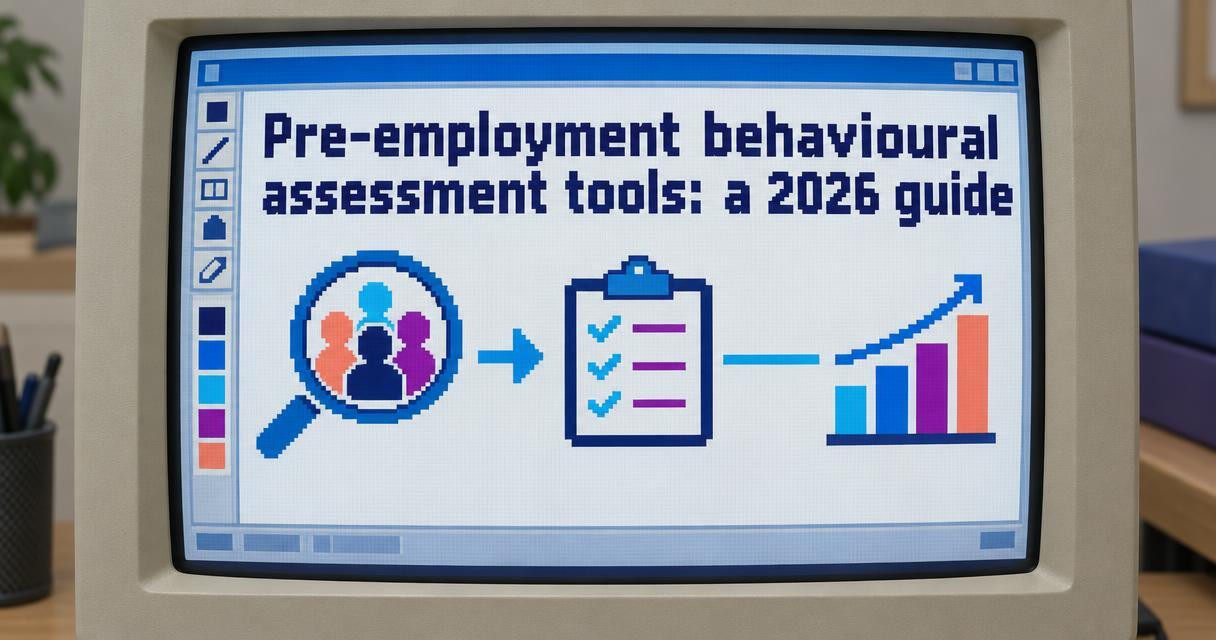
Pre-employment behavioural assessment tools are structured tests that evaluate a candidate's work style, motivations, and cultural alignment before you make a hiring decision.
Last reviewed October 2026
Key takeaways
- Behavioural assessments measure how candidates work, helping you predict job performance more accurately than skills tests alone.
- Structured testing reduces people insight risk by giving you objective data on cultural fit and work motivation.
- Modern pre-employment tools must balance deep assessment insight against candidate drop-off rates.
- Integrating behavioural insights directly into your applicant tracking system improves hiring speed and defensibility.
- Choosing the right assessment stack requires a strong focus on compliance, ethical screening, and bias prevention.
Most HR technology manages process risk effectively. Applicant tracking systems move candidates from application to interview, sending automated emails and checking compliance boxes along the way. But process compliance does not guarantee a good hire.
When new hires fail, it is rarely because they lack the technical skills listed on their resume. They usually fail because their work style clashes with the team, their communication approach disrupts the culture, or their motivations do not align with the role. This is people insight risk. Evaluating people insight risk early is where pre-employment behavioural assessment tools prove their worth.
By understanding who a candidate is and how they actually work, you move past the resume illusion. You build teams based on objective evidence rather than gut feeling.
Traditional screening methods rely heavily on past experience and self-reported skills. Pre-employment behavioural assessments look deeper. They evaluate the core traits and soft skills that determine how a candidate will behave in your specific workplace environment.
These tools typically measure dimensions like emotional resilience, decision-making style, and collaboration preferences. They draw heavily on established behavioural science frameworks, such as the Big Five personality traits, to provide a structured view of a person's working style.
The data backs this approach. According to assessment research cited by KlearSkill, conscientiousness correlates with job performance at approximately r=.31 across roles. When you know a candidate scores highly on conscientiousness, you have a scientifically valid indicator that they are likely to perform well in roles requiring detail and reliability.
You can read more about how these principles work in practice by reviewing how to use psychometric assessment tools in your recruitment process. Identifying these traits upfront saves managers from trying to coach behaviours that simply do not come naturally to the candidate.
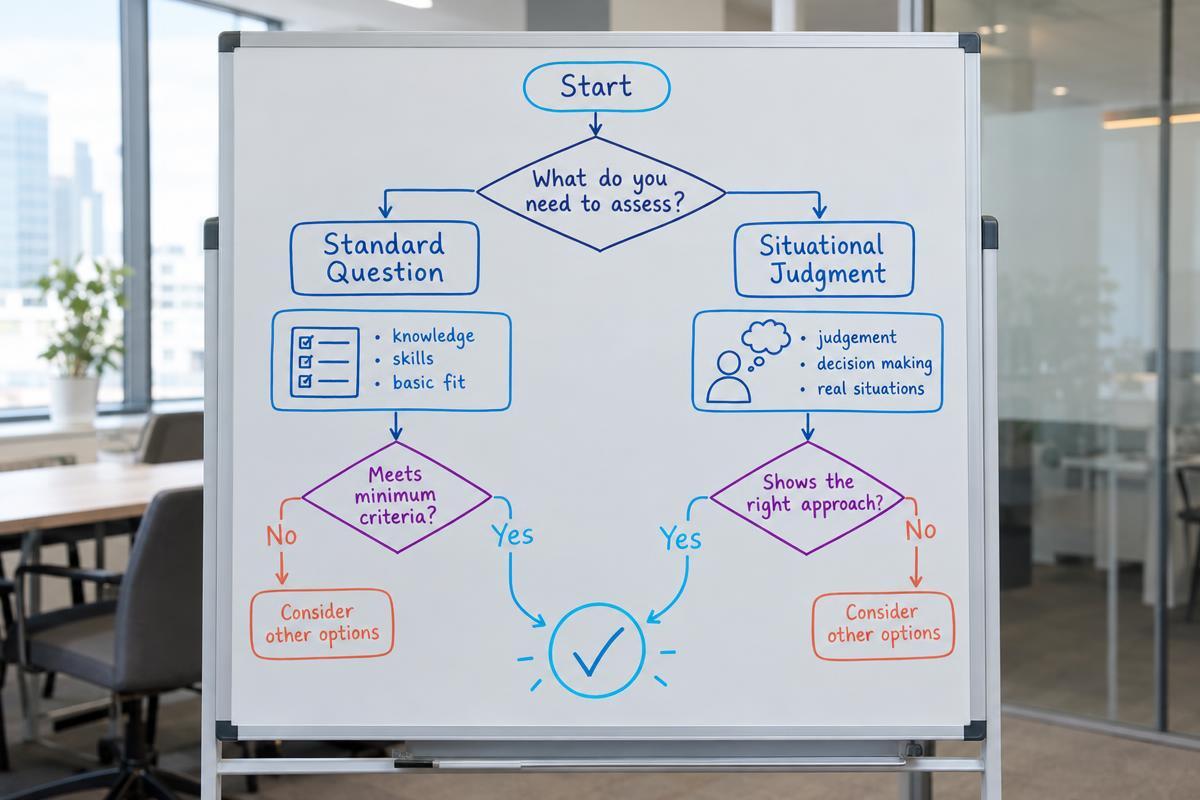
Implementing a new step in your hiring process always raises concerns about candidate experience. Long, poorly designed tests can increase candidate drop-off rates. Modern hiring teams must balance the need for deep assessment data against the risk of losing strong applicants.
The return on investment becomes clear when you measure the cost of tooling against the cost of early turnover. A bad hire disrupts team changing, wastes training resources, and ultimately requires you to start the recruitment process again.
Organisations using structured behavioural insights see tangible improvements. Research from Relias shows companies using pre-employment behavioural assessments report a 20 per cent increase in retention, and integrating these insights into onboarding is associated with 69 per cent higher retention and 58 per cent lower early turnover.
Furthermore, SHRM research cited by Rework shows that 78 per cent of employers using pre-employment assessments report an improved quality of hire. The initial investment in candidate evaluation pays dividends through long-term team stability.
Not all screening tools serve the same purpose. When building your recruitment technology stack, you need to understand the difference between basic skills testing and comprehensive behavioural profiling.
| Tool Category | What It Measures | Best Used For | Risk Profile |
|---|---|---|---|
| Hard Skills Tests | Technical knowledge, coding, typing speed | Screening baseline competency for technical roles | High process efficiency, low people insight |
| Cognitive Ability Tests | Problem-solving, numerical reasoning, logic | Predicting learning agility in complex roles | Moderate people insight, high candidate fatigue risk |
| Behavioural Assessments | Work style, motivations, cultural alignment | Understanding how candidates fit the team changing | High people insight, reduces early turnover |
Generic personality tests often provide interesting labels but lack practical application for the workplace. A strong assessment tool must match candidates to the reality of how your organisation actually operates.
This is where purpose-built platforms make a difference. Compono Hire is an applicant tracking system that profiles candidates against your culture and your best people. It provides a ranked view of who fits the role and the team, backed by behavioural science, rather than just matching keywords on a CV.
If you are evaluating your options, reading about choosing pre-employment assessment software helps clarify which features actually drive better hiring decisions.
Algorithmic bias and legal compliance are serious considerations for any HR leader introducing assessment technology. Tools that learn from historical hiring data can inadvertently replicate past biases, leading to adverse impact against minority groups.
Ethical screening requires clear standards. In many jurisdictions, employment tests must meet strict regulatory guidelines, such as the EEOC guidelines in the United States or fair work standards in Australia. The assessments must be proven to relate directly to the job requirements.
Behavioural science provides a defence against unstructured bias. When every candidate completes the same validated assessment, evaluated against the same objective criteria, you reduce the influence of the interviewer's gut feeling. This standardisation creates a fairer process for all applicants.
To build a legally defensible and fair recruitment process, explore proven behavioural assessment hiring strategies that focus on objective data rather than subjective impressions.
A common objection to pre-employment behavioural assessment tools is that candidates will simply guess the answers you want to hear. Faking is a valid concern with outdated, transparent questionnaires.
Modern behavioural science counters this through careful test design. Techniques like ipsative testing force candidates to choose between equally desirable or undesirable statements. This makes it incredibly difficult for an applicant to game the system, as there is no obvious right answer.
Situational judgment tests are another highly effective method. They present realistic workplace scenarios and ask candidates to select their most likely response. Thomas International research notes that situational judgment tests predict job performance with validity coefficients of 0.45 to 0.60, compared with just 0.27 for unstructured interviews.
Pairing this with structured interviews using standardised questions and scoring rubrics can raise predictive validity from r=.20 to r=.51, according to SHRM data cited by KlearSkill. The combination of secure testing and structured interviewing provides a highly accurate picture of the candidate.
An assessment tool is only useful if hiring managers actually use the data. Keeping behavioural insights in a separate software silo creates friction. The best results occur when assessment data flows directly into your daily recruitment workflows.
A modern workflow should trigger the behavioural assessment immediately after the initial application screening. The results should then automatically populate the candidate's profile within your recruitment platform. When a hiring manager reviews a shortlist, they see the technical qualifications sitting right next to the cultural alignment scores.
This integration also improves the interview stage. Instead of asking generic questions, managers can use the assessment data to probe specific areas. If the profile indicates a candidate prefers solitary work, the interviewer can ask targeted questions about how they handle highly collaborative projects.
This shift from manual screening to intelligent profiling explains why CVs are losing their edge. Resumes tell you what someone did. Behavioural data tells you how they did it, and how they will likely perform in your team.
Compono Hire is an applicant tracking system that integrates behavioural science directly into your recruitment workflow. It evaluates candidate fit based on qualifications, skills, and work personality, helping you reduce both process risk and people insight risk.
A pre-employment behavioural assessment is a scientifically designed test used during the hiring process to evaluate a candidate's work style, motivations, and natural tendencies. It helps employers understand how an applicant will behave in the workplace and interact with their team.
A well-designed pre-employment behavioural assessment should take between 10 and 20 minutes to complete. Keeping the test concise helps maintain a positive candidate experience and reduces the risk of applicants abandoning the process.
While candidates can try to guess what employers want, modern assessments use forced-choice questions, consistency scales, and situational judgment scenarios to make faking extremely difficult. These design elements ensure the data remains accurate and reliable.
Yes, structured behavioural assessments help reduce bias by evaluating all candidates against the same objective, science-backed criteria. This shifts focus away from subjective resume details and interviewer gut feelings, promoting fairer hiring decisions.
Leading assessment tools integrate with your applicant tracking system via native connections or APIs. This allows the ATS to automatically trigger the test and display the candidate's behavioural profile alongside their standard application data.
How a behavioural assessment for hiring predicts job performance, reduces bias, and helps you build teams that work well together.

Learn proven strategies for crafting great interview questions to enhance recruitment success.

How to compare pre-employment assessment tools in 2026, and how to screen candidates for skills, behaviour and fit with your organisation.
 Compono