


 Mathan Allington

Can you ask about age in a job interview in Australia?
 Mathan Allington
Asking about age in a job interview carries legal risks under Australian law. Discover the exceptions, compliance rules, and what to ask candidates.
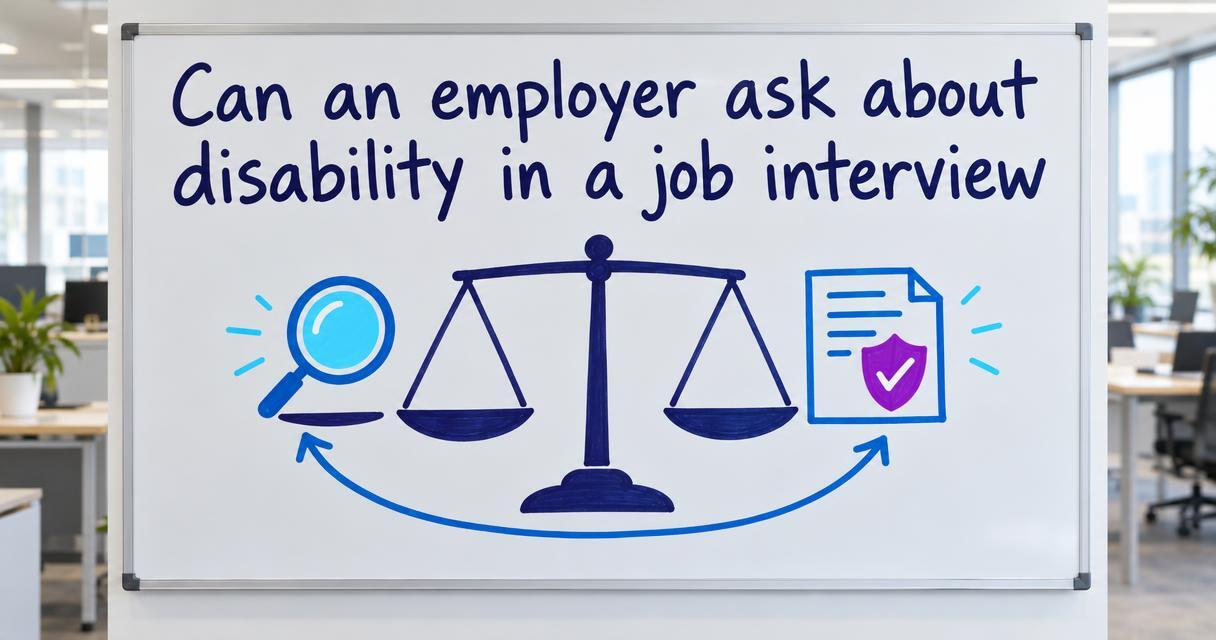
In Australia, an employer can only ask about a candidate's disability in a job interview if the questions relate directly to the inherent requirements of the role or the need for reasonable adjustments.
Last reviewed November 2026
Key takeaways
- Australian law prohibits general or intrusive questions about a candidate's health, medical history or disability.
- Employers can ask how a disability might affect a person's ability to perform the essential duties of the job safely.
- You are allowed to ask if a candidate requires reasonable adjustments to participate fully in the interview or assessment process.
- Structured interviews and objective scoring rubrics protect employers from discrimination claims and improve hiring outcomes.
Hiring managers often stumble into illegal territory when trying to build rapport or assess a candidate's physical capacity for a role. A casual question about a visible mobility aid or a gap in a resume can quickly become a breach of the Disability Discrimination Act 1992. This happens because interviewers confuse general curiosity with assessing job fit.
The consequences of poorly structured interviews are clear. The Australian Human Rights Commission reported that employment was the basis of 29% of complaints made under Australia's Disability Discrimination Act in 2023–24. When hiring teams lack a standardised script, they expose the organisation to compliance risks and alienate capable candidates before they even start.

The rules governing job interviews in Australia differ significantly from those in the United States and other regions. Under the Disability Discrimination Act 1992 and the Fair Work Act, it is unlawful to treat a candidate less favourably because of a disability. This means fishing expeditions into a person's medical background are off the table.
According to the Australian Human Rights Commission, employers cannot ask general, intrusive questions about a candidate's health, medical history, lifestyle, doctor visits, or disability management when those questions are unrelated to the job. You cannot ask a candidate how they acquired a disability or what medication they take. If you are unsure whether your standard interview script complies with the law, using a free interview questions checker helps identify risky phrasing before you speak with candidates.
The law provides a specific exception for questions that assess a candidate's ability to perform the core functions of the role safely. These core functions are known as inherent requirements. If a job involves heavy lifting, driving a commercial vehicle or sustained physical exertion, you can ask if the candidate has any condition that would prevent them from performing those specific tasks.
The Australian Human Rights Commission notes that employers can ask questions directly related to the role, including how a disability may affect essential duties, workplace safety, or the adjustments needed to perform the job. The distinction relies on specificity. Asking "do you have any back problems?" is a general inquiry and a legal risk. Asking "this role requires lifting 15-kilogram boxes safely throughout the day, are you able to perform this task?" addresses an inherent requirement directly.
Employers have a legal obligation to make reasonable adjustments for candidates and employees with a disability, provided it does not cause unjustifiable hardship to the business. Asking about these adjustments is entirely appropriate and demonstrates a commitment to inclusive hiring practices.
The Australian Human Rights Commission confirms that employers may ask whether a candidate needs reasonable adjustments during an interview or assessment, and should arrange those adjustments where required. You can ask this question in the initial screening phase or meeting invitation. Examples of reasonable adjustments include providing interview materials in large print, ensuring wheelchair access to the interview room, or allowing extra time for a skills test.
Understanding the legal boundaries is only half the picture. The other half is recognising the candidate experience. Unconscious bias and poorly framed questions actively push skilled talent out of the workforce. The Diversity Council of Australia found that 42% of workers with disability reported experiencing workplace discrimination or harassment in the 2023–24 Inclusion@Work Index.
This bias has a direct impact on employment outcomes. The Grattan Institute found that about one in eight working-age Australians with disability reported experiencing discrimination in 2022. Furthermore, only 34% of people with disability who experienced discrimination were employed, compared with 53% of those who had not experienced discrimination. Building a behavioural hiring strategy helps organisations focus on capability and organisational fit rather than physical assumptions.
The most effective way to prevent unlawful questions and reduce bias is to standardise your interview process. A structured interview ensures every candidate answers the same set of questions, evaluated against the same scoring rubric. This approach removes the randomness of conversational interviewing and keeps hiring managers focused on job-relevant criteria.
Organisations looking to reduce hiring bias with an ATS need tools that embed compliance into the workflow. Compono Hire is an applicant tracking system that includes structured interview templates and scoring tools, helping hiring managers evaluate candidates on skills and culture fit rather than demographic factors. This provides a defensible, evidence-based reason for every hiring decision.
When interviewers rely on objective data, hiring consistency improves across the entire business. Using Compono Hire, The Coffee Club delivered consistent hiring standards across 400 outlets, ensuring every manager evaluated candidates using the same good interview questions and criteria. This protects the organisation from compliance risks and gives every candidate a fair opportunity to demonstrate their value.
Compono Hire provides the structure and assessment tools you need to run fair, compliant and evidence-backed interviews across your organisation.
Yes. A candidate is under no legal obligation to disclose a disability unless it directly affects their ability to perform the inherent requirements of the role safely. If the disability does not impact their capacity to do the job, they can choose to keep that information private.
If an interviewer asks an intrusive medical question, a candidate can politely redirect the conversation back to their capabilities. A common response is to ask how the question relates to the specific duties of the role, or to state clearly that they have no health conditions that would prevent them from performing the job.
An employer can require a medical check if physical fitness is a genuine requirement of the job. The assessment must focus specifically on the tasks the person will perform, rather than acting as a general health screening.
Candidates who face unlawful questioning or discrimination during the hiring process can lodge a complaint with the Australian Human Rights Commission. The Commission will investigate the complaint and attempt to resolve it through conciliation, which can result in financial compensation or changes to the employer's hiring policies.
Inherent requirements are the essential activities that must be carried out to get the job done. This does not include peripheral tasks or the specific way a task has historically been performed. If a task can be achieved through reasonable adjustments or assistive technology, the method of completing it is not an inherent requirement.
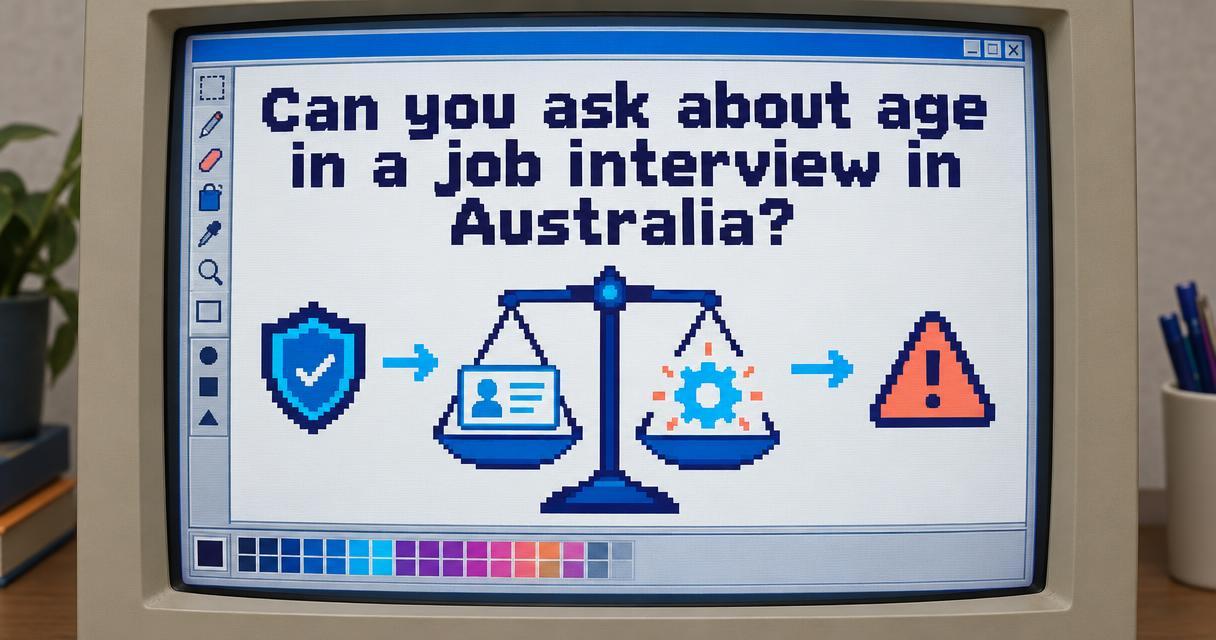
Asking about age in a job interview carries legal risks under Australian law. Discover the exceptions, compliance rules, and what to ask candidates.

Where culture fit hiring crosses into discrimination under Australian law, what tribunals have ruled, and how to assess candidates fairly.

What recruitment software does, what the best recruitment software in Australia needs (SEEK, assessment, HRIS links) and how it copes in graduate...