

.webp)

 Mathan Allington


What does the predictive index measure in 2026?
 Mathan Allington
The Predictive Index measures four behavioural drives plus cognitive ability to predict how people work. Learn what that means for smarter hiring.

Pre-employment assessment in Australia is the use of standardised, validated tools to evaluate a candidate's skills, personality and organisational fit before a hiring decision. Assessments are legal when they are non-discriminatory and job-relevant, and they consistently outperform resumes and unstructured interviews at predicting how someone will actually perform.
Last reviewed July 2026.
Key takeaways
- Pre-employment assessments reduce hiring bias by providing objective data on candidate capabilities and work styles.
- Evaluating organisation fit alongside technical skills is essential for long-term retention and team harmony.
- Modern assessments should be short, engaging and mobile-friendly so the candidate experience stays positive.
- Data-driven hiring lets leaders predict how new starters will collaborate with the existing team.
Hiring for mid-market organisations often feels like a high-stakes guessing game. You review a pile of resumes, run a few interviews, and hope the person you choose is as capable as they seem on paper. With the cost of a bad hire often estimated at double the employee's annual salary, that is an expensive gamble.
Traditional recruitment falls short because it weighs past experience heavily while ignoring future potential and behavioural alignment. Without structured assessment, it is hard to see how a candidate handles pressure, how they solve problems, or whether their natural work preferences match the role. HR leaders also face a speed-versus-accuracy trade-off: in a competitive market you want to secure talent quickly, but rushing without objective data usually shows up later as turnover and cultural friction.
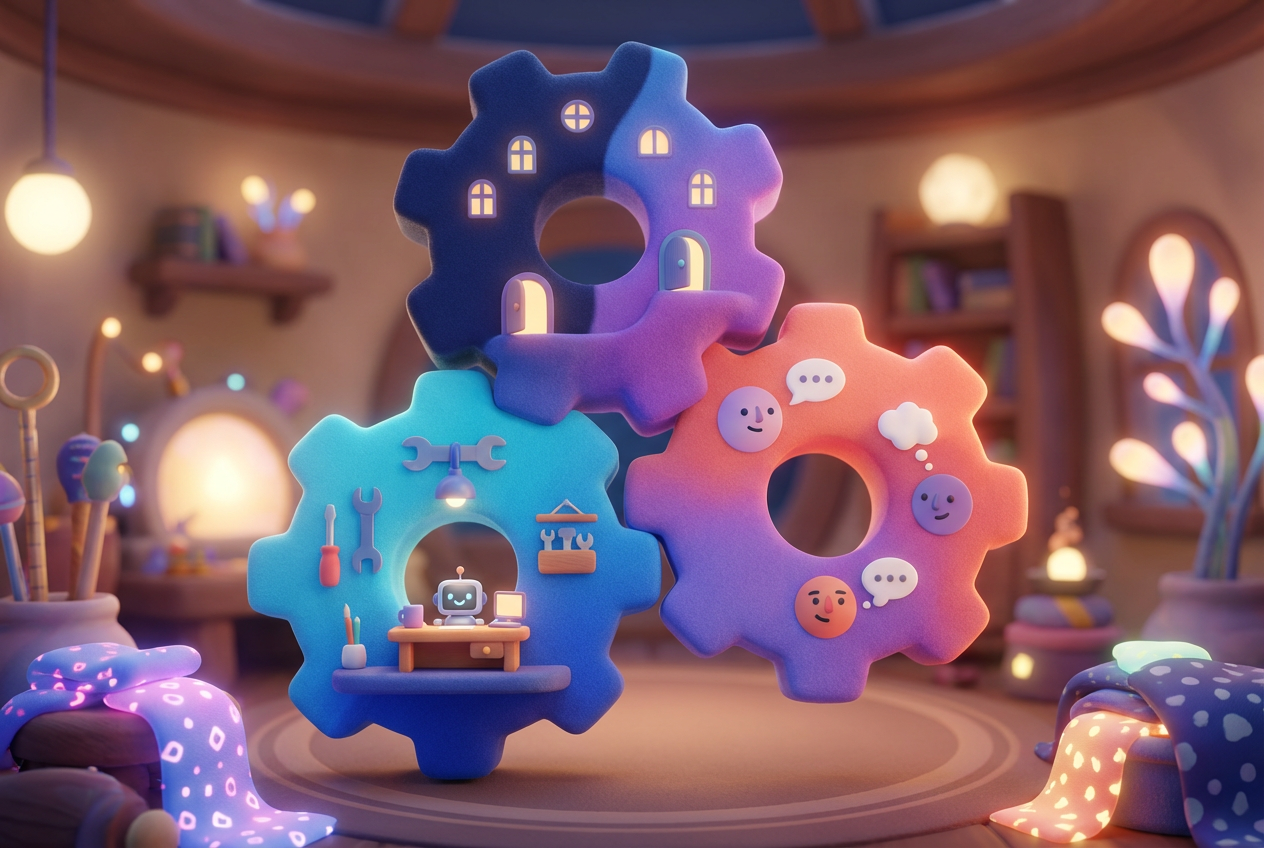
A complete assessment covers three distinct areas: organisation fit, job fit and personality fit. Together they tell you whether a person has the right skills and the right mindset for your team.
Organisation fit is the most overlooked. It checks whether a candidate's values and work style align with your company culture. If your team runs on rapid iteration, hiring someone who prefers rigid, slow-moving process frustrates both sides. Compono Hire assesses these dimensions automatically and ranks candidates on how well they match your environment, with culture-fit predictions that are validated against real hiring outcomes.
Job fit covers the specific competencies the role requires, while personality fit looks at natural tendencies. Someone might have the accounting skills a role demands, but if they are naturally a Pioneer, a repetitive data-entry role will feel stifling. Matching people to work they find motivating is the quiet secret of long-term engagement.
Every person has a dominant preference for how they approach work. Understanding these preferences helps managers build balanced teams where different strengths complement each other, and it lets you predict a candidate's likely contributions and blind spots before day one.
Say your team is full of Doers: excellent at execution, light on long-term strategy. Adding another Doer gets tasks finished faster, but adding an Evaluator brings the critical analysis the team is missing. Pre-employment assessment gives you the blueprint to make those additions deliberately, moving from hiring people who are "just like us" to hiring people who add to us.
A common worry is that assessments scare off top talent. In practice, candidates tend to appreciate the chance to demonstrate their strengths in a way a resume never allows, provided the process respects their time. Assessments should take minutes, work on a phone, and feel intuitive.
Sharing insights back with the candidate goes further. When applicants receive a picture of their own work personality, it signals that you care about their development, not just their output. That transparency builds trust before the first day and smooths the transition from candidate to employee.
Unconscious bias sits inside every unstructured hiring process. We naturally favour people who share our background or interests, and that rarely produces the best hires. Standardised assessments act as a neutral filter, judging every candidate on the same criteria.
The result is fairer decisions and a more diverse workplace. Candidates who might have been overlooked in a traditional interview get seen for what they can actually do. Centralising the data in a platform like Compono also removes the "he said, she said" of interview feedback, replacing it with a clear, comparable score for every applicant.
Compono Hire assesses organisation fit, job fit and personality in one workflow, with culture-fit predictions proven validated.
Talk to usYes, provided they are non-discriminatory and relevant to the requirements of the job. They are a standard part of professional recruitment across the country. For specific compliance questions, seek professional advice.
A well-designed assessment covers three dimensions: organisation fit (values and work style against your culture), job fit (the competencies the role requires) and personality fit (natural work preferences and tendencies).
Modern assessments are designed to be efficient, often taking only a few minutes to complete. Short, mobile-friendly assessments keep completion rates high and protect the candidate experience.
No. While the assessments are grounded in organisational psychology, platforms like Compono translate the data into plain-language reports that any hiring manager or HR leader can use to make informed decisions.

The Predictive Index measures four behavioural drives plus cognitive ability to predict how people work. Learn what that means for smarter hiring.

The 17 Predictive Index reference profiles in plain English: what each type means, how the four factors combine, and how to read a PI result.

Support work asks for patience under pressure. Here is how culture fit hiring finds people who hold up in the role and share how your team works.
 Compono