How an intelligent HR platform transforms team performance
Building a high-performing team is often treated like a game of chance, where leaders hope the right personalities eventually click and the work gets...
Become the expert on delivering
valid and fair assessments for
your training and education.
Hire
|
Engage
|
Develop
|
|
Automatically match to candidates who are a great fit for your team culture and who are intrinsically motivated to succeed. |
Deeply understand your organisation with science-backed analytics on your culture, team design, and engagement. |
Back your onboarding, compliance and skill development with industry-leading credentialling, competency and capability expertise.
|
Hey Compono helps you understand your personality and how to turn it into your superpower.
First 1,000 users get 10 minutes free.
Just $15 a month after that — cancel anytime.
Understanding how to identify skills gaps is the difference between a team that merely stays afloat and one that consistently exceeds its targets. In today’s workplace, the speed of change means the capabilities you had yesterday might not be enough to carry you through tomorrow.
We often think of skills gaps as a future problem – something to worry about during the next annual review or hiring round. However, the reality is that these gaps are felt every single day. They show up as missed deadlines, frustrated employees, and a general sense that the team is ‘busy’ but not necessarily ‘productive’. When we fail to identify these gaps early, we risk burnout as high performers try to cover for missing expertise.
For many HR leaders and managers, the challenge isn't just knowing that a gap exists, but pinpointing exactly where it lies. Is it a technical deficiency, or is it a lack of soft skills like communication or leadership? Without a structured way to analyse these needs, we often rely on gut feel, which can lead to biased hiring or training that doesn't actually move the needle on performance.
You cannot identify a gap if you don't know what you are aiming for. The first step in a successful skills gap analysis is to look at your business objectives for the next twelve to eighteen months. Are you launching a new product? Are you looking to improve customer retention? Each of these goals requires a specific set of ‘work actions’ to be successful.
At Compono, we’ve spent over a decade researching high-performing teams. Our research has identified eight key work activities that define success: Evaluating, Coordinating, Campaigning, Pioneering, Advising, Helping, and Doing. By aligning your team’s current capabilities against these eight activities, you can start to see where the ‘white space’ exists. If your goal is innovation but your team is heavily weighted toward ‘Doing’ and ‘Auditing’, you have identified a clear gap in ‘Pioneering’ and ‘Campaigning’.
Once you know what you need, it is time to look at what you have. Traditional resumes only tell half the story. To truly identify skills gaps, you need to understand the natural work preferences of your people. Some people are naturally inclined to scrutinise details – these are your Auditors – whilst others thrive on selling a vision – your Campaigners. Both are vital, but they serve different purposes.
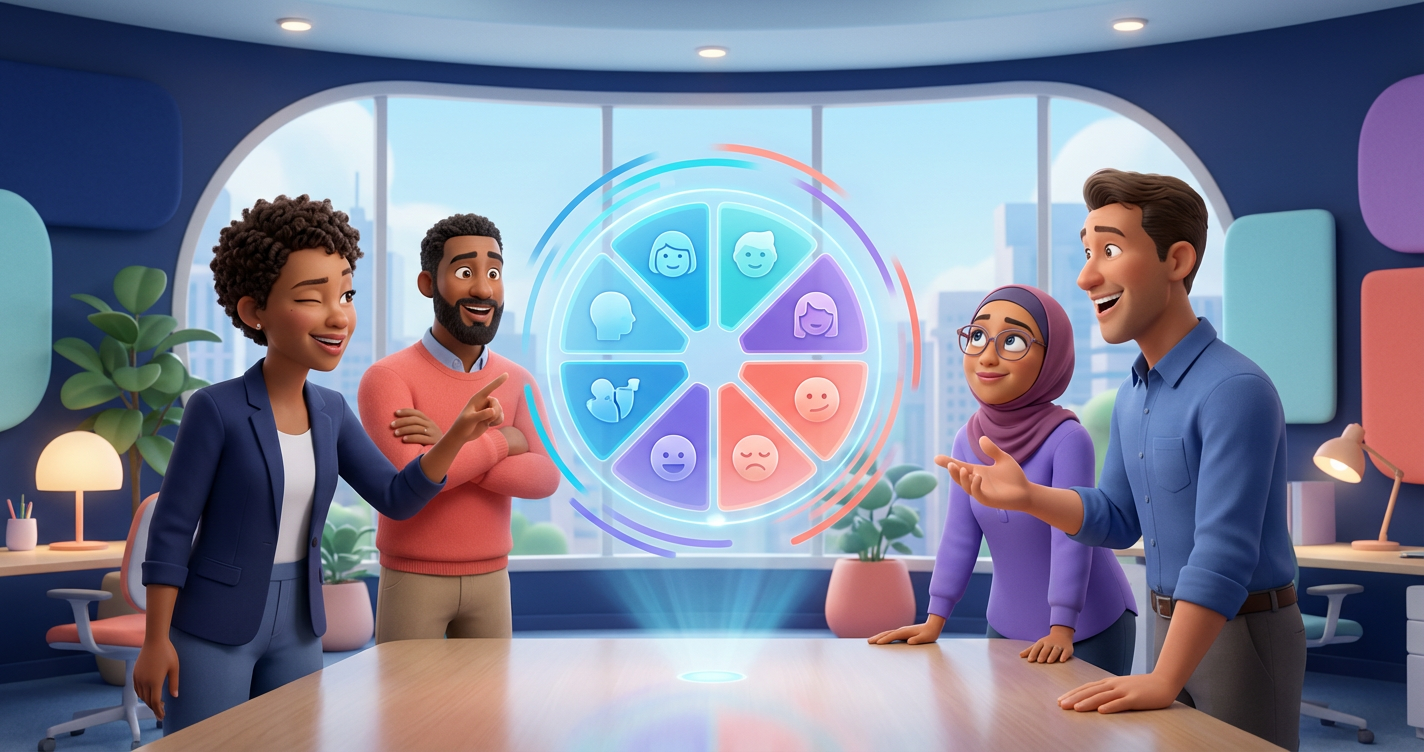
Using a tool like the Compono work personality assessment allows you to map your entire team on a single framework. This isn't about pigeonholing people; it is about visibility. When you see your team plotted on a wheel, it becomes obvious if everyone is clustered in one quadrant. This visual data makes it much easier to justify a new hire or a specific training programme to senior leadership because the gap is no longer theoretical – it is visible.
Identifying the gap is only half the battle; the next step is closing it. You generally have three options: train your current staff, hire new talent, or outsource the work. For mid-market companies, the most sustainable path is often a mix of the first two. If you find a gap in leadership capability, for example, you might look at internal candidates who show a natural preference for 'Advising' but lack the formal training.
When you use data to drive these decisions, the conversations with employees become much warmer and more supportive. Instead of saying "you aren't performing," you can say, "we’ve identified that our team needs more strength in strategic planning, and we think your natural analytical skills make you a great fit for this development path." This approach builds trust and helps people feel like they are part of the solution. You can learn more about how we view this in The Compono Culture, Engagement & Performance Model.
Sometimes, the gap is too large to fill with training alone. When this happens, your recruitment strategy needs to be laser-focused on the specific work personality you are missing. If your team is struggling with execution and deadlines, you don't just need another ‘good hire’ – you specifically need a ‘Coordinator’ or a ‘Doer’.
This is where modern recruitment technology changes the game. Within Compono Hire, business leaders can actually select the work personality they need for a role. The platform then automatically scores and ranks candidates based on that specific need. This ensures that every new person you bring into the organisation is actively closing a skills gap, rather than just adding more of what you already have. It turns hiring from a replacement exercise into a strategic growth exercise.
A skills gap analysis is a systematic process used to determine the difference between the current skills of your workforce and the skills required to meet your business goals. It helps HR leaders decide whether to train, hire, or restructure.
In a modern workplace, we recommend conducting a formal review at least once a year, or whenever there is a significant shift in business strategy. Ongoing monitoring through people intelligence platforms can provide real-time insights.
Yes – whilst traditional skills tests measure technical knowledge, work personality assessments help you identify gaps in work behaviours and preferences, such as leadership, coordination, or innovation capabilities.
The best way depends on the urgency. If the need is immediate, hiring a specialist via a platform like Compono Hire is best. If the need is long-term, investing in employee development is more cost-effective.
Focus on the business impact. Use visual data – like a team personality wheel – to show where the team is currently weighted and how that imbalance is preventing the company from reaching specific strategic objectives.

Compono Hire helps you predict job-fit and team-fit using behavioural science, so you can shortlist with confidence.
Request a demoBuilt for mid-market hiring teams.

Voice-first coaching that adapts to your personality. Get actionable steps you can take this week.
Start freeBuilt by Compono. Not therapy — practical behaviour change.
Building a high-performing team is often treated like a game of chance, where leaders hope the right personalities eventually click and the work gets...
Ever looked at those dream teams that just seem to click, where everyone’s strengths complement each other perfectly, and wondered how they got it...
Finding the right Learning Management System (LMS) can feel like a full-time job in itself, especially when you are responsible for the growth and...