 Compono


HR leader tools: why process-first tech is incomplete

People problems are real. They come from tools that manage process but ignore decisions. If you are an HR leader in today's workplace, you have...


Become the expert on delivering
valid and fair assessments for
your training and education.



.png?width=383&height=200&name=team%20(1).png)

Your hiring process is likely selecting for professional interviewees rather than high-performing employees because most traditional systems prioritise social likability and resume keywords over actual work samples and organisational fit.
Key takeaways
- Traditional hiring metrics like 'time-to-fill' often sacrifice long-term quality for short-term speed.
- Interview performance is a poor predictor of job success compared to structured work samples and personality alignment.
- Shifting to a retention-first model reduces the significant financial and cultural costs of a 'wrong-hire'.
- Psychological safety during the recruitment phase allows candidates to demonstrate their true potential.
- Data-driven assessments help remove unconscious bias by focusing on objective role requirements.
Most businesses treat the hiring process as a race. We measure 'time-to-fill' as if the speed of a transaction determines its value. While leaving a seat empty has its costs, filling it with the wrong person is far more expensive. When we prioritise speed, we inadvertently lean on mental shortcuts. We look for candidates who 'feel right' or who possess a polished charisma that shines in a thirty-minute chat.
This reliance on 'gut feel' is a trap. It optimises for social rapport rather than technical or cultural competence. A candidate who is excellent at navigating an interview might struggle with the actual demands of the role once the honeymoon period ends. We need to stop asking how quickly we can hire and start asking how long those hires will stay and thrive within our unique environment.
At Compono, we believe the foundation of a high-performing team isn't just a list of skills on a page. It is the intersection of personality, values, and work preferences. When you move away from the 'fill-fast' mentality, you begin to see recruitment as an investment in your future culture rather than a checklist for current gaps.

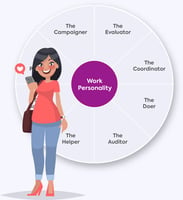
There is a significant gap between being good at an interview and being good at a job. Interviews are a specific type of performance art. They reward extroversion, quick thinking under pressure, and the ability to tell a compelling story. However, many roles – like those for an Auditor or a Doer – require quiet focus, methodical execution, and attention to detail. None of these traits are easily measured in a standard behavioural interview.
When we rely on 'tell me about a time when' questions, we are testing a candidate's memory and narrative skills. We aren't testing their ability to solve a real-time problem or collaborate with your existing team. This paradox leads to 'the honeymoon hang-over' – where a brilliant interviewee turns into a mediocre employee. We must pivot toward practical testing frameworks that mirror the daily reality of the role.
Consider the role of Compono Hire in this transition. By using objective assessments that measure Organisation Fit and personality fit alongside skills, we help you look past the 'performance' and see the person. This ensures the candidate doesn't just look good on paper but actually matches the rhythm of your workplace.
We often hear managers complain about the 'cost of a vacancy'. They point to lost productivity and overworked team members. While these are valid concerns, they pale in comparison to the cost of a bad hire. Industry research suggests that a mis-hire can cost a company up to 2.5 times the individual's annual salary. This includes recruitment fees, onboarding time, disrupted team morale, and the eventual cost of offboarding and starting again.
A 'slow-hire' – a deliberate, rigorous process focused on quality – is actually a cost-saving measure. It protects your team from the 'churn and burn' cycle that destroys psychological safety. When a team sees a revolving door of new starts, they stop investing in relationships. They become guarded. By slowing down and using data-driven metrics to measure 'Quality of Hire' post-onboarding, you build a more stable and profitable organisation.
Using a Workforce Intelligence Platform allows you to see the big picture. When you understand the attributes of your top performers, you can replicate that success. It turns hiring from a guessing game into a strategic function that directly impacts the bottom line through improved retention and decreased turnover costs.

Many organisations believe that a 'tough' hiring process must be a difficult one for the candidate. This is a mistake. High friction – such as clunky application portals, repetitive data entry, and 'ghosting' – does not filter for quality; it filters for desperation. The best candidates often have multiple options and will abandon a process that feels disrespectful of their time.
Reducing friction means making the process smooth, transparent, and engaging. It does not mean lowering your standards. It means ensuring that every step of the journey provides value to the candidate as well. If you ask them to complete an assessment, explain why. If they don't get the job, provide constructive feedback. This builds your employer brand and ensures that even unsuccessful candidates walk away with a positive view of your organisation.
Psychological safety starts during the recruitment phase. If a candidate feels safe, they are more likely to be themselves. This gives you a more accurate view of their personality and potential. Using tools like the work personality assessment provides candidates with insights into their own strengths, making the process a two-way street of discovery and respect.
If you want to know if someone can code, watch them code. If you want to know if they can manage a project, have them plan a micro-task. The 'Shadow Work' approach involves using real-world scenarios to replace abstract behavioural questions. This levels the playing field for candidates who might be less 'polished' in an interview setting but are exceptional at the actual work.
This method also helps reduce unconscious bias. When you focus on a work sample, you are looking at the output, not the person's background, education, or accent. It forces the hiring team to define exactly what 'good' looks like before they even meet a candidate. This objective standard is the enemy of the 'culture fit' trap, which often serves as a mask for hiring people who look and think just like us.
To truly innovate, we must move toward 'Retention-First' hiring. This means looking for the Pioneer who will drive your next project or the Helper who will bind your team together during a crisis. It requires a deep understanding of your current team's DNA, something we explore in The Compono Culture, Engagement & Performance Model.
To move from a speed-based process to a quality-based one, you need a structured plan. It involves rethinking your metrics and your methods. First, define your 'Ideal Candidate Profile' based on data, not feelings. Look at your existing top performers and identify the traits that make them successful. Second, replace generic interviews with structured work samples. Third, implement objective personality and fit assessments early in the funnel.
Fourth, train your hiring managers to recognise their own biases. 'Culture fit' should be replaced with 'Culture add' – what is this person bringing that we currently lack? Finally, measure your success by retention rates at the 12-month mark rather than the 30-day mark. This shift in perspective will transform your hiring from a reactive chore into a competitive advantage.
At Compono, we have spent over a decade researching what makes teams work. We know that when you align the right person with the right role and the right culture, amazing things happen. You don't just fill a seat; you grow a business. It is time to stop optimising for the interview and start optimising for the career.
Key insights
- Optimising for speed leads to 'gut-feel' hiring which increases the risk of expensive turnover.
- Work samples and objective assessments are far more predictive of success than traditional interviews.
- A retention-first approach focuses on 'Culture Add' rather than the biased concept of 'Culture Fit'.
- Candidate experience should be low-friction but high-rigour to attract top-tier talent.
- Success in recruitment should be measured by long-term performance and tenure, not time-to-fill.
If your new hires consistently look, think, and act like your existing leadership, you likely have a 'culture fit' bias. Using objective assessments like those in Compono Hire can help remove these unconscious leanings by focusing on data-driven fit markers.
When recruiters are incentivised solely on speed, they may overlook red flags or skip essential cultural alignment checks. This leads to higher turnover, which actually increases the total time spent hiring over a two-year period.
Work samples are small, role-specific tasks that a candidate completes during the process. They allow you to see the candidate's actual skills in action, providing a much more accurate prediction of job performance than a verbal description of their experience.
Focus on clarity and respect. Provide a clear timeline, explain why you are using specific assessments, and ensure your technology is mobile-friendly. A rigorous process can still be a pleasant one if the candidate feels the hurdles are relevant and fair.
Culture fit often leads to 'sameness' and groupthink. Culture add looks for individuals who share your core values but bring different perspectives, backgrounds, or work personalities that fill gaps in your current team structure.

People problems are real. They come from tools that manage process but ignore decisions. If you are an HR leader in today's workplace, you have...

Most HR leaders are drowning in data but starving for clarity. You might have a system that tracks every leave request and payroll cycle perfectly,...

Have you ever hired someone who looked perfect on paper, only to find they clashed with the team within a month? Resumes show you what a person has...