

 Mathan Allington
Interviewer calibration: how to align your hiring panel
 Mathan Allington
Interviewer calibration aligns your hiring panel on exactly how to score candidates. Learn how to prevent bias, track drift, and build structured...

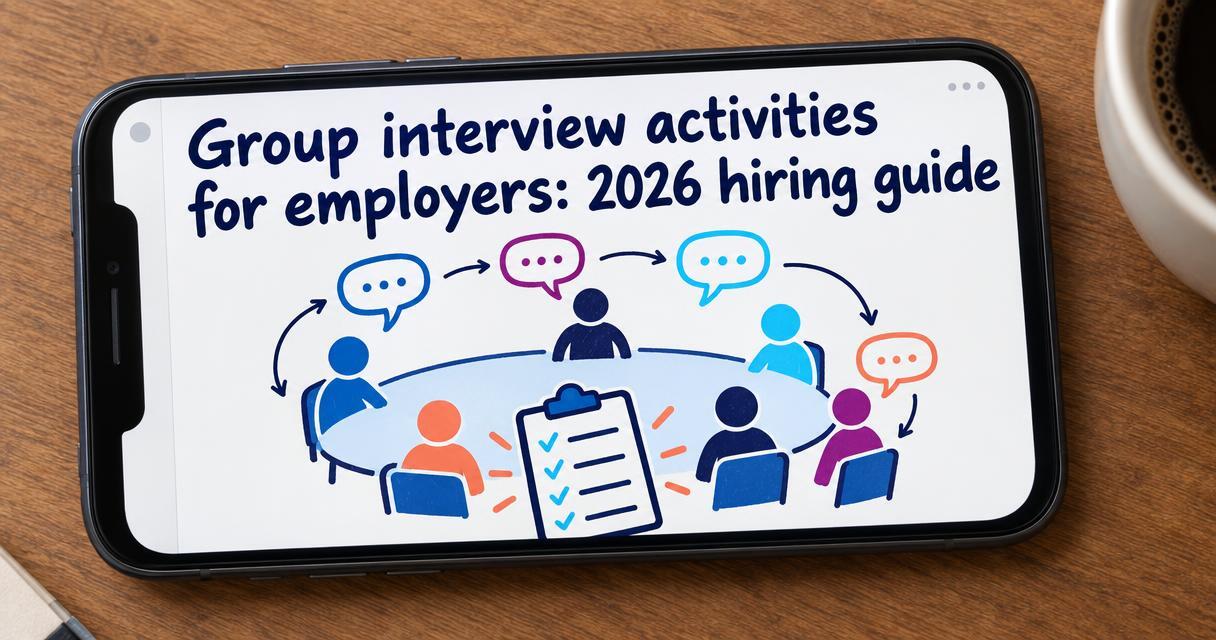
Effective group interview activities for employers are structured problem-solving tasks designed to reveal how candidates collaborate, communicate, and handle pressure in a team setting.
Last reviewed November 2026
Key takeaways
- Group interviews save time, but without structured activities and objective scorecards, they often reward the loudest candidate rather than the best fit.
- Employers must assign clear roles to interviewers, separating the person who helps the activity from the people observing and scoring.
- Choosing activities that allow silent planning time gives introverted and neurodivergent candidates a fair chance to demonstrate their problem-solving skills.
- Scoring candidate performance with a standardised rubric protects your hiring process from bias and helps you defend your hiring decisions.
Many employers run group interviews to fill high-volume roles quickly. Bringing ten candidates into a room for an hour is faster than running ten separate interviews. The problem is that unstructured group settings often select for interview skill rather than job capability. When hiring managers simply sit and watch a free-flowing discussion, they naturally gravitate toward the most vocal, confident person in the room.
This reliance on gut feeling introduces significant risk. According to the 2024 Candidate Experience Report by Criteria Corp., 27 percent of surveyed candidates said they had experienced bias during an interview, while another 35 percent were unsure whether bias had occurred. If you assess candidates purely on who speaks first, you lose out on analytical thinkers, careful listeners, and people who excel at supporting others.
To fix this, you need group interview activities that measure specific behaviours. You need a system that separates observation from facilitation, and a scoring method that treats every candidate equally.
Preparation is the difference between a chaotic group discussion and a highly predictive assessment. Before you invite candidates to a session, you need to define exactly what you are measuring and how you will capture the data.
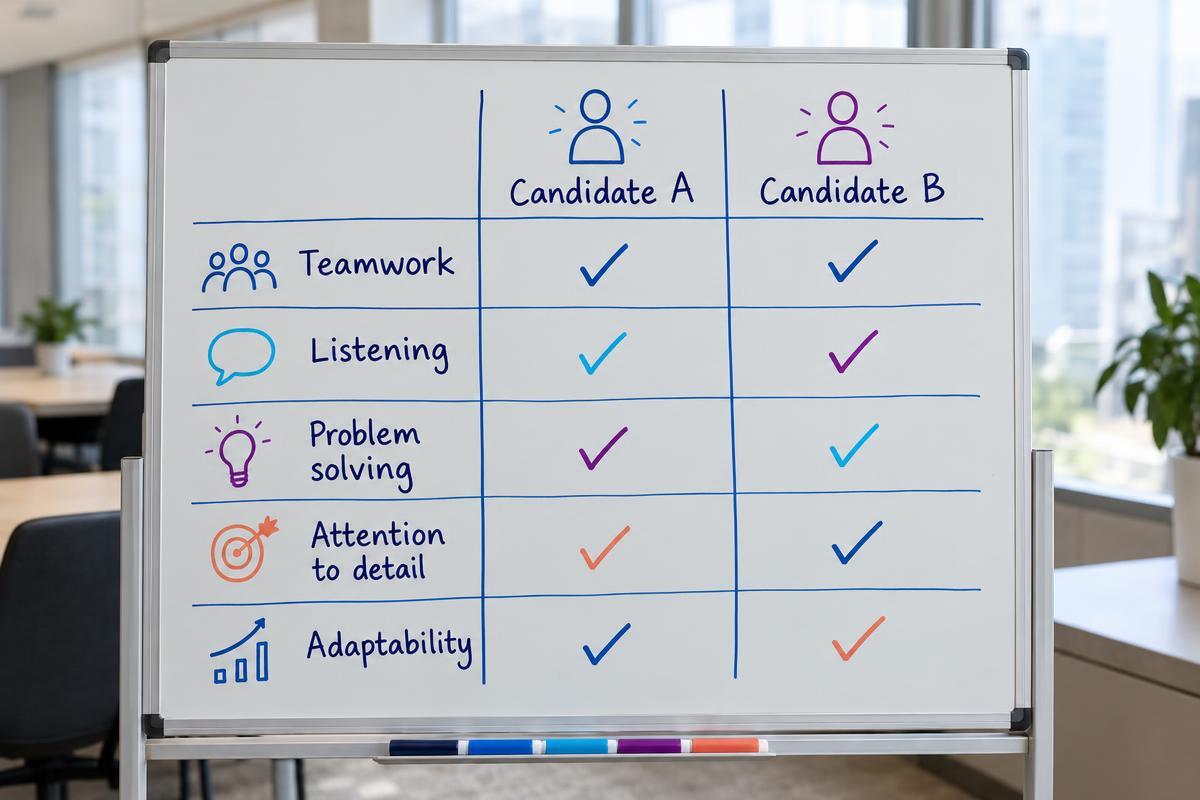
Start by identifying three or four behaviours that are critical to the role. For a customer service team, you might look for active listening, de-escalation, and empathy. For an operations team, you might look for time management, delegation, and logic. Avoid vague terms like "leadership" or "teamwork". Break those concepts down into observable actions. "Teamwork" is hard to score, but "asks for input from quiet team members" is easy to see and rate.
One person cannot run an activity, manage the timer, and accurately score ten different candidates at once. You need a panel. Assign one person to be the facilitator. Their only job is to explain the rules, keep the group on track, and answer questions. Assign two or three other managers to be observers. Divide the candidates among the observers so each manager is only watching and scoring three or four people.
Group interviews must follow the same rules as one-on-one interviews. In Australia, this means adhering to the Fair Work Act and the relevant federal and state anti-discrimination Acts. You cannot design activities that inadvertently disadvantage candidates based on protected attributes like age, disability, or cultural background. Building a bias-free hiring process means focusing strictly on skills, problem-solving, and behavioural alignment with the job.
The best activities force candidates to make decisions with limited information and limited time. Here are five practical exercises you can adapt for your organisation.
This activity works well for customer-facing or operational roles. Give the group a written scenario detailing three urgent problems happening simultaneously. For example, a major client is angry on the phone, the payment system just crashed, and a junior staff member is asking for help. Give the group 15 minutes to agree on which problem to solve first, second, and third.
Watch for how candidates negotiate. Do they bulldoze others to get their way, or do they build consensus? Does someone take notes and keep time?
Traditional group activities heavily favour extroverts. The silent build levels the playing field and accommodates different working styles. Provide the group with a complex set of instructions and materials, like building a specific structure out of blocks or sorting a large set of messy data on a whiteboard. The catch is they must complete the task in ten minutes without speaking.
This forces candidates to rely on non-verbal communication, situational awareness, and cooperation. It reveals who can follow the flow of a team and who tries to dominate physically.
This is an excellent activity for management or administrative candidates. Give the group a hypothetical departmental budget and a directive to cut costs by 20 percent. Provide character profiles for the staff members affected by the cuts. The group must present a joint recommendation at the end of 20 minutes.
You are looking for analytical thinking and empathy. Watch for the candidate who balances the raw numbers with the human impact of the decisions.
For technical, marketing, or product roles, show the group a competitor's website, app, or marketing campaign. Ask them to spend five minutes silently identifying three major flaws. Then, give them 15 minutes as a group to agree on one major flaw and pitch a solution to fix it.
This activity includes silent planning time, which gives neurodivergent and introverted candidates a chance to gather their thoughts before speaking. It helps you hire for culture add by showing you how candidates bring unique perspectives to a shared problem.
Give the group a list of 15 tasks they need to complete by the end of the day. Make it mathematically impossible to finish all 15 tasks. Ask them to sort the tasks into "must do", "delegate", and "drop".
Observe how the candidates handle stress and conflicting opinions. The final list matters less than the process they use to get there.
Many organisations now hire distributed teams, which means group interviews must happen over video calls. Virtual group interviews require slightly different mechanics to avoid candidates talking over one another.
Use breakout rooms to divide large groups into pods of four or five. Have an observer join each room with their camera and microphone turned off so they can watch the interaction without participating. Instead of physical materials, use shared digital whiteboards or collaborative documents. Virtual activities test digital literacy and remote communication skills, which are critical for distributed roles.
If you run a brilliant group activity but rely on your memory to pick the best candidate, you waste the data. You need a structured way to score the behaviours you just observed. Research from Hyring shows that structured interviews have a predictive-validity coefficient of approximately 0.51 for job performance, versus about 0.38 for unstructured interviews.
Use a standardised scorecard. Every observer should have a rubric that rates candidates on a clear scale for the specific behaviours you identified earlier.
| Behaviour | Poor (1) | Acceptable (3) | Excellent (5) |
|---|---|---|---|
| Active Listening | Interrupts others frequently. | Waits for turn to speak. | Builds on the ideas of others. |
| Problem Solving | Focuses only on the obstacles. | Offers one viable solution. | Analyses risks and suggests alternatives. |
| Inclusivity | Ignores quiet team members. | Allows everyone to speak. | Directly asks quiet members for input. |
After the activity, the observers should compare their scores before discussing their general feelings. This grounds the hiring decision in data, not charisma. According to SHRM's 2024 Talent Trends research, 54 percent of organisations use pre-employment assessments. Backing up your group interviews with objective data helps you match these industry standards.
Group interviews can be intimidating for candidates. A poor experience damages your employer brand and costs you talent. Criteria Corp's 2024 Candidate Experience Report found that 91 percent of candidates wanted interview feedback from employers regardless of whether they received a job offer.
Because you used a structured rubric to score the activities, you have specific, behavioural feedback ready to share. Telling a candidate they were "not quite the right fit" is frustrating. Telling them they "needed to demonstrate more active listening during the budget exercise" is constructive and professional.
Running group interviews at scale requires consistent processes and clear evaluation standards. Compono Hire is an applicant tracking system that matches candidates to your culture, not just their resumes. It helps you build structured evaluation criteria so your observers score candidates on the exact behaviours your organisation values. We helped The Coffee Club start consistent hiring standards across more than 400 outlets, leading to an 8 percent lower turnover rate. You can apply the same rigour to your group assessments.
Group interviews allow employers to assess multiple candidates simultaneously, saving significant time. They also provide a unique environment to observe interpersonal skills, teamwork, and leadership potential in real time, which is difficult to measure in a standard one-on-one interview.
The ideal size for a group interview activity is between four and six candidates. If you have fewer than four, the group changing is limited. If you have more than six, quieter candidates will struggle to participate, and your observers will find it difficult to accurately score everyone's performance.
You can accommodate introverts by choosing activities that include periods of silent reading and individual planning before the group discussion begins. You should also train your facilitators and observers to watch for candidates who demonstrate strong analytical skills and active listening, rather than just rewarding those who speak the most.
No. Group interviews are highly effective for screening candidates and assessing teamwork, but they should not replace one-on-one interviews completely. A group setting does not give you enough time to explore a candidate's specific work history, career goals, or technical qualifications in depth.
Interviewer calibration aligns your hiring panel on exactly how to score candidates. Learn how to prevent bias, track drift, and build structured...
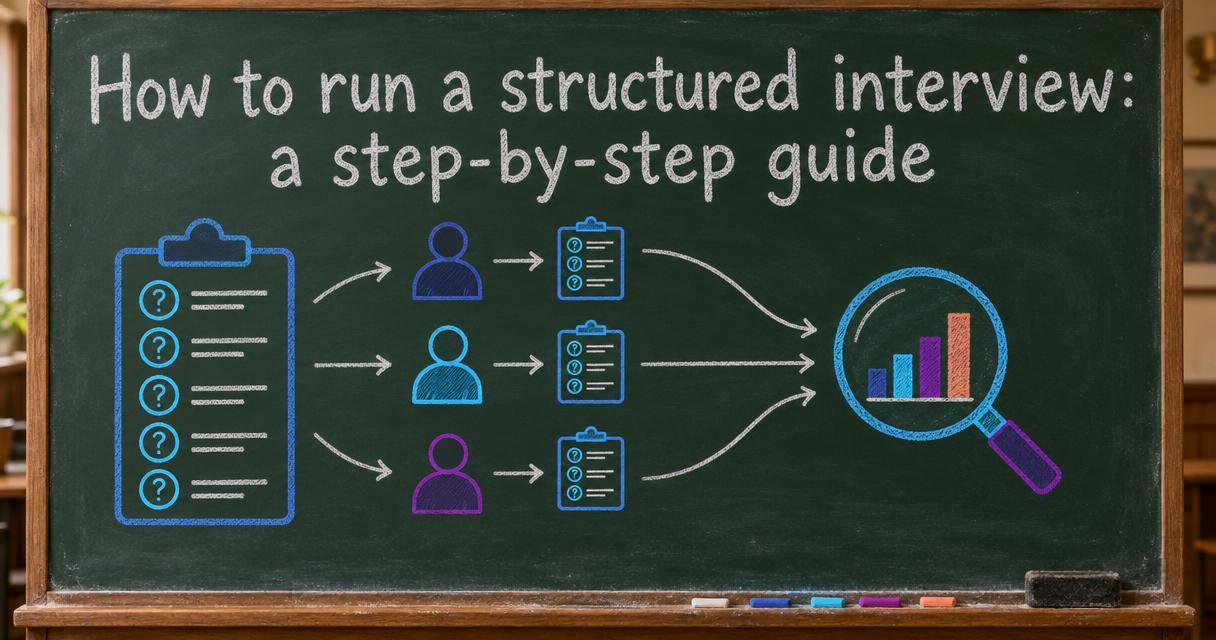
To run a structured interview that reduces hiring bias and accurately predicts job performance. Discover how to build rubrics and score candidates...
The best second interview questions for employers. Learn how to structure your second round to assess culture fit and behavioural alignment...