

 Claire Fernando

HR can vibe-code plenty of its own tools, but anything that measures people (culture, engagement, personality or fit) needs validated science behind it, and a prompt can't supply that. Build the admin helpers if you have the time. Keep the tools that make decisions about people on research-backed ground.
Founders are asking their people teams a new question this year: what can we build ourselves? With "vibe coding" named Collins Dictionary's word of the year for 2025, a pulse survey or a recognition bot is now an afternoon's work. The harder question is which HR tools you should build, and which ones lose their value the moment you do.
In short
- Vibe coding is fine for low-risk HR admin tools, but tools that measure people need validated, research-backed instruments to produce data you can defend.
- A validated culture or engagement survey loses its validity when its questions are edited, which is why Compono keeps its 12 culture dimensions fixed.
- AI-generated code introduced security flaws in 45% of tasks in Veracode's 2025 testing of more than 100 large language models, a real risk for anything holding employee data.
- HR platforms that try to do everything often stall; the value of validated people data comes from connecting it, so culture data from current teams informs who you hire next.
- Personality profiling at leadership level only covers part of the organisation. Team design depends on knowing the work personalities of the people underneath.
Why are founders asking HR to vibe-code?
Vibe coding means describing what you want to an AI model in plain language and letting it write the software. The term was coined by AI researcher Andrej Karpathy in early 2025 and spread fast enough to become Collins Dictionary's word of the year.
For AI-native founders, it has become a default question for every line item in the budget. People advisors who work with these start-ups describe a common expectation: if a tool doesn't handle confidential information, the founder assumes it can be built in-house.
The more experienced advisors draw a firm line. Compensation, the HR information system (HRIS), legal documents and anything confidential stay off the list. Beyond that, most low-risk tools are open for discussion.
The real constraint for most HR teams is time. Building and maintaining your own tools sits on top of the day job, so even with a mandate from the founder, few people teams will build much. What the mandate does change is the bar. Every HR tool now has to prove it's a must-have.
Which HR tools are safe to build yourself?
A simple test helps. If the tool's output is a nudge, you can probably build it. If its output is a judgement about a person, you probably shouldn't.
In that last group, a bug can quietly shape someone's career.
What do you lose without validated science?
You lose the ability to defend the result. A validated instrument has been tested to show it measures what it claims to measure, and that the results predict something that matters. That work takes years of research and large samples. A prompt can produce questions that look right in an afternoon, but it can't produce the evidence that they work.
Method matters more than most people assume. A 2022 re-analysis by Paul Sackett and colleagues in the Journal of Applied Psychology found structured interviews were the strongest single predictor of job performance (r = .42), ahead of cognitive ability tests (r = .31). Structure is the reason. The same validated questions, asked and scored the same way every time, give you data you can compare and trust.
Experienced practitioners make the same choice in their own work. When they run a psychometric with a client, they pick one with published research behind it over a home-made personality quiz, because the research is what makes the results worth acting on.
Structure is a proven principle
None of this is new thinking. Structured interviews have decades of selection research behind them, and Sackett's 2022 re-analysis ranked them as the strongest single predictor of job performance (r = .42, ahead of cognitive ability tests at r = .31). No vendor invented structure. The evidence settled it long ago, and good tools make it easier to apply the same way every time.
That principle shapes how we build Compono. Updates to Compono Hire brings personality and job fit into its structured interview guidance, so hiring teams ask the same validated questions of every candidate, and those questions reflect the role and the team the person will join.
This is also why Compono Engage, our employee engagement software and culture assessment platform, doesn't let you rewrite its core survey. Culture is measured against 12 validated dimensions (such as innovative versus risk-averse, and process-driven versus outcomes-driven), and engagement against a balanced scorecard. Customers ask to edit those questions regularly. The answer stays no, because the questions are the part that carries the validation. Change them and the data stops meaning what it says.
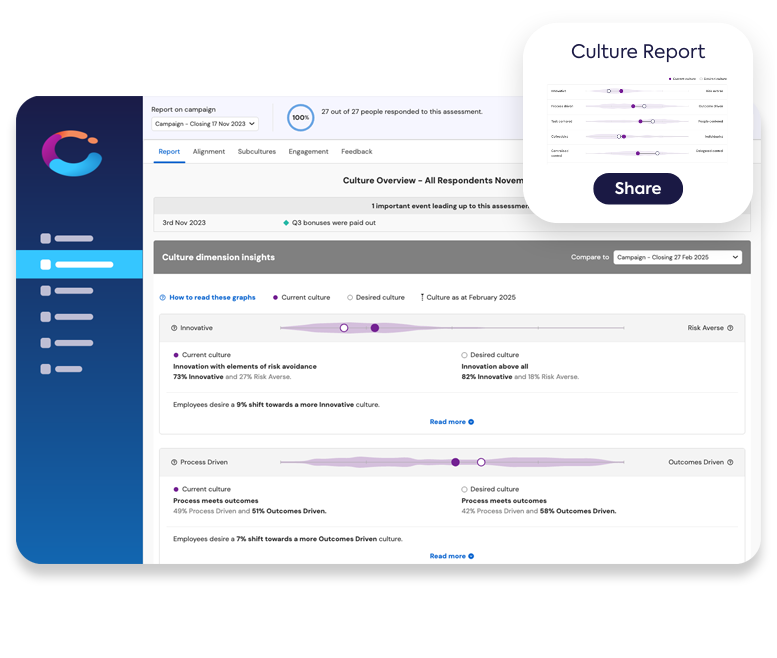
We've talked about one middle path internally: letting teams add their own bespoke questions as a separate layer, for example to check how newly launched values are landing. Those answers could sit alongside the validated results without changing them, and they wouldn't feed hiring decisions. The core stays fixed.
Is AI-generated code a security risk for HR data?
It can be. In Veracode's 2025 GenAI Code Security Report, AI-generated code introduced security vulnerabilities in 45% of the 80 coding tasks tested across more than 100 large language models. Veracode's CTO pointed to vibe coding directly.
HR holds some of the most sensitive data in any business: pay, performance notes, health and leave records, engagement comments people gave on the promise of confidentiality. A home-built tool without a backend engineer looking after it is a risk that lands on HR's desk.
Users notice, too. Our partnerships team regularly hears from prospects about tools that crash often, along with the suspicion that they were vibe-coded. A single high-profile failure at a large company could be enough to make many HR teams rethink building their own tools.
The same caution applies to AI inside established platforms. We haven't rushed AI features into Compono, because every one needs guardrails so it doesn't override the validated science or hallucinate advice about real teams.
Why do do-it-all HR platforms struggle?
Vibe coding isn't the only way HR ends up with tools that do a lot of things averagely. The other is the vendor that tries to cover every HR function at once.
We've heard of one well-known performance platform that expanded into compensation and HRIS in quick succession. It hired a head of compensation, then made the role redundant. The HRIS product proved more complex than expected and the line was shut down. Even the strongest specialists find doing it all much harder than it looks.
For any vendor tempted to expand, the useful question shifts from whether it could build a new module to whether it should. Every bolt-on dilutes the thing that made the product worth buying.
It's a question we ask ourselves. Compono won't build payroll or an HRIS, because they aren't our unique value. Our focus is people science: understanding how your people work, then using that in every people decision. Your HRIS handles records and process well. Compono adds the people insight layer it was never designed to provide, and connects to it.
Personality at the top, but what about the team underneath?
Many organisations run a psychometric for the leadership team and stop there. It's useful for leaders to understand each other. It doesn't tell you much about how the teams they lead actually work.
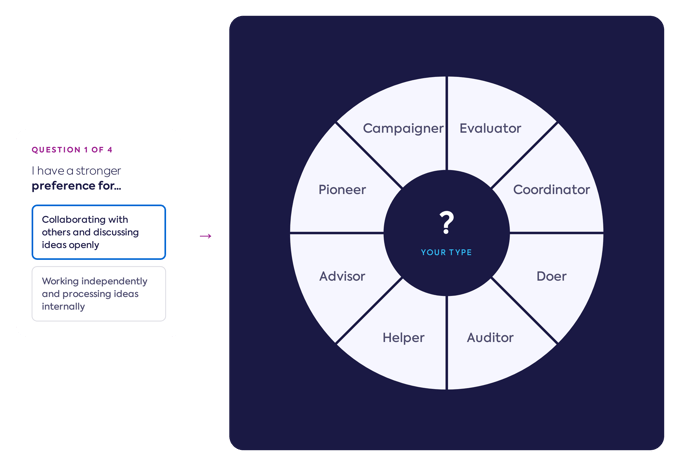
Compono maps every team member against eight work personalities, so you can see these gaps before they show up as frustration or turnover. The fix might be moving people between teams or changing who you hire next.
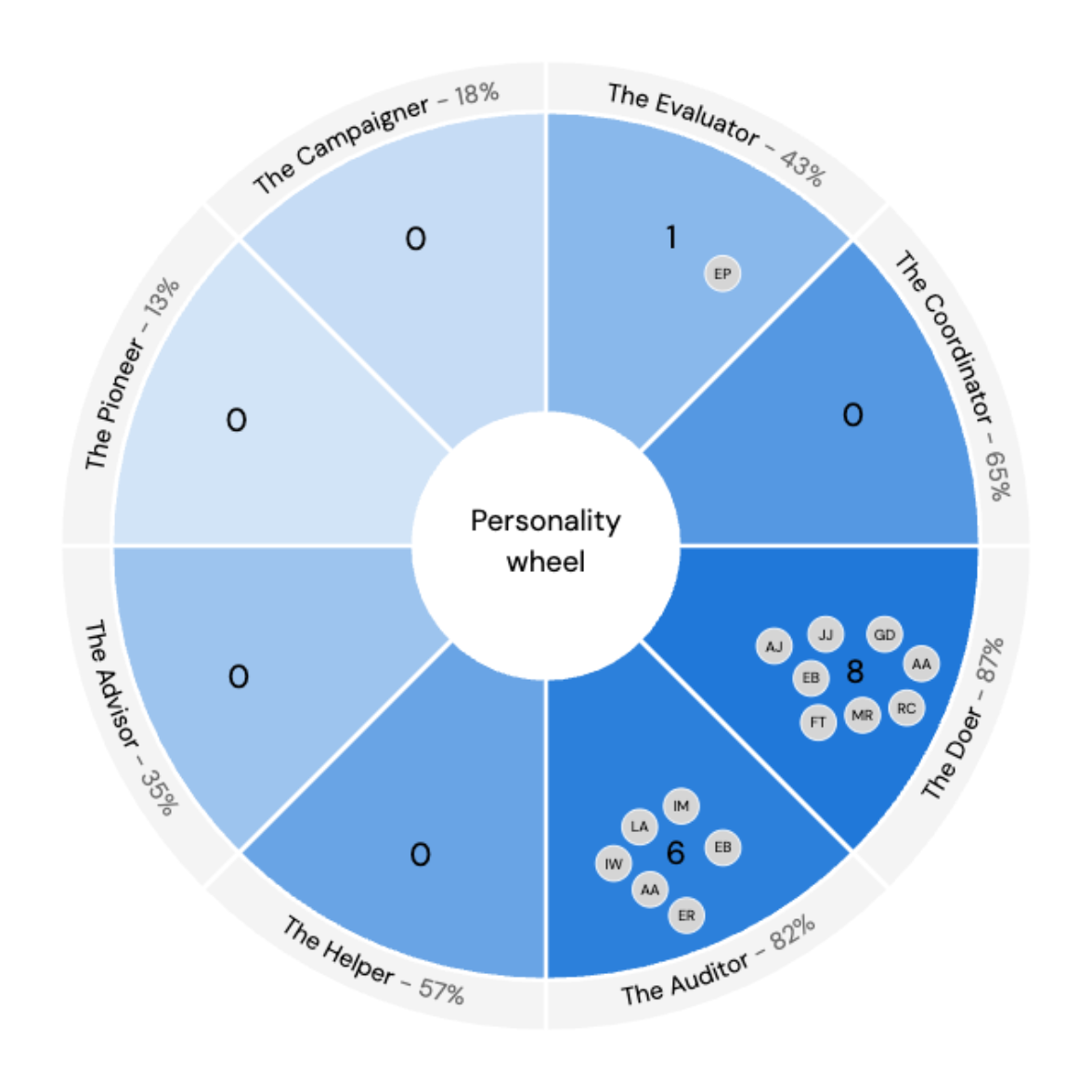
That last option only works if your culture and personality data reaches your hiring process. In most businesses it doesn't. Engagement data sits in one tool and the applicant tracking system (ATS) sits in another. Compono Hire closes that gap: you can set a role's culture fit using your own team's desired culture data, and candidates are asked what kind of environment they work best in. Hire's culture-fit matching has shown 92% prediction accuracy.
One caution our team always raises: if you bring a pioneer into a team of doers, you need a leader who will give their ideas room. People data informs the decision. Good management still has to carry it.
How do you decide what to build, buy or connect?
Four questions sort most HR tools quickly:
- Does it make or inform a decision about a person? If yes, use a validated instrument.
- Does it hold confidential employee data? If yes, it needs proper security engineering behind it.
- Does its data need to travel? If culture data should shape hiring, and learning should follow engagement gaps, choose tools that share one source of people data.
- Would you defend it to your board, or in a dispute? If the honest answer is "we wrote the questions last month", you've found your risk.
Anything that passes all four with a "no" is a fair candidate for vibe coding.
Key takeaways
- Vibe coding suits low-risk HR helpers such as recognition, onboarding nudges, policy FAQs and quick pulse checks.
- Tools that measure people only work if the instrument is validated, so editing the questions breaks them.
- Nearly half of AI-generated coding tasks in Veracode's testing introduced security flaws, which matters for employee data.
- HR platforms that try to do everything often stall. Specialist people science that connects to your stack holds its value.
- Team design needs personality data for everyone in the team, including the people leaders manage.
The tools you build should help. The tools you trust should be proven.
Founders will keep asking HR what it can build, and for plenty of small jobs the answer is "quite a lot". For the decisions that shape who joins your teams and how they work together, the science is the product. Losing it to save a licence fee is a poor trade.
FAQ
Can HR vibe-code its own engagement survey?
You can build a quick pulse check, and for a one-off question it’s often fine. A full engagement or culture survey needs validated questions and a tested scoring model, otherwise you can’t compare results over time or defend the conclusions.
Why can’t I change the questions in a validated culture survey?
The questions are what carry the validation. Rewording or replacing them changes what’s being measured, so the results lose their research backing. Compono keeps its 12 culture dimensions and engagement scorecard fixed for that reason.
Can we add our own questions, like how our values are landing?
Bespoke questions can sit alongside a validated survey as a separate layer, as long as they don’t alter the validated scores. They’re useful for checking specific initiatives. They shouldn’t be used for hiring decisions.
Is it worth using psychometrics in hiring?
Validated, job-relevant assessments add a consistent, comparable signal to interviews. They’re most useful early in the process, measured against the team the person will join, instead of being added at the final shortlist stage.
What size business is Compono built for?
Compono works best for organisations with roughly 60 to 1,000 employees. That’s large enough to act on team-level people data, and usually before a business locks into a single enterprise suite.
Sources
-
Veracode, 2025 GenAI Code Security Report press release, 30 July 2025: https://www.veracode.com/press-release/ai-generated-code-poses-major-security-risks-in-nearly-half-of-all-development-tasks-veracode-research-reveals/
-
Sackett, P. R., Zhang, C., Berry, C. M., & Lievens, F. (2022). Revisiting meta-analytic estimates of validity in personnel selection. Journal of Applied Psychology. Summary via HumRRO: https://www.humrro.org/blog/is-cognitive-ability-the-best-predictor-of-job-performance-new-research-says-its-time-to-think-again/
-
SHRM, citing Sapient Insights Group 2024 to 2025 HR Systems Survey and Capterra: https://www.shrm.org/executive-network/insights/simplify-tech-stack-risk-redundancies-hr-software-sprawl
-
Collins Dictionary word of the year 2025, reported by CTV News: https://www.ctvnews.ca/lifestyle/article/vibe-coding-named-word-of-the-year-by-collins-dictionary/
Claire Fernando is a Digital Marketing Specialist at Compono, an Australian people and culture platform that combines hiring, culture, and learning with people insight.