

.webp)

 Mathan Allington


How AI hiring tools are transforming modern recruitment
 Compono
Discover how AI hiring tools improve recruitment efficiency and reduce bias. Learn to balance automation with human intelligence for better hiring...
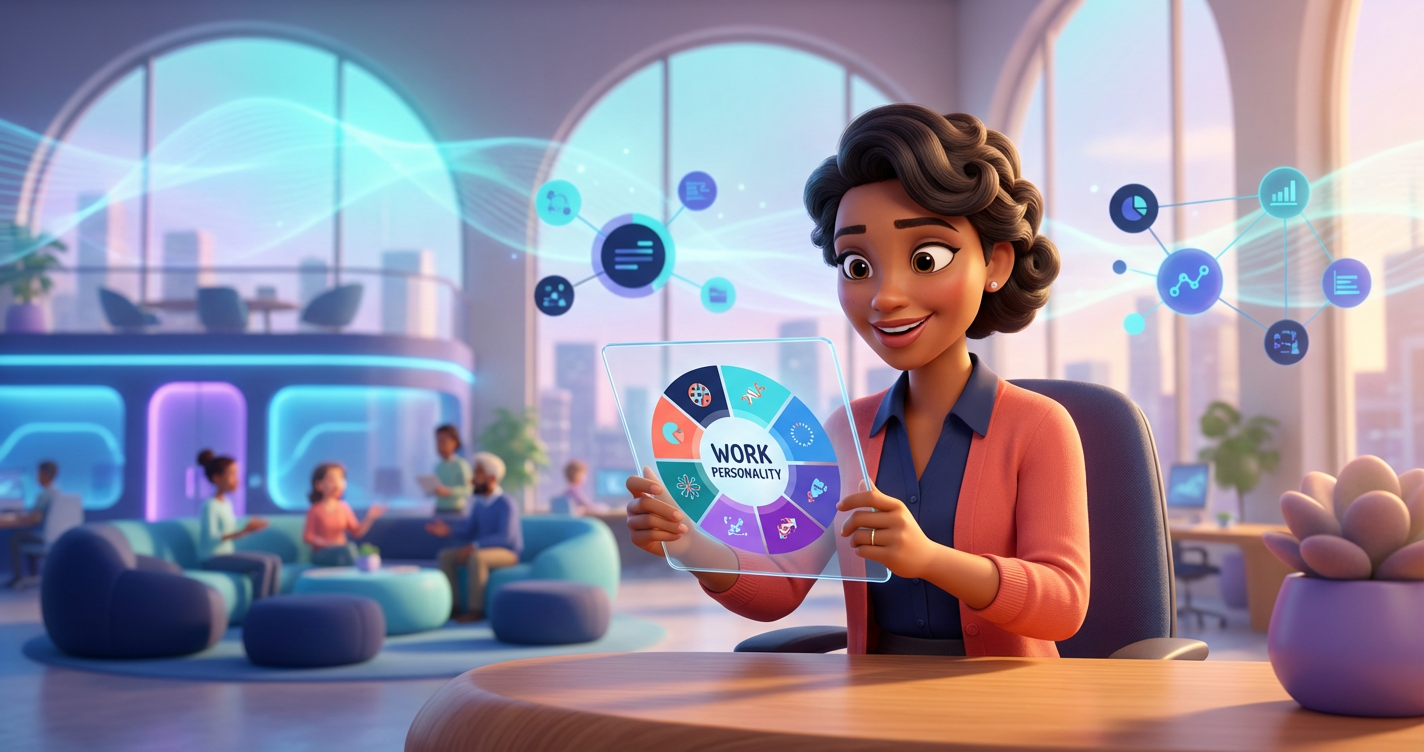
To choose AI hiring tools, judge them on five criteria: explainable rankings (no black-box decisions), fit measurement that goes beyond keywords, data that follows the employee past the hire, human-in-the-loop design, and an interface your team will actually use. Tools that automate admin and surface fit insight beat tools that just move resumes faster.
Last reviewed July 2026.
The rise of automation in HR has been swift, but the most successful teams use technology to sharpen the human element of hiring rather than replace it. Smart algorithms in the workflow reduce time-to-hire and ground recruitment decisions in objective data rather than unconscious bias.
Key takeaways
- AI hiring tools cut administrative burden by automating resume screening and initial candidate ranking.
- The best automation strategies feed human decision-making with data on candidate personality and culture fit.
- Ethical AI requires transparency and a focus on removing bias from the early stages of the funnel.
- High-performing teams use technology to match candidates' natural work preferences with the needs of the role.
HR leaders are often buried under a mountain of applications for every open role. Manually sorting hundreds of resumes is slow and prone to fatigue. By the fiftieth application of the afternoon, it is easy to overlook a stellar candidate simply because your brain is tired.
Traditional hiring also leans on the gut feel of a recruiter or hiring manager. Experience is valuable, but subjective impressions are frequently shaped by unconscious biases, such as where someone went to university or a shared hobby, that have nothing to do with job performance. The problem is not effort. It is the lack of objective tools that show a candidate's full potential at volume, before the interview.
Our research into high-performing teams shows the gap between a good hire and a great one usually comes down to how well their natural work personality matches the activities the role requires. Without technology to surface those insights, you are hiring in the dark and hoping the person who looks good on paper thrives in your environment.
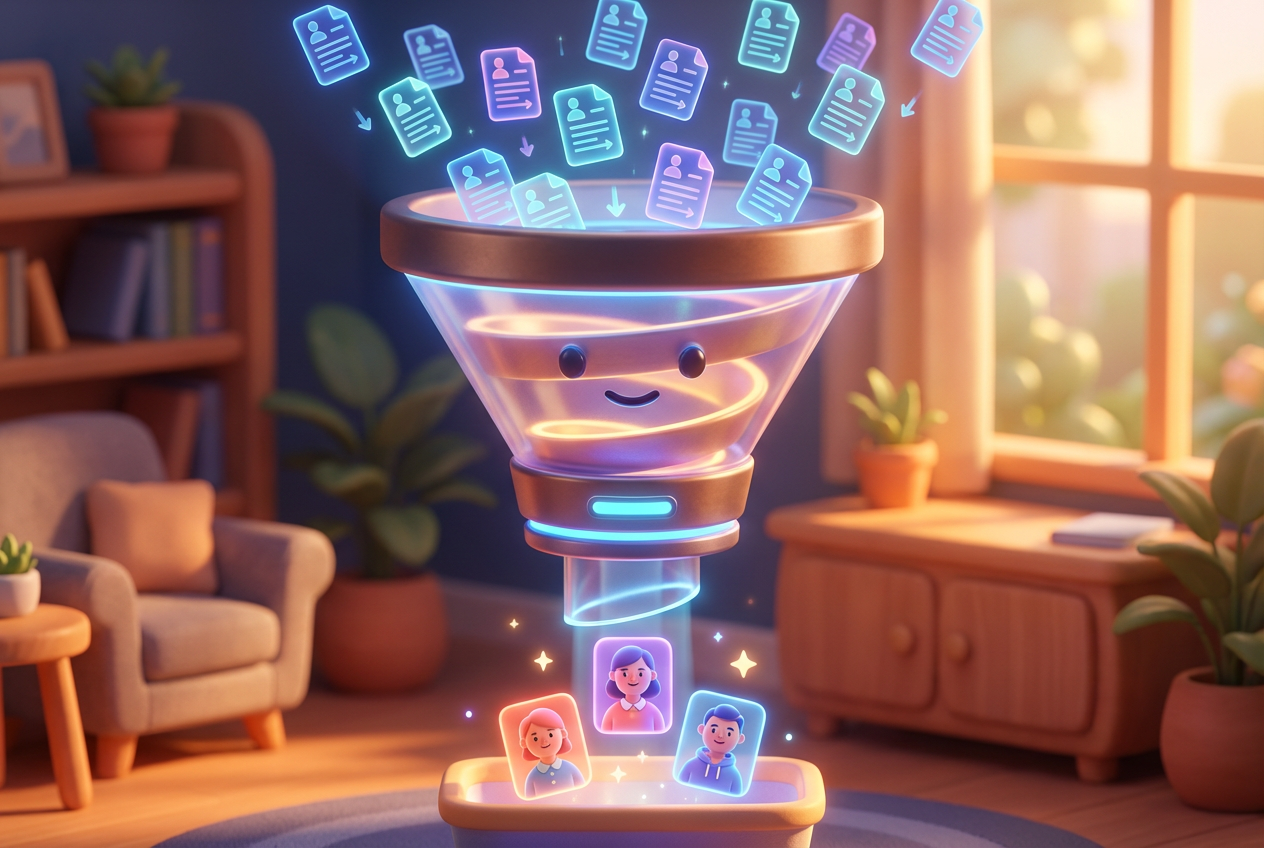
The most immediate benefit of AI hiring tools is radical simplification of initial screening. Instead of hours of keyword searches, smart systems analyse qualifications, experience and career trajectory in seconds. Your team stops being data entry clerks and returns to being people partners focused on high-value conversations with strong candidates.
The real value appears when tools go beyond keyword matching to assess organisation fit: culture, job and personality fit combined. Compono Hire, for example, scores and ranks candidates in real time on these dimensions, with a validated culture-fit prediction, giving you a clear shortlist of who to talk to first.
Centralising this intelligence also creates a more equitable process. Every candidate is measured against the same objective benchmarks, so talent from diverse backgrounds gets a fair look. That consistency is nearly impossible to achieve manually across multiple hiring managers, departments and locations.
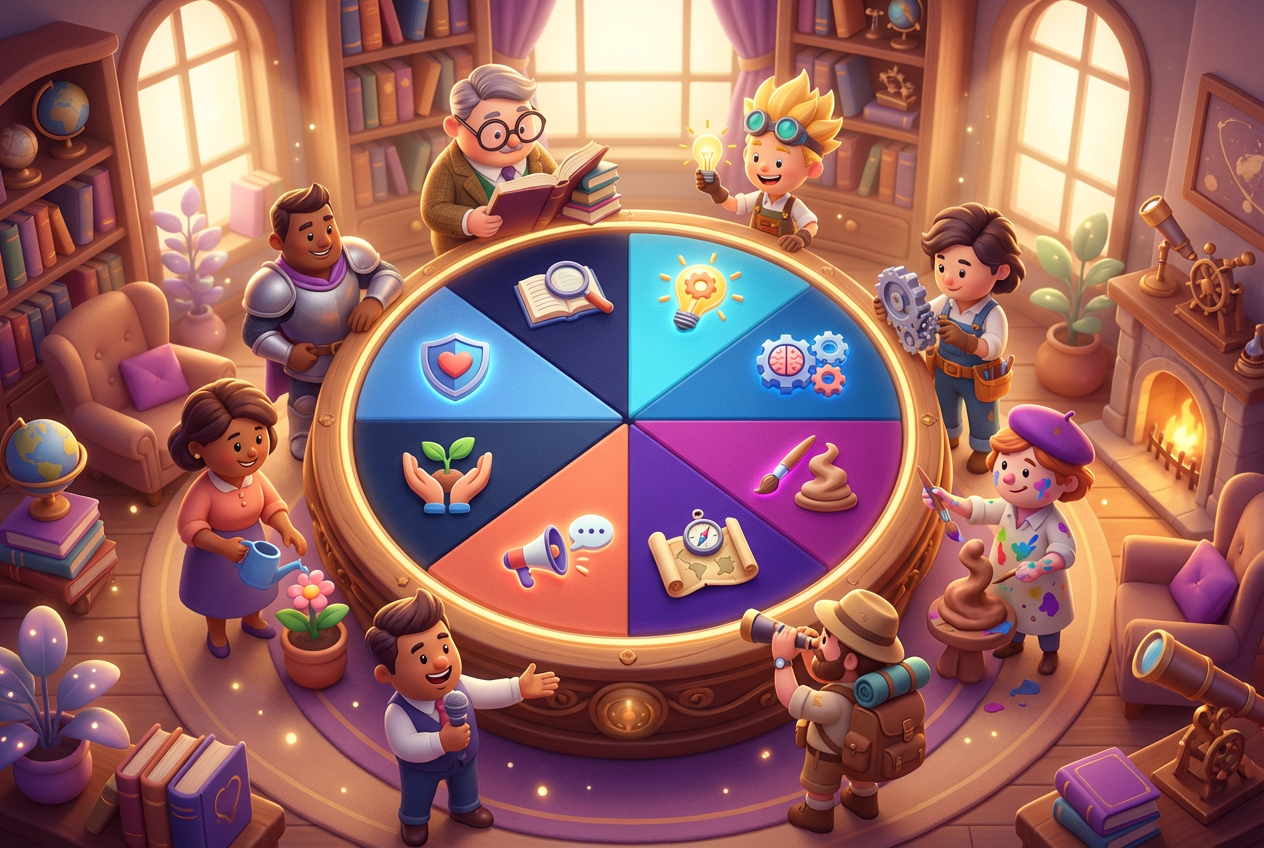
A resume tells you what someone has done, but rarely how they will do it. AI hiring tools increasingly include psychometric and work preference assessments that reveal a candidate's natural tendencies. Knowing whether someone thrives on new ideas or excels at precision changes how you build teams.
With data on a person's work personality, you can predict how they will interact with existing team members. Will they push for new ideas, or bring order to a chaotic project? You are not just hiring a person for a job; you are designing a team for a specific outcome.
Consider a fast-growing tech team needing a project lead. Three candidates have identical experience on paper, but the data shows one is a natural coordinator who excels at enforcing deadlines and developing systems. If the team is struggling with missed milestones, the decision becomes clear. AI hiring tools make invisible traits visible, with a precision once reserved for enterprises with large consulting budgets.
The most effective AI hiring tools are designed so technology provides the insight and humans make the final call. The goal is removing drudge work (scheduling, initial screening, data collation) to create more time for the conversations that matter. AI can tell you a candidate has the right skills and personality profile, but only you can judge the chemistry in a face-to-face meeting.
Organisations that try to automate the entire journey end up with a cold, robotic candidate experience. Candidates value transparency and personal connection. Used well, technology actually improves their experience because they are not left waiting weeks for a response. A faster, data-backed process shows you value their time and are serious about fit.
Workforce intelligence should give leaders confidence, not replace them. The same data that guides a hiring decision can guide how you develop that person once they join, highlighting opportunities and risks you might otherwise miss.
1. Explainable rankings. Avoid black-box tools where you cannot see how the algorithm decides. You should know exactly why a candidate ranked where they did and what criteria were used. Transparency keeps your hiring ethical and defensible.
2. Fit measurement, not just keywords. The tool should assess job fit, culture fit and personality fit together, because that combination predicts retention and performance far better than resume keywords.
3. Data longevity. Does the data only serve the hire, or does it follow the employee into development and engagement? The best systems provide a continuous thread of insight from application through their whole tenure, so you can see the long-term return on hiring decisions.
4. Human-in-the-loop design. The tool should support your judgement with evidence, not remove you from the decision.
5. Usability. If a system is too complex, your team reverts to old manual habits. Look for clean interfaces, clear reporting and insights that do not require a data science degree. The best technology is the one that gets used every day.
Key insights
- AI hiring tools are most effective when they focus on organisation fit rather than just technical skills or keywords.
- Work personality data lets leaders build balanced, high-performing teams.
- Automation should remove administrative friction and free time for human connection.
- Transparent algorithms are essential for ethical, unbiased hiring.
- The most valuable HR technology supports the whole employee lifecycle, from hire to development.
Compono Hire ranks candidates on job, culture and personality fit in real time, and shows you exactly why each one scored the way they did.
Talk to usThey use objective data points and standardised assessments to rank candidates. By focusing on skills, qualifications and work personality traits rather than subjective resume details, every applicant is evaluated against the same criteria, removing much of the gut feel that leads to biased hiring.
No. AI is designed to support recruiters, handling high-volume, repetitive tasks like screening and scheduling. That frees recruiters to build relationships, assess cultural nuance and make final decisions that require emotional intelligence.
Organisation fit assesses a candidate across three dimensions: job fit (skills), culture fit (shared values) and personality fit (natural work preferences). AI tools measure these traits together to predict long-term success and retention, not just ability to do the job.
Yes. Mid-market organisations often benefit most because they have smaller HR teams. Automation lets them compete with larger enterprises for talent by speeding up hiring and providing insight that would otherwise need far more headcount.
Discover how AI hiring tools improve recruitment efficiency and reduce bias. Learn to balance automation with human intelligence for better hiring...

AI-written applications are clogging hiring pipelines. Why keyword filters miss them, and how matching on work personality surfaces real candidates.
AI-generated résumés are chaos. Discover how “hiring slop” is burying genuine talent and learn smarter hiring strategies that go beyond the broken...
 Mathan Allington