

.webp)

 Compono


Choosing the best recruit CRM software for Australian teams
 Mathan Allington
How to choose recruit CRM software: the features that matter, ATS vs CRM, AI in practice, and how to measure recruitment ROI beyond time-to-hire.

Most business leaders still view recruitment as a necessary evil - a drain on the budget that involves endless resume sifting and high agency fees. But as we move into 2026, the most successful organisations have realised that hiring isn't just an administrative task to be managed; it is the single most powerful lever for strategic growth.
For decades, the standard recruiting model has been purely reactive. A vacancy opens, a job ad is posted, and HR spends dozens of hours manually filtering through hundreds of applications. This approach treats recruitment as a transactional cost centre. You are essentially paying for the 'privilege' of filling a seat, often with little certainty that the person you hire will actually perform or stay long-term.

In this old-school framework, success is measured by 'time to fill' and 'cost per hire'. While these metrics are important for the balance sheet, they don't tell you anything about the quality of the hire or the long-term value they bring to your team. When you focus solely on minimising upfront costs, you often end up with the 'brilliant jerk' -someone with the right technical skills who destroys your team culture - or someone who looks great on a resume but lacks the natural work personality to thrive in your specific environment.
The hidden costs of this reactive model are staggering. Between lost productivity, advertising spend, and the inevitable turnover that follows a poor fit, a bad hire can cost a business up to 2.5 times the employee’s annual salary. To move beyond this, we need to stop looking at recruitment through the lens of expense and start seeing it as talent architecture.
Transitioning to a strategic model means aligning your people strategy directly with your business goals. Instead of asking "Who can fill this role today?", a strategic HR leader asks "What skills and behaviours do we need to achieve our three-year growth targets?" This is where the Compono platform helps you shift your perspective from filling gaps to building capability.
Strategic recruitment focuses on the 'leading indicators' of success. These include cultural alignment, motivational fit, and cognitive relatability. When you hire someone whose natural work style matches the demands of the role, they become productive faster, stay longer, and contribute more to the bottom line. This is how you turn a cost centre into a value-generating engine.
By using an advanced Applicant Tracking System (ATS), you can automate the heavy lifting of administrative tasks. This frees your team to act as strategic advisors to the business. Instead of being the 'fun police' or the 'rule keepers', HR becomes the architect of the workforce, using data to predict which candidates will actually drive the company forward.

In 2026, relying on keywords in a resume is no longer enough. We know that resumes are often poor indicators of on-the-job performance. Strategic hiring requires a deeper dive into data. This involves using sophisticated skills mapping and ontologies that understand the relationship between different types of experience.
For example, a candidate might not have the exact job title you are looking for, but they may possess a highly related set of transferable skills that make them a 'hidden gem'. Traditional systems would filter them out; a strategic system identifies their potential. This is particularly vital in the current global talent shortage where finding a 100% literal match is increasingly rare.
We believe that understanding a candidate's work personality is just as important as their technical ability. By assessing how an individual solves problems, handles conflict, and collaborates within a team, you can build balanced groups that are designed for high performance. This data-driven approach removes the guesswork and human bias that often leads to expensive mis-hires.
The journey from administrative to strategic requires the right technology stack. Compono Hire was built specifically to bridge this gap by automating the manual triage process. Our system uses advanced logic to rank every candidate in real-time based on how well their skills, qualifications, and work personality match your unique requirements.
This isn't just about saving time; it's about accuracy. Consider the case of VicRoads, who achieved $34 million in operational savings by using our platform to streamline their licensing and assessment processes. While that was a government-scale project, the principle remains the same for mid-market businesses: when you automate the 'hygiene' factors of recruitment and compliance, you unlock massive strategic value.
Furthermore, by integrating Compono Engage, you can benchmark your actual company culture before you even post a job. This ensures that the candidates you attract are already aligned with 'the way we do things around here'. It moves the culture-fit conversation from a vague 'gut feeling' in an interview to a measurable, data-backed strategic metric.
To prove that recruitment has moved from a cost centre to a strategic driver, you need to report on the metrics that the C-suite actually cares about. While 'time to fill' still matters, you should be adding 'quality of hire', 'first-year retention rate', and 'team performance lift' to your reports.
Strategic HR leaders use people analytics to show the direct correlation between hiring decisions and business outcomes. If you can demonstrate that employees hired through a data-driven process have a 20% higher productivity rate or a 30% lower turnover rate compared to those hired through traditional methods, you have effectively turned recruitment into a profit-protection centre.
Our reporting tools allow you to 'report up' with confidence. You can show exactly which sourcing channels are delivering the best long-term hires, allowing you to double-down on what works and cut wasteful spending on underperforming job boards. This level of transparency cements HR's position as a critical strategic function within the senior leadership team.


How to choose recruit CRM software: the features that matter, ATS vs CRM, AI in practice, and how to measure recruitment ROI beyond time-to-hire.
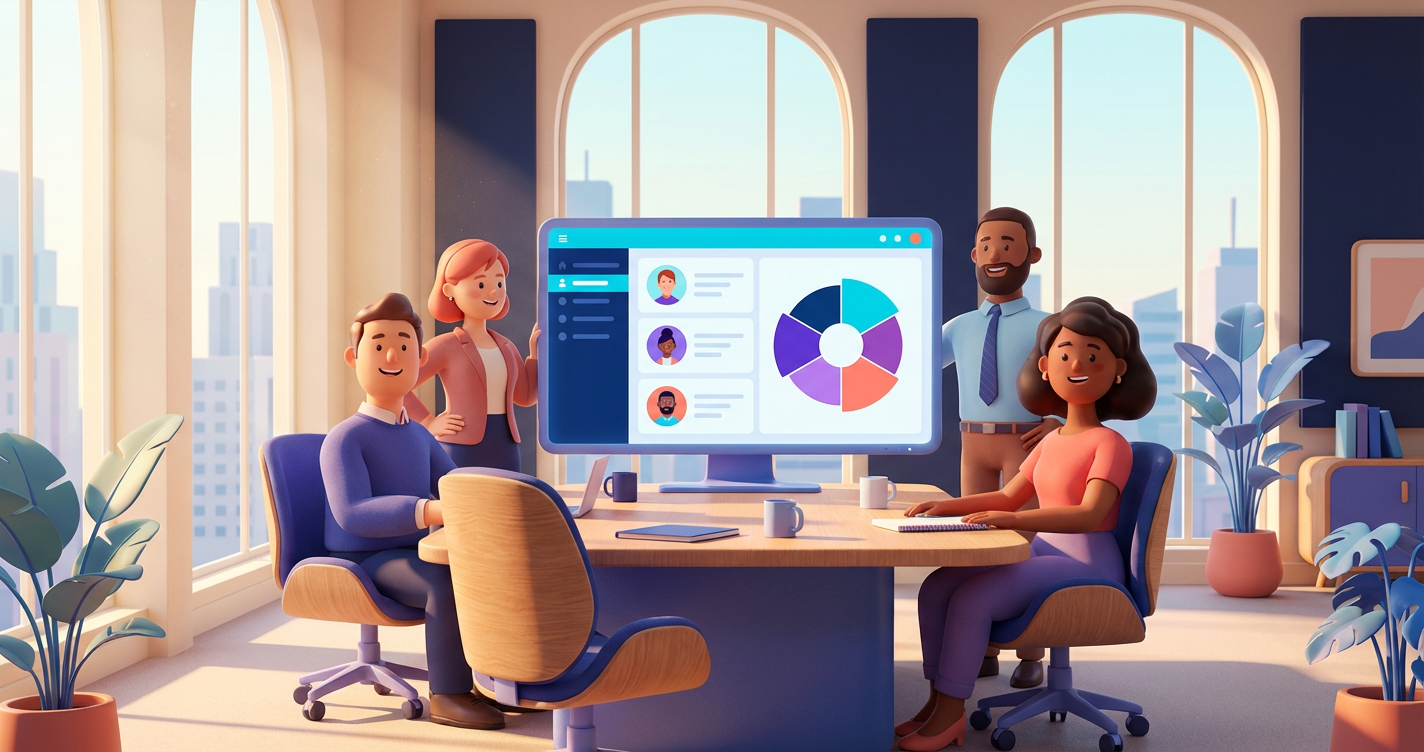
A practical guide to choosing recruitment software: define your bottlenecks, weigh quality of hire over speed, and test the candidate experience.

How to choose recruitment software in Geelong: what an ATS should assess about candidate behaviour, and how that builds stronger teams.
 Compono