


 Mathan Allington

Recruitment Metrics Dashboard: Essential KPIs for 2026
 Compono
How to build a recruitment metrics dashboard that tracks time-to-fill, cost-per-hire and quality of hire, and what to do with the numbers.
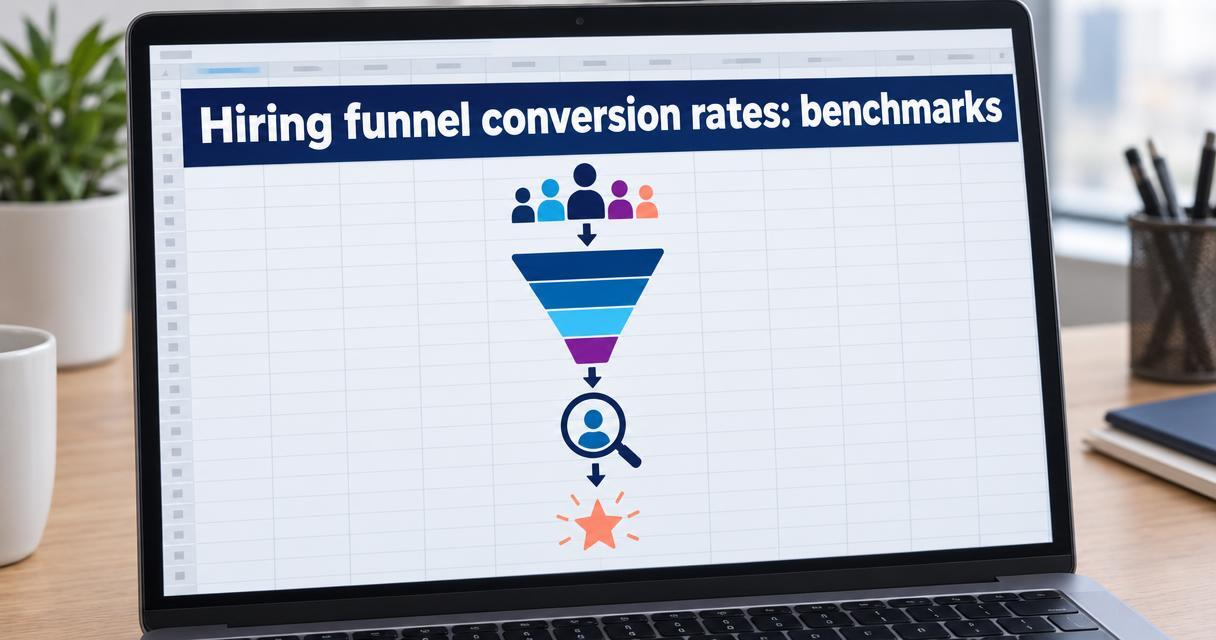
Hiring funnel conversion rates measure the percentage of candidates who move from one stage of your recruitment process to the next, showing you exactly where you lose top talent.
Last reviewed October 2026
Key takeaways
- Conversion rates reveal friction in your candidate experience, highlighting exactly where your recruitment process frustrates applicants.
- Industry benchmarks show that only about 8 percent of candidates pass the initial screening stage.
- High-volume hourly hiring requires speed, while technical roles demand depth and engagement to prevent drop-offs.
- Minor percentage improvements in your screen-to-interview ratio drastically reduce your cost per hire.
- Incomplete applicant tracking systems manage process risk but ignore people insight risk, causing bad cultural fits to slip through.
Many human resources teams focus entirely on the time it takes to fill a role and the cost of the final signature. These are lagging indicators. By the time you realise a recruitment campaign has failed, the budget is spent and the best candidates have already accepted offers elsewhere. If you do not track the steps in between, you have no way to diagnose the problem.
Most traditional HR technology is incomplete. It handles process risk perfectly well by tracking compliance, logging resumes and scheduling interviews. It completely ignores people insight risk. This is the risk of advancing candidates who look great on paper but clash with your organisational culture. When you push mismatched candidates through your funnel, you create identifying hiring bottlenecks at the interview stage and waste hours of management time.
Tracking your hiring funnel conversion rates gives you diagnostic power. A steep drop-off between application and screening tells you your job description is attracting the wrong people. A massive decline between the interview and the offer tells you your screening process is not working. Understanding these metrics helps you stop guessing and start fixing the specific stages that leak talent.
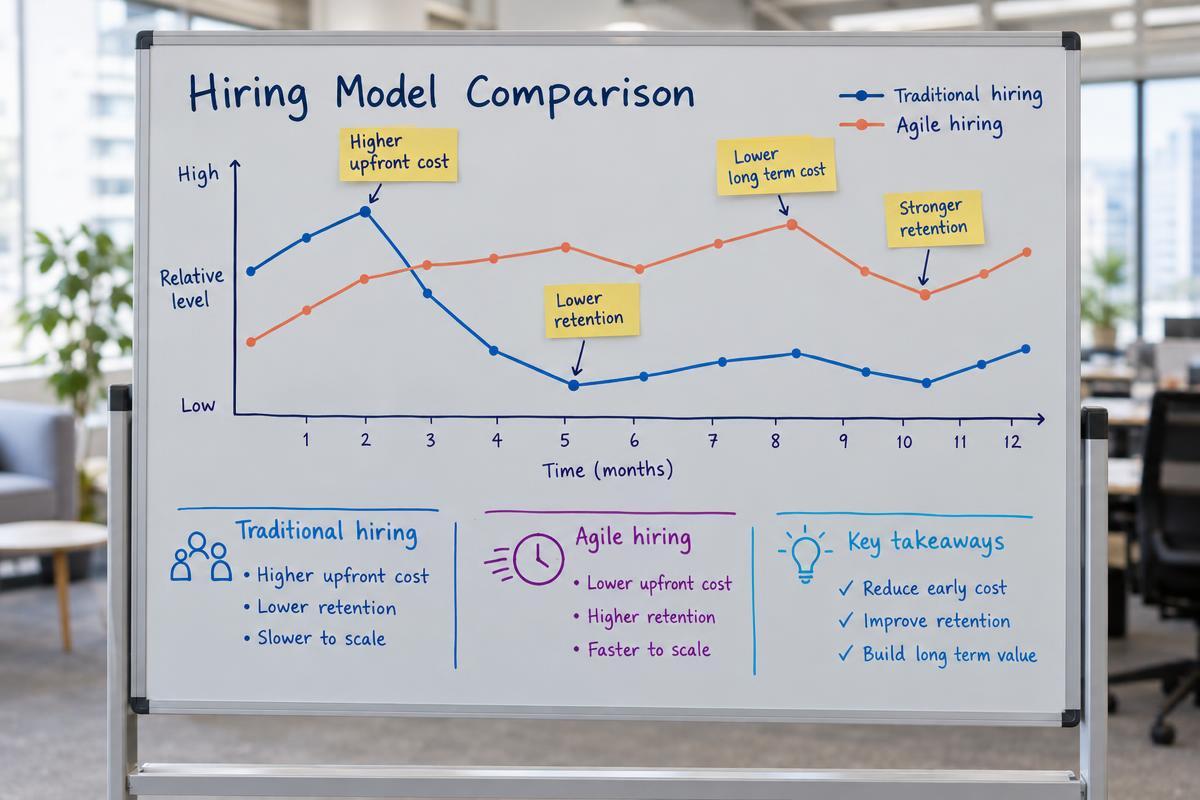
A recruitment funnel works exactly like a sales funnel. You start with a wide pool of potential applicants and narrow it down through systematic qualification. To measure conversion rates accurately, you must first define clear boundaries for each stage.
This top-of-funnel metric measures how many people view your job advertisement and actually decide to apply. A low conversion rate here usually means your salary expectations, location requirements or employer branding do not match the market. Candidates read the requirements, decide the role is not worth their time, and close the tab.
This stage tracks the percentage of applicants who meet your baseline requirements and receive a call or an initial assessment. If you receive hundreds of applications but only screen five people, your job advertisement was likely too broad. You paid to attract candidates who were never going to fit.
The screening stage filters out candidates who lack the technical skills or the work personality required for the role. This conversion rate tells you how accurate your initial sorting mechanism is. If almost everyone passes the screen but fails the formal interview, your screening process is too soft.
This is the most expensive stage of the funnel. It requires time from hiring managers, team leaders and executives. The conversion rate from interview to offer should be relatively high. If it is low, you are bringing the wrong people into the room.
The final metric measures your ability to close the deal. Candidates who reach this stage have proven their capability and fit. A low conversion rate here points to uncompetitive salaries, a poor candidate experience during the interviews, or a slow decision-making process.
Knowing your own metrics is only half the battle. You need to know what a healthy funnel looks like in the modern market. Recent research provides a baseline for today's workplace.
Data published by CareerPlug shows that job views convert to applications at approximately 6 percent. From there, applications convert to interviews at 3 percent. Interviews then convert to hires at 27 percent. The overall applicant-to-hire ratio is approximately 1 hire per 180 applicants.
The attrition is steepest early on. A report by Gem notes that only about 8 percent of applications advance beyond the initial screening stage. However, for those who make it to the very end, approximately 82 percent of offers are accepted.
These numbers vary significantly by role type. Research from Ashby found that applications convert to interviews at 4.7 percent for business roles and 3.6 percent for technical roles. Ashby also reports that approximately 35 percent of candidates pass the recruiter-screen stage, and about 24 percent pass the onsite-interview stage.
Candidates rarely drop out of a funnel by accident. They leave because the process asks too much of them or gives too little back. Understanding the candidate perspective helps you patch the leaks in your pipeline.
When an employer demands a one-way video interview, a cognitive test and a work sample before a human conversation takes place, candidates abandon the application. High-quality talent will not jump through hoops for an employer who has not yet proven the role is worth their time. Assessments must sit at the right stage of the funnel and provide value to the candidate.
If you hide the salary band until the final interview, you create artificial funnel inflation. Candidates progress through the stages simply to find out what the job pays. When you finally reveal a number below their expectations, they decline the offer. You ruin your interview-to-offer conversion rate and waste hours of management time.
Top candidates disappear when communication breaks down. If a week passes between an interview and a follow-up email, the candidate assumes they missed out and accepts another offer. A high drop-off rate after the screening stage almost always points to a slow feedback loop.
You cannot judge all recruitment funnels by the same standard. The metrics that indicate success in retail or hospitality will signal a massive failure in a software engineering campaign.
In retail, logistics and hospitality, speed is the only currency that matters. The funnel is incredibly wide at the top and requires aggressive filtering. Candidates for hourly roles often apply to ten jobs in a single afternoon and accept the first offer they receive. If your application-to-screen conversion takes three days, your funnel will collapse. Success in high-volume hiring means automating the early stages to secure candidates within hours.
Technical, engineering and senior business roles operate differently. The candidate pool is small, and the top of the funnel is narrow. These candidates value deep engagement over pure speed. They want to speak with their future manager, understand the technical stack, and assess the company culture. If you automate too much of a knowledge worker funnel, your offer acceptance rate will plummet because candidates never build a connection with the team.
Just as industries require different approaches, different levels of seniority produce entirely different conversion data. Applying an entry-level benchmark to an executive search will hide severe problems in your process.
Entry-level roles generate high application volumes. You might receive 400 applications for a graduate marketing position. The conversion rate from application to screen will sit in the low single digits. This is entirely normal. The challenge is filtering the noise quickly and fairly without introducing bias.
Executive searches flip this changing. You might only have fifteen potential candidates in your entire market. The top of the funnel is heavily targeted, meaning your application-to-screen conversion should sit above 80 percent. If an executive funnel sees high drop-offs at the interview stage, you have an alignment problem between the board, the hiring manager and the recruiter. Understanding these baseline differences prevents you from diagnosing the wrong problem.
Small improvements in conversion rates create massive cost savings. You do not need to overhaul your entire recruitment strategy to see a financial return. You only need to fix the specific friction points that leak talent.
Consider the cost of a failed interview process. If a hiring manager spends ten hours a week interviewing candidates who lack the right work personality, that is ten hours of lost productivity. By introducing a psychometric assessment earlier in the funnel, you might drop your screen-to-interview conversion rate from 30 percent to 15 percent. This looks like a decline on paper, but it means the hiring manager only sees candidates who genuinely fit the culture. You have effectively doubled the efficiency of their interview time.
You can model these improvements using an Offer Acceptance Rate Calculator to see how early-stage filtering protects late-stage investments. When you stop losing candidates to slow processes, you reduce your reliance on expensive agency fees and external job boards. The calculating the return on investment for improved hiring practices shows that better conversion at the screening stage is the fastest way to protect your recruitment budget.
You cannot improve a funnel you cannot see. Modern teams need technology that tracks every stage of the candidate journey while evaluating the human elements that actually predict success.
Traditional systems treat recruitment like a logistics problem. They track compliance, log emails and store resumes. This process-only thinking forces recruiters to manually assess whether a candidate will thrive in the team. When recruiters rely on gut feel, bad hires slip through, which is one of the primary the reasons behind new hire failures today. The funnel breaks because the technology only measures what people can do, not who they are.
A true applicant tracking system handles both process risk and people insight risk. It automates the administrative burden so recruiters can move fast, while mapping candidates against the work personalities of your top performers. When The Coffee Club started this approach, they established a single, consistent hiring standard across more than 400 outlets. By understanding exactly who fitted their culture, they maintained high conversion rates and achieved an 8 percent lower turnover rate.
Funnel optimisation is not a project you finish; it is a discipline you maintain. The market changes, candidate expectations shift, and your internal culture evolves. Your conversion rates will fluctuate as a result.
Establish a monthly review cadence for your recruitment metrics. Look for sudden drops in offer acceptance rates or spikes in interview cancellations. When you spot a variance, test a single variable. Rewrite the job description, shorten the application form, or mandate a 24-hour feedback rule for hiring managers. Measure the impact of that one change before adjusting anything else.
The goal is never to achieve a 100 percent conversion rate. A right conversion rate means your filters are broken and you are hiring everyone who applies. The goal is to build a predictable, efficient funnel that treats candidates with respect and delivers high-performing people to your organisation.
Compono Hire is an applicant tracking system that matches candidates to your culture while giving you complete visibility over your hiring funnel. When you evaluate for fit early, you stop wasting interviews on candidates who will not thrive in your team, and you protect your time to hire.
A good conversion rate depends entirely on the stage and the industry. Generally, about 8 percent of candidates pass the initial screening stage, while roughly 82 percent of those who reach the final stage will accept an offer. High-volume retail roles will see different averages compared to senior executive searches.
You calculate a conversion rate by dividing the number of candidates who successfully complete a stage by the total number of candidates who entered that stage, then multiplying by 100. For example, if 50 candidates apply and 5 are invited to interview, your application-to-interview conversion rate is 10 percent.
A sudden drop in offer acceptance usually points to a slow recruitment process, uncompetitive salary benchmarking, or a poor candidate experience during the interviews. Top candidates rarely wait for slow employers; they accept the first strong offer they receive.
Modern HR technology improves conversion by automating administrative tasks to speed up the process, and by using behavioural science to assess cultural fit early. This ensures hiring managers only spend time interviewing candidates who are highly likely to succeed, preventing bottlenecks late in the funnel.

How to build a recruitment metrics dashboard that tracks time-to-fill, cost-per-hire and quality of hire, and what to do with the numbers.

Discover why choosing the right recruitment platform is critical for culture fit, team performance, and long-term retention. Learn more with Compono.

How to choose talent acquisition software in Darwin, and how to hire for culture fit as well as technical skill across the Northern Territory.