

.webp)

 Mathan Allington


Workforce intelligence platform guide: Building smarter teams in 2026
 Mathan Allington
What a workforce intelligence platform does, how it turns scattered HR data into decisions you can defend, and what to look for when you compare.
If your current HR platform feels more like a digital filing cabinet than a strategic partner, it is time to explore the best ELMO software alternatives available today.
Key takeaways
- Modern human resources teams are moving away from purely transactional systems toward platforms that offer deep workforce intelligence and behavioural insights.
- The best alternatives prioritise a smooth, consumer-grade user experience to ensure high adoption rates among both managers and employees.
- When evaluating new platforms, focus on how well the system handles the entire employee lifecycle, from unbiased candidate assessment to continuous learning and engagement.
- Upgrading your HR technology stack requires a solid business case focused on reducing administrative overhead, improving retention, and driving better hiring decisions.
- Successful migration relies on thorough data auditing, clear stakeholder communication, and partnering with a vendor that prioritises ongoing support.
For many years, traditional Human Resources Information Systems (HRIS) served a singular, vital purpose: digitising paper-based processes. They took the heavy lifting out of payroll, leave management, and basic compliance. However, as of 2026, the demands placed on HR leaders have fundamentally shifted. Today's workplace requires more than just a system of record; it requires a system of intelligence. If your organisation is scaling, modernising, or simply struggling to get managers to log into your current platform, you are likely experiencing the friction of outgrowing your legacy technology.
Finding the right software involves looking beyond basic feature checklists. It requires a closer look into how a platform supports your culture, engages your people, and provides actionable data to your leadership team. In this comprehensive guide, we will explore why organisations are seeking new solutions, what to look for in a modern HR management system, and how to evaluate the top ELMO software alternatives to build a more resilient, high-performing workforce.
The decision to replace an established HR system is never taken lightly. It involves significant investment, change management, and a temporary disruption to daily operations. However, the cost of remaining on a platform that no longer serves your strategic goals can be far higher. Understanding the catalysts for change is the first step in identifying what you truly need from your next software partner.
Historically, HR software was designed for HR administrators. Its primary function was to ensure compliance, track hours, and store employee records securely. While these transactional capabilities remain essential, they are now considered the bare minimum. Modern people leaders are expected to be strategic business partners. They need platforms that provide insights into team dynamics, predict turnover risks, and help align individual performance with broader business objectives.
When an HR platform lacks these strategic capabilities, teams are forced to rely on manual workarounds, fragmented spreadsheets, and gut feeling. This limits the ability of the HR function to demonstrate true return on investment (ROI) to the executive board. Seeking out an alternative is often driven by the need to improve the HR function from a cost centre to a strategic command centre.
In our personal lives, we use applications that are intuitive, fast, and visually appealing. When employees log into their workplace systems and are met with clunky interfaces, confusing navigation, and slow load times, it creates a jarring expectation gap. A poor user experience directly correlates with low system adoption. If managers find it difficult to complete a performance review or approve leave, they simply will not do it, or they will delay it until the data is no longer relevant.
Many organisations begin looking for alternatives when they realise their current system is creating friction rather than removing it. A modern platform must offer a consumer-grade experience that equips employees to take ownership of their own HR needs through self-service portals, reducing the administrative burden on the HR team.
No single software can be the best at absolutely everything. While single platforms offer convenience, they often lack the depth required for specialised tasks like complex payroll, advanced psychometric testing, or sophisticated learning management. As a result, businesses often need to integrate their core HR system with other tools. If an existing platform has a closed set-up or rigid APIs, it becomes a bottleneck for innovation.
Organisations today demand flexibility. They want the ability to connect their HR platform with their preferred communication tools, productivity suites, and specialised applications. The search for a new system is frequently triggered by the frustration of data silos and the inability to create a cohesive technology set-up.
Recognising the need for change often comes down to observing the daily frustrations of your workforce. If your HR team is spending more time managing the software than managing people, it is a clear indicator that your current technology is holding you back. Here are the core signs that it is time to evaluate the market.
Managers are the crucial link between HR strategy and employee experience. If your managers are actively avoiding your HR system, your strategy is failing at the execution level. This resistance usually stems from complex workflows that take managers away from their core duties. When performance reviews are seen as a bureaucratic nightmare rather than a valuable coaching opportunity, the system is failing.
A telltale sign that you need an alternative is when HR has to constantly chase managers to complete basic tasks. Modern systems use automated nudges, intuitive dashboards, and simplified workflows to make managerial tasks effortless, turning managers into active participants in the HR set-up rather than reluctant users.
Data is only valuable if it is accessible and actionable. If generating a simple report on employee turnover, training completion rates, or diversity metrics takes hours of exporting data to Excel and manually manipulating pivot tables, your system is inefficient. This lack of real-time visibility prevents leaders from making proactive decisions.
if candidate data lives in one system, performance data in another, and engagement surveys in a third, without any communication between them, you have data silos. The inability to draw correlations between the hiring process and long-term employee success is a major driver for seeking a unified, intelligent platform.
The employee journey begins long before the first day on the job. It starts with the very first interaction a candidate has with your brand. If your recruitment module feels outdated, and the transition from candidate to new hire involves repetitive data entry and confusing onboarding portals, you are risking high early-turnover rates.
Organisations outgrow their systems when they realise that a disjointed onboarding process is damaging their employer brand. A smooth transition that makes a new hire feel welcomed, prepared, and culturally aligned from day one is a hallmark of modern HR technology.
Once you have established the need for change, the next step is defining what "better" looks like. The HR technology market is vast, and it is easy to become distracted by flashy features that do not solve your core problems. To make an informed decision, you must focus on capabilities that drive genuine workforce intelligence and operational efficiency. For a deeper dive into evaluating these platforms, you can review our guide to modern HR technology.
Basic metrics tell you what has happened; workforce intelligence tells you why it happened and what to do next. When evaluating alternatives, look for platforms that incorporate behavioural science and advanced analytics into their core architecture. You want a system that helps you understand the underlying drivers of engagement, performance, and culture.
This means moving beyond simple headcounts and leave balances. A solid system will help you identify skills gaps, map team dynamics, and predict future talent needs based on objective data rather than subjective opinions. It is about transforming raw data into strategic foresight.
The quality of your workforce is entirely dependent on the quality of your hiring decisions. Traditional Applicant Tracking Systems (ATS) often rely heavily on keyword matching and CV parsing, which can perpetuate bias and overlook high-potential candidates who lack traditional backgrounds. Modern alternatives focus on whole-of-business candidate evaluation.
When evaluating recruitment modules, look beyond simple pipeline management. The Compono Hire platform, for instance, evaluates candidates across organisation fit, skills, and qualifications. By bringing behavioural science into the screening process, you can make fairer, smarter hiring decisions that lead to better long-term retention, without relying on outdated CV-screening methods.
The annual engagement survey is a relic of the past. In today's fast-paced environment, waiting twelve months to find out how your employees are feeling is a recipe for high turnover. Modern HR systems must include continuous listening tools that allow you to take the pulse of your organisation in real-time.
Look for platforms that offer pulse surveys, anonymous feedback channels, and sentiment analysis. More importantly, the system should provide managers with actionable insights and recommended interventions based on the feedback received. Engagement is not a metric to be measured; it is a continuous dialogue to be managed.
The HR technology environment is diverse, and vendors generally fall into a few distinct categories. Understanding these categories will help you narrow down your search and find the right fit for your specific organisational maturity and technological set-up. If you are looking for a comprehensive list of options, exploring the best ELMO alternatives can provide valuable context.
These platforms aim to be the single source of truth for everything from payroll to performance. They are often highly appealing to small-to-medium enterprises (SMEs) that want to consolidate their tech stack and manage everything under one login. They typically offer a broad range of features, including core HR, leave management, basic recruitment, and performance tracking.
However, the trade-off for this breadth is often depth. While an single platform might have a recruitment module, it may lack the advanced assessment capabilities required by high-volume or highly specialised talent acquisition teams. These platforms are excellent for establishing foundational HR processes but may struggle to scale with complex, enterprise-level requirements.
This category represents the evolution of HR technology. These platforms are built on the premise that understanding people is the key to business success. They combine core HR functionalities with deep behavioural science, psychometrics, and advanced analytics. They are designed for mid-market and enterprise organisations that view their workforce as a strategic asset rather than an administrative burden.
Solutions in this category focus heavily on aligning individual capabilities with organisational goals. By use People Intelligence for Business, these platforms bridge the gap between transactional HR data and strategic workforce insights, equiping leaders to build high-performing teams based on objective data rather than guesswork.
Some organisations prefer to build a custom HR tech stack by selecting the absolute best software for each specific function. This might involve using one platform exclusively for applicant tracking, another for learning management, and a third for core HR and payroll. This approach ensures that every department has the most advanced tools available for their specific needs.
The challenge with best-of-breed solutions lies in integration. Ensuring that data flows smoothly between multiple disparate systems requires solid APIs and often dedicated IT support. If the integrations fail, you risk creating the very data silos you set out to eliminate. This approach is generally best suited for highly mature organisations with strong technical resources.
When you sit down to watch vendor demonstrations, it is easy to be swayed by sleek interfaces and rehearsed presentations. To make an objective comparison, you must evaluate how each platform handles the specific workflows that matter most to your business. Here is a breakdown of the key feature areas to scrutinise.
A modern ATS should do more than simply collect resumes. It needs to actively improve your time-to-hire and quality-of-hire. Evaluate how the platform handles job posting distribution, candidate communication, and interview scheduling. Look closely at how the system mitigates bias, does it offer blind screening or objective scoring rubrics?
consider the candidate experience. Is the application process mobile-friendly? Can candidates easily track their status? A clunky application process will deter top talent before they even reach the interview stage. The best platforms treat candidates like customers, providing a smooth, branded experience from start to finish.
Professional development is a major driver of employee retention. A basic Learning Management System (LMS) that merely tracks compliance training is no longer sufficient. You need a platform that supports continuous, self-directed learning and skill development.
Modern teams need continuous skill development that aligns with their career trajectories. Platforms like Compono Develop integrate learning science principles to ensure training actually translates to on-the-job performance. Look for features like personalised learning paths, microlearning capabilities, and the ability to link learning outcomes directly to performance goals.
Evaluate how the platform handles performance reviews. Does it force you into a rigid annual cycle, or does it support continuous feedback, regular check-ins, and agile goal setting? The best systems facilitate meaningful conversations between managers and employees, rather than just serving as a digital appraisal form.
look at how the system measures and manages culture. Does it provide tools for peer-to-peer recognition? Can it map team dynamics to ensure diverse working styles are balanced? Culture is not an abstract concept; it is the sum of daily behaviours, and your HR platform should provide visibility into those behaviours.
Identifying the perfect software is only half the battle; securing the budget and executive buy-in is often the harder task. HR leaders must learn to speak the language of the Chief Financial Officer (CFO). This means translating HR challenges into financial impact and demonstrating a clear return on investment.
Start by quantifying the time wasted on manual administrative tasks. Calculate the hours your HR team spends data-entering new hires, chasing managers for performance reviews, or manually compiling reports. Multiply those hours by the average hourly wage of your HR staff. This gives you a baseline figure for the cost of administrative inefficiency.
Next, factor in the cost of compliance risks. If your current system is prone to errors in leave calculations or fails to track mandatory certifications accurately, you are exposing the business to potential fines and legal action. Highlighting these risks is a powerful way to demonstrate the necessity of a reliable, automated system.
The most significant financial impact of modern HR software comes from improving retention and hiring outcomes. The cost of a bad hire, factoring in recruitment costs, lost productivity, and the impact on team morale, is astronomical. If a new system can improve your quality-of-hire by even a small percentage through better assessment tools, the platform will quickly pay for itself.
Similarly, demonstrate how continuous listening and better performance management can reduce voluntary turnover. Calculate your current turnover rate and the associated costs of replacing staff. Show how a modest reduction in turnover, driven by better engagement tools, will result in substantial bottom-line savings for the business.
Selecting the software is just the beginning. The success or failure of a new HR platform is largely determined by the implementation process. A poorly executed rollout will lead to frustration, low adoption, and ultimately, a failed investment. Careful planning and solid change management are essential.
Before moving to a new system, you must clean your house. Migrating dirty, outdated, or duplicate data into a new platform will immediately compromise its value. Conduct a thorough audit of your current employee records. Decide what historical data genuinely needs to be migrated and what can be archived.
It is important to note that starting fresh is sometimes the best approach, particularly with candidate data. Rather than attempting complex migrations of old ATS records, many organisations find greater success in building new, high-quality talent pools within their new system, ensuring all data is accurate, relevant, and compliant with current privacy standards.
Do not wait until the system is live to tell your employees about it. Change management should begin the moment the vendor is selected. Identify champions within different departments who can test the system early, provide feedback, and advocate for the new platform among their peers.
Communicate clearly and frequently about why the change is happening, how it will benefit employees directly (e.g., easier leave applications, clearer career paths), and what the training process will look like. The goal is to build anticipation and alleviate anxiety before the launch date arrives.
When you reach the final stages of your evaluation, it is time to ask the hard questions. Do not settle for generic marketing answers; demand specific, evidence-based responses from your shortlisted vendors. The answers to these questions will reveal the true nature of the partnership you are entering into.
Ask the vendor to outline their exact implementation methodology. How long does a typical deployment take for an organisation of your size? Who will be managing the project on their end, and what resources will be required from your IT and HR teams? A vendor that promises an overnight implementation without requiring your input is likely overpromising.
enquire about post-launch support. Once the implementation team leaves, who do you call when something breaks? Is support local or offshore? What are their guaranteed response times? A great software platform is useless if you cannot get help when you need it.
HR data is highly sensitive. You must ensure that any vendor you partner with adheres to the strictest security standards. Ask for documentation regarding their data encryption protocols, penetration testing frequency, and compliance with relevant privacy legislation.
Crucially for Australian and New Zealand businesses, ask exactly where the data is hosted. Data sovereignty is a major concern, and many organisations require their employee data to be stored on local servers to comply with internal policies or government regulations. Do not assume data is stored locally just because the vendor has a local sales office.
Key insights
- Upgrading your HR software is an opportunity to transition from a purely administrative function to a strategic, intelligence-led operation.
- The true value of a modern platform lies in its ability to provide actionable insights through behavioural science and continuous listening.
- A smooth, consumer-grade user experience is non-negotiable for ensuring high adoption rates among managers and staff.
- Building a successful business case requires translating HR inefficiencies into hard financial costs and demonstrating clear ROI through improved retention.
- Thorough data auditing, solid change management, and asking vendors tough questions about security and support are critical for a successful implementation.
Transitioning to a new HR platform is a significant undertaking, but the rewards of a highly engaged, efficiently managed workforce far outweigh the temporary challenges of implementation. By focusing on workforce intelligence and user experience, you can select a system that truly drives your business forward.
If you'd like to talk through how Compono can support your team, we're happy to walk you through it. No pressure, just a conversation.
Related reading
The market is broad, ranging from single transactional HRIS platforms to advanced workforce intelligence systems. Leading alternatives include platforms that focus heavily on behavioural science, continuous engagement, and strategic talent acquisition, offering a more modern approach to people management than legacy systems.
Companies usually switch when they experience low user adoption due to clunky interfaces, a lack of strategic reporting capabilities, or when the system creates data silos. As businesses grow, they need platforms that offer predictive analytics and a smooth employee experience, rather than just digital filing cabinets.
Implementation timelines vary significantly based on the size of your organisation, the complexity of your data, and the specific modules being deployed. A standard rollout for a mid-market company typically takes anywhere from 8 to 16 weeks, provided that data auditing and stakeholder alignment are managed effectively prior to kick-off.
Yes, most modern HR platforms are built with open APIs designed to integrate smoothly with leading payroll providers. This allows organisations to maintain their preferred financial systems while upgrading their core HR, performance, and recruitment capabilities without disrupting pay cycles.
An HRIS (Human Resources Information System) is primarily transactional, focusing on record-keeping, compliance, and basic processes. A workforce intelligence platform goes much further, using behavioural science, psychometrics, and advanced analytics to provide actionable insights into team dynamics, predictive hiring, and strategic performance alignment.
What a workforce intelligence platform does, how it turns scattered HR data into decisions you can defend, and what to look for when you compare.

What a talent intelligence platform does, how to compare them on skills data and bias reduction, and the questions to ask before you buy.
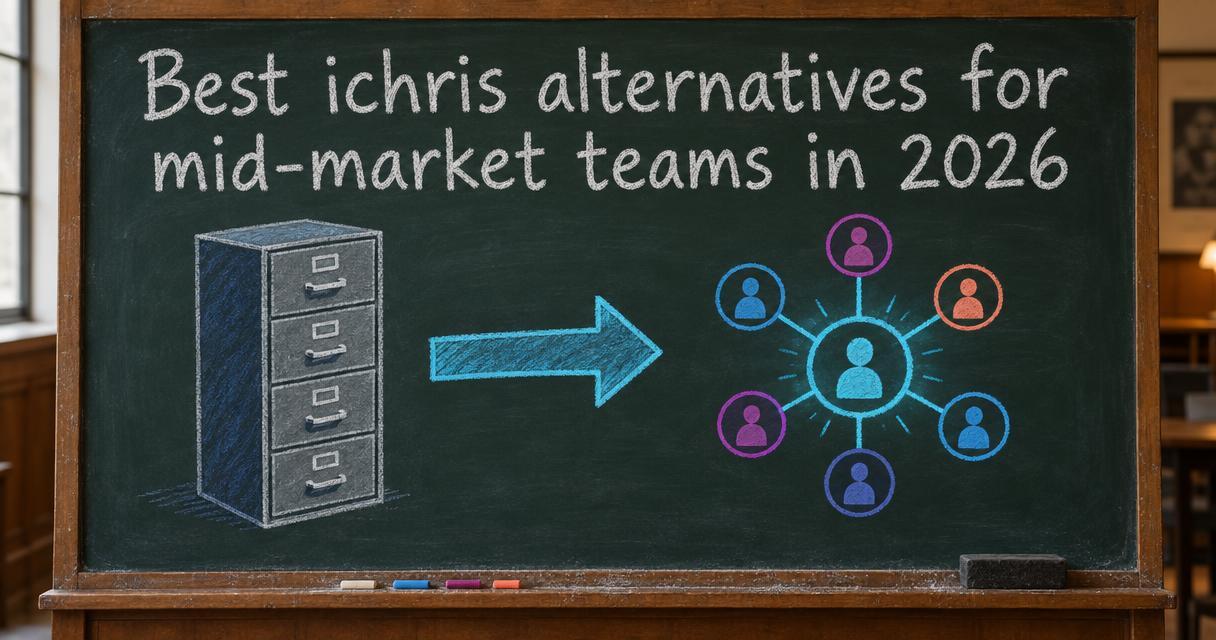
Ichris alternatives? Discover why modern HR teams are moving away from legacy databases toward intelligent workforce platforms.