

.webp)

 Mathan Allington


Workforce intelligence platform guide: Building smarter teams in 2026
 Mathan Allington
What a workforce intelligence platform does, how it turns scattered HR data into decisions you can defend, and what to look for when you compare.
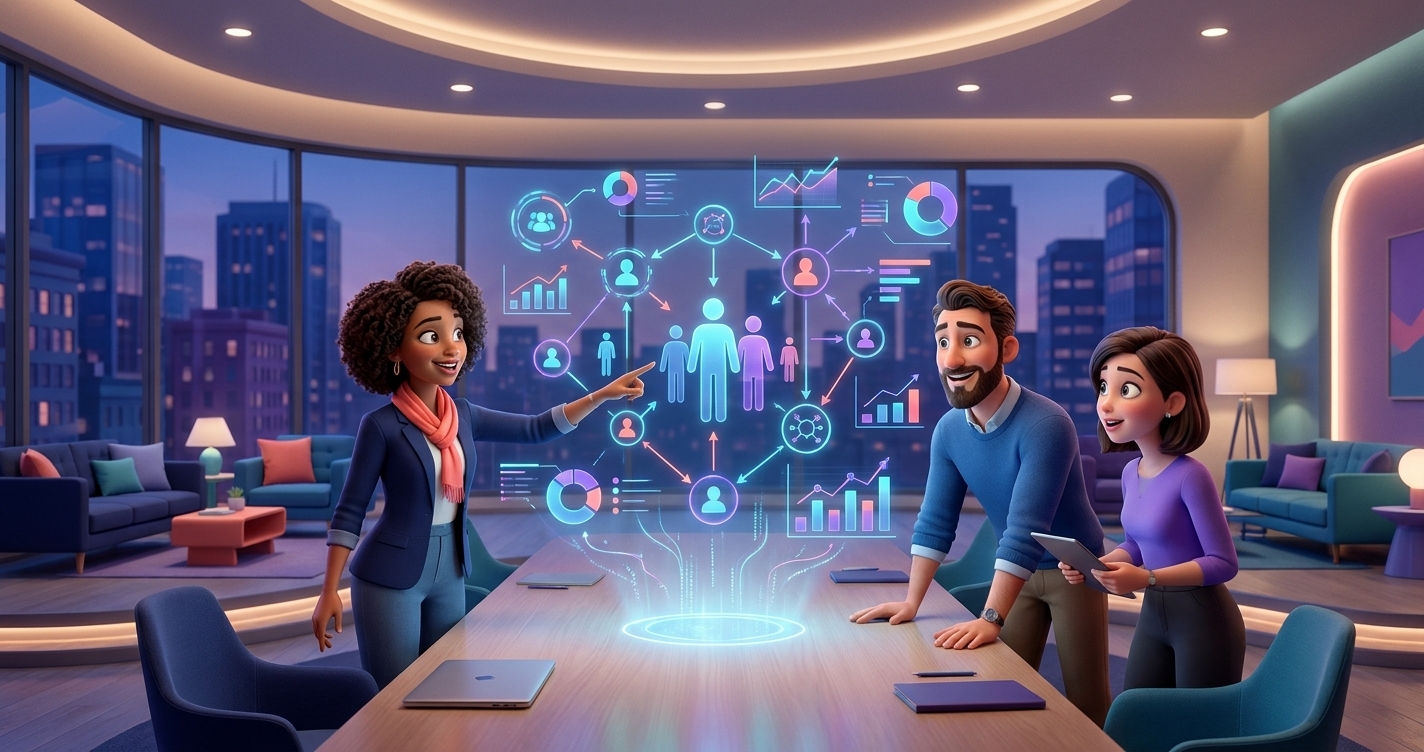
A talent intelligence platform is an advanced HR technology solution that aggregates and analyses workforce data to help organisations make predictive, evidence-based decisions about hiring, retaining, and developing their people.
Key takeaways
- A true talent intelligence platform connects fragmented HR data to provide predictive insights across the entire employee lifecycle.
- Organisations are shifting from traditional applicant tracking systems to intelligence platforms to solve critical skills shortages.
- Integrating behavioural science and work personality data into your intelligence platform significantly improves long-term quality of hire.
- Successful implementation requires aligning your talent intelligence strategy with broader business objectives and securing cross-functional buy-in.
- Artificial intelligence in HR is moving from niche experimentation to mainstream adoption, particularly in talent acquisition and internal mobility.
Today's workplace is fundamentally different from the environments that shaped traditional human resources technology. In the past, HR systems were primarily designed as digital filing cabinets, repositories for resumes, payroll data, and static performance reviews. They were transactional by nature, built to manage processes rather than open up human potential. But as we work through the complexities of 2026, the demands on HR leaders have shifted dramatically. You are no longer just managing headcount; you are architecting the future of your workforce in an era of unprecedented disruption.
This shift has exposed the critical limitations of legacy systems. When a business needs to pivot quickly, launch a new product line, or adopt emerging technologies, traditional HR software cannot tell leadership if the current workforce has the latent skills to execute the strategy. It cannot predict which external candidates are most likely to thrive in your specific culture, nor can it proactively identify top performers who are at risk of leaving. This intelligence gap is precisely why the talent intelligence platform has emerged as the most critical technology investment for modern enterprises.
To understand why talent intelligence platforms have become indispensable, we must first look at the macroeconomic forces reshaping the global labour market. We are currently facing a talent paradox: despite economic fluctuations, the demand for highly specific, complex skills is vastly outstripping supply. Traditional recruitment methods, posting a job ad and waiting for the perfect resume to arrive, are no longer sufficient to meet business needs.
The cost of this talent scarcity is staggering. Recent research highlights the severe financial impact of failing to secure the right capabilities. In fact, skills shortages may cost the global economy up to $5.5 trillion by 2026 due to product delays, quality issues, and missed revenue (IDC). When critical roles remain unfilled, innovation stalls, customer experience degrades, and competitors gain ground. The stakes for getting talent decisions right have never been higher.
the rapid acceleration of artificial intelligence is fundamentally altering the skills environment. Every organisation is now, to some extent, a technology company, requiring a workforce capable of working alongside advanced algorithms. Yet, a massive preparedness gap exists. Data shows that 94% of CEOs and CHROs identify AI as their top in-demand skill for 2025, yet only 35% of leaders feel they have prepared employees effectively for AI roles (IDC). This disconnect highlights a profound failure in traditional talent management and upskilling strategies.
As the talent pool tightens, the competition for capable workers becomes fierce. Nearly 4 in 5 employers report difficulty finding skilled workers, intensifying the need for talent intelligence platforms to identify and assess capabilities (Skima AI). When the external market cannot provide the talent you need on demand, you must have the systemic intelligence to identify adjacent skills, assess learning agility, and build talent pipelines internally. This is where a talent intelligence platform transitions from a "nice-to-have" tool to a critical business survival mechanism.

The term "talent intelligence" is frequently used in HR technology marketing, often blurring the lines between basic analytics dashboards and true predictive platforms. To make informed technology decisions, it is crucial to understand what actually constitutes a comprehensive talent intelligence platform in 2026.
At its core, a talent intelligence platform is an set-up that aggregates data from multiple sources, applicant tracking systems, performance management tools, learning management systems, and external market data, to create a unified, dynamic view of your workforce. However, data aggregation alone is not intelligence. The true value of the platform lies in its ability to apply advanced analytics, behavioural science, and artificial intelligence to that data to generate actionable, predictive insights.
Unlike a traditional Applicant Tracking System (ATS), which merely moves candidates through a linear workflow, a talent intelligence platform evaluates the candidate's potential fit against the specific behavioural and skill requirements of the role and the broader team dynamics. Unlike a traditional Human Resources Information System (HRIS), which records past employee actions, a talent intelligence platform predicts future outcomes, such as flight risk, leadership potential, and skill development trajectories.
To evaluate whether a system is genuinely providing talent intelligence, you must look for three foundational pillars. If any of these are missing, you are likely looking at a glorified reporting tool rather than a strategic platform.
1. Comprehensive Data Integration:
The platform must break down HR data silos. It needs to ingest data regarding candidate assessments, employee engagement surveys, performance reviews, and learning outcomes. By connecting these disparate data points, the platform can reveal hidden correlations, for example, identifying the specific onboarding behaviours that lead to higher first-year retention rates.
2. Predictive Analytics and AI:
Intelligence means looking forward. The platform should use machine learning algorithms to forecast trends. This includes predicting time-to-fill for specific roles, forecasting future skills gaps based on business growth plans, and identifying employees whose engagement patterns suggest they are becoming a retention risk.
3. Behavioural Science and Work Personality: This is often the missing link in basic platforms. Skills and experience only tell half the story. True intelligence requires understanding how people think, collaborate, and solve problems. A solid platform integrates psychometric data to assess alignment with team culture and role requirements. For instance, a comprehensive workforce intelligence platform uses behavioural science to ensure that you are not just hiring for technical capability, but for long-term organisational fit.
The recruitment environment is arguably the area most profoundly impacted by the rise of talent intelligence platforms. The days of relying on gut feeling and subjective interview feedback are rapidly ending, replaced by data-driven methodologies that significantly enhance the quality of hire.
We are seeing a massive shift in how technology is deployed in the hiring process. 51% of U.S. organisations now use AI to support HR activities, marking a shift from niche pilots to mainstream adoption (High5). 64% of organisations that use AI in HR apply it specifically to recruiting, interviewing, or hiring, making talent acquisition the leading use case (High5). This widespread adoption is driven by the urgent need to simplify processes and improve decision accuracy.
One of the primary functions of a talent intelligence platform in recruitment is to look beyond the static, often embellished, traditional resume. Resumes are notoriously poor predictors of future job performance. They tell you what a candidate has done, but they offer very little insight into what a candidate is capable of doing, or how they will behave under pressure in your specific work environment.
A talent intelligence platform shifts the focus from past experience to future potential. By using structured assessments, cognitive testing, and behavioural profiling, the platform can identify candidates who possess the underlying traits necessary for success, even if their career history is unconventional. This approach not only widens the talent pool, a critical advantage in a tight labour market, but also significantly improves the diversity of hires by reducing reliance on traditional pedigree markers like specific university degrees or past employers.
Human bias, both conscious and unconscious, is the enemy of effective recruitment. When hiring managers rely on unstructured interviews and "culture fit" evaluations based on personal affinity, they inadvertently replicate the existing workforce demographics, stifling diversity and innovation. A talent intelligence platform introduces rigorous standardisation into the evaluation process.
By defining the exact skills, cognitive abilities, and behavioural traits required for a role upfront, the platform ensures that every candidate is evaluated against the same objective criteria. When evaluating solutions, look for platforms that smoothly integrate these assessments into the hiring workflow. For example, using the Compono Hire module allows teams to automatically assess candidates across organisation fit, skills, and qualifications, ensuring that every hiring decision is grounded in objective data rather than subjective opinion.
In a competitive market, speed is a distinct advantage. Top candidates are rarely on the market for long. Talent intelligence platforms drastically reduce time-to-hire by automating the initial screening processes and instantly surfacing the most highly matched candidates. Instead of recruiters spending hours manually reviewing hundreds of unqualified applications, the platform presents a ranked shortlist based on predictive success models.
these platforms enable proactive pipeline building. By analysing historical hiring data and market trends, the platform can advise talent acquisition teams on when to start sourcing for specific roles, which sourcing channels yield the highest quality candidates, and how to engage passive talent effectively before a critical vacancy even opens.
While talent acquisition often commands the largest share of the HR technology budget, the most significant ROI of a talent intelligence platform often comes from its impact on talent management and retention. In an era where external hiring is expensive and difficult, your existing workforce is your most valuable, and often most underutilised, asset.
A common failure in modern enterprises is the inability to match internal talent with emerging opportunities. Employees frequently leave organisations not because they are dissatisfied with the company, but because they cannot see a clear path for career progression. They find it easier to secure a promotion or a lateral career change by answering a recruiter's message on LinkedIn than by navigating their own internal HR processes.
A talent intelligence platform solves this problem by creating a dynamic, real-time inventory of your organisation's skills and capabilities. It goes beyond the static job titles in your HRIS to understand the actual competencies each employee possesses. This involves analysing project histories, learning module completions, and peer feedback to build comprehensive skills profiles.
When a new project arises or a critical role becomes vacant, the platform can instantly identify internal employees who have the exact skills required, or more importantly, the adjacent skills and learning agility to step into the role quickly. This internal mobility not only saves massive amounts of money on external recruitment fees and onboarding time but also significantly boosts employee engagement and loyalty.
Retention strategies are traditionally reactive. HR teams typically find out an employee is unhappy during an exit interview, at which point it is far too late to intervene. A talent intelligence platform flips this paradigm from reactive to predictive through the use of continuous listening and behavioural analytics.
By analysing data points such as participation in pulse surveys, changes in collaboration patterns, and the frequency of feedback, the platform can identify subtle shifts in employee sentiment that indicate a rising flight risk. This allows HR business partners and managers to intervene proactively, perhaps by offering a new challenge, adjusting compensation, or addressing a team dynamic issue, before the employee decides to leave. Integrating people intelligence for business ensures that leadership teams have the visibility required to protect their most critical talent assets.
Data and artificial intelligence are powerful tools, but they must be grounded in a deep understanding of human psychology to be truly effective. This is where behavioural science improve a standard analytics tool into a significant talent intelligence platform. Understanding the "why" behind employee behaviour is just as important as measuring the "what."
Every individual brings a unique set of natural preferences, motivations, and communication styles to the workplace. When these natural preferences align with the requirements of their role and the dynamics of their team, employees are more engaged, productive, and resilient. When there is a mismatch, it leads to friction, burnout, and ultimately, turnover.
A sophisticated talent intelligence platform incorporates psychometric assessments to decode what we call "Work Personality." This goes far beyond generic personality tests; it is a scientifically validated measurement of how an individual naturally prefers to operate in a professional setting. Do they thrive in structured environments, or do they prefer ambiguity? Are they natural pioneers who love ideation, or are they meticulous auditors who excel at quality control?
By understanding work personality, organisations can make vastly superior decisions across the entire talent lifecycle. During the hiring phase, you can ensure that a candidate's natural working style complements the existing team structure. During team formation, managers can balance different personality types to avoid groupthink and ensure all necessary work activities, from ideation to execution, are covered. During leadership development, you can tailor coaching strategies to align with an individual's intrinsic motivations.
The ultimate goal of talent intelligence is not just to improve individual performance, but to architect high-performing teams. A team is not merely a collection of skilled individuals; it is a complex set-up of interacting personalities and work styles. A talent intelligence platform allows leaders to visualise these team dynamics before making critical personnel decisions.
For example, if a manager is looking to add a new member to a project team, the platform can model how different candidates will impact the team's overall behavioural balance. If the team is already heavy on creative visionaries but lacks execution focus, the platform will highlight candidates whose work personality leans toward coordination and doing. This proactive team design prevents conflict, accelerates time-to-productivity, and ensures that the team has the cognitive diversity required to solve complex problems.
Transitioning to a talent intelligence platform represents a significant strategic shift and a substantial financial investment. Securing buy-in from the C-suite, particularly the CEO and CFO, requires a compelling business case that clearly articulates the return on investment (ROI) in terms of hard financial metrics and strategic business outcomes.
HR leaders must move beyond traditional HR metrics like "cost per hire" and "time to fill" and connect talent intelligence directly to revenue generation, risk mitigation, and operational efficiency. The narrative must shift from "we need better HR software" to "we need a platform to secure the capabilities required to execute our corporate strategy."
To build a solid business case, start by quantifying the cost of the status quo. Calculate the total annual cost of employee turnover, including recruitment fees, onboarding costs, and lost productivity during the vacancy period. Next, calculate the financial impact of bad hires, the salaries paid to individuals who did not pass probation or failed to meet performance expectations.
A talent intelligence platform directly attacks these costs. By improving quality of hire through objective assessments, you reduce early attrition. By enabling internal mobility, you drastically cut external agency spend. By predicting flight risks, you retain institutional knowledge. When you present these projected savings against the cost of the platform, the ROI is typically realised within the first year of deployment.
The most compelling business cases align talent intelligence with the CEO's top strategic priorities. If the company's goal is rapid international expansion, demonstrate how the platform will identify leaders with the cross-cultural agility to open new markets. If the goal is digital transformation, show how the platform will map the existing digital skills inventory and identify the specific upskilling required to meet the technology roadmap.
Emphasise the risk mitigation aspect of talent intelligence. In a world where skills shortages can derail product launches and cost millions in missed revenue, a platform that provides visibility into capability gaps and succession planning is a critical risk management tool. By positioning talent intelligence as a strategic enabler rather than an administrative expense, HR leaders can secure the executive sponsorship required for a successful implementation.
Purchasing a talent intelligence platform is only the first step; the true challenge lies in implementation and adoption. Many organisations fail to realise the full value of their HR technology investments because they treat the rollout as a simple IT project rather than a comprehensive change management initiative.
A successful implementation requires careful planning, stakeholder engagement, and a fundamental shift in how managers and HR professionals approach talent decisions. It is not just about turning on a new software system; it is about changing the organisational culture to embrace data-driven decision-making.
Before the platform can generate intelligent insights, it must be fed high-quality data. The first phase of implementation must focus on data hygiene. Audit your existing HR systems to identify incomplete records, outdated job descriptions, and inconsistent performance metrics. A talent intelligence platform is only as good as the data it consumes; "garbage in, garbage out" is a harsh reality in predictive analytics.
Simultaneously, establish clear strategic alignment. Define the specific business problems the platform is intended to solve in its first year. Are you primarily focused on reducing first-year turnover in the sales team? Are you trying to improve internal promotion rates for diverse candidates? By setting specific, measurable goals upfront, you can configure the platform to deliver immediate, visible value.
Avoid the "big bang" approach to implementation. Rolling out a complex intelligence platform to the entire organisation simultaneously often leads to overwhelmed users and high abandonment rates. Instead, opt for a phased rollout, starting with a specific department or a distinct use case, such as talent acquisition for a high-volume role.
Identify and equip internal champions, influential hiring managers and HR business partners who are enthusiastic about data-driven HR. Train these champions extensively and use their early successes to build momentum and demonstrate value to the rest of the organisation. When a sceptical manager sees a peer significantly reduce their time-to-hire while improving candidate quality, they are far more likely to adopt the new system.
Training cannot be a one-time event. As the platform evolves and new features are released, continuous education is essential. However, training should focus less on "which buttons to click" and more on how to interpret the insights the platform generates. Managers need to be taught how to read a behavioural assessment report, how to conduct a structured interview based on predictive data, and how to use retention risk scores to initiate constructive career conversations.
Ultimately, the goal is cultural embedding. Talent intelligence should become the default language of talent discussions. When a manager requests a new headcount, the first question from HR should be, "What does the platform say about our internal capability for this role?" When this level of integration is achieved, the organisation has successfully transitioned from traditional HR to true talent intelligence.
As we look toward the latter half of the decade, the capabilities of talent intelligence platforms will continue to expand exponentially. The integration of generative AI will make these platforms more conversational and accessible, allowing managers to query complex workforce data using natural language.
We will also see a deeper integration of talent intelligence with broader business operations. Workforce data will no longer sit in an HR silo; it will be combined with operational, financial, and customer data to provide a whole-of-business view of how human capital drives business outcomes. The organisations that embrace this technology today will build an insurmountable competitive advantage, securing the agile, high-performing workforce required to navigate whatever the future holds.
Key insights
- The global skills shortage requires organisations to abandon reactive hiring and adopt predictive, intelligence-driven talent strategies.
- A genuine talent intelligence platform must integrate diverse HR data, apply predictive analytics, and use behavioural science to be effective.
- Evaluating candidates based on work personality and objective behavioural traits drastically reduces bias and improves long-term retention.
- Internal mobility is the most cost-effective solution to the talent crisis, and intelligence platforms are essential for uncovering hidden internal skills.
- Successful implementation of HR technology requires treating the rollout as a strategic change management initiative, not just an IT deployment.
Ready to transition from reactive HR processes to predictive, data-driven workforce strategies? The right technology partner makes all the difference in building high-performing teams.
If you'd like to talk through how Compono can support your team, we're happy to walk you through it. No pressure, just a conversation.
Related reading
An Applicant Tracking System (ATS) is primarily a workflow tool designed to track a candidate's progress through the hiring stages and store their resume. A talent intelligence platform is a strategic tool that uses data, AI, and behavioural science to predict a candidate's future success, assess their cultural fit, and provide insights for internal mobility and retention long after the hiring process is complete.
These platforms help with retention by using predictive analytics to identify early warning signs of employee disengagement or flight risk. They also map internal skills, allowing organisations to proactively offer employees clear career progression paths, upskilling opportunities, and internal mobility options before they start looking for jobs externally.
When designed correctly, AI actually reduces hiring bias. Traditional hiring relies heavily on human gut feeling, which is highly susceptible to unconscious bias. A quality talent intelligence platform standardises the evaluation process, focusing purely on objective data, skills assessments, and behavioural science, ensuring all candidates are measured against the exact same criteria.
While timelines vary based on the size of the organisation and the complexity of the deployment, many companies begin to see a return on investment within the first 6 to 12 months. This ROI is typically realised through a reduction in external recruitment agency fees, lower early attrition rates, and decreased time-to-hire for critical roles.
Yes, leading talent intelligence platforms are designed with open architectures and solid APIs specifically to integrate with your existing HR set-up. They sit as an intelligence layer across your current ATS, HRIS, and Learning Management Systems to aggregate data and provide unified insights without requiring you to rip and replace your foundational systems.
What a workforce intelligence platform does, how it turns scattered HR data into decisions you can defend, and what to look for when you compare.
Moving off ELMO? Compare the HR platforms Australian teams switch to, what each one actually covers, and where the feature gaps show up.
Discover how to choose the best ATS in Australia for 2026. Learn about essential features, behavioural science in hiring, and how to evaluate...