
.webp)

 Mathan Allington
Best LMS for New Zealand teams: a guide to smarter learning
 Mathan Allington
LMS providers for New Zealand teams compared: local support, compliance and integrations, plus what to check before you choose a learning platform.
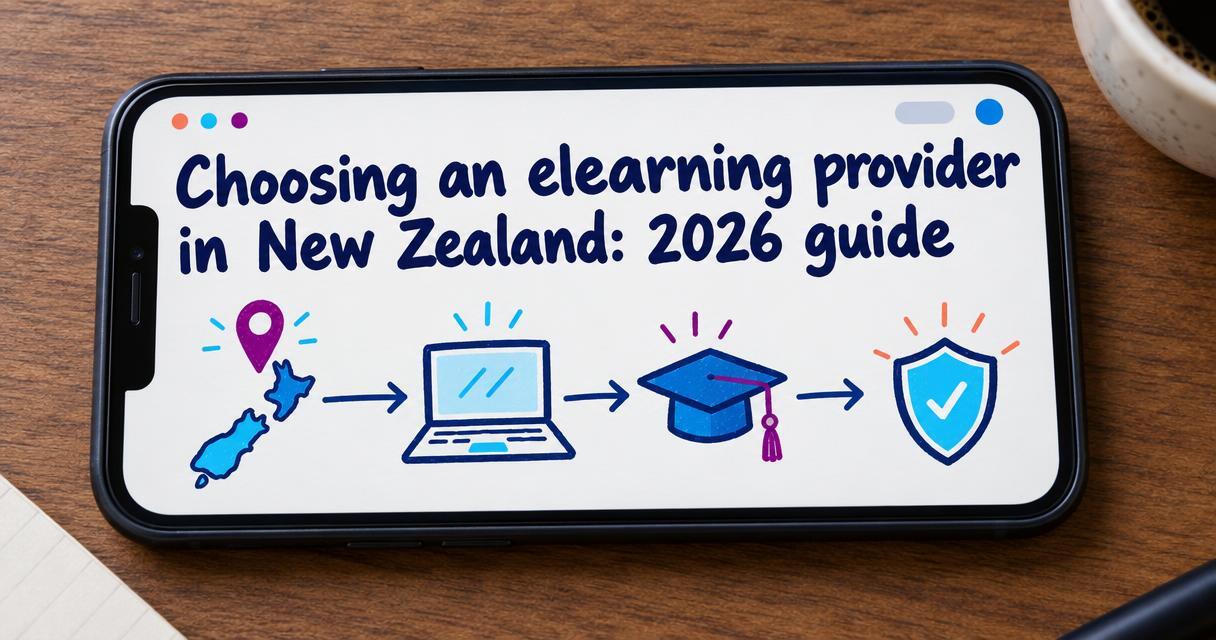
Choosing an elearning provider in New Zealand means looking beyond software features to find a partner who understands local privacy laws, cross-Tasman workforce changing, and cultural alignment under Te Tiriti o Waitangi.
Last reviewed October 2026
Key takeaways
- Compliance training requires a platform built for New Zealand data privacy standards and specific regulatory requirements.
- Cultural responsiveness is no longer optional when deploying workforce training across Kiwi organisations.
- Healthcare and government sectors are proving that targeted digital learning dramatically improves completion rates.
- A true learning management system must track competency and capability rather than just course completions.
Many organisations start their search for an elearning provider by looking at generic global platforms. They quickly find that off-the-shelf content built for North American or European audiences fails to connect with their local workforce. Spelling differences are a minor annoyance, but missing local compliance standards creates immediate legal risk.
A generic safety module will not cover your obligations under the Health and Safety at Work Act 2015. A global HR course will not explain the Holidays Act or local parental leave entitlements. When you buy digital learning, you are buying the behavioural changes that content creates. If the content feels foreign, your team will click through it as quickly as possible and forget the material by the end of the day.
Finding the right local partner fixes this problem. An effective New Zealand provider brings technical expertise, instructional design skills, and a deep understanding of how Kiwi teams work. They help you shift from running mandatory tick-box exercises to building genuine capability across your organisation.
Organisations operating in New Zealand have a responsibility to honour Te Tiriti o Waitangi principles. This extends directly into how you train and develop your people. Your learning content needs to reflect the diverse reality of the modern New Zealand workplace.
A skilled local elearning partner will know how to weave Te Ao Māori (the Māori world view) into your digital training. This means using appropriate language, understanding cultural nuances in communication, and building specific modules for cultural competency. When an elearning provider understands this context, they create courses that resonate deeply with your workforce instead of feeling like an imported compliance exercise.
It also changes how learning is delivered. A strong provider designs social and collaborative learning elements that reflect a community-focused approach to skill development. They design content that respects different ways of learning and sharing knowledge.
Data privacy is a major consideration for New Zealand employers evaluating HR technology. The Privacy Act 2020 places strict rules on how you collect, store, and transfer employee data. When you use a global learning management system, your staff data often ends up on servers located in other jurisdictions.
Government departments, healthcare providers, and enterprise businesses usually require data sovereignty. They need assurance that their employee records remain within approved local or regional cloud infrastructure. The best LMS providers in New Zealand build their platforms to meet these specific local hosting and security requirements from day one.
Compliance also applies to the course material itself. Local providers keep their core compliance libraries updated when New Zealand employment laws change. You do not have to worry that your team is learning outdated or irrelevant rules.
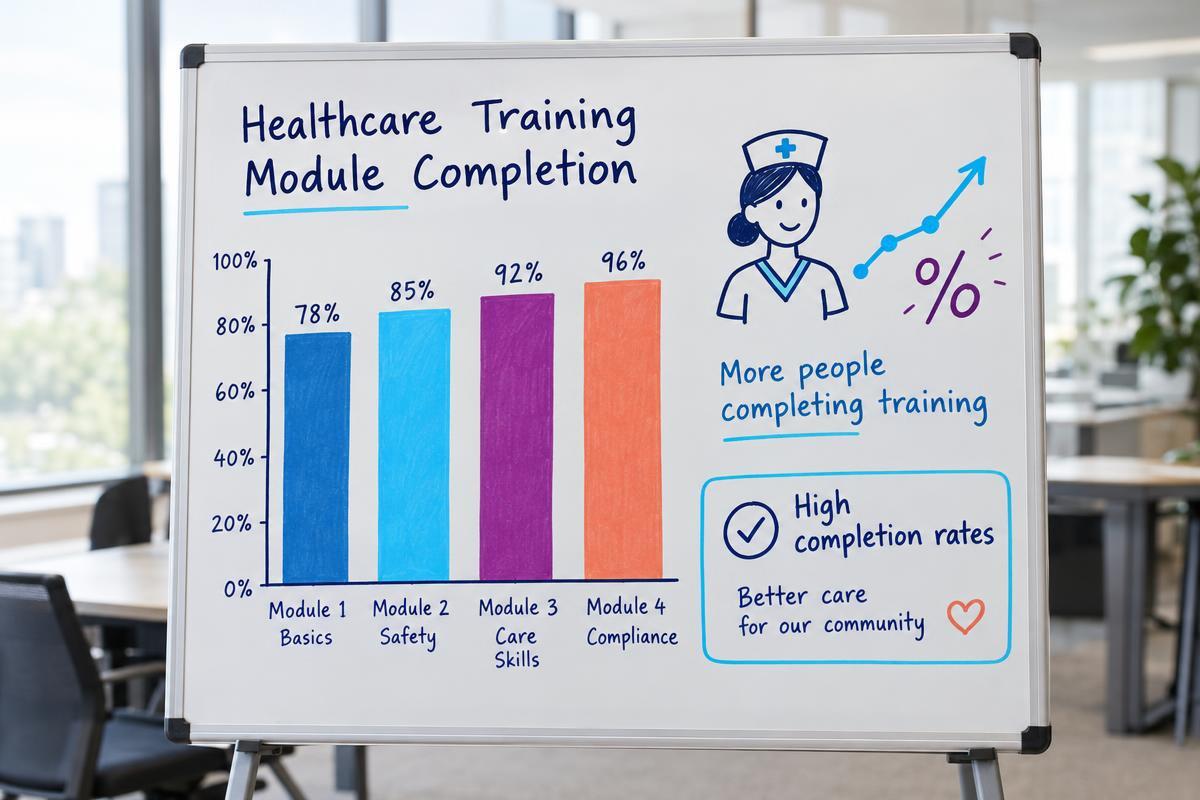
The public and healthcare sectors demand high standards for digital learning. Their work involves high-stakes environments where poor training leads to serious real-world consequences. The results they achieve offer excellent benchmarks for corporate buyers.
Data published in Nursing Praxis shows that nine national critical-care eLearning modules generated 8,586 enrolments and 6,189 completions during their first 12 months after launching in April 2024. The same study found that 99 percent of users said the national critical-care eLearning program was useful for their learning, with nurses representing 77 percent of participants.
These figures prove that highly specific, well-designed digital learning drives incredible engagement. When an elearning provider focuses on the exact context of the learner's daily reality, completion rates naturally rise. The same principle applies whether you are training nurses on critical care or retail staff on customer service.
Many New Zealand businesses operate across both sides of the Tasman. Managing a workforce in multiple countries creates complex training requirements. You need an elearning provider with the scale and capacity to handle both markets.
The scale of regional providers is significant. A report from Business Wire notes that B Online Learning has trained more than 10,000 learning designers and L&D administrators across Australia and New Zealand since 2012. Similarly, Engage Learning notes it has developed hundreds of digital programs and learning-management systems for clients and thousands of learners internationally.
If your organisation plans to expand, finding a partner who understands cross-border compliance is highly valuable. They can help you standardise your core training while maintaining local modules for specific regional regulations. This is especially useful when comparing employer on-costs between Australia and New Zealand, as standardising your training approach reduces your overall administrative burden.
Budgeting for an elearning project requires understanding how providers structure their fees. Global platforms often charge in US dollars, exposing your L&D budget to constant currency fluctuations. A local partner bills in NZD and offers predictable pricing models.
Custom eLearning content development in New Zealand typically falls into three main pricing tiers. Basic compliance modules cost between $5,000 and $10,000 NZD. Mid-level interactive courses with branching scenarios usually range from $15,000 to $25,000 NZD. Highly bespoke simulations, gamified learning experiences, or virtual reality modules often exceed $30,000 NZD.
Platform subscription costs for a learning management system scale based on your active user count. You can expect to pay anywhere from $4 to $15 NZD per learner each month, depending on the features you need. Many providers offer tiered pricing where the cost per user drops as your headcount grows.
To make an informed choice, it helps to look at exactly what a local New Zealand provider offers compared to a global generic vendor.
| Capability | Generic global provider | Local New Zealand partner |
|---|---|---|
| Data hosting | Often offshore | Local or ANZ-based cloud |
| Privacy compliance | GDPR or CCPA focused | Privacy Act 2020 aligned |
| Cultural context | Generic corporate tone | Te Ao Māori integration |
| Pricing transparency | USD subject to exchange rates | Predictable NZD billing |
| Support hours | Delayed international support | Same time zone support |
When you take your project to market, your Request for Proposal (RFP) needs to ask the right questions. Avoid copying generic templates from the internet. Tailor your questions to uncover how the provider operates in the New Zealand context.
First, ask about their instructional design methodology. Do they rely entirely on reading slides, or do they build scenario-based assessments that reflect real workplace challenges? Second, request specific examples of how they handle accessibility and cultural responsiveness in their design process.
Third, clarify their technical handover process. When they finish building a custom course, ask if you receive the source files. You need to know if you can make minor text updates yourself or if you are locked into paying their hourly rate for every small change. Finally, evaluate their platform capability. Moving from basic HR administration to true HR software in New Zealand requires a system that measures actual competency.
The ultimate goal of corporate training is to change behaviour and close capability gaps. A standard elearning provider will just build a course and hand it over. A strategic partner will help you map that course to specific skills your business needs.
This is where Compono Develop changes the conversation. Compono Develop is a learning management system that focuses on building real capability. It tracks the skills your people are acquiring and highlights the gaps you still need to close. It moves you away from measuring success by course completions and toward measuring success by workforce readiness.
When you combine local content design with a platform that understands behavioural science, your training budget becomes an investment in performance. Your people get learning experiences that make sense in their daily context, and your leadership team gets clear data on the skills available within the business.
When you are ready to move beyond basic course delivery and start building real capability across your team, Compono provides the infrastructure you need.
You should look for a provider with a proven track record in the local market. They need to understand New Zealand employment compliance, data sovereignty laws, and how to design culturally responsive content. Check their portfolio for relevant industry experience and ensure their pricing is transparent in NZD.
Custom elearning development costs depend entirely on the complexity of the course. A basic text-and-quiz compliance module might cost $5,000 NZD. A detailed, interactive scenario-based course will typically cost between $15,000 and $25,000 NZD. High-end simulations can cost significantly more.
Data sovereignty ensures your employee training records and personal information remain subject to New Zealand laws, specifically the Privacy Act 2020. Many government agencies and large enterprises mandate local hosting to prevent sensitive workforce data from being accessed under foreign jurisdictions.
Including cultural competency requires more than just translating a few words. You need to work with instructional designers who understand Te Ao Māori and can weave these principles into the core narrative of your training. This ensures the content is respectful, relevant, and engaging for your local workforce.
An elearning provider is typically a service agency that designs and builds custom training content. An LMS (Learning Management System) is the software platform used to host, deliver, and track that training. Many top providers in New Zealand offer both the custom content creation and the software platform to deliver it.

LMS providers for New Zealand teams compared: local support, compliance and integrations, plus what to check before you choose a learning platform.

Effective employee qualifications tracking reduces operational risk, ensures compliance, and replaces manual spreadsheets with automated systems.
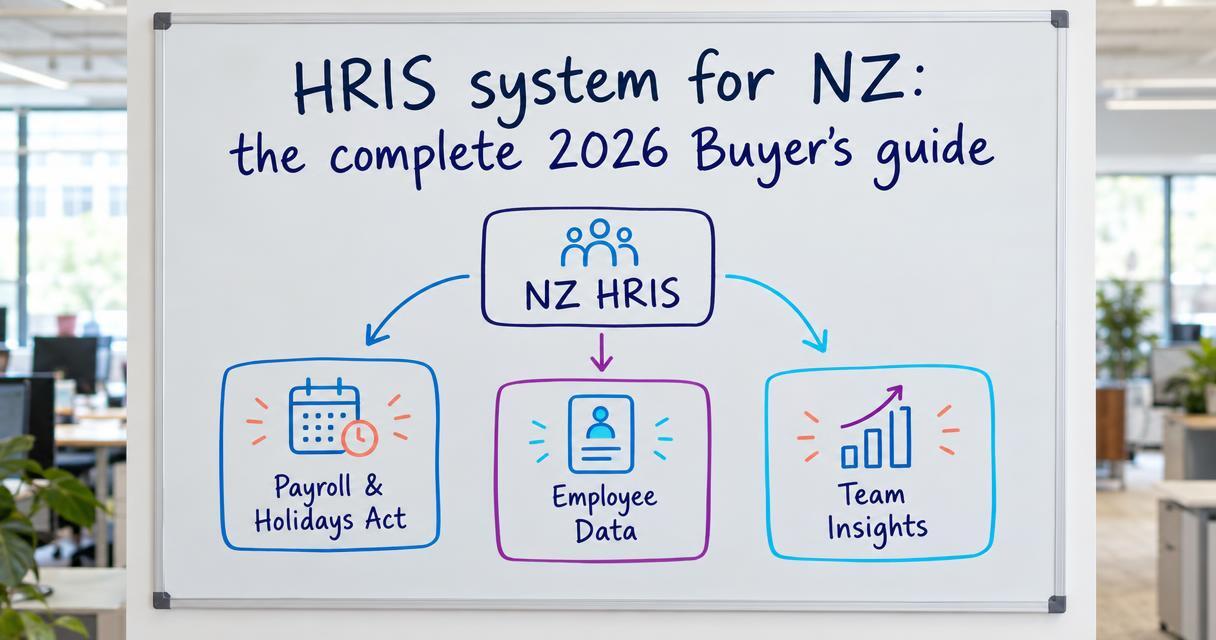
An HRIS system for NZ? Learn how to navigate local compliance, connect payroll, and choose HR software that improves team performance.