

.webp)

 Mathan Allington


1 min read
Practical ways to meet regulator requirements without slowing your team down
 Compono
The most effective ways to meet regulator requirements involve embedding compliance tracking directly into your team's daily workflows rather than...
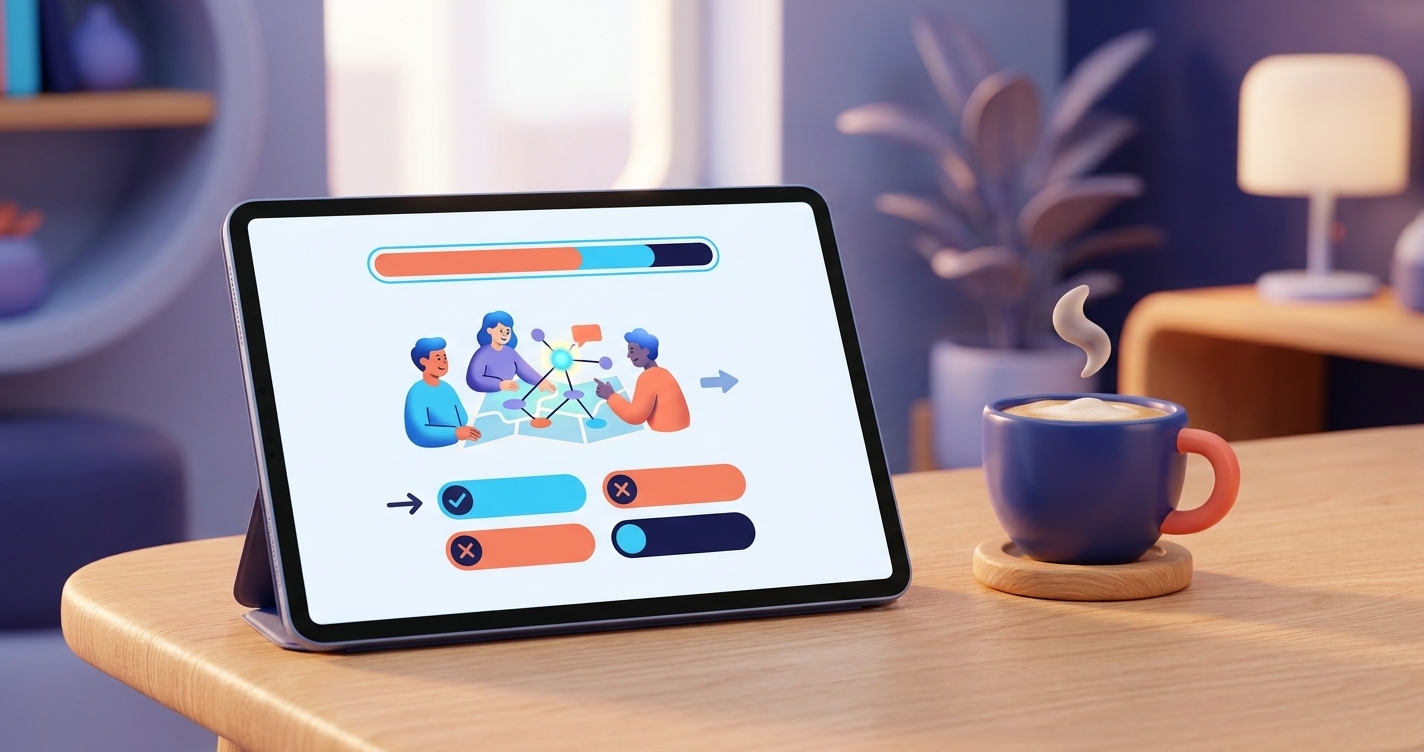
An effective assessment platform for licensing bodies in New Zealand must balance rigorous regulatory compliance with universal accessibility to accurately evaluate candidate competency.
When regulatory authorities evaluate testing software, they face a specific set of pressures. They need to protect public safety by maintaining high standards, while ensuring the testing process remains fair and accessible for all candidates. The shift from physical testing centres and paper-based examinations to digital environments has created new opportunities to evaluate people accurately. It also introduces new technical requirements for security, identity verification, and system architecture.
Key takeaways
- Modern platforms evaluate practical, scenario-based competencies rather than simple fact memorisation.
- Accessibility standards ensure candidates across all regions and backgrounds have equitable access to testing.
- Thorough identity verification protects the integrity of the high-stakes licensing process.
- Digital assessments reduce administrative workloads by connecting directly with existing government databases.
Last reviewed July 2026.
Licensing bodies in New Zealand operate in a unique environment. They must serve a highly distributed population, balancing the needs of urban centres with remote rural communities. Relying entirely on physical testing locations creates geographic inequity. Candidates living outside major cities often face long travel times and significant expenses just to sit an exam.
Digital assessment platforms bridge this gap by allowing secure, remote testing. This shift requires more than simply moving a paper test onto a screen. It demands a complete rethinking of how competency is measured and verified. Regulatory bodies are moving away from legacy systems that require heavy manual administration and long processing times. They are looking for modern software that can handle high volumes of candidates while maintaining strict audit trails.
The goal is to create a testing environment that is rigorous enough to protect public safety but user-friendly enough to prevent unnecessary candidate frustration. When a platform is difficult to use, candidates spend their cognitive energy fighting the software rather than answering the questions. This leads to inaccurate evaluations and increased support requests for the licensing authority.

Integrity is the foundation of any licensing process. Whether a candidate is applying for a heavy vehicle licence, a professional certification, or a safety accreditation, the public needs to trust that the person holding the licence actually earned it. This makes security the primary concern when selecting an assessment platform.
Modern platforms use a variety of methods to verify candidate identity and secure the testing environment. Remote proctoring features can monitor the testing session to ensure the candidate is completing the work independently. Secure browser technology prevents candidates from opening other tabs, accessing search engines, or taking screenshots of the test material during the examination.
These security measures must be applied thoughtfully. If identity verification processes are too complex, they create a barrier to entry for candidates with lower digital literacy. The best assessment platforms implement security protocols that operate quietly in the background. They verify identity and monitor behaviour without creating a hostile or intimidating experience for the user.
A licensing assessment should measure a candidate's competency in a specific area, not their reading speed or digital fluency. Accessibility is a mandatory requirement for government and regulatory bodies. In New Zealand, this means accommodating a diverse population with varying levels of literacy, different primary languages, and different physical abilities.
Platforms must comply with international accessibility standards, such as the Web Content Accessibility Guidelines (WCAG). This ensures the software works with screen readers and other assistive technologies. Beyond technical compliance, the design of the assessment itself matters. Text should be clear and readable. Colour contrast must be sufficient for candidates with visual impairments. Audio options can help candidates who struggle with written text to comprehend the questions fully.
We can look at digital transformations in similar jurisdictions to see the impact of accessible design. For example, the PrepL learner licensing transformation in Queensland demonstrated how moving to an interactive, digital format can improve the learning and testing experience for new drivers. By making the content more engaging and accessible, regulatory bodies can improve pass rates without lowering their safety standards.
Traditional multiple-choice examinations have a significant flaw. They are excellent at testing whether a candidate can memorise facts, but they are poor at predicting how that candidate will behave in the real world. Knowing the exact wording of a safety regulation does not guarantee that a person will make the right decision when faced with a hazard on a worksite.
To protect public safety, licensing bodies need to evaluate true competency. This requires a shift towards scenario-based testing. Instead of asking candidates to recall a rule, the assessment presents them with a realistic situation and asks them to make a judgement call. This approach draws on behavioural science to understand how a person processes information and reacts under pressure.
Building these types of evaluations requires specific software capabilities. Compono Assure helps organisations design and deliver assessments that move beyond simple fact-checking. By using varied question types, multimedia scenarios, and adaptive testing logic, regulatory bodies can build a much more accurate picture of a candidate's practical capability.
Digital assessment platforms generate a wealth of data that paper-based systems simply cannot match. Every interaction a candidate has with the platform is recorded. Licensing bodies can use this data to continuously improve their testing processes and identify potential issues before they become systemic problems.
Item analysis allows administrators to look at the performance of individual questions. If a large percentage of highly competent candidates are all getting the same question wrong, it usually indicates that the question is poorly worded or confusing. The regulatory body can then rewrite the question to ensure it accurately measures the intended competency.
Analytics also help identify demographic biases in the testing material. If candidates from a specific region or background are consistently struggling with a particular section of the assessment, administrators can investigate whether the language or context of those questions is creating an unfair disadvantage. This level of insight is essential for maintaining equitable licensing standards across New Zealand.
An assessment platform does not operate in isolation. It is one part of a much larger digital environment that manages the entire lifecycle of a licence. The testing software must communicate with candidate management systems, government databases, and identity verification services.
When these systems are disconnected, administrative staff are forced to manually export data from the testing platform and import it into the registry. This manual handling introduces the risk of human error and slows down the time it takes to issue a licence to a successful candidate. It also creates a frustrating experience for the user, who may have to enter their personal details multiple times across different government portals.
A modern assessment platform uses application programming interfaces (APIs) to connect smoothly with existing infrastructure. When a candidate passes their assessment, the result is automatically securely transmitted to the central registry. The licence is updated, and the candidate receives their credentials without delay. This connected approach reduces the administrative burden on licensing bodies and provides a much better experience for the public.
Key insights
- Geographic and demographic diversity in New Zealand requires assessment platforms that prioritise remote accessibility and inclusive design.
- Scenario-based testing provides a more accurate measure of real-world competency than traditional multiple-choice memorisation.
- Strong security features and identity verification are necessary to maintain public trust in the licensing process.
- Automated data flow between testing platforms and government registries reduces administrative errors and speeds up credential issuance.
See how Compono Assure helps licensing bodies build secure, accessible, scenario-based assessments.
Talk to usA suitable platform must offer high-level security, strict identity verification, and the ability to handle high volumes of users. It also needs to meet international accessibility standards and integrate easily with existing government databases to ensure data remains secure and accurate.
Platforms use a combination of secure login credentials, integration with national identity services, and remote proctoring tools. These features ensure that the person taking the test is the correct candidate, preventing fraud and protecting the integrity of the licence.
Yes, well-designed platforms include accessibility features like adjustable text sizes, high-contrast modes, and audio narration. They also allow administrators to adjust time limits for specific candidates, ensuring the test measures competency rather than processing speed.
Knowledge testing usually asks candidates to recall facts or rules from memory. Competency evaluation uses scenario-based questions to assess how a candidate applies those rules in realistic situations, providing a better indicator of their actual ability to perform a task safely.
Modern platforms use secure APIs to communicate directly with central registries. This allows candidate data and test results to flow automatically between systems, eliminating the need for manual data entry and reducing administrative delays.

1 min read
The most effective ways to meet regulator requirements involve embedding compliance tracking directly into your team's daily workflows rather than...

1 min read
To replace paper assessments effectively, you need to map your physical workflows to a digital platform that automates scoring while maintaining...
1 min read
A competency management platform for childcare providers New Zealand teams use centralises educator qualifications, tracks compliance requirements,...