

.webp)

 Mathan Allington


Choosing the right HRIS software for your growing team
 Mathan Allington
What HRIS software covers, the core features to compare, and how to connect it with your hiring and development data as the team keeps growing.
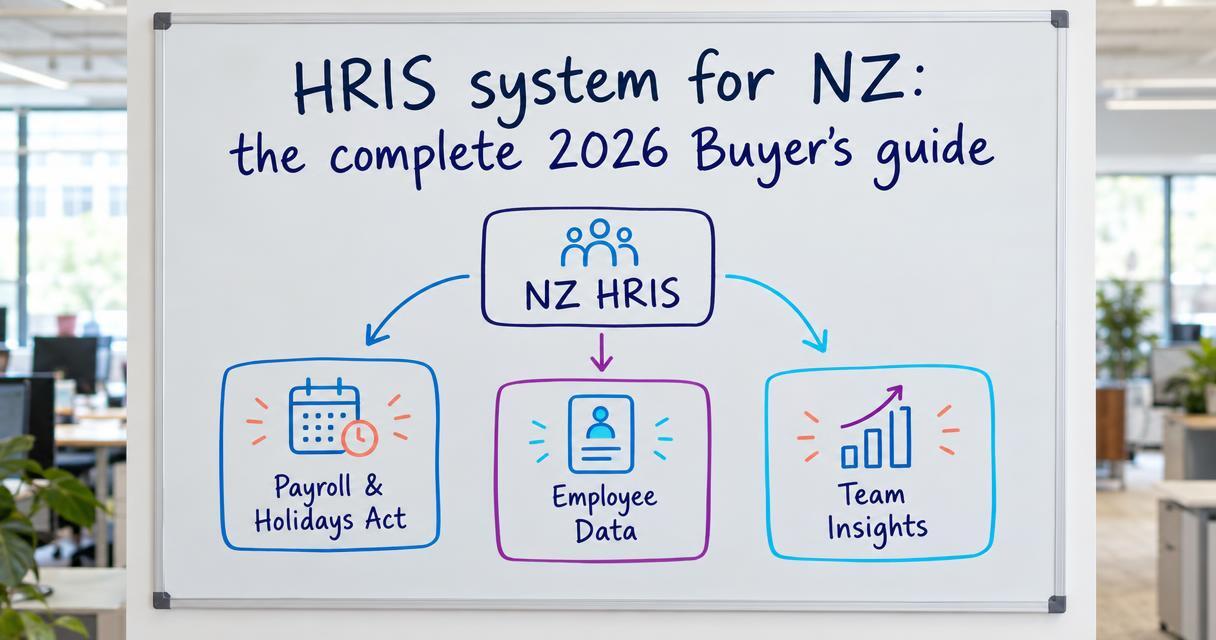
An HRIS system for NZ is a software platform that centralises employee data, manages local compliance requirements like the Holidays Act, and automates core human resources tasks.
Last reviewed October 2026
Most vendors will tell you that is enough. We disagree. A digital filing cabinet is a baseline requirement for modern business, but it will not help you understand your workforce or make better decisions about your people.
Key takeaways
- New Zealand businesses require HR systems that can handle complex local compliance, specifically the Holidays Act 2003 and KiwiSaver integration.
- A traditional HRIS acts as a system of record, while modern platforms act as systems of intelligence that connect hiring, culture, and capability.
- Payroll integration is the most critical technical requirement for any HRIS deployment in the New Zealand market.
- Choosing software based solely on feature checklists often leads to low adoption rates among managers and employees.
Buying human resources software is expensive and disruptive. Many New Zealand businesses fall into the trap of purchasing a global platform that looks impressive in a sales demonstration but fails to handle local nuances. You end up with a powerful system that requires manual workarounds for basic local requirements.
The New Zealand market has specific legislative and cultural expectations. Your HRIS system needs to manage everything from casual employment contracts to complex leave calculations. When a system cannot handle these local realities natively, your HR team spends their week exporting data to spreadsheets to calculate entitlements.
This administrative burden prevents HR leaders from doing the work that actually matters. When you are stuck managing data entry, you cannot focus on team performance or culture.
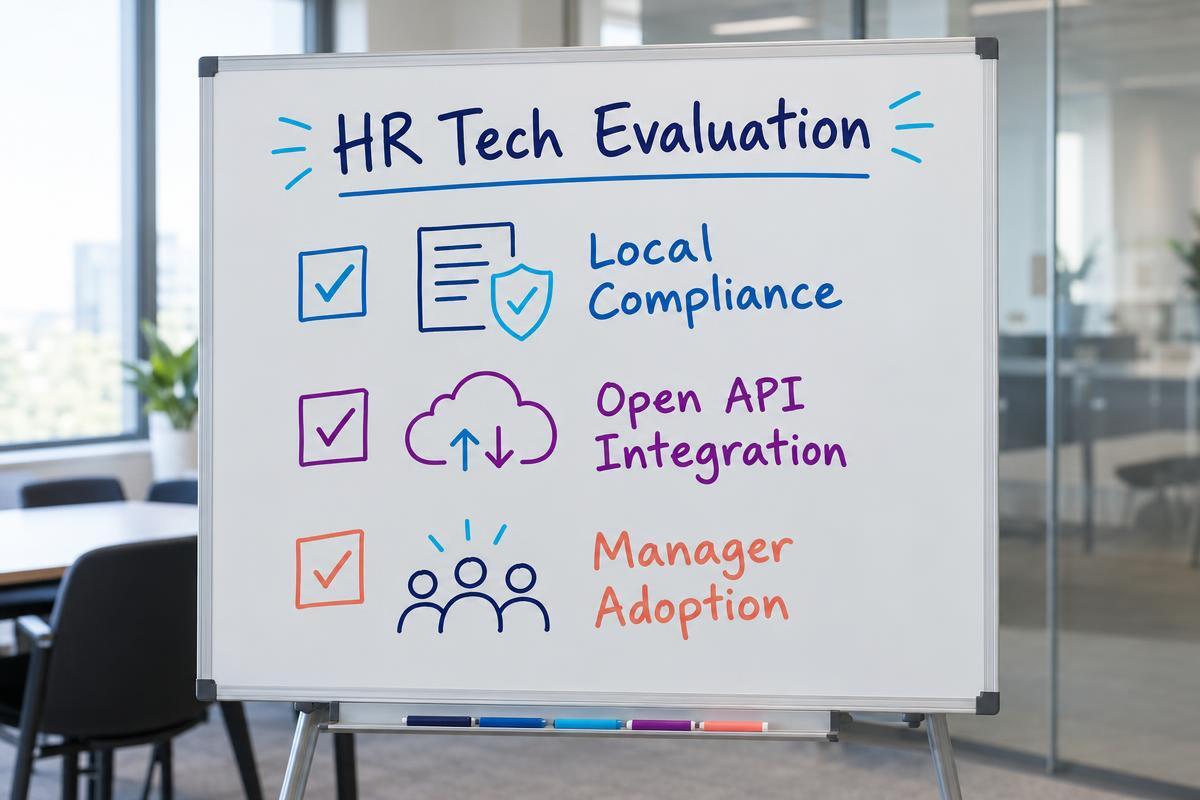
You cannot discuss HR software in New Zealand without addressing payroll. The Holidays Act 2003 is notoriously complex. It requires employers to calculate leave payments based on either ordinary weekly pay or average weekly earnings over the past 12 months, whichever is higher.
This calculation requires accurate, historical data about hours worked and payments made. If your HRIS does not integrate cleanly with your payroll software, you expose your business to significant compliance risk. We have seen countless organisations face heavy remediation costs because their systems were not talking to each other correctly.
A modern HR setup connects your core people data with your financial systems. This integration ensures that when an employee changes their hours, gets a promotion, or takes annual leave, the data flows automatically. You should always verify how a potential HRIS handles New Zealand employment rates and thresholds before signing a contract.
Most traditional HRIS platforms are built for the finance team. They exist to ensure people get paid and compliance boxes get ticked. They are systems of record. Today's workplace requires a system of intelligence.
A system of record tells you that an employee has been with the company for two years and has three weeks of leave accrued. A system of intelligence helps you understand if that employee is engaged, capable, and aligned with your culture. This is the difference between tracking people and understanding them.
When you are choosing the best HR software in New Zealand, you need to look beyond data storage. You need tools that provide insight into human behaviour. For example, Compono Engage acts as a continuous listening platform that shows you exactly what to fix in your culture, rather than just reporting on what is broken.
Evaluating an HRIS requires a clear understanding of your current bottlenecks. If you buy a system based on a generic feature list, you will pay for modules you never use. Focus on the capabilities that actually solve problems for your team.
Your HRIS must act as the single source of truth for employee data. This includes personal details, contract information, and emergency contacts. The system must comply with the New Zealand Privacy Act 2020, offering role-based access control so managers only see the information relevant to their direct reports.
The handover from candidate to employee is a common failure point. Your core HR system must connect seamlessly with your applicant tracking system. When you use a dedicated tool like Compono Hire, it manages the complex workflow of assessing candidates and building talent pools. Once a candidate accepts an offer, that data should flow directly into your HRIS to trigger the onboarding process without manual data entry.
Annual performance reviews are largely ineffective. Your HR technology should support continuous feedback and capability development. You need a way to track not just what employees have done, but what they are capable of doing next. Compono Develop builds genuine capability across your workforce, moving beyond simple compliance checklists to actual skill acquisition.
The expectations placed on HR teams have shifted dramatically. The technology you choose dictates whether your team operates as administrators or strategic advisors.
| Capability Area | Traditional HRIS (System of Record) | Modern Platform (System of Intelligence) |
|---|---|---|
| Data focus | Stores historical employee data and contract details. | Provides predictive insights on retention and performance. |
| User experience | Built for HR administrators and payroll officers. | Built for managers and employees to use daily. |
| Recruitment | Basic job posting and resume storage. | Behavioural assessment and candidate fit analysis. |
| Culture | Annual engagement surveys with delayed results. | Continuous listening and actionable culture metrics. |
The vendor selection process is critical. You are not just buying software; you are choosing a partner that will hold your most sensitive commercial data. You need to ask hard questions during the procurement phase.
First, demand to see the exact workflow for managing a New Zealand employee's lifecycle. Do not accept generic global demonstrations. Ask the vendor to show you how the system handles a casual employee transitioning to permanent part-time, or how it manages KiwiSaver opt-outs.
Second, investigate the integration set of tools. Closed systems create data silos. You want an open API architecture that allows you to connect your HRIS with your preferred payroll, rostering, and learning management systems. A strong ANZ HR technology strategy relies on best-of-breed tools communicating with each other.
Finally, look at the implementation support. Software is useless if your team refuses to log in. The vendor must provide a clear change management plan and local support hours. If their support team is entirely based in another time zone, your urgent payroll issues will not get resolved in time.
Getting budget approval for a new HRIS requires a commercial argument. You cannot just talk about making HR's life easier. You must demonstrate how the system will improve business outcomes, reduce risk, and save money.
Start by calculating the hidden costs of your current setup. Quantify the hours spent on manual data entry, the cost of payroll errors, and the compliance risks associated with messy spreadsheets. Then, factor in the strategic benefits. When managers have access to real-time people data, they make faster, better decisions about promotions and resourcing.
A proper HR system reduces employee turnover by ensuring a smooth onboarding experience and providing clarity around performance. In a tight New Zealand labour market, retaining your best people provides a massive return on investment.
If you are tired of systems that just store data without telling you what it means, it is time to upgrade your approach to people management.
A Human Resources Information System (HRIS) is a software platform used to manage core HR data and processes. It centralises employee records, manages time and attendance, handles benefits administration, and often connects directly to payroll systems. It serves as the foundational database for a company's workforce.
Some HRIS platforms include a native payroll module, while others integrate with dedicated payroll software. In New Zealand, many businesses prefer to use a specialised local payroll provider that handles the Holidays Act perfectly, and integrate it with a broader HRIS for managing the rest of the employee lifecycle.
Pricing varies significantly based on the size of your business and the modules you require. Most vendors charge a monthly subscription fee per employee. You should also budget for upfront implementation costs, which cover data migration, system configuration, and staff training.
An HRIS typically focuses on core administrative functions like data storage, time tracking, and benefits. Human Capital Management (HCM) software usually includes these core features plus strategic modules for talent acquisition, performance management, and succession planning. In practice, vendors often use the terms interchangeably.
Implementation timelines range from four weeks for a simple setup in a small business to six months or more for a complex enterprise deployment. The timeline depends heavily on the cleanliness of your existing data, the number of integrations required, and the availability of your internal project team.
What HRIS software covers, the core features to compare, and how to connect it with your hiring and development data as the team keeps growing.
What a SaaS HR platform covers, where most stop at admin, and how connecting hiring, engagement and development turns people data into decisions.

What separates an HR platform from admin-only HR software, the features worth paying for, and the questions to ask a vendor before you sign anything.