

.webp)

 Mathan Allington


Employee attrition analysis: how to predict and prevent turnover
 Mathan Allington
How to run an employee attrition analysis: the formula, the cuts that matter (tenure, team, manager), and how to turn the numbers into a retention...
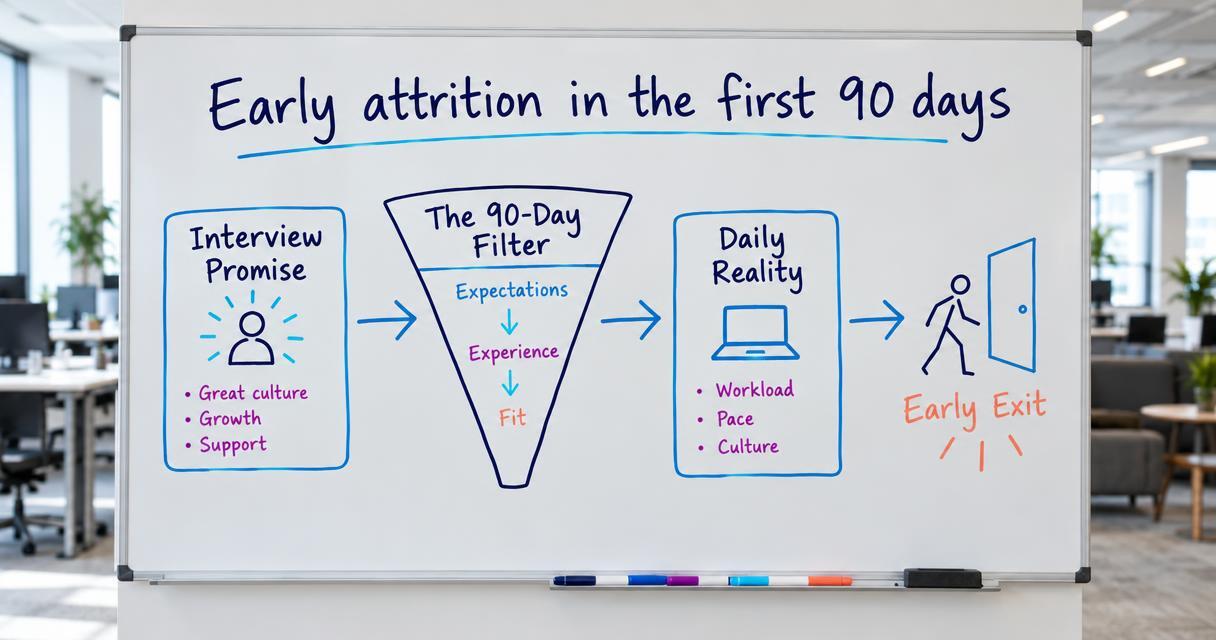
Early attrition in the first 90 days usually happens because the reality of the daily work does not match the expectations set during the recruitment process.
Last reviewed October 2026
Key takeaways
- Most 90-day resignations are hiring failures disguised as onboarding problems.
- Candidates leave quickly when they experience a culture shock or discover the role requirements were misrepresented.
- You can reduce early turnover by assessing for organisational fit and work personality before making an offer.
- Effective onboarding requires structured check-ins and clear performance expectations rather than just a welcome lunch.
The three-month mark acts as a brutal mirror for your recruitment process. When a new hire walks out before their probation period ends, the financial hit is immediate and severe. You lose the initial recruitment costs, the hours spent interviewing, and the wages paid during their brief tenure.
The hidden costs are often worse. Your existing team members lose the time they invested in training the new starter. Productivity drops as the workload shifts back onto the wider team. If this pattern repeats, your employer brand starts to suffer in the market.
Many leaders look at their attrition rate and assume their induction manual needs rewriting. They add more check-ins to the calendar or schedule another welcome morning tea. This approach completely misses the root cause of the problem.
When someone resigns in their first quarter, the exit interview usually features polite excuses about a better offer or a change in personal circumstances. The reality is much simpler. You hired someone who did not fit the environment, or you sold them a version of the company that does not exist.
This misalignment becomes obvious within the first few weeks of employment. A candidate who thrives on strict processes will struggle in a chaotic startup environment. A highly collaborative worker will feel isolated in a heavily siloed corporate structure.
Understanding why new hires fail requires an honest look at your selection criteria. If you only assess technical skills and completely ignore behavioural alignment, you are leaving the success of the hire up to chance.
Job descriptions are notoriously bad at reflecting reality. Hiring managers often copy and paste requirements from previous years without updating the actual daily tasks. During interviews, both parties are on their best behaviour, leading to a sanitised version of the truth.
The new hire arrives on day one expecting a strategic role with high autonomy. By day fourteen, they realise the job is highly administrative and heavily micromanaged. This psychological contract breach is the leading driver of early exits.
You can prevent this by being aggressively honest during the interview stage. Share the messy parts of the job. Introduce the candidate to the actual tools they will use and the specific challenges the team is facing right now. A candidate who opts out at the interview stage saves you a massive headache down the line.
Technical competence gets a candidate the job, but behavioural misalignment is what gets them fired or causes them to quit. Every workplace has a distinct operating rhythm. If a person's natural working style clashes with that rhythm, the friction begins immediately.
This is where objective measurement changes the game. Compono Hire evaluates candidates across Organisation Fit, Skills, and Qualifications to give you a clearer picture of how they will actually perform in your specific environment. It removes the guesswork from the selection process.
When you measure work personality upfront, you stop hiring people who look great on paper but are destined to clash with your company culture. You build a team of people who naturally align with how your business actually operates.
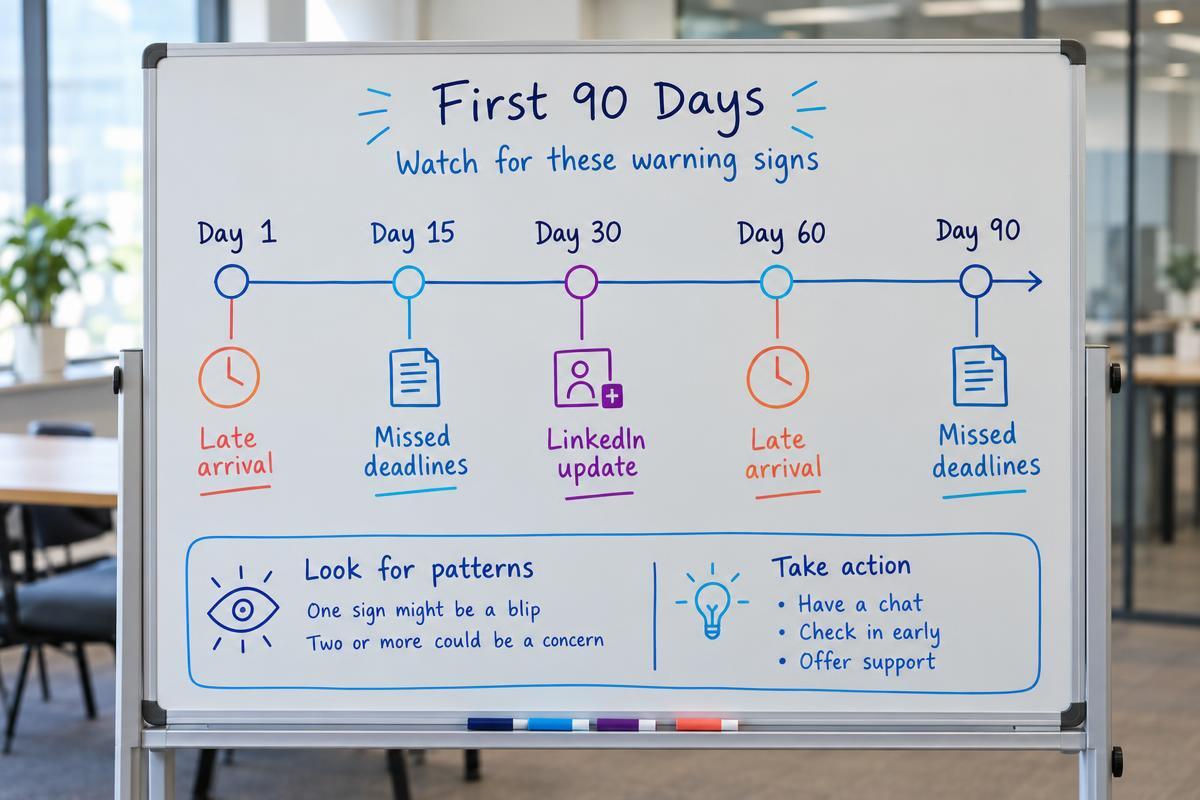
Early attrition rarely happens overnight. There is a predictable timeline of disengagement that occurs between the first day and the final resignation. Managers who know what to look for can often intervene before the situation becomes unrecoverable.
| Timeframe | Candidate Experience | Warning Signs |
|---|---|---|
| Weeks 1 to 2 | The honeymoon phase ends as the reality of the daily tasks sets in. | Asking repetitive questions about role scope, arriving late, or showing reluctance to engage with the wider team. |
| Weeks 3 to 6 | The reality check hits as initial training finishes and actual output is expected. | Missed deadlines, visible frustration with internal systems, or a sudden drop in communication with their manager. |
| Weeks 7 to 12 | The flight risk window opens as the candidate actively decides if they will stay. | Taking unexplained personal leave, updating their LinkedIn profile, or withdrawing from team social activities. |
You need to train your frontline managers to spot these attrition risk warning signs early. Waiting for the formal three-month probation review is far too late to address a motivation problem.
A strong induction program bridges the gap between the promise of the interview and the reality of the role. It provides the new hire with the context they need to work through the organisation successfully.
The best programs focus heavily on the first week. They ensure all hardware is ready, software access is granted, and the new hire has a clear schedule of who they are meeting. Nothing signals a lack of care quite like a new employee sitting at an empty desk waiting for an IT ticket to clear.
Following solid employee onboarding best practices means setting clear 30, 60, and 90-day goals. The employee needs to know exactly what good performance looks like at each of those milestones. Ambiguity breeds anxiety, and anxiety leads to resignations.
HR teams can design the best induction framework in the world, but the direct manager determines if it actually works. The manager is the primary lens through which the new hire views the entire company.
Managers often make the mistake of delegating the entire first month to a buddy or a digital learning portal. While those tools are helpful, they do not replace direct leadership. The manager needs to hold weekly one-on-one meetings specifically focused on alignment and roadblocks.
These meetings should not just be status updates on tasks. They are opportunities to ask direct questions about the employee's experience. Ask them what has surprised them about the role so far. Ask them where they feel they are lacking support.
Fixing early turnover requires better data. You need to track exactly when people are leaving and correlate those exits back to the hiring managers and the original job advertisements.
Look at your failure rate by department. If one specific team has a 40 percent failure rate in the first three months, you have a leadership or role design problem in that team. Do not treat it as a generic company-wide issue.
When you align your hiring criteria with your actual culture and hold managers accountable for the first quarter experience, your early attrition numbers will drop. You will stop wasting money on false starts and start building a stable, capable workforce.
Our platform helps you align your hiring criteria with your actual workplace culture so you can identify the right candidates before you make an offer.
Industry benchmarks vary widely by sector, but a failure rate above 15 percent in the first three months usually indicates a systemic problem with your recruitment process or role design.
You calculate it by dividing the number of new hires who remain employed at the 90-day mark by the total number of people hired during that specific period, then multiplying by 100 to get a percentage.
If the issue is a simple lack of technical training, targeted coaching can fix the problem. If the issue is a fundamental clash of values or work personality, the relationship is rarely salvageable and it is usually better to part ways quickly.
Employees usually leave without a backup plan when the workplace environment is actively toxic, when the stress of the role severely impacts their health, or when the actual job is entirely different from what they were promised.

How to run an employee attrition analysis: the formula, the cuts that matter (tenure, team, manager), and how to turn the numbers into a retention...

Franchise recruitment lives or dies on consistency. How to hire to one standard across every location, with lessons from The Coffee Club's 400...

How to build a new employee onboarding process that improves retention and engagement, with practical steps to bring new hires into your culture.
 Compono