


 Mathan Allington

Workday Peakon pricing 2026: true costs and alternatives
 Mathan Allington
The true cost of Workday Peakon in 2026. Learn about hidden implementation fees, per-user subscription tiers, and how to budget for your team.

Culture Index pricing is not publicly listed, but third-party estimates place the cost at roughly $5,000 to $20,000 or more annually depending on the size of your organisation.
Last reviewed October 2026
Quick answer
- Price: Estimated $5,000 to $20,000+ annually, plus $2,000 per administrator for onboarding and training.
- Best for: Organisations looking for an advisory-led behavioural assessment rather than a standalone software tool.
- Verdict: Culture Index offers reliable behavioural profiling backed by consulting, but the lack of transparent pricing and mandatory advisory fees make it a heavy investment for mid-market teams.
Finding accurate pricing for HR technology is often frustrating. Many vendors hide their subscription costs behind mandatory sales calls and opaque quoting processes. When you are trying to build a business case for a new assessment tool, you need to know the total cost of ownership upfront. Without clear numbers, it is impossible to evaluate whether a platform fits your budget.
Mid-market HR leaders are increasingly moving away from process-heavy tools that ignore human behaviour. They want to understand how their people work and what drives performance. To do this effectively, you must map your team changing and establish clear culture benchmarks that guide your hiring decisions. Culture Index is a well-known name in this space, offering behavioural profiling designed to help business leaders put the right people in the right seats.
Before you commit to a long-term contract, it helps to understand exactly what you are buying. This guide breaks down the estimated costs of Culture Index in 2026. We look at the consulting fees, the subscription models, and how the platform compares to transparent alternatives.
Because the company does not publish a standard price list, prospective buyers must rely on market data and user reports. According to industry research by Assessing.ai, third-party estimates place Culture Index at roughly $5,000, $20,000+ annually. This broad range exists because the final quote depends heavily on your company size and the specific scope of your deployment.
We know that Culture Index pricing reportedly increases with organisation size. A smaller business will naturally pay less than a mid-market enterprise, but the entry point remains substantial. A founder commentary recently summarised the cost as “thousands/yr” for a smaller company. This indicates that even at the lowest tier, you are making a significant annual commitment.
On the positive side, the estimated annual subscription reportedly includes unlimited surveys through a client portal rather than a per-candidate fee. This unlimited model is helpful for high-volume recruitment because you do not have to rationing assessments. You can test every applicant without worrying about incremental charges adding up at the end of the month.
When you evaluate the cost of Culture Index, you must look beyond the software subscription. The platform is not designed as a self-serve application that your HR team can simply log into and use independently. Instead, Culture Index is sold as part of an advisory engagement. Pricing covers access to a Culture Index advisor in addition to the survey platform.
This means you are buying consulting services alongside the software. For organisations that lack internal HR expertise, an external advisor can provide valuable guidance on interpreting data and restructuring teams. However, for established HR teams who already know how to interpret psychometric data, mandatory consulting feels like an unnecessary premium. It inflates the total cost of ownership and slows down implementation.
Furthermore, becoming proficient with the system requires investment in your internal staff. Administrator training and onboarding are estimated at approximately $2,000 per administrator. If you want multiple HR managers or department heads to have full administrative access and certification, these training fees will compound quickly.
Justifying a software and consulting package that costs upwards of $20,000 a year requires a strong business case. The return on investment for behavioural assessments typically comes from two areas. The first is a reduction in employee turnover. The second is an increase in hiring speed and quality.
When you hire people who naturally align with the role and the team environment, they stay longer and perform better. Assessing culture fit correctly at the front end of the recruitment process prevents expensive mis-hires down the line. If a $20,000 platform helps you avoid replacing just one or two senior employees, it has effectively paid for itself in its first year.
However, the ROI equation changes when you factor in implementation time. Systems that require extensive executive consulting and mandatory training take longer to deploy. The longer it takes to train your team and integrate the assessments into your daily hiring workflow, the longer you wait to see any financial return.
Buyers exploring Culture Index almost always evaluate The Predictive Index (PI) alongside it. Both platforms focus heavily on behavioural profiling and both target executive leaders rather than just HR departments. They also share very similar commercial models.
Like Culture Index, PI does not publish its prices publicly. If you review a detailed Predictive Index pricing guide, you will see that PI is also quoted based on employee headcount and the number of software modules you select. Both platforms rely heavily on partner networks and certified consultants to deliver the software, which means consulting fees are baked into the overall cost for both options.
The primary difference lies in the software set of tools. PI has built out a broader suite of tools covering employee engagement and strategic planning, while Culture Index remains tightly focused on its core behavioural survey and advisory methodology. If you want a standalone software tool without the consulting overhead, neither of these legacy platforms will be a right fit.
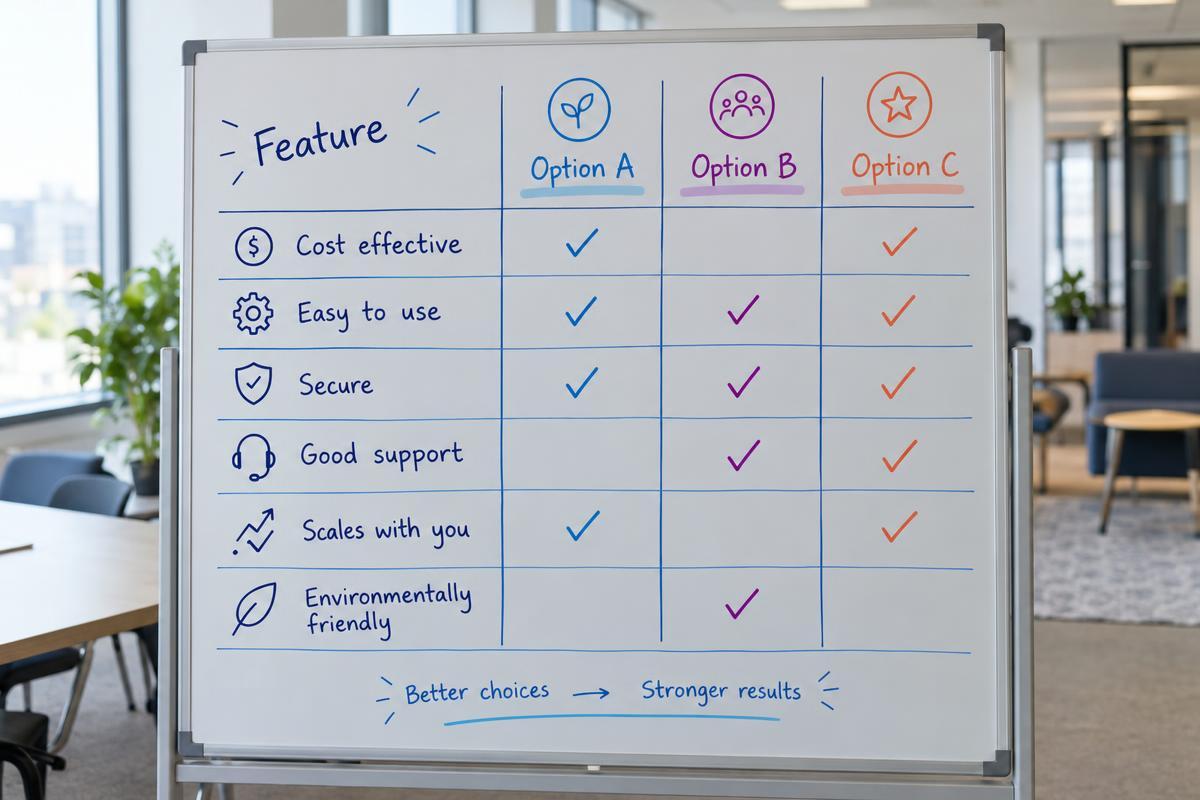
If you want the benefits of behavioural science without the mandatory consulting fees, the market offers several modern Culture Index alternatives. Modern platforms embed personality and culture insights directly into your recruitment workflows. Here are the top alternatives to consider.
| Vendor | Estimated pricing | Best for |
|---|---|---|
| Compono Hire | Transparent platform pricing | Matching candidates to culture and skills automatically |
| The Predictive Index | Pricing on request | Enterprise workforce analytics and consulting |
| Criteria Corp | Pricing on request | High-volume cognitive and skills testing |
Compono makes Compono Hire. We've included it and kept every entry's strengths and limits honest.
Most HR tech only manages process risk, leaving you to guess if a candidate will actually thrive in your team. Compono Hire changes this by handling both process and people insight. Our platform assesses your current culture and generates a benchmark that analyses candidates at the front end of your hiring process.
By assessing every candidate against the 12 key dimensions of your culture, we score candidates automatically. For example, The Coffee Club delivered consistent hiring across 400 outlets and achieved an eight percent or more lower turnover rate by matching candidates to their culture with Compono Hire.
PI is a direct competitor to Culture Index and offers a very similar advisory-heavy model. It provides excellent behavioural data and team design tools, but it suffers from the same pricing opacity. Buyers must negotiate through partners, making it difficult to predict long-term costs as your organisation scales.
Criteria Corp is a strong option if you need to administer a wide variety of tests, from emotional intelligence to basic software skills. As detailed in our Criteria Corp pricing guide, costs scale with testing volume. While the tests are rigorous, they function as standalone hurdles rather than a complete map of your organisation's unique culture.
If your HR tech cannot tell you why your best people are leaving or who will thrive in your team, it is only doing half the job. Compono Hire combines a powerful applicant tracking system with deep behavioural science, allowing you to find amazing talent that others cannot see, all with transparent pricing.
No, Culture Index does not typically charge a per-candidate or per-survey fee. The estimated annual subscription includes unlimited surveys, allowing you to assess as many applicants and employees as you need. The total cost is scaled based on the overall size and complexity of your organisation.
Culture Index sells its platform as an advisory engagement rather than a simple software subscription. Because the cost includes access to a consultant and tailored business advice, the company prefers to quote each business individually after assessing their specific needs and headcount.
Culture Index does not offer a standard self-serve free trial. Because the platform relies heavily on consultant-led onboarding and executive alignment, prospective buyers usually experience the tool through a guided demonstration or a pilot assessment run by the sales team.
Both platforms offer behavioural assessments backed by consultant networks. Culture Index is highly focused on its specific survey methodology and advisory delivery. The Predictive Index offers a broader suite of software tools covering employee engagement, job targeting and strategic planning, though both share similar opaque pricing models.
Yes, third-party reports indicate that administrator training is required and carries an additional cost. Estimates place this training fee at roughly $2,000 per administrator, which ensures your internal team understands how to read the psychometric data and apply the methodology correctly.
The true cost of Workday Peakon in 2026. Learn about hidden implementation fees, per-user subscription tiers, and how to budget for your team.
Compare the best Testlify alternatives for 2026. Discover how top assessment platforms manage recruitment costs, evaluate skills, and measure culture...
Exactly how much Ashby ATS costs in 2026. Explore pricing tiers, hidden add-on fees and true software costs in our comprehensive buyer's guide.