

.webp)

 Mathan Allington


HR software NZ
 Mathan Allington
Finding the right HR software in NZ means moving beyond basic payroll and leave trackers. Discover how to choose a platform that actually understands.
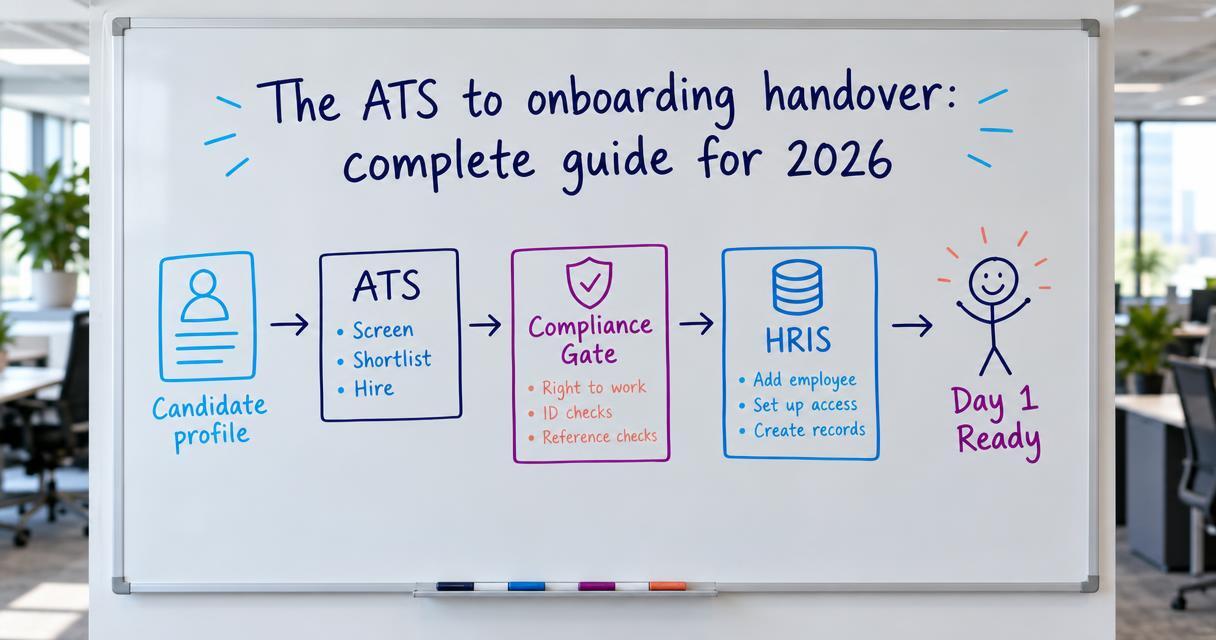
The ATS to onboarding handover is the process where a candidate's data, compliance documentation, and context move from your hiring system into your HR software to prepare them for their first day.
Last reviewed October 2026
Key takeaways
- The handover gap is where most compliance and candidate experience failures occur.
- Manual data entry between systems introduces errors that delay payroll and IT setup.
- A successful handover automates data flow while keeping human connection at the centre of preboarding.
- Pre-start compliance gates ensure no one starts work without the correct right-to-work checks.
- Connecting your hiring platform to your HRIS creates a single source of truth for employee records.
The candidate signs the employment contract. The recruiter marks the role as filled. The hiring manager assumes HR is handling the setup. HR assumes IT is provisioning the hardware. Meanwhile, the new hire sits in silence for four weeks wondering if the company has forgotten they exist.
This is the preboarding black hole. It happens when the applicant tracking system (ATS) does not communicate with the onboarding platform or the broader human resources information system (HRIS).
Many organisations focus heavily on the candidate experience during the interview phase. They spend time crafting the right employer brand and mapping out the first 90 days of employment. The weeks between the offer acceptance and the start date are often ignored.
This gap is a major flight risk. According to Compono's research on why new hires fail, early turnover often stems from poor processes and disconnected tools rather than bad people decisions. When the handover breaks down, candidates experience buyer's remorse before they even log in for the first time.
People problems rarely appear out of nowhere. They are usually the result of broken systems. The handover from recruitment to employment fails for four specific reasons.
Recruitment teams buy software to solve recruitment problems. HR teams buy software to solve core HR problems. The result is a technology stack that does not integrate natively. When the ATS and the HRIS cannot share a database, candidate information gets trapped in the hiring platform.
This forces teams to rely on manual workarounds. Data sits in isolated environments, making it impossible to track a candidate's journey from their initial application through to their first performance review.
When systems do not talk to each other, humans have to bridge the gap. A recruiter downloads a CSV file from the ATS and emails it to the HR administrator. The administrator manually types the candidate's name, address, and salary details into the payroll system.
Manual data entry guarantees mistakes. A misspelled surname delays a background check. An incorrect bank account digit means the new hire misses their first pay cycle. These administrative errors damage trust early in the employment relationship.
The handover phase suffers from the bystander effect. The recruitment team considers their job done once the contract is signed. The HR team is waiting for the new starter to arrive on Day 1. The hiring manager thinks IT is organising the laptop.
Without clear ownership, critical tasks fall through the cracks. No one takes responsibility for the candidate's experience during the notice period. This lack of accountability is one of the most common hiring mistakes modern businesses make.
High-risk industries like healthcare, disability services, and finance require strict credential checks. Candidates must provide police checks, working with children checks, or professional licenses before they can legally perform their duties.
A broken handover process relies on memory or spreadsheets to verify these documents. When these checks are missed, non-compliant candidates slip through and begin working. This creates severe legal and financial exposure for the business.
Failing to connect your hiring and onboarding systems is expensive. The costs appear in three distinct areas of the business.
Regulators do not care if your systems failed to sync. If an employee starts work without a valid visa or mandatory certification, the business is liable. Fines for employing non-compliant staff can run into the hundreds of thousands of dollars.
A manual handover makes auditing nearly impossible. When auditors ask for proof of a right-to-work check, HR teams waste days hunting through email attachments and paper files because the data never moved cleanly from the ATS to the compliance register.
New hires want to add value immediately. They cannot do that if they spend their first week waiting for software licenses, building access passes, and email accounts.
When the ATS does not trigger an automated alert to IT, the provisioning process only begins after the employee arrives. This wastes the new hire's time and frustrates the hiring manager who needs them working on active projects.
Top performers have options. If a candidate experiences a chaotic, disorganised preboarding process, they will question their decision to join your company. If a counter-offer or a better opportunity comes along during their notice period, they will take it.
Replacing a candidate who drops out before Day 1 means paying recruitment costs twice. You lose the agency fee, the advertising spend, and the hours your leadership team invested in interviews.
A successful handover requires specific data points to flow securely from the hiring environment into the employment record. You need to map out exactly what information is moving.
The basics must be perfectly accurate. This includes the legal name, preferred name, personal email address, phone number, and physical address. Getting the preferred name right from the start shows respect and attention to detail.
Your HRIS needs the agreed salary, superannuation details, tax file numbers, and bank account information. This data should flow directly from a secure candidate form into the payroll system without human intervention.
Every certificate, license, and background check collected during the recruitment phase must attach to the permanent employee record. This ensures the HR team can set up automated expiry reminders for future renewals.
This is the data most companies forget to transfer. Interview notes, behavioural assessment results, and identified skills gaps should move into the onboarding system. This context helps managers tailor the new hire's development plan from week one.
Technology should handle the data. Humans should handle the relationship. Getting this balance right is the secret to a great handover.
Use your systems to generate the employment contract and collect digital signatures. Automate the emails that remind candidates to upload their tax forms. Set up API triggers that notify IT to order hardware the moment the offer is accepted.
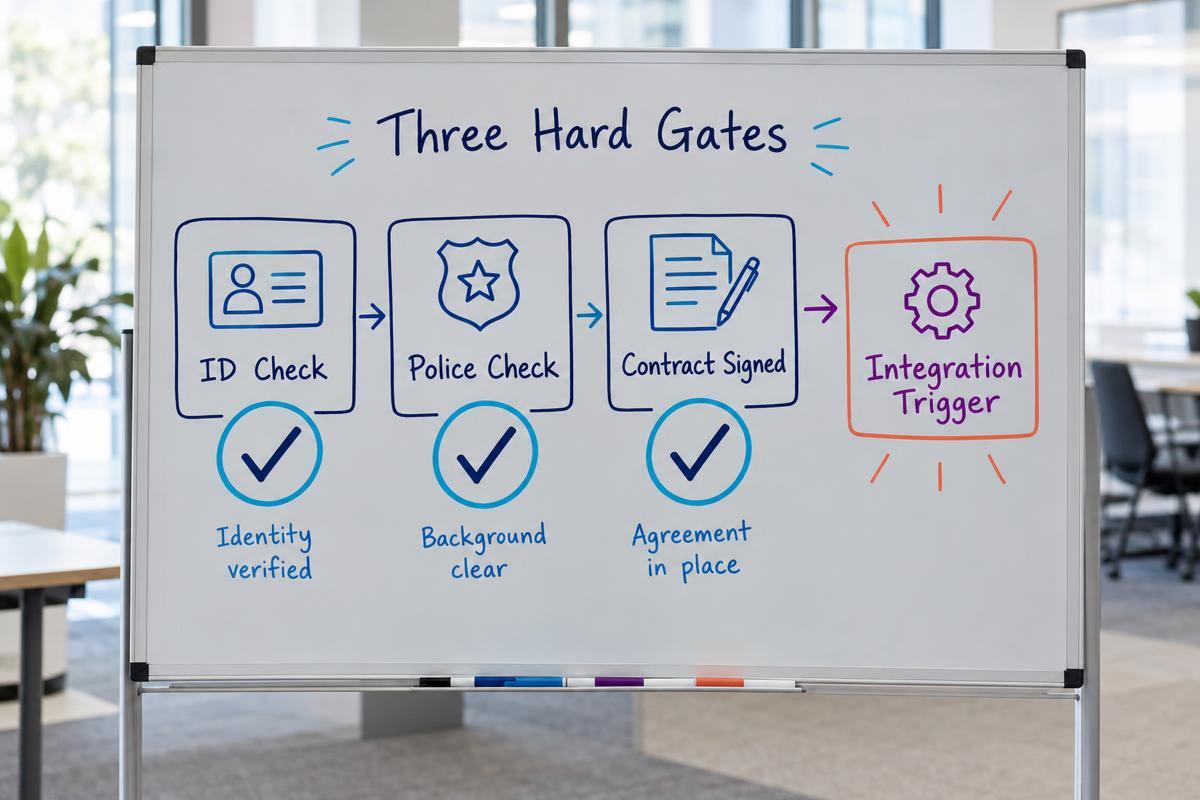
The Compono Hire platform handles this automation through pre-start compliance gates. It blocks starts until mandatory requirements are met. It then uses an API-based trigger to hand off the new hire to your HRIS or onboarding software.
You cannot automate culture. A manager should call the new hire the week before they start to say hello. The team should send a quick welcome video. Assign a buddy to answer the small questions the candidate might feel silly asking HR.
These human touchpoints require very little time but deliver massive returns in candidate engagement and confidence.
Fixing the handover gap requires a mix of process design and technology configuration. Follow these steps to build a reliable transition.
Audit your existing process. Document exactly how a candidate moves from "Offer Accepted" to "Active Employee". Note every time a staff member downloads a file, copies text, or sends an internal email. These manual touchpoints are the failure risks you need to eliminate.
Define the non-negotiable checks required for every role. Build these into your ATS as hard gates. The system should physically prevent the candidate from progressing to the onboarding stage until these specific documents are verified and attached to the profile.
Create a RACI matrix (Responsible, Accountable, Consulted, Informed) for the preboarding phase. HR might own the contract generation. IT owns the hardware provisioning. The hiring manager owns the welcome call. Document this clearly in a new employee onboarding checklist so everyone knows their role.
Work with your software vendors to connect your ATS and your HRIS. Use open APIs to push candidate data across the systems automatically. Ensure the integration includes custom fields like assessment scores and specific compliance tags.
Map out what the candidate will hear from you during their notice period. Send them a welcome pack on week one. Send them their Day 1 itinerary on week two. Send them a message from their buddy on week three. Keep the communication consistent but not overwhelming.
The handover does not end when payroll is set up. The candidate needs to know how to do their job. Once the data moves across, use employee onboarding software to trigger specific learning pathways. This ensures they complete their mandatory induction training and understand their initial tasks.
Managers often assume HR handles everything. You need to train them on their specific responsibilities during the handover phase. Show them how to access the candidate's behavioural profile and interview notes so they can manage the new hire effectively from the start. You can read more about this in our guide to employee onboarding best practices.
You need to track specific metrics to know if your new handover process is working. Look at your pre-start drop-off rate. If candidates are accepting offers but not showing up on Day 1, your preboarding experience is failing.
Measure the time it takes to achieve full productivity. When IT provisioning is automated and learning pathways are triggered immediately, new hires reach competence faster. Finally, survey your new starters at the end of their first week. Ask them specifically if the reality of the job matched the expectations set during the recruitment process.
Key insights
- Manual data transfers between your ATS and HRIS guarantee administrative errors and delay critical setup tasks.
- Pre-start compliance gates protect the business from legal risk by blocking non-compliant starts.
- Technology should handle the data transfer so managers can focus on the human connection during the notice period.
- Clear task ownership prevents new hires from falling into the preboarding black hole.
Stop losing great candidates in the gap between the offer and their first day. Connect your hiring process directly to your onboarding workflows for a smooth new starter experience.
Related reading
The ATS to onboarding handover is the operational process of moving a hired candidate's data, documents, and context from the applicant tracking system into the company's HRIS or payroll software. It prepares the business and the candidate for their first day of employment.
Preboarding covers the weeks between a candidate accepting an offer and their actual start date. It is a high-risk period for candidate drop-off. A strong preboarding phase keeps the candidate engaged, manages their compliance paperwork, and ensures their equipment is ready for Day 1.
You should transfer core identity details, contact information, agreed salary, bank details, tax information, and all verified compliance documents. You should also transfer contextual data like interview notes and behavioural assessment results to help the manager plan the induction.
Compliance gates are automated blocks within the hiring software. They prevent a candidate from moving to the "hired" status or triggering the HRIS integration until specific mandatory documents (like a police check or medical registration) have been uploaded and verified.
Ownership should be shared but clearly defined. HR typically owns the data transfer and contract compliance. IT owns the hardware and software provisioning. The hiring manager owns the relationship, communication, and first-week scheduling.
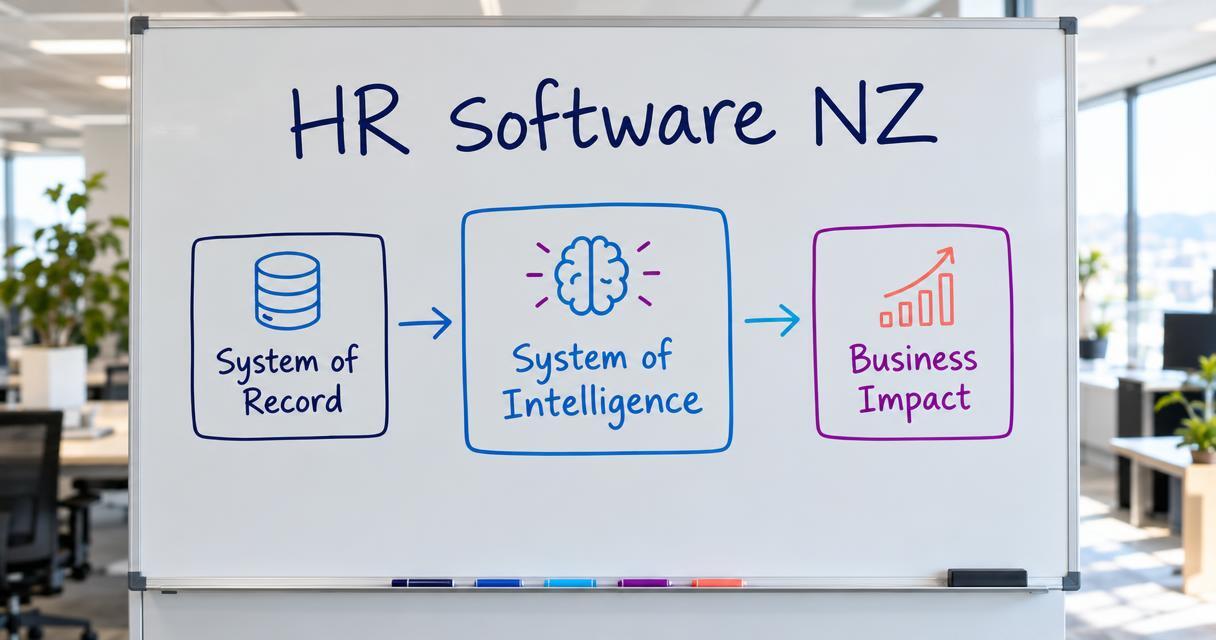
Finding the right HR software in NZ means moving beyond basic payroll and leave trackers. Discover how to choose a platform that actually understands.
How to compare recruitment platforms on culture fit, not only applicant tracking, with the questions Australian HR teams should ask before signing.

How to choose recruit CRM software: the features that matter, ATS vs CRM, AI in practice, and how to measure recruitment ROI beyond time-to-hire.