

.webp)

 Mathan Allington


How smarter hiring can help Australia’s disengaged employee epidemic
 Rudy Crous
Discover how smarter hiring practices can combat Australia's employee disengagement epidemic and save Australian businesses billions annually. Learn...
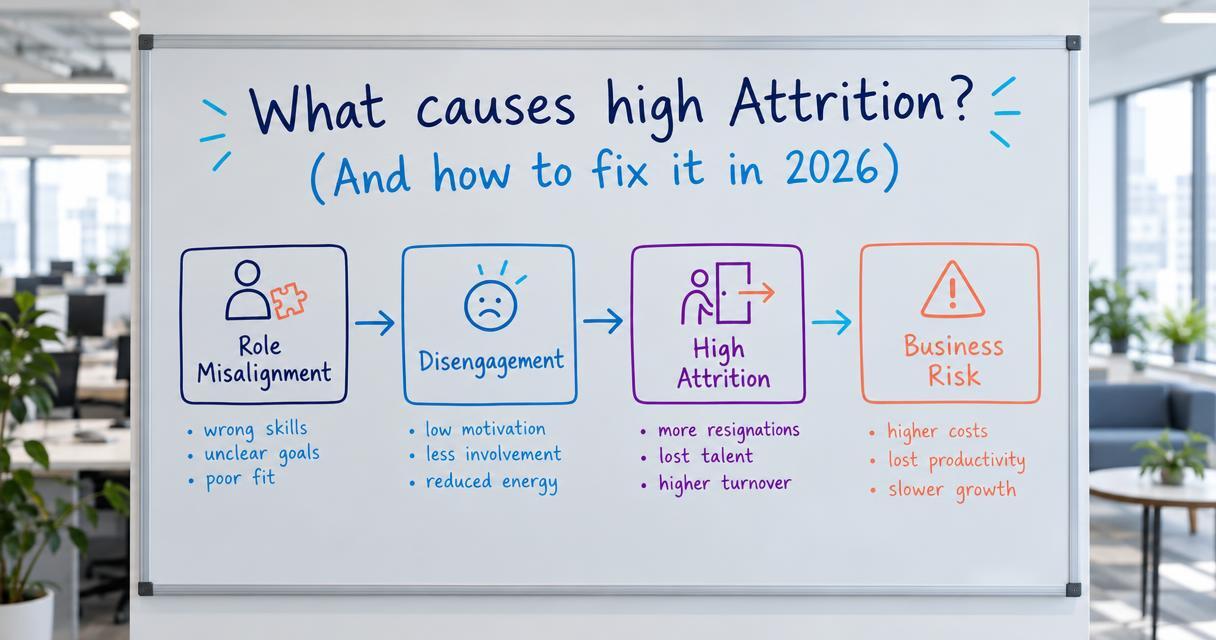
What causes high attrition is a fundamental misalignment between what an employee needs to thrive and what their role, manager, or company culture actually provides.
Last reviewed October 2026
It is rarely a sudden event. People leave slowly over time as small frustrations compound into a final decision to exit. When you see a spike in departures, you are looking at a lagging indicator of decisions made months or even years earlier.
Key takeaways
- High attrition is usually a hiring problem disguised as a retention problem.
- The root causes often trace back to a mismatch in work personality or unclear role expectations.
- Attrition differs from turnover because it includes all departures, including retirements and role eliminations where the headcount is not replaced.
- Fixing a high attrition rate requires using objective data to align people with the right roles from day one.
Before diagnosing the problem, we need to clarify the terms. Many leaders use attrition and turnover interchangeably. They measure different things.
Employee attrition refers to the natural reduction of a workforce over time. This includes resignations, retirements, and instances where someone leaves and the company chooses not to fill the position. It is a measure of your overall shrinking headcount.
Turnover refers specifically to employees leaving and being replaced. If ten people resign and you hire ten new people to take their jobs, your turnover is high but your overall headcount remains stable. Layoffs are employer-initiated reductions in force, usually driven by financial constraints or strategic shifts rather than employee dissatisfaction.
Companies often treat high attrition as a mystery to be solved with exit interviews. The reality is much simpler. People leave when the reality of their daily work does not match the expectations set during the hiring process.
The most common cause of early attrition is a mismatch between the job description and the actual job. A candidate accepts a role believing they will be driving strategy, only to find their days consumed by administrative reporting. This creates immediate disengagement. When the daily reality of a job contradicts the promises made during the interview, trust erodes quickly.
We often hire for skills and fire for fit. If you hire someone who thrives on structured, methodical work into a chaotic startup environment that requires constant pivoting, they will burn out. This is not a failure of their capability. It is a failure of alignment. When an employee's natural working style clashes with the demands of their environment, they will eventually seek a role that feels less like swimming upstream.
You can have a great overarching company culture and still suffer from high attrition if specific teams are managed poorly. Often, this traces back to a single toxic high-performer. Tolerating a brilliant jerk sends a clear message to the rest of the team about what the company truly values. When leadership ignores bad behaviour because the person delivers results, the collateral damage is the departure of good people who refuse to work in a toxic subculture. The impact of brilliant jerks is a primary driver of preventable departures.
People want to know they are from here. This does not always mean a promotion or a new title. It means acquiring new skills and taking on new challenges. When an organisation treats training as a compliance exercise rather than an investment in capability, employees stagnate. If they cannot see a path to grow their skills internally, they will find an employer who will invest in them.
You cannot fix a problem you are not measuring accurately. Calculating your attrition rate gives you a baseline to understand whether your retention strategies are actually working.
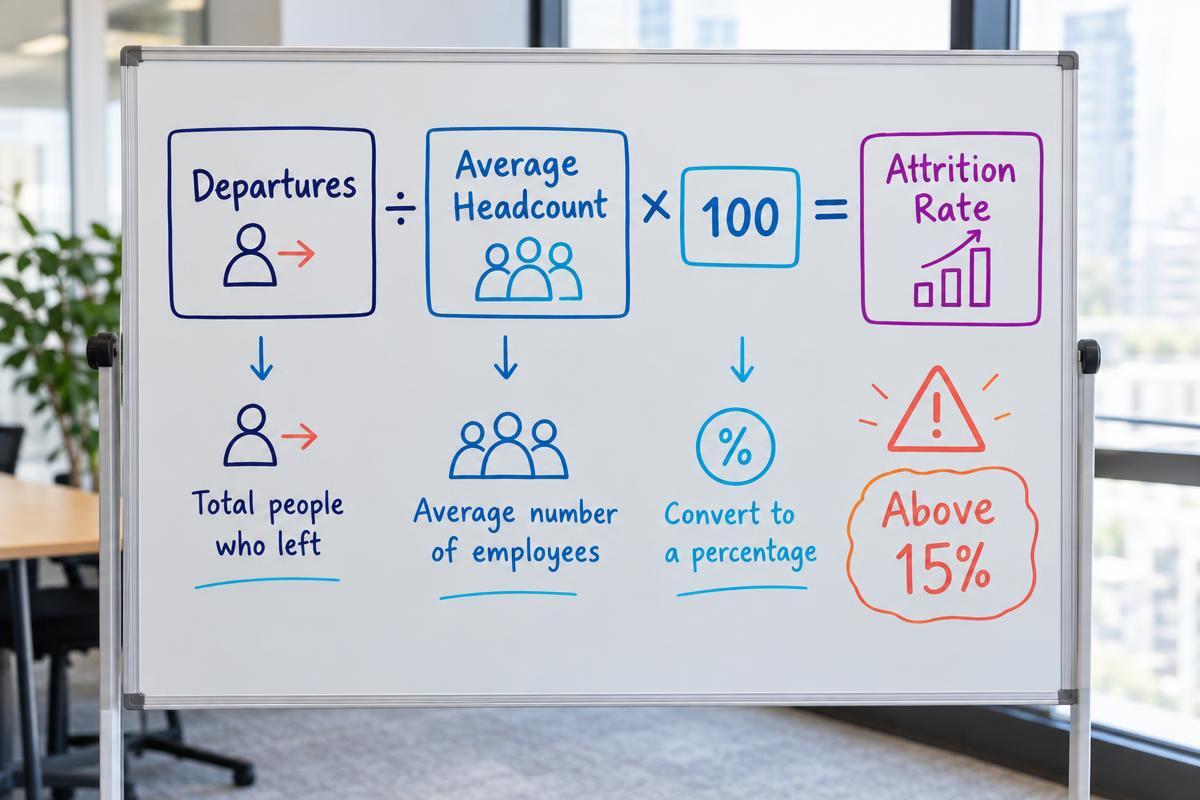
The formula is straightforward. Divide the number of employees who left during a specific period by the average number of employees during that same period. Multiply the result by 100 to get your percentage.
| Metric | Calculation Example |
|---|---|
| Departures in 12 months | 15 employees |
| Average headcount | 100 employees |
| Calculation | (15 ÷ 100) × 100 |
| Annual Attrition Rate | 15% |
What is considered a high attrition rate? The answer depends heavily on your industry. Retail and hospitality historically operate with higher baseline rates than professional services. However, if your annual attrition rate climbs above 15% in a corporate environment, you have a clear signal that something in your set of tools is broken. Catching the warning signs of resignation early is far cheaper than replacing staff later.
The immediate cost of losing an employee is obvious. You have to advertise the role, screen candidates, and train a replacement. But the hidden costs of high attrition are far more damaging to a business.
When experienced staff leave, they take institutional knowledge with them. This is the undocumented understanding of how things actually get done. The workarounds, the client preferences, the historical context of major decisions. When this knowledge walks out the door, the remaining team members have to reinvent the wheel. This slows down productivity across the entire department.
High attrition also creates a cultural debt. Constant departures signal to the remaining staff that leaving is the logical next step. It normalises quitting. When people see their colleagues constantly updating their LinkedIn profiles and heading for the exit, they start questioning their own future at the company.
If you want to fix high attrition, you have to stop treating it as a problem for the end of the employee lifecycle. Retention starts at recruitment.
The traditional hiring model relies heavily on CVs and gut instinct. This approach tells you what a person has done, but it tells you very little about how they will behave in your specific environment. To improve retention, you need to shift to an inside-out hiring approach. This means defining the behavioural traits and work styles required for success in the role before you even look at a resume.
Once people are in the building, you need better data on how they are actually feeling. Relying on an annual survey is like driving a car while only looking in the rearview mirror once a year. It is common to find situations where your engagement survey says fine but people still leave. You need continuous listening tools that measure the underlying drivers of culture, not just surface-level happiness.
The Compono Engage platform helps you map these underlying drivers continuously. By gathering real-time data on team alignment and psychological safety, you can intervene and fix systemic issues before a resignation letter lands on your desk.
High attrition is a symptom of poor alignment. By using objective behavioural data in your hiring and continuous listening in your management, you can build teams that actually want to stay.
Related reading
A normal attrition rate varies by industry, but a general benchmark across professional sectors is around 10 to 15 percent annually. Rates significantly higher than this often indicate underlying issues with culture, compensation, or role alignment.
You fix high attrition by improving your hiring accuracy and addressing toxic subcultures. This means using objective behavioural data to ensure candidates actually fit the role and the team environment, rather than just matching skills on a resume.
Attrition includes all employee departures, including retirements and roles that are eliminated and not replaced, resulting in a smaller overall headcount. Turnover specifically refers to employees leaving and being replaced by new hires.
Yes. If a company is undergoing a major strategic pivot or cultural overhaul, losing employees who are actively misaligned with the new direction can be beneficial. It makes room for new hires who fit the future state of the business.
Discover how smarter hiring practices can combat Australia's employee disengagement epidemic and save Australian businesses billions annually. Learn...

Finding the right HR software in NZ means moving beyond basic payroll and leave trackers. Discover how to choose a platform that actually understands.

Find the best culture platform for companies with 500 employees in Australia. Learn how to measure engagement and align your mid-market team's...
 Mathan Allington
 Compono