
.webp)

 Mathan Allington


Comparative Analysis of Software for Recruitment Solutions
 Mathan Allington
The five categories of recruitment software, what each one actually automates, and how to tell which fits the hiring problem you have.
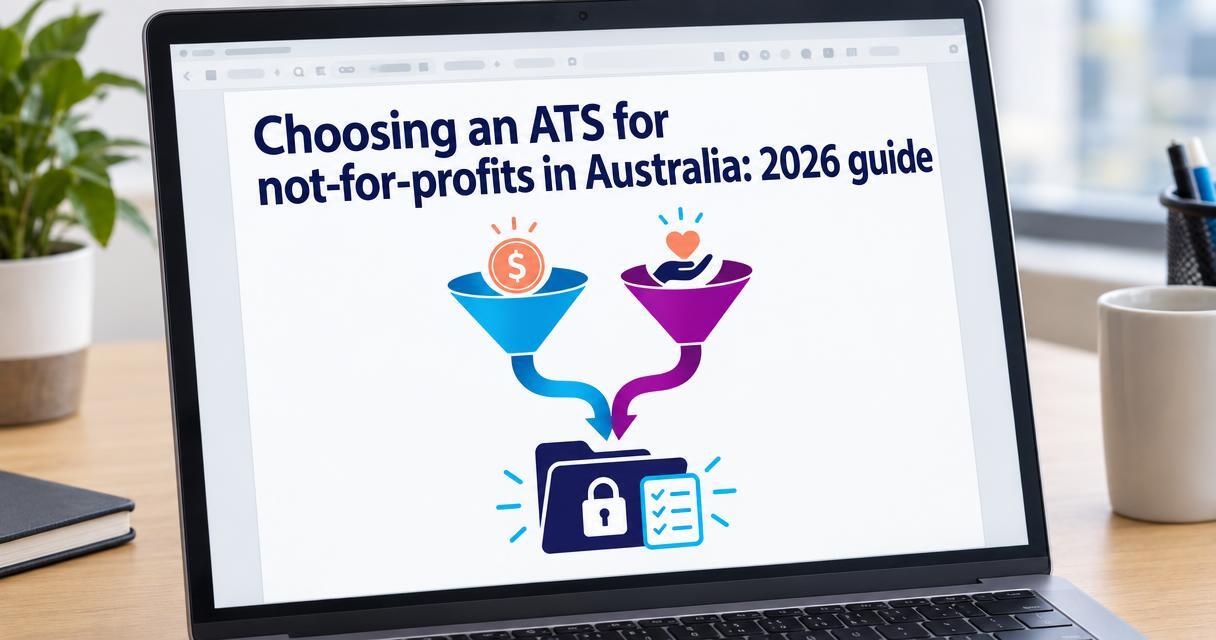
An applicant tracking system (ATS) for not-for-profits in Australia must handle dual hiring pipelines for paid staff and volunteers while managing strict compliance requirements like Working With Children Checks and national police checks.
Last reviewed October 2026
Key takeaways
- Australian charities need an ATS that manages both traditional employment pipelines and high-volume volunteer registration.
- Compliance tracking for Working With Children Checks (WWCC), VEVO and police checks must be built into the screening workflow.
- Values alignment is critical, requiring tools that assess candidate motivation alongside qualifications.
- Demonstrating return on investment through reduced administration time helps justify software costs in grant applications.
Recruiting for a charity or community organisation is fundamentally different from corporate hiring. Australian charities employed 1.6 million people, 11% of the national workforce, in the 2024 reporting period, making able to grow recruitment infrastructure strategically significant for the sector. Yet many community organisations still rely on manual spreadsheets and overflowing email inboxes to manage their hiring.
This manual approach creates significant risk. Workforce capacity was identified as the biggest people-related strategic risk by Australian NFP leaders, with workforce shortages, recruitment difficulties and capability gaps cited as contributing factors. When hiring managers are bogged down in administration, they have less time to assess whether a candidate genuinely shares the organisation's mission.
Budget constraints compound the problem. Only one in four Australian NFPs reported financial sustainability, strengthening the case for ATS platforms that reduce manual administration and recruitment costs. A modern ATS built for the Australian context does more than track resumes. It acts as a compliance safeguard, a volunteer management hub and a tool for identifying people who will stay long term.
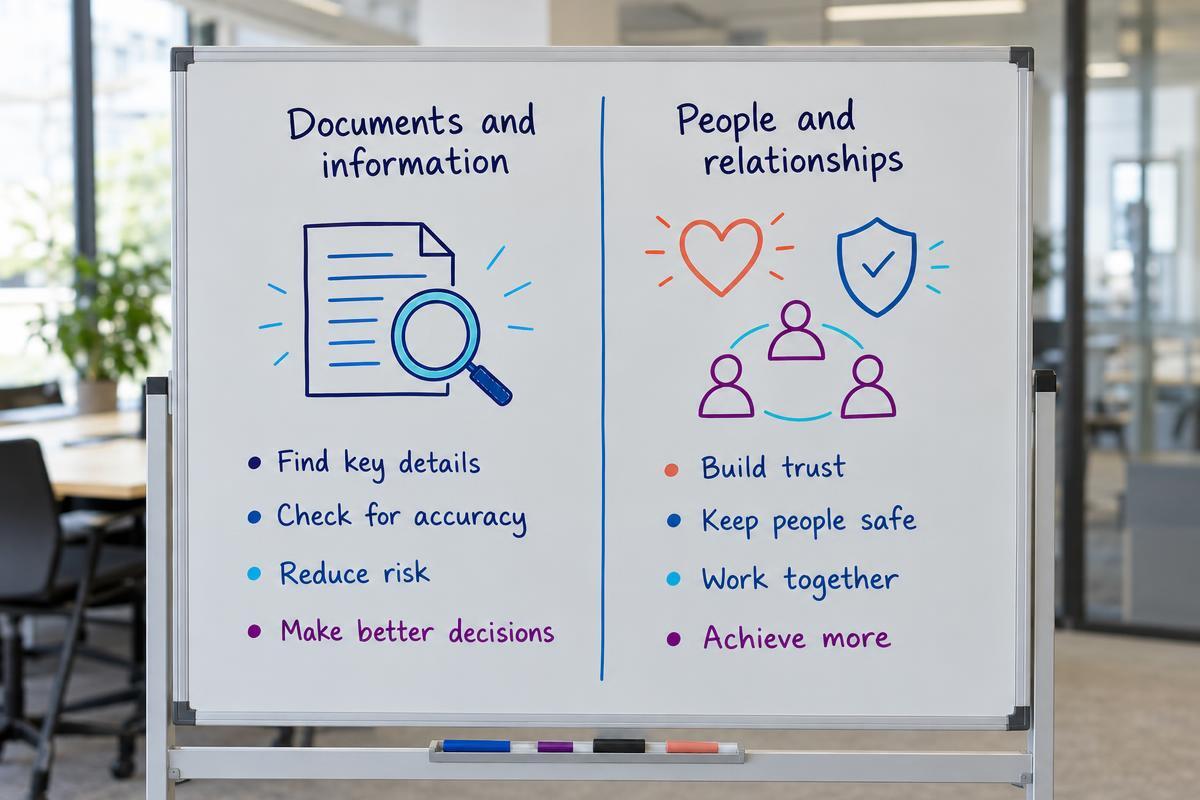
Corporate hiring systems assume every applicant wants a paid job. The community sector operates differently. 53% of Australian charities operated without paid staff and relied entirely on volunteers, highlighting the need for simple, low-administration hiring workflows where recruitment does occur. Even large organisations run dual pipelines.
An ATS for a not-for-profit needs to support multiple application styles. A senior executive search requires a rigorous multi-stage interview process, detailed psychometric assessment and board approval steps. A volunteer intake for a weekend fundraising event requires a frictionless mobile form, a quick identity check and a bulk-communication tool.
When you force volunteers through a corporate employment application, they drop out. When you force executive hires through a basic web form, you lose the data structure needed for good decisions. Choosing an ATS in Australia means finding a platform flexible enough to build custom workflows for different types of engagement.
Compliance in the community sector is heavy and strictly enforced. 34% of Australian NFP boards said workforce issues dominated board attention, while 30% cited compliance, two areas an ATS can support through structured hiring and recordkeeping. A strong platform captures compliance data before a candidate ever reaches an interview.
Australian not-for-profits face specific screening requirements. These include Working With Children Checks (which vary by state, such as the Blue Card in Queensland or the WWVP in the ACT), NDIS Worker Screening Checks, and national police checks. Your software should automatically request these details and flag missing information early in the pipeline.
Data privacy is equally important. Under the Australian Privacy Principles (APPs), charities must handle sensitive personal data securely. Your ATS must offer local data hosting to ensure candidate information remains onshore. It should also connect neatly with your new employee onboarding processes so approved checks move straight into your payroll system without manual data entry.
People join not-for-profits because they care about the cause. Skills matter, but a highly skilled candidate who clashes with your culture will quickly cause friction. An ATS for Australian charities should prioritise values alignment and culture fit, not just resume parsing, to identify candidates genuinely committed to an organisation's mission.
Traditional hiring tools screen out candidates based on keyword matching. This approach penalises people returning to the workforce or those transitioning from corporate roles to the charity sector. These candidates might lack specific sector experience but possess the exact motivation and work style your team needs.
You can solve this by embedding behavioural science into the application process. Behavioural hiring for not-for-profits helps you understand a candidate's intrinsic drivers. Compono Hire is an applicant tracking system that assesses candidates across organisation fit, skills and qualifications so you understand who they are before you interview them. This insight helps you build teams that are aligned on purpose.
When evaluating recruitment software, it helps to understand the difference between a generalist corporate tool and one configured for community organisations. The table below outlines what to look for.
| Feature | Corporate ATS focus | Not-for-profit ATS requirement |
|---|---|---|
| Application flows | Standardised CV upload and cover letter | Customisable forms for low-friction volunteer registration |
| Compliance tracking | Basic background checks | Automated tracking for WWCC, NDIS screening and police checks |
| Candidate assessment | Keyword matching for hard skills | Values alignment and behavioural fit assessment |
| Integration | Enterprise ERP systems | Local HRIS, volunteer management tools and VEVO |
Integration capability is a major deciding factor. Your ATS should connect smoothly to your human resources information system (HRIS) and payroll software to support Single Touch Payroll (STP) Phase 2 requirements. It should also integrate with VEVO (Visa Entitlement Verification Online) to confirm working rights for temporary residents and international students who frequently volunteer.
Approving new technology is notoriously difficult in the community sector. More than 40% of Australian NFPs experienced significant income fluctuations during the year, making flexible recruitment capacity particularly relevant for organisations managing variable funding and staffing demand. You need to prove return on investment.
Start by calculating the hours your team spends on manual administration. Add up the time spent acknowledging applications, scheduling interviews, chasing compliance documents and manually entering data into payroll. An effective ATS automates these steps, freeing up your team to focus on candidate engagement and program delivery.
Many software providers offer specific pricing models or discounts for registered Australian charities. When applying for capacity-building grants, frame the ATS as vital infrastructure. A system that secures candidate data, ensures regulatory compliance and improves volunteer intake directly supports the organisation's ability to deliver its mission safely.
Hiring for a mission-driven organisation means finding people who share your values while managing strict compliance and budget constraints. Compono provides recruitment technology that assesses candidates for culture fit upfront, helping you build aligned teams without the administrative burden.
An ATS for a not-for-profit is configured to handle both paid employment and volunteer pipelines. It focuses heavily on values alignment, local regulatory compliance tracking and cost-effective administration, whereas corporate systems typically assume all applicants are applying for standard paid roles.
A capable ATS automates the collection and tracking of mandatory requirements like Working With Children Checks, national police checks and NDIS Worker Screening Checks. It can flag expired documents and block candidates from progressing until their compliance data is verified.
Yes. You can build custom workflows that offer a fast, mobile-friendly application process for volunteers. This removes the barrier of traditional CV uploads while still capturing essential contact details and compliance information.
Many ATS providers offer discounted pricing for organisations registered with the Australian Charities and Not-for-profits Commission (ACNC). It is always worth discussing your registered charity status during the evaluation process to access community pricing tiers.
Modern recruitment platforms incorporate behavioural science and psychometric assessments early in the application process. This helps you identify candidates who naturally align with your organisation's culture and mission, rather than relying entirely on past work experience.

The five categories of recruitment software, what each one actually automates, and how to tell which fits the hiring problem you have.

How to work out which recruitment software is right for your team, from features to cultural alignment and hiring intelligence.

What candidate management software does, how it differs from a full ATS, and the features that matter most when you compare systems.
 Compono