
.webp)

 Mathan Allington


Comparative Analysis of Software for Recruitment Solutions
 Mathan Allington
The five categories of recruitment software, what each one actually automates, and how to tell which fits the hiring problem you have.

Candidate management software is the system your hiring team uses to track, organise, assess and communicate with applicants from the moment they apply to the moment they accept. The useful distinction when you are comparing options is scope: some tools manage a single open role from advertisement to offer, and some manage your whole relationship with talent, including people you did not hire this time and will want next time.
Last reviewed September 2026.
Most buyers arrive at this category because something broke. A strong candidate went cold while the shortlist sat in someone's inbox, or three interviewers turned up with three different versions of the same CV. Software fixes that part quickly. The harder question, and the one worth spending your evaluation time on, is whether the system helps you pick the right person rather than just process people faster.
Candidate management is the work of keeping every applicant relationship organised and moving. In practice that means six jobs:
A platform that does the first four and ignores the last two will feel efficient and still leave you starting from zero on every new vacancy.
The labels get used interchangeably by vendors, which makes demos confusing. The categories are genuinely different in what they are built to do.
| Approach | What it is built for | Strongest at | Best fit |
|---|---|---|---|
| Spreadsheets and a shared inbox | Tracking a handful of applicants for one or two roles at a time. | Costing nothing and needing no setup. | Teams hiring a few times a year who can live with the risk of losing track. |
| Applicant tracking system | Running an open requisition from advertisement to offer, with stages, approvals and compliance records. | Process discipline, audit trails and reporting on funnel speed. | Any organisation hiring regularly enough that consistency matters. |
| Recruitment CRM | Building and nurturing relationships with talent before a role exists. | Sourcing, pipelines, campaigns and long-term candidate relationships. | Agencies, and in-house teams that hire the same roles repeatedly. |
| Candidate management inside a workforce platform | Deciding who will succeed, with hiring data that carries into onboarding and development. | Assessment, fit evidence and ranking, plus a record that does not stop at the offer. | Organisations where the cost of a wrong hire is higher than the cost of a slow one. |
Plenty of products sit across two of these rows, which is fine as long as you know which row you are buying for. If your current gap is between recruitment and core HR rather than inside recruitment, our comparison of what an ATS does versus an HRIS is the better place to start, and we have a separate guide on choosing between an ATS and a recruitment CRM in Australia.
A dozen open tabs, a cluttered inbox and a memory of who was promised an interview on Tuesday is a system. It is just an expensive one. Strong candidates are usually weighing more than one process at a time, so every day a shortlist sits idle is a day your preferred hire is being interviewed somewhere else.
The less obvious cost is inconsistency. When screening happens in someone's head under time pressure, the filter changes by the hour. Familiar employer names and recognisable universities start doing the work that evidence should be doing, and capable applicants without those markers get cut for reasons nobody wrote down. That is a quality problem and, in a regulated hiring process, a defensibility problem.
Put a number on it before you shop. Our cost per hire calculator accounts for advertising, agency fees and the hours your team spends on coordination, which turns a vague sense of inefficiency into a business case a CFO will read.

Feature lists all look similar by the third demo. These are the capabilities that change day-to-day work:
Australian buyers should also check job board coverage, including SEEK, and how the platform handles right-to-work documentation and records retention under local privacy obligations.

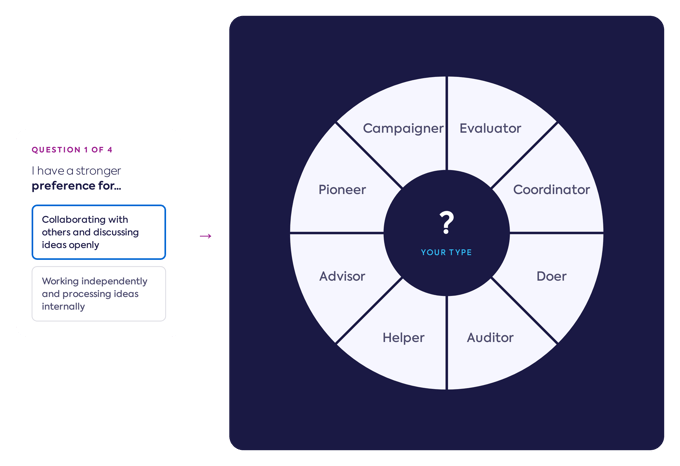
A resume tells you what a person has done. It rarely tells you how they will do it, or how they will work with the team they are joining. Compono's framework describes eight work personalities: Doer, Auditor, Helper, Advisor, Pioneer, Campaigner, Evaluator and Coordinator. Knowing that a role needs the steady execution of a Doer, or the meticulous standards of an Auditor, changes who you shortlist and the questions you ask them.
Used properly, this is not a personality quiz bolted onto a hiring process. You benchmark what success looks like in the role, assess applicants against that benchmark, and keep the evidence with the candidate record. Compono Hire scores and ranks applicants on organisation fit alongside skills and qualifications, so the shortlist arrives with reasoning attached instead of a gut feeling attached.
Two cautions worth stating plainly. Fit evidence should widen your shortlist, not narrow it to people who resemble the incumbent team, so check that any platform lets you benchmark against the role rather than against one manager's preferences. And an assessment result is input to a hiring decision, never the decision itself.
Applicants judge you on responsiveness more than on anything you write in the ad. A clunky application form that asks for details already on the attached CV, multiple logins, or four weeks of silence will cost you the people you most wanted. A candidate management system earns its licence fee partly by making the simple courtesies automatic: instant confirmation on apply, a status update at each stage, and a clear, human rejection for the people who miss out.
Those rejected applicants matter commercially. In consumer-facing businesses they are also customers, and in tight talent markets they are next year's applicants. Treating them well at scale is only realistic with software doing the prompting.
The reporting question most buyers skip is the one that pays off. Which sources produce applicants who actually get hired, not just applicants. Where in the funnel do good people drop out. Do the assessment scores of your best hires look different from the scores of people who left in the first year.
Start with two numbers and add from there. Time to hire tells you whether your process is losing people to delay, and offer acceptance rate tells you whether your process or your offer is the problem. Both are standard in any serious platform, and both are worth checking against your own baseline before you sign, so you can tell in six months whether the purchase worked.
If a vendor cannot answer the scoring question in plain language, that is useful information in itself.
Compono Hire scores every applicant on organisation fit, skills and qualifications, so your shortlist comes with evidence instead of a hunch.
Talk to usIt is the system a hiring team uses to capture applications, screen and assess applicants, record panel feedback, communicate with candidates and keep strong people on file for future roles. The better products also carry what you learned during hiring into onboarding, so the new starter's manager begins with context rather than a blank page.
An applicant tracking system is organised around an open role and its stages, approvals and compliance records. Candidate management is the wider job of managing people and relationships across roles and over time, which usually adds talent pooling, assessment and long-term candidate records. Many products do both, so ask which one the product was originally designed for.
If you hire more than a few times a year, yes. The return comes less from saved admin time than from not losing a good applicant to a slow process, and from having a consistent, explainable basis for decisions when there is no recruitment team to keep it all in their heads.
It applies the same screening criteria to every applicant, records the reasons for decisions, and replaces a rushed reading of a resume with structured evidence such as skills checks and work personality. It reduces bias rather than removing it, because humans still make the hiring decision, and any scoring model should be reviewed for the patterns it produces.
Pricing is usually quoted rather than published, and the unit varies between users, employees and open roles, so two proposals are rarely comparable as written. Work out your current cost per hire first, then judge each quote against that number and against the cost of the hires you are getting wrong.
Communication speed and panel consistency improve almost immediately, because they are process changes. Quality measures such as retention and performance of new hires need a full cycle to show, so expect to wait six to twelve months before judging the purchase on those.

The five categories of recruitment software, what each one actually automates, and how to tell which fits the hiring problem you have.

Recruitment software for New Zealand teams: what to look for, how to weigh local needs against global tools, and how to assess fit before you...

What a candidate management system does, which features matter most, and how to pick one that lifts candidate quality as well as admin speed.