

.webp)

 Mathan Allington


What does hiring software actually mean for your business
 Mathan Allington
Hiring software explained in plain terms: what it covers, how it differs from an ATS, and how assessment helps you hire people who actually fit.

An ATS manages active vacancies: posting jobs, tracking applications, moving candidates to contract. A recruitment CRM nurtures relationships with people who haven't applied yet. Australian companies in 2026 increasingly need both in one platform, because your best hire is often someone already in your database, and disconnected systems never surface them.
Last reviewed July 2026
This guide explains what each system does, why the divide between them is dissolving, and what to look for if you are choosing recruitment technology for an Australian business this year.
Australian companies are under a distinctive set of pressures in 2026. The Fair Work Act has seen significant updates regarding right-to-disconnect and flexible work arrangements, making compliance more complex. Meanwhile the skills shortage has evolved: the challenge is no longer just finding people, it is finding the right people who actually want to stay. Those pressures are blurring the line between an applicant tracking system (ATS) and a recruitment CRM.
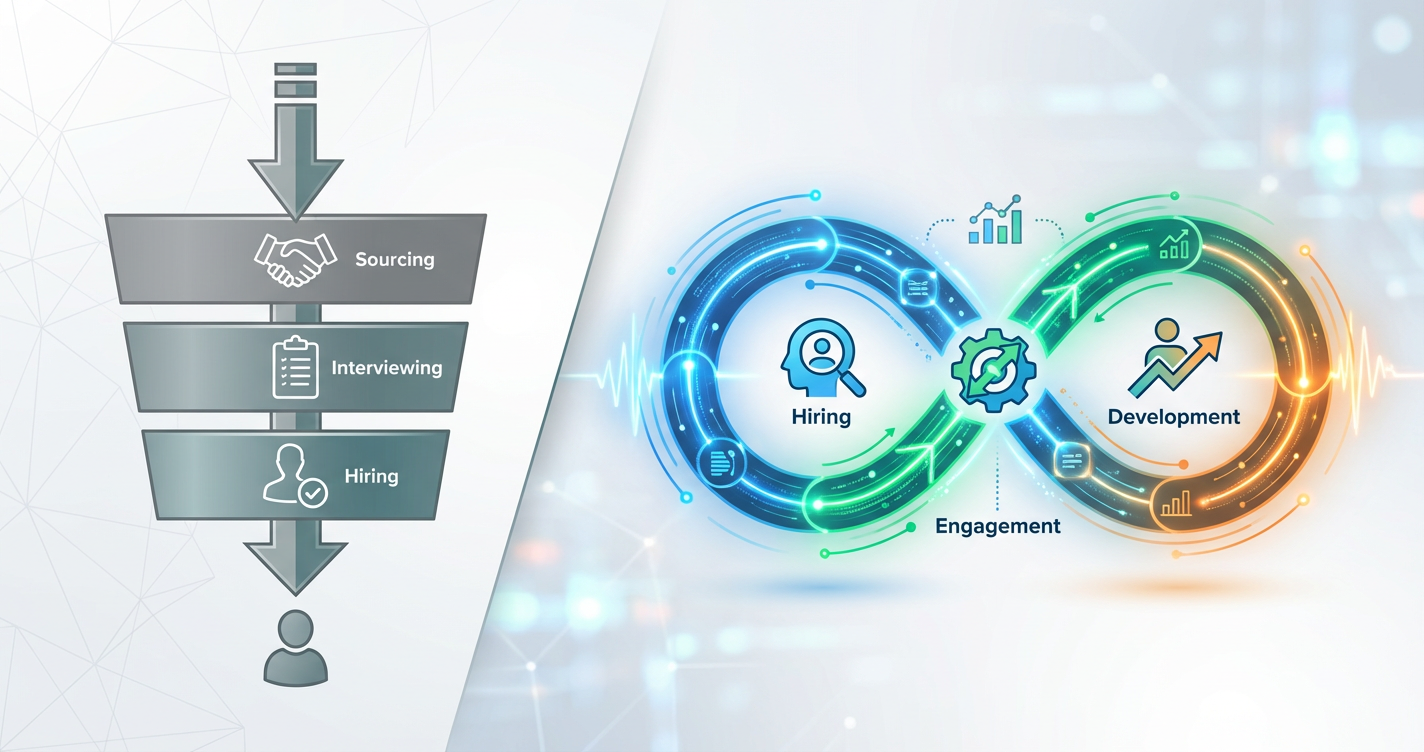
Historically, the ATS handled the hire itself: posting jobs, receiving applications, moving candidates through a workflow. A system of record. The CRM was where you nurtured people who had not applied yet. A system of engagement. But in 2026 your best hire might be someone who applied for a different role six months ago, or a current employee ready for their next move. If those two datasets are not talking to each other, you are losing money and talent.
Recruitment has become a continuous loop rather than a linear funnel, which is why leading Australian firms are moving from disconnected point tools to integrated platforms like Compono.
An applicant tracking system is built for the "now". It organises the chaos of high-volume applications for an active opening, keeps you on the right side of your legal obligations, and gets a contract signed. It is essential operational infrastructure, especially for mid-market businesses growing from 60 to 1,000+ employees, where spreadsheets become a liability.
A recruitment CRM (candidate relationship management) is built for the "future". You use it to grow a talent community: newsletters, webinar invitations, staying top-of-mind with people you would love to hire one day. In a market where passive candidates make up a huge share of the workforce, the CRM is your proactive engine, and it reduces your dependence on expensive job boards.
Problems start when one half is strong and the other is weak: a great ATS with a dormant CRM, or a warm CRM feeding into a clunky application process that scares candidates off. In 2026, candidate experience is a genuine differentiator. If applying to you feels like a 1990s tax return, the best people go elsewhere.

Legacy recruitment tech runs on keyword matching: search "Project Manager" and "Prince2", get everyone with those words on a PDF. That approach fails in two expensive ways. First, it ignores the "brilliant jerk" problem: technically perfect hires who wreck team culture within three months. The cost of a mis-hire in Australia, counting fees, lost productivity and training, can easily exceed 2.5 times the employee's salary.
Second, keyword systems reward people who game the buzzwords, not the people with the best underlying potential, which quietly undermines diversity goals. They also miss transferable skills entirely. Many of the roles you are hiring for in 2026 did not exist three years ago, and a keyword filter cannot see that a background in data analysis maps neatly onto an AI-era role.
The fix is matching on who a person is, not just what they have done. Compono Hire integrates psychometric insight and culture-fit data directly into the hiring workflow, matching people on potential rather than resume formatting.
Compono bridges the ATS and the CRM in a single platform. Instead of sifting a sea of resumes, you get a ranked shortlist based on skills, qualifications and fit for your culture. When you post a job, the platform automatically scans your existing talent pool and surfaces the top matches instantly, including the hidden gems a keyword search would never find.
Culture data feeds the same engine. With Compono Engage, you can benchmark what makes your current high performers succeed, then hire for those traits. Behavioural red flags show up before the first interview, not three months after the start date.
The most cost-effective way to fill a skills gap in 2026 is often internal, yet most recruitment CRMs only look outward. A genuine talent platform includes your current workforce. If you do not know the hidden skills of your own employees, they will eventually take those skills to a competitor who asked.
Combining engagement data with recruitment workflows makes this practical. If Engage shows a team member is motivated but stagnating, HR can reach out with internal opportunities before a resignation letter arrives. That saves recruitment costs and tells your people their growth matters, which is what retention actually looks like in practice.
Evaluate any 2026 purchase on how it connects to the rest of your stack: payroll, LMS, performance tools. Only 20% of large companies in our research reported fully integrated systems, which leaves mid-market firms a real opening to win on agility.
Integration is about data integrity as much as convenience. When recruitment data (skills, personality traits, work preferences) follows the employee into their new role, onboarding gets personal from day one, and managers can adapt their leadership style to how each hire actually works.
Local context is the last filter. Australian privacy law is tightening, and global providers with cookie-cutter setups rarely account for Fair Work Act nuances or local certifications. A partner that understands the Australian market keeps you compliant while you scale.
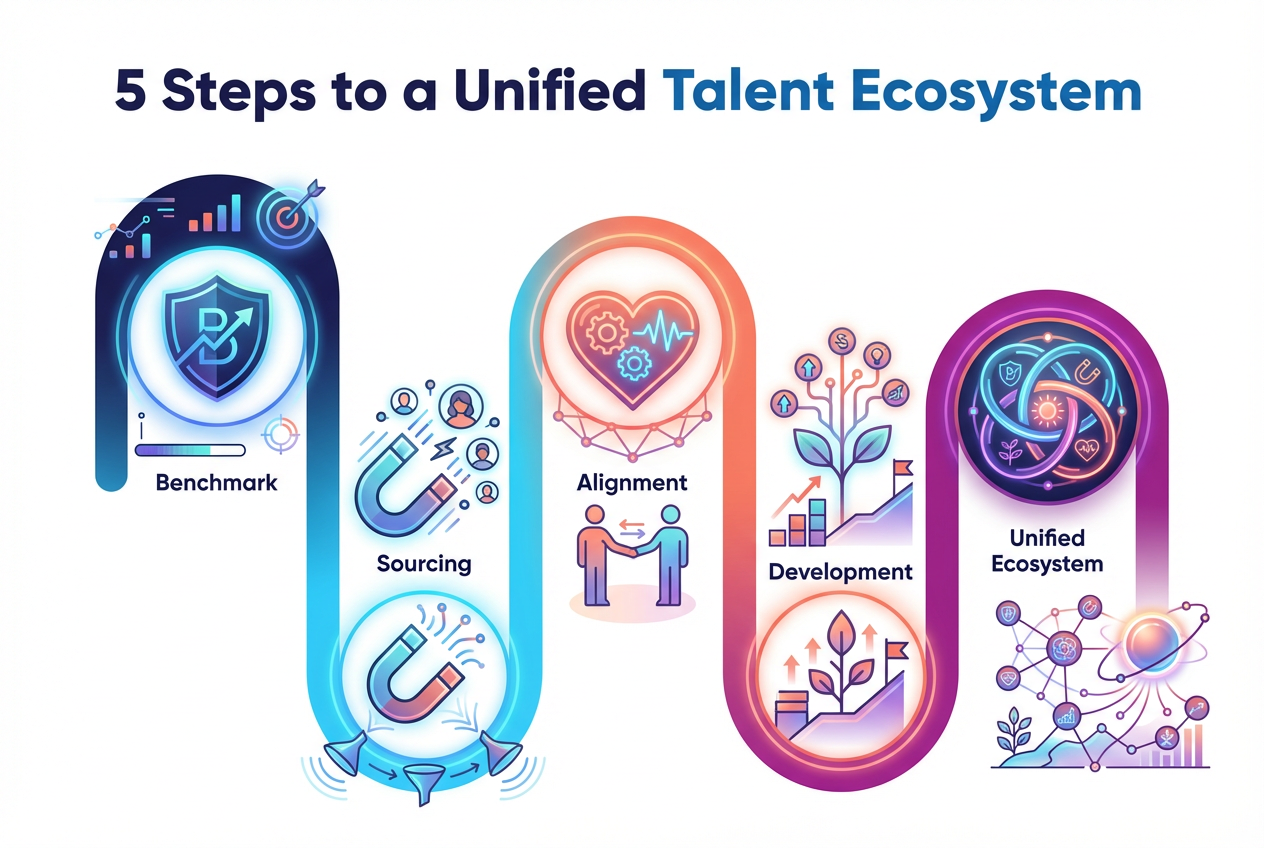
Compono combines tracking, talent pooling and culture-fit matching, so the right candidate surfaces whether they applied yesterday or last year.
Talk to usAn ATS manages active vacancies: applications, workflow and compliance for open roles. A recruitment CRM manages relationships with potential candidates before they apply, building talent pools you can activate when a role opens.
Most growing Australian businesses now need both capabilities, ideally in one platform. A standalone ATS leaves your talent pool cold between roles, while a standalone CRM cannot run a compliant, efficient hiring process.
Counting recruitment fees, lost productivity and training, a mis-hire can easily exceed 2.5 times the employee's salary, which is why matching on culture fit as well as skills matters so much.
Filling skills gaps internally is often cheaper and faster than external hiring, and it lifts retention. A platform that combines engagement data with recruitment workflows can flag motivated employees ready for a new challenge before they start looking elsewhere.

Hiring software explained in plain terms: what it covers, how it differs from an ATS, and how assessment helps you hire people who actually fit.

How an HR generalist uses an ATS day to day: what it automates, how hiring managers fit in, and what to check at setup before you commit.
What a recruitment CRM does, how it differs from an ATS, and how talent pipelines cut time-to-hire and last-minute job ad spend.
 Compono