

.webp)

 Mathan Allington
A working with children check register is the central record employers use to track and verify the clearance status of their staff.
Last reviewed October 2026
Managing this compliance requirement on a static spreadsheet is a massive operational risk. Employers often treat the check as a simple onboarding task to tick off and forget. The reality of modern compliance requires active oversight and real-time data.
Key takeaways
- A compliant working with children check register must track real-time clearance status rather than just expiry dates.
- Continuous monitoring across Australian jurisdictions means a valid check can be revoked without warning.
- Failing to maintain accurate records carries heavy financial and legal penalties for employers.
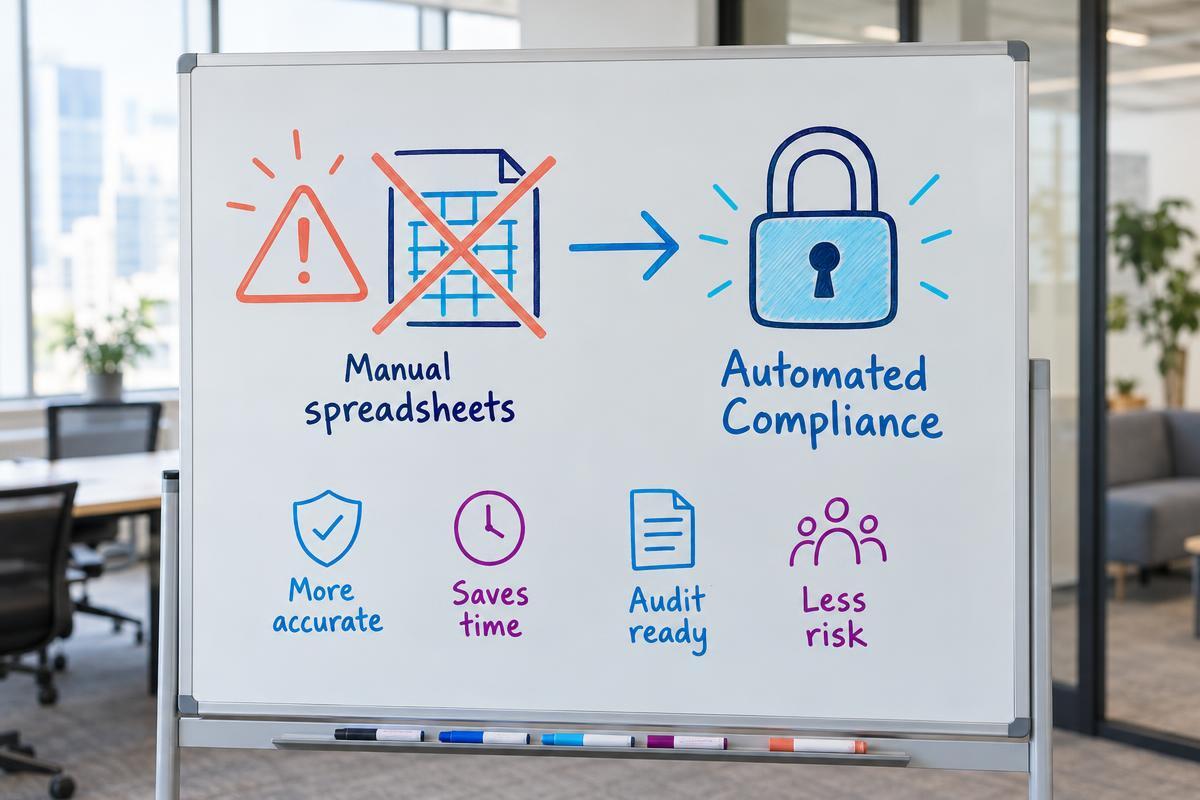
- Moving from manual spreadsheets to automated credential software removes the risk of human error.
The sheer volume of clearances in Australia makes manual tracking impossible to do well. In 2024–25, New South Wales had 2,012,813 people with an active Working With Children Check clearance. That is a massive portion of the workforce. But the more important detail from that same data shows 706 people were barred from working with children during that period.
If one of those 706 people works for your organisation, a spreadsheet will not tell you their status has changed. You need a system that actively manages this data. Adding credential verification to your new employee onboarding checklist is only the first step. You then have to maintain that record for the entire duration of their employment.
Why a static working with children check register fails
Many organisations still rely on basic spreadsheets to track expiry dates. This approach fundamentally misunderstands how the clearance system works in 2026. Continuous monitoring applies in every Australian jurisdiction. This means authorities can suspend or revoke a clearance the moment new police or disciplinary information emerges.
If an employee commits an offence on a Saturday, their clearance could be revoked by Monday morning. A manual spreadsheet will still show their check as valid until its original expiry date three years in the future. You are flying blind. You need a working with children check register that actively flags status changes and prompts managers to take immediate action.
Employers have a legal obligation to ensure their workforce is cleared to work with vulnerable people every single day. Relying on an administrative assistant to manually check a government portal once a month leaves a massive window for error. Building audit-ready training records and compliance registers requires digital automation.
Navigating the cross-border compliance trap
Managing a workforce across multiple states introduces a major administrative headache. Australia’s eight Working With Children Check schemes are not portable between states and territories. Workers generally need a separate local application and fee to operate in a new jurisdiction.
If your organisation operates across borders, your working with children check register must account for different rules and verification methods. A clearance in Victoria does not automatically allow an employee to run a workshop in Queensland. Your tracking system must map exactly which state clearances an employee holds and restrict them from being rostered in jurisdictions where they lack compliance.
This complexity is driving the push for national standards. The proposed National Early Childhood Worker Register is designed to give regulators visibility of workers’ identity, qualifications, training and Working With Children Check status. Until a fully unified national system exists, employers must manage this fragmentation themselves. Understanding how to credential staff online in Australia is a core competency for modern HR teams.
The administrative burden of compliance
Managing compliance takes a massive toll on human resources teams. Every time a new cohort of staff joins the business, administrators spend hours chasing paperwork and cross-referencing government databases. This manual effort drains productivity and creates bottlenecks in the hiring process.
When you rely on paper files and spreadsheets, you also create a single point of failure. If the person who manages the working with children check register goes on leave, the organisation loses its visibility over compliance. A digital system democratises this data, allowing site managers and department heads to verify clearances instantly without waiting for head office.
The massive cost of an inaccurate register
The penalties for failing to maintain an accurate working with children check register are severe. Regulators do not accept administrative oversight as an excuse for non-compliance. In South Australia, working with children without a required check is an offence carrying a maximum penalty of $20,000 for a first or second offence. Subsequent offences can result in a $50,000 fine or a year in prison.
Beyond the financial penalties, the reputational damage of a compliance failure can destroy an organisation overnight. Parents and stakeholders expect absolute certainty when it comes to child safety. You cannot afford to guess whether your records are up to date. Using purpose-built school and university HR software in Australia helps mitigate this risk by hardwiring compliance into your daily operations.
Moving to an automated compliance system
The only secure way to manage this risk is to move away from manual data entry. A digital working with children check register connects directly to your broader workforce management system. It prevents non-compliant staff from being rostered and alerts management long before a clearance expires.
Compono Assure helps you track workforce qualifications and verified skills in real time. It removes the manual administration and gives you a clear dashboard of who is compliant and who needs immediate attention. When you automate the verification process, you remove the risk of human error and ensure your organisation is always audit-ready.
Your working with children check register should be a changing tool that protects your business and the people you serve. Upgrading your systems is a basic requirement for operating safely in 2026.
How Compono can help with compliance tracking
Managing employee credentials manually leaves your organisation exposed to massive financial and reputational risk. Our credentialling tools give you real-time visibility over your workforce so you never have to guess who is cleared to work.
What is a working with children check register?
A working with children check register is a secure record kept by employers to track the clearance status of their staff and volunteers. It records the worker's details, clearance number, expiry date and current status. Employers use this register to prove compliance during audits and to ensure no barred individuals are rostered to work with children.
How often should I update my working with children check register?
You must update your register immediately when a new employee starts or when a clearance expires. Because Australian jurisdictions use continuous monitoring, a worker's status can change at any time. Best practice is to use automated software that flags status changes in real time rather than relying on manual scheduled checks.
Can I use one register for staff across different Australian states?
Yes, you can use a single digital register, but it must be capable of tracking multiple state-based clearances. Working with children checks are not portable across borders in Australia. Your register needs to clearly record which specific state clearances each employee holds so they are not accidentally assigned to work in a jurisdiction where they are non-compliant.
What happens if an employee's check is revoked?
If an employee's clearance is revoked or suspended, you must immediately remove them from any child-related work. It is a serious criminal offence to employ someone in a child-related role without a valid clearance. You must update your working with children check register to reflect the barred status and follow your state regulator's specific notification procedures.

