

.webp)

 Mathan Allington


How to issue digital credentials to employees
 Compono
Learn how to issue digital credentials to employees. Discover the workflow for creating verifiable badges, bulk issuing, and connecting to your HR...
To verify employee licences, you must check the credential directly with the issuing authority rather than relying on a visual inspection of the physical document.
Last reviewed October 2026
Key takeaways
- Always verify credentials directly with the government or regulatory body that issued them.
- Collect the specific licence number during onboarding to make database searches faster and more accurate.
- Check for disciplinary actions, restrictions, and probation status rather than just looking for an active status.
- Implement a recurring schedule to re-verify credentials because an active licence today can be suspended tomorrow.
- Maintain a detailed audit trail of every check including the date, the reviewer, and the primary source used.
A physical card tells you nothing about today. It only tells you that on the day it was printed, the person met the requirements to hold that credential. Between the printing date and today, a lot can happen. Suspensions, restrictions, and revocations do not automatically update on a piece of plastic in an employee's wallet.
If you employ drivers, medical professionals, or high-risk machinery operators, taking a photocopy of a card is not verification. It is just filing. True verification requires you to confirm the current status of the credential with the body that issued it. Failing to do this exposes your business to massive operational risk, uninsurable accidents, and severe regulatory penalties.
Many businesses still rely on asking new hires to bring their physical cards into the office on their first day. A manager looks at the card, takes a photocopy, and places it in a filing cabinet. This process is fundamentally broken.
Physical cards are easily forged. Digital PDF certificates are even easier to alter. A visual check cannot tell you if the credential was cancelled yesterday. Licence verification should check the credential's source, employee identity, licence type, identifier and dates as separate controls, rather than relying on a visual document review. You need to know the data is real, not just that the document looks convincing.
When you run through your new employee onboarding checklist, you must build primary source verification into the workflow. If you wait until after the employee has started operating machinery or treating patients, you have already accepted the risk.
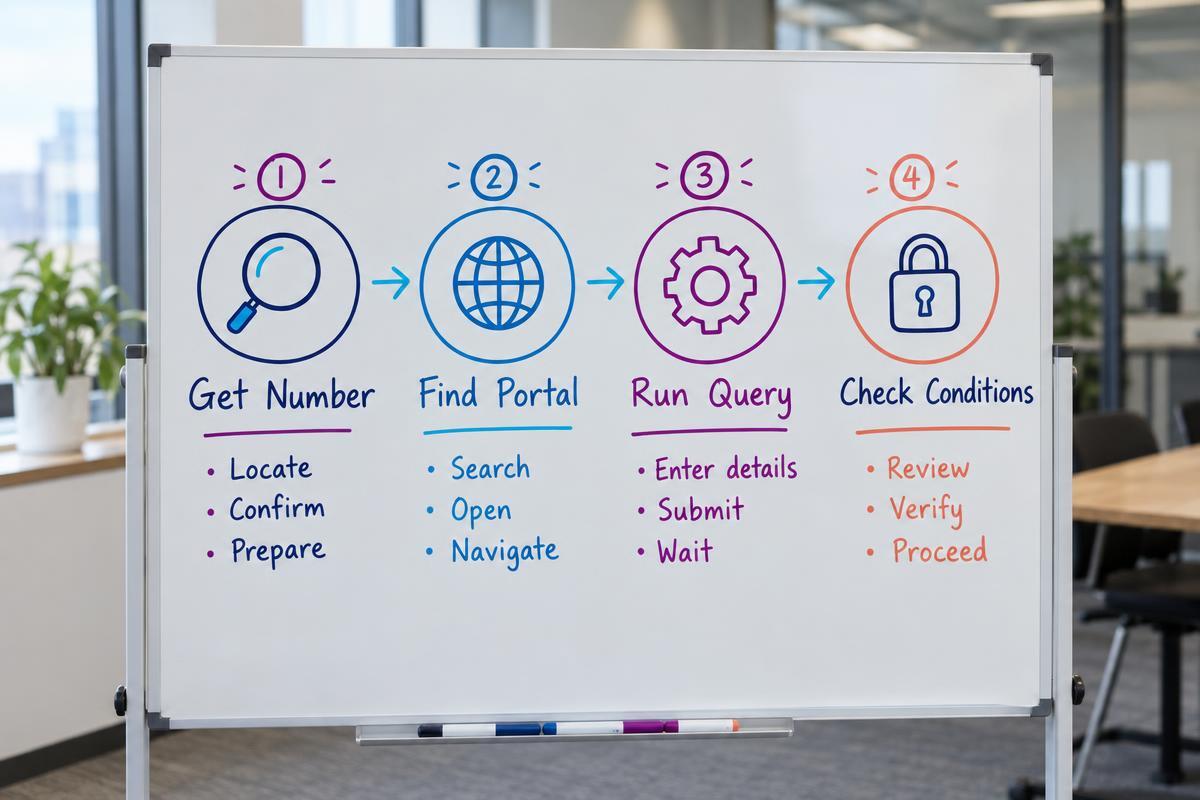
It is not enough to log into a portal and see a green tick next to a name. A proper check looks at the entire context of the credential. Professional licence verification means confirming status, expiry, disciplinary actions and restrictions directly with the issuing authority or its official database.
For example, a commercial driver might have an active licence, but they might also have a new restriction limiting them to automatic vehicles or daylight hours only. If you only check the active status, you miss the restriction. Verification should confirm not only active status but also restrictions, probation, suspensions and other disciplinary actions.
This level of detail is critical for workplace safety. If an incident occurs, investigators will not just ask if the employee was licensed. They will ask if the employee was licensed for that specific task, at that specific time, under those specific conditions. When you verify and track them online using official databases, you capture this nuance.
If you are managing a small team, you might handle this process manually. While this approach does not scale well, it is important to understand the mechanics of a primary source check.
| Verification Step | Action Required | Why It Matters |
|---|---|---|
| 1. Collect data | Get the licence number and issuing state or body. | Name searches often fail due to common names. |
| 2. Locate portal | Find the official government or regulator website. | Third-party aggregate sites may have outdated data. |
| 3. Run query | Input the specific identifier to retrieve the record. | Ensures you are looking at the exact credential. |
| 4. Match identity | Cross-reference the returned name with your employee. | Prevents employees from using a borrowed number. |
| 5. Check conditions | Read all notes regarding restrictions or probation. | Ensures the employee is cleared for specific duties. |
Getting the right data upfront makes this process much smoother. Name searches in government databases often return multiple results or fail entirely on spelling variations. Licence-number searches are generally faster and more precise than name-only searches, so employers should collect the number during application or onboarding.
A licence is not a set-and-forget credential. An employee can lose their driving privileges on a Saturday and turn up to work on a Monday. If you only check credentials at the point of hire, you are flying blind for the rest of the employee's tenure.
Employers should verify licences before the employee starts work, document the result, and re-verify after each renewal rather than relying on the employee's confirmation. People rarely volunteer the information that they have lost the qualification required to do their job.
You need a rhythm for checking credentials that matches the risk profile of the role. A practical ongoing-control schedule is quarterly verification for licensed staff, annual comprehensive audits and immediate checks after reported disciplinary action. For large workforces, managing this schedule manually in spreadsheets is nearly impossible. This is where dedicated licence management software becomes essential for maintaining continuous compliance without overwhelming your administrative team.
If a regulator audits your business, they will ask for proof that you verified your workforce. Telling them that you looked at a portal last month is not enough. You need a documented audit trail for every single check.
Employers should record the licence class, number, expiry date and conditions in the employee's personnel file after checking the regulator's portal. This creates a baseline of truth that you can point to if an incident occurs.
The metadata of the check is just as important as the result itself. Verification records should include the check date, source, licence number, confirmed status, reviewer and any discrepancies. When you use modern verification of competency software, this metadata is captured automatically. Every time a manager or an automated system queries a government database, the system logs exactly who checked what and when.
Managing spreadsheets of expiry dates is a fast track to compliance breaches and operational risk. Compono Assure automates the tracking and credentialling process so you always have proof your people are competent and compliant.
You should verify credentials before the employee starts work and immediately upon renewal. For high-risk roles, a quarterly verification schedule is recommended to catch any suspensions or restrictions that occur between renewal periods.
No. A photocopy only proves what the document looked like on the day it was copied. It does not tell you if the credential has since been suspended, restricted, or revoked by the issuing authority.
If a credential required for the role is suspended, the employee must immediately cease any duties that require that qualification. You must document the suspension and follow your internal policies regarding alternative duties or stand-down periods.
The employer holds the ultimate responsibility for ensuring their workforce is qualified and compliant. Relying entirely on the employee to self-report changes to their credential status is a major compliance risk.
Name searches often return multiple results or fail due to spelling variations and name changes. A licence number is a unique identifier that links directly to the specific employee's record, making the search much faster and more accurate.

Learn how to issue digital credentials to employees. Discover the workflow for creating verifiable badges, bulk issuing, and connecting to your HR...
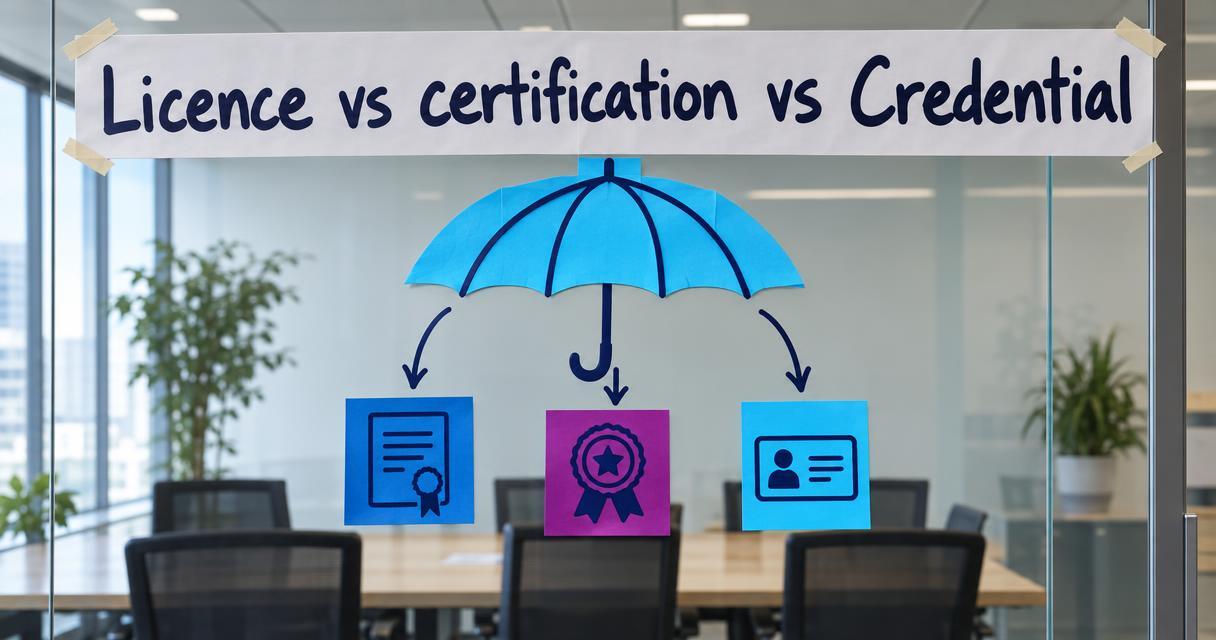
Learn the exact difference between a licence, a certification, and a credential to protect your business from compliance risks. Discover how to...
To evidence licence compliance in an audit. Discover how to build a defensible register and prove your workforce is qualified without relying on.
 Mathan Allington