

.webp)

 Mathan Allington


High Risk Work Licence Register Template: What You Need in 2026
 Compono
What to include in a high risk work licence register template, why tracking VOCs matters, and how to automate compliance for your site.
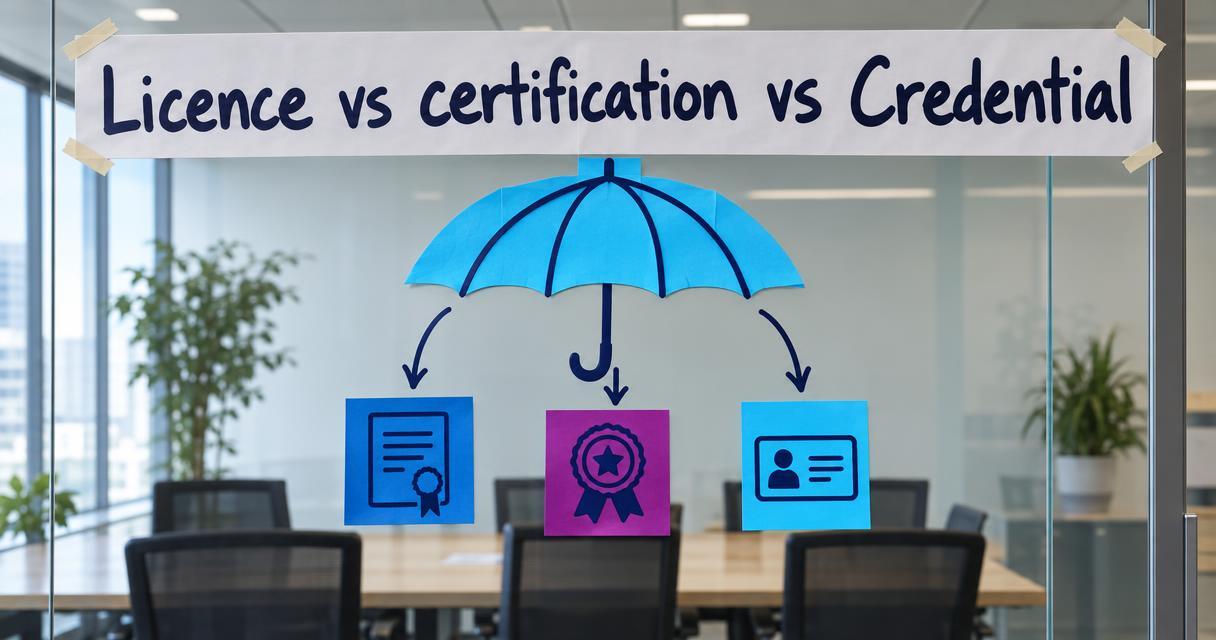
A credential is the broad umbrella term for any documented evidence of capability, while a licence is a legal requirement to perform a job, and a certification is an industry-recognised proof of specific skills.
Last reviewed October 2026
Key takeaways
- Credentials include everything from university degrees and safety tickets to digital badges.
- Government bodies issue licences to protect public safety and enforce strict legal compliance.
- Professional associations issue certifications to standardise industry excellence and verify specific competencies.
- Certificates show someone attended a course, whereas certifications prove they passed a formal assessment.
- Managing these different evidence types requires a system built for auditable compliance rather than simple learning management.
We throw these words around like they mean the same thing. They do not. When a hiring manager asks for a credential, they might mean a university degree. When a site supervisor asks for a licence, they mean legal permission to operate dangerous equipment. Treating them as synonyms creates a massive mess in your compliance records.
If your compliance system treats a two-hour webinar certificate the same as a government-issued medical licence, your business carries hidden risk. You need to know exactly what evidence you are collecting, who issued it, and why it matters. Spreadsheets fail at this because they cannot tell the difference between a voluntary skill badge and a legally mandated operating permit.
A credential is the evidence. It is the physical or digital proof that someone knows what they are doing. This category includes university degrees, security clearances, digital badges, licences, and certifications. Think of it as the top level of the hierarchy.
When you ask a candidate for their credentials, you are asking for their entire portfolio of professional proof. This portfolio tells you what they have studied, what they are legally allowed to do, and what standards they meet. Tracking these different types of proof requires dedicated tools. Many businesses look for workforce credentialing software to keep this evidence organised and ready for audit.
Every licence is a credential. Every certification is a credential. However, not every credential carries the same weight. A digital badge for completing a coding bootcamp is a credential, but it will not satisfy a government safety inspector. You must categorise them correctly to maintain a safe and compliant workforce.
A licence is legal permission to do something. You do not get a choice here. Governments or regulatory bodies issue licences to protect public safety and enforce laws. If an employee operates a heavy vehicle without a valid licence, the business faces massive fines, site closures, or criminal liability.
Licences have strict expiration dates and rigid renewal conditions. They often require ongoing proof of physical fitness, clear criminal records, or assessed capability. You cannot fake compliance here. If the regulator asks for proof, you must provide it immediately. This is where a proper licensing management system becomes necessary to prevent people from working on expired documentation.
Common examples include nursing licences, forklift licences, and commercial driving permits. The defining feature of a licence is the legal barrier to entry. Without it, the individual is legally barred from performing the task, regardless of their actual skill level or years of experience.
A certification proves someone meets a specific industry standard. Unlike a licence, a certification is usually issued by a professional association or independent body rather than a government. It is often legally voluntary but practically mandatory. Most enterprise clients will refuse to hire contractors who lack standard industry certifications.
For example, a project manager might not legally need a PMP certification to work. Employers demand it anyway because it guarantees a baseline level of knowledge. Certifications require candidates to pass a formal exam and often demand continuous professional development points to maintain the active status.
Certifications build trust. They tell your clients and partners that your workforce operates to a recognised standard of excellence. Tracking these requires a system that monitors both the expiration dates and the ongoing education requirements tied to the certification.
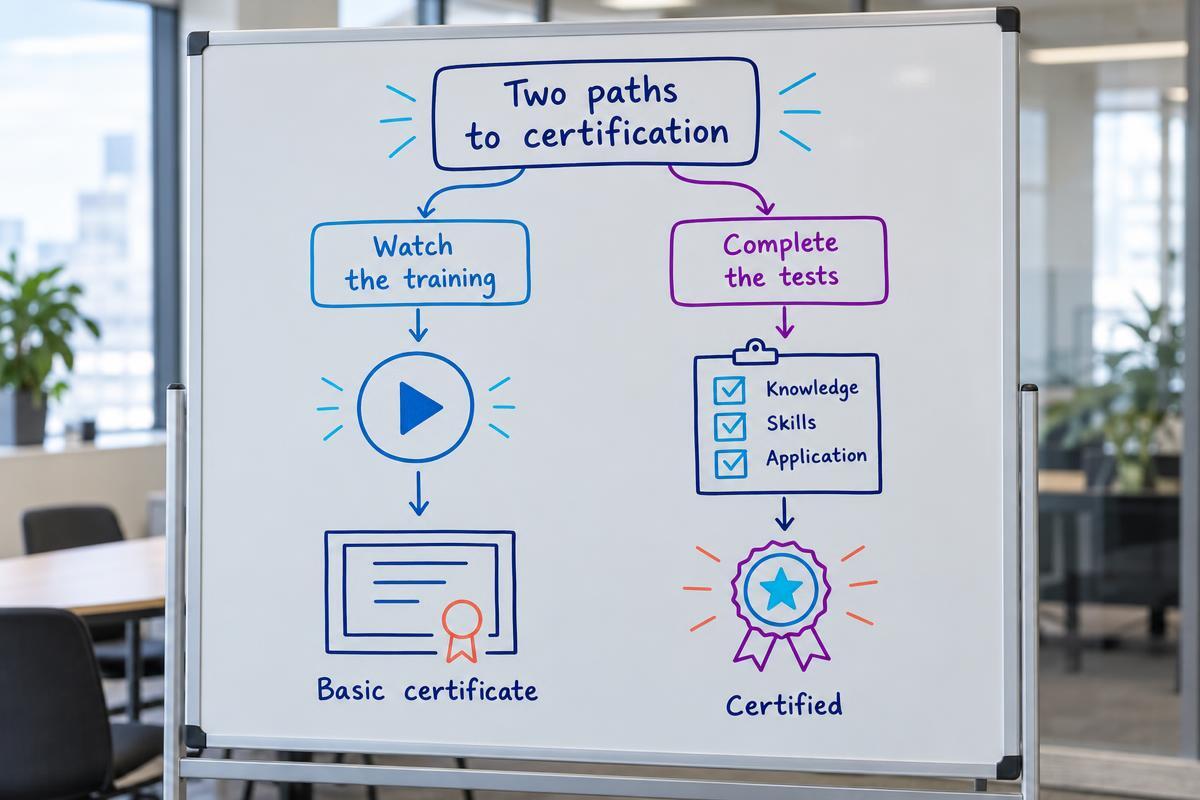
People confuse certificates with certifications constantly. A certificate simply proves someone attended a course or completed a learning module. It measures participation. A certification measures assessed capability. This is an important difference when you are building a safe working environment.
If an employee sits through a fire safety video, they get a certificate. If they pass a rigorous practical assessment on handling hazardous materials under pressure, they earn a certification. Understanding this distinction is step one in building a proper competency framework for your team.
Certificates are useful for tracking general onboarding or awareness training. They are entirely inadequate for proving someone is competent to perform high-risk work. Always check whether your records show participation or proven capability.
To keep your compliance records accurate, you need to understand how these three categories differ in practice. The table below outlines the core differences.
| Feature | Licence | Certification | Certificate |
|---|---|---|---|
| Issuer | Government or regulatory body | Professional association | Training provider or employer |
| Legal Requirement | Mandatory by law | Voluntary (but often expected) | Voluntary internal requirement |
| What it proves | Legal permission to operate | Assessed industry proficiency | Participation or completion |
| Renewal | Strict periodic renewal | Requires ongoing development | Rarely expires |
Knowing the definitions is easy. Managing the actual documents across hundreds of employees is hard. Spreadsheets break down when you have to track different renewal dates, evidence requirements, and issuing bodies for every role. A data entry error on a spreadsheet can lead to an unlicensed worker walking onto a restricted site.
You need a way to verify that the person doing the job today is actually qualified to do it. You also need an audit trail to prove it to external regulators. This is why organisations use a dedicated certification platform to automate the tracking and verification process.
Purpose-built software removes the human error from compliance. Compono Assure handles this natively by tracking where competency gaps exist and ensuring recertification happens before any critical credential expires. It gives you the evidence you need the moment an auditor asks for it.
Managing different types of evidence across a large workforce requires a system built for high-stakes compliance. We help you track every licence, certification, and credential in one auditable platform.
A licence is legally required by a government body to perform a specific job, while a certification is typically issued by a professional association to prove you meet an industry standard. You cannot legally work without a required licence, but a certification is often voluntary.
Yes, a university degree is a type of credential. The term credential is a broad category that includes degrees, diplomas, licences, certifications, and digital badges. It serves as documented proof of your education and capability.
No, a certification cannot replace a legally mandated licence. If a government regulator requires a licence to operate machinery or practice medicine, a professional certification from an industry body will not satisfy the legal requirement.
Employers ask for credentials to verify that candidates have the skills, education, and legal permission required to perform the job safely. Credentials provide independent proof of capability, reducing the risk of hiring unqualified staff.
Renewal periods vary widely depending on the issuing body and the type of licence. Some require annual renewal, while others last for several years. Renewals often require individuals to submit updated medical checks or prove they have maintained their skills.

What to include in a high risk work licence register template, why tracking VOCs matters, and how to automate compliance for your site.

How government agencies manage workforce credentialling, stay compliant, and plan capacity in 2026, plus what to look for in a system.

What a training record management system should hold, how to maintain training records for staff, and how digital records survive an audit.
 Mathan Allington