


 Mathan Allington

LinkedIn learning pricing for business 2026
 Mathan Allington
The true cost of LinkedIn Learning pricing for business in 2026. Compare the Teams and Enterprise plans with alternatives for your organisation.
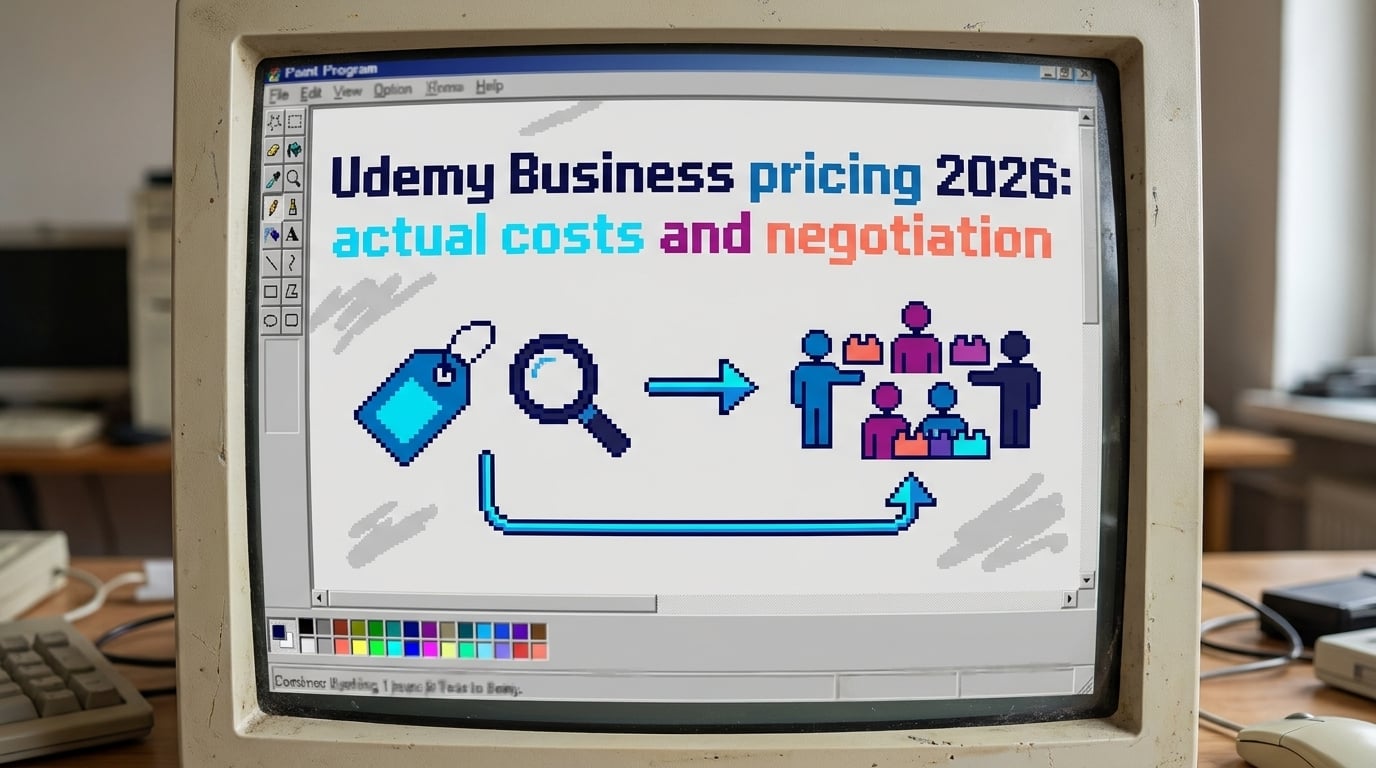
Udemy Business pricing begins at $360 per user annually for the standard Team Plan, whereas Enterprise pricing is custom and requires a direct quote from their sales team.
Last reviewed November 2026
Quick answer
- Price: $360 per user annually for the Team Plan; custom quotes required for the Enterprise plan.
- Best for: Broad, self-directed upskilling across diverse technical and business topics.
- Verdict: A vast content library that works best when paired with a true learning management system that tracks actual capability and business alignment.
Buying corporate learning tools often feels like a guessing game. You know you need to train your workforce, but unravelling per-seat costs, minimum user thresholds and unlisted enterprise tiers complicates the buying process. While content libraries provide access to thousands of courses, they do not automatically translate to measurable workforce capability. You need to understand exactly what you are paying for, how to negotiate the best rate, and whether your organisation needs a content provider, a learning management system, or both.
Udemy Business splits its offering into two main corporate tiers. The first is the Team Plan, aimed at smaller groups and departments. According to TrainingCost, Udemy Business Team Plan pricing is listed at $360 per user annually for organisations with 2 to 50 users.
If you prefer to calculate the monthly equivalent, Udemy’s Team Plan standard price is equivalent to $30 per user per month when billed annually, based on analysis from PricingSaaS. For European buyers, the Team Plan is reported to cost €336 per user annually in European pricing, as noted by Kurslotse.
Sometimes new customers can secure a better introductory rate. A first-year promotional price of $252 per user annually represented a 30% discount for eligible new Team Plan customers, according to data from TrainingCost. This plan provides a massive library. The Team Plan includes access to more than 28,000 courses and preparation resources for over 200 certification exams, giving your staff plenty of self-directed learning options, according to Kurslotse.
The second tier is the Enterprise Plan, designed for organisations needing 51 or more seats. Udemy Business Enterprise pricing is not publicly listed and requires contacting Udemy’s sales team for a quote, as confirmed by TrainingCost. Because Udemy Business pricing is described as per-seat and quote-based, meaning the effective cost depends on license utilisation, larger organisations must negotiate directly, according to Softwares.com.
However, procurement data gives us a clue about average enterprise spend. A third-party buyer-data estimate puts the median Udemy Business contract at approximately $28,600 per year, based on four reported deals via CostBench.

The sticker price of a learning platform rarely reflects the total cost of ownership. When evaluating software costs, you must factor in add-ons, administration and implementation time. Enterprise plans often push buyers toward premium modules like the Leadership Academy or Udemy Business Pro. These add-ons offer advanced tech labs, coding workspaces and deep-dive assessments, but they incur additional per-seat costs above your base enterprise quote.
Seat utilisation is another significant hidden cost factor. Because you pay per license rather than per active user, a seat assigned to an employee who logs in once a year costs exactly the same as one used daily by a power learner. If your organisation struggles to drive engagement, your effective cost per hour of learning skyrockets. You are paying for capacity rather than actual capability.
Furthermore, managing content libraries requires internal administration. Someone in your human resources or learning department needs to select learning paths, assign specific courses, monitor completions and chase up staff who fall behind. This administrative overhead is a tangible business cost that many procurement teams completely overlook when signing the initial contract. A system that does not automate these workflows will cost you heavily in staff hours.
To contextualise your investment, you must weigh this platform against other popular solutions and true learning management systems. Content libraries like Udemy and LinkedIn Learning provide the raw material for upskilling. In contrast, platforms like Compono Develop focus on aligning learning with measurable capability frameworks and mandatory compliance tracking.
| Platform | Price | Best for | Limits |
|---|---|---|---|
| Compono Develop | Starts at $4 per user per month (billed annually) | Tracking compliance, custom capability mapping, and operational savings | Requires you to supply or integrate your own training content |
| Udemy Business | $360 per user annually (Team Plan); custom (Enterprise) | Vast technical and business skills course library | Functions primarily as a content library rather than a capability tracker |
| LinkedIn Learning | Approx. $379 per user annually | Professional networking integration and soft skills | Less focus on deep, technical certification preparation |
| Coursera for Business | Approx. $399 per user annually | University-grade certifications and structured academic programs | More academic focus means longer completion times for practical skills |
Compono makes Compono Develop. We've included it and kept every entry's strengths and limits honest.
If you are choosing your primary training software, you might read our best Australian LMS guide to see exactly how content libraries and structured learning management systems differ.
When your workforce exceeds 50 employees, you enter the realm of custom enterprise quotes. Negotiating software contracts requires preparation and strategy. Vendors rely heavily on volume tiering, meaning the more seats you buy, the lower your individual per-seat cost becomes. However, buying excess seats just to reach a discount threshold is a common procurement trap that wastes budget.
Start by calculating your realistic adoption rate. If you have 500 employees, perhaps only 300 will actively engage with self-directed learning on a regular basis. Negotiate your enterprise tier based on this active group rather than your total headcount. You can ask for a flexible licensing model that allows you to rotate seats among employees as project requirements change, ensuring you never pay for dormant users.
You can also use multi-year agreements to lock in lower rates and protect your budget against annual price hikes. Vendors are often willing to waive onboarding fees, increase administrative support, or include premium add-ons for free if you commit to a two-year or three-year contract. Always ask your sales representative to outline the exact renewal terms and price caps in writing. This prevents unexpected and aggressive price increases when year two begins.
Procurement timing also plays an important role in the discount you receive. Sales teams operate on quarterly and annual quotas. Approaching a vendor near the end of their financial quarter often opens up superior pricing, as representatives are highly motivated to close deals and hit their targets.
The ultimate test of any learning investment is whether it genuinely improves your workforce. Buying access to a massive library of 28,000 courses sounds incredibly impressive on paper. Yet, if those courses do not align with your specific organisational goals, your return on investment remains stubbornly low. Providing endless content can actually overwhelm employees, causing choice paralysis and reducing overall completion rates.
This is why many leading organisations separate their content providers from their learning management systems. They might use a third-party platform for broad technical upskilling while using a dedicated capability platform to track mandatory compliance, map skills gaps, and measure direct operational impact. Ensuring your training system connects to your competency frameworks is vital for long-term success. If you want to understand how targeted training works better than endless browsing, explore the six learning science principles we live by.
Measuring total cost of ownership involves looking beyond the subscription invoice. You must calculate the subscription cost, add your internal administration costs, include any premium add-ons, and factor in the opportunity cost of unaligned training. If your team spends hours watching generic videos that do not change how they perform their daily tasks, that time represents lost productivity. A true capability platform prevents this by ensuring every learning module serves a clear business purpose.
A major pitfall for human resources leaders is confusing learning activity with business capability. When evaluating pricing for content libraries, buyers often look at the cost per course. They assume that if an employee completes ten courses, the organisation receives ten times the value. Unfortunately, modern adult learning does not work this way. Watching a video series on project management does not guarantee the employee can successfully run a project.
Content platforms report on metrics like hours watched, logins, and courses completed. These are engagement metrics, not performance metrics. A high engagement score tells you your staff are watching videos, but it tells you nothing about whether they are applying new skills safely and effectively on the job. To bridge this gap, you need a system that assesses competence after the learning takes place.
True capability requires structured assessments, on-the-job observation, and manager sign-off. When you pay a premium for enterprise content, you still face the burden of proving that the content changed employee behaviour. Organisations operating in highly regulated industries, such as healthcare or finance, cannot rely on a video completion certificate to prove compliance. They require rigorous evidence of competence, which content libraries are not designed to capture.
Deciding on a corporate learning platform requires an honest assessment of your internal learning culture. In fact, understanding your team's Work Personality preferences can help identify who will actually thrive in a self-directed digital environment. If your employees are highly motivated learners who constantly seek out new technical skills, a broad team plan offers excellent value. The sheer volume of courses means almost every software development, design, or marketing skill is covered extensively.
Conversely, if your primary goal is tracking mandatory compliance, ensuring staff hold the right certifications for their roles, or closing specific workforce capability gaps, a content library alone is insufficient. You will need a proper learning management system to enforce those requirements and maintain audit-ready records. As discussed in our review of the evolving learning management system market, the smartest approach is often a hybrid model.
You can deploy a focused LMS for critical capability mapping and provide library access to a smaller cohort of power users who genuinely need continuous, deep technical upskilling. This targeted approach prevents you from overspending on unused licenses while ensuring your core business risks are managed effectively.
If you need a system that tracks actual workforce capability rather than just course views, our platform connects learning to real business outcomes. We help you map skills, enforce compliance, and deliver targeted training that makes a measurable operational difference.
For teams of 2 to 50 users, the standard Team Plan costs $360 per user annually. They occasionally offer promotional rates for new customers, but you must pay for the entire year upfront.
No, both the Team and Enterprise plans require an annual commitment. While the cost breaks down to a monthly equivalent, you are billed for the full year in advance.
The Enterprise plan is designed for organisations with 51 or more users. You must contact their sales team directly to negotiate a custom quote for this tier.
While the base per-user fee covers the standard content library, advanced modules like the Leadership Academy or technical pro labs require additional fees. You must also factor in the internal administrative time required to select courses.
Yes, the Enterprise plan includes integrations with most major learning management systems and single sign-on providers, allowing you to centralise reporting across your platforms.
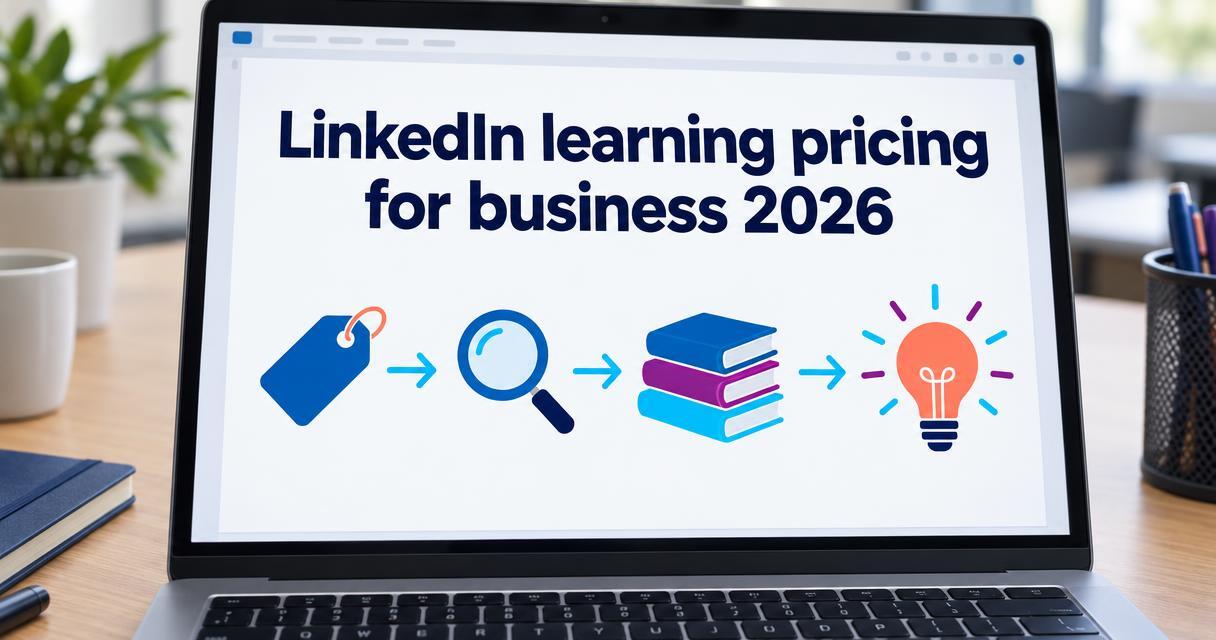
The true cost of LinkedIn Learning pricing for business in 2026. Compare the Teams and Enterprise plans with alternatives for your organisation.

The true cost of EdApp in 2026. Compare per-user pricing plans, hidden fees and learning management alternatives to make the right budget choice.

Choosing a blended learning platform for workplace training in 2026, with prices: TalentLMS from US$119 a month, 360Learning US$8 a user, Docebo by...
 Compono