

.webp)

 Compono


Finding the Best LMS for Manufacturing Australia 2026
 Compono
How to choose an LMS for manufacturing in Australia, built around the safety and productivity pressures plants actually face.
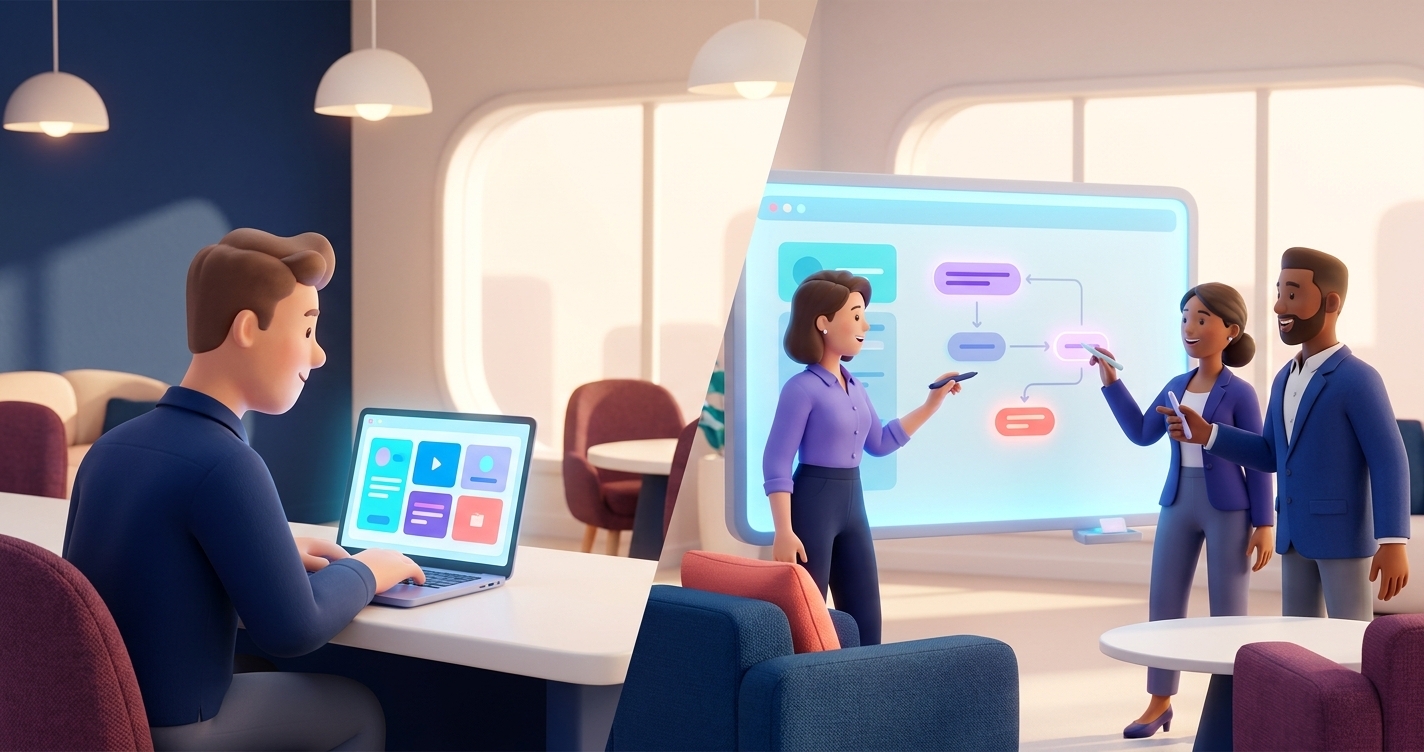
A blended learning platform for workplaces combines face-to-face instruction with digital training modules, giving teams the flexibility to learn at their own pace while maintaining the accountability of in-person guidance.
Key takeaways
- Blended learning platforms merge digital scalability with human connection, making training more effective and accessible.
- Organisations using blended approaches see higher engagement rates and better knowledge retention than those relying purely on e-learning.
- The right platform integrates with your existing systems to track progress and measure performance impact.
- Successful implementation requires a clear strategy that balances self-paced digital modules with targeted face-to-face sessions.
Workplace training is broken. We force employees into marathon seminar rooms where they forget most of the material by Tuesday. Or we dump them into sterile e-learning portals and wonder why completion rates flatline. Neither extreme works.
The modern workforce needs flexibility. They also need human context to understand how concepts apply to their specific roles. This tension is why blended learning has moved from a nice-to-have concept to a core business requirement.
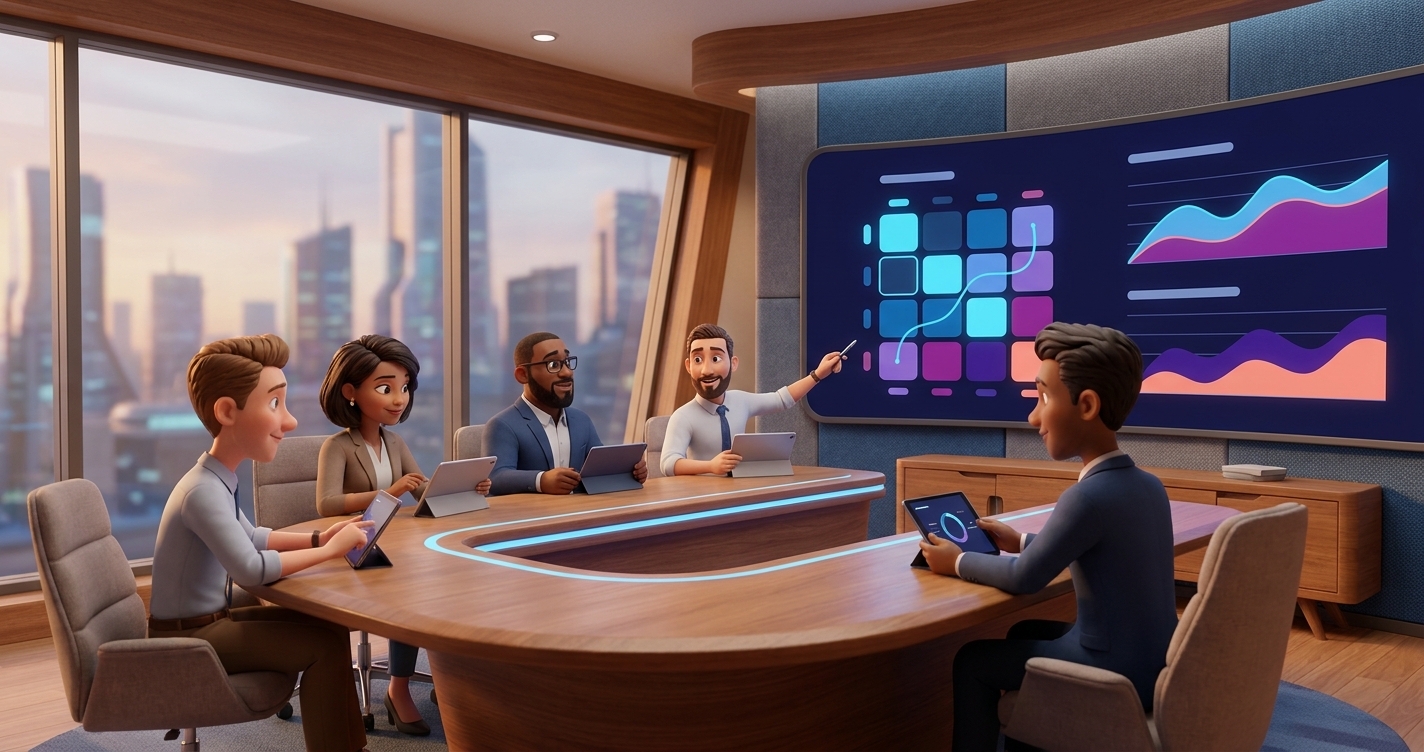
A blended learning platform is the digital infrastructure that manages both online and offline educational experiences. It serves as the central hub where employees access self-paced modules, register for in-person workshops, and track their overall progress.
The scale of this shift is massive. The global blended learning market was valued at USD 50.8 billion in 2023 and is projected to grow at a 13.6% CAGR from 2024 to 2030, according to recent industry data.

Relying entirely on face-to-face training drains budgets through travel expenses and lost productivity. Relying entirely on digital modules drains morale through isolation and disengagement. Blended learning solves both problems.
The results speak for themselves. In the 2025 Early Careers Survey, 73% of students in blended-learning programs felt job-ready, versus 54% in traditional in-person courses.
You get the scalability of digital content for foundational knowledge. You preserve expensive face-to-face time for high-value activities like role-playing, debate, and complex problem-solving.
Effective blended learning relies on a flipped classroom approach. Employees consume the foundational theory independently through videos, reading materials, or interactive quizzes.
When they arrive at the live session – whether virtual or physical – they already understand the basics. The instructor spends that valuable synchronous time answering specific questions, facilitating group work, and applying the theory to real business scenarios.
You cannot run a modern training program on spreadsheets and email chains. You need a dedicated system to handle the logistics.
Data shows that 83% of companies use an LMS to manage training programs, reflecting the evolving learning management system landscape. These platforms handle the heavy lifting of content delivery, assessment grading, and compliance tracking.
A complete toolkit typically includes a learning management system, video conferencing software for remote live sessions, and content authoring tools. If you are looking to simplify this process, the Compono Develop module provides a centralised environment to build, deliver, and track both digital and in-person learning experiences.
Pure e-learning has its place. If you need to roll out an annual fire safety update or a basic compliance checklist, a quick digital module is the most efficient choice.
Blended learning is required when you need to change behaviour. Leadership development, complex sales methodologies, and deep technical skills require human feedback. You cannot learn how to handle a difficult performance review by clicking through a slide deck. You need to practice the conversation with another human being.
There are several ways to structure your approach. The right model depends on your team's location, schedule, and learning objectives.
This is the most common model. Employees complete digital coursework before attending a live session. The live session is dedicated entirely to application and discussion.
Employees rotate on a fixed schedule between online learning, face-to-face instruction, and group projects. This works well for structured onboarding programs where new hires need exposure to different learning modalities.
Digital learning forms the backbone of the program, with instructors providing ad-hoc support as needed. This suits highly autonomous teams who need to learn specific technical skills at their own pace.
Theoretical models are fine, but how does this look on the ground? Here are practical applications you can implement immediately.
Instead of locking new employees in a conference room for three days, spread the learning out. They can complete company history and compliance modules online during their first week. You then schedule short, focused face-to-face sessions with department heads to discuss strategy and culture.
Future leaders can study management theory, financial basics, and HR policies through self-paced digital modules. They then gather for monthly in-person workshops to role-play difficult conversations and analyse complex case studies with senior executives.
When introducing a new CRM, employees can watch screen-recording tutorials to learn the basic interface. The live training sessions are then reserved for complex workflows and specific troubleshooting, rather than wasting time showing people where the login button is.
Do not attempt to overhaul your entire training catalog at once. Start small and focus on a single, high-impact program.
Audit your existing face-to-face training. Identify the sections where the instructor is simply lecturing or presenting facts. Move that content into digital modules. Take the remaining time – the interactive, high-value segments – and refine them into shorter, more focused live sessions.
Organisations spent an average of 13% of their budget on learning tools in 2025. Ensure that investment goes toward platforms that actually support your instructional design goals, rather than just acting as a digital filing cabinet.
Key insights
- Blended learning is about using the right format for the right cognitive task.
- Digital modules excel at delivering facts and theory at scale.
- Face-to-face sessions excel at application, debate, and behavioural change.
- Starting small with a single program allows you to test your technology stack and gather employee feedback before a wider rollout.
Transitioning to a blended learning model requires the right infrastructure to manage both digital and face-to-face experiences effectively. We provide the tools to build, deliver, and track your entire training ecosystem from one place.
Related reading
Blended learning refers to the intentional combination of digital self-paced study and synchronous instruction (whether online or in-person). Hybrid learning specifically refers to a live session where some participants are in the physical room while others join remotely via video link.
Look beyond simple completion rates. Track knowledge retention through follow-up assessments weeks after the training. More importantly, measure behavioural changes on the job through manager feedback and performance metrics related to the training topic.
The biggest hurdle is often technology fatigue. If your platform is difficult to use, employees will abandon the digital modules, which renders the subsequent live sessions useless. You also need to ensure managers provide dedicated time for employees to complete the self-paced components during work hours.
Yes. The face-to-face component does not require a physical classroom. Live, interactive video workshops serve the exact same purpose. The key is ensuring those live virtual sessions are highly interactive and focused on application, rather than just another one-way presentation.
How to choose an LMS for manufacturing in Australia, built around the safety and productivity pressures plants actually face.
Need a training register template in Australia? Learn what to include, how to meet WHS and NDIS compliance standards, and when to automate your...
What to look for in an LMS for a professional services firm: faster onboarding, billable skills tracking and compliance you can prove.