


 Mathan Allington

Microsoft Viva Glint pricing 2026
 Mathan Allington
Looking at Microsoft Viva Glint pricing for 2026? Discover the true costs of standalone tiers, suite bundles, and hidden Microsoft 365 requirements.
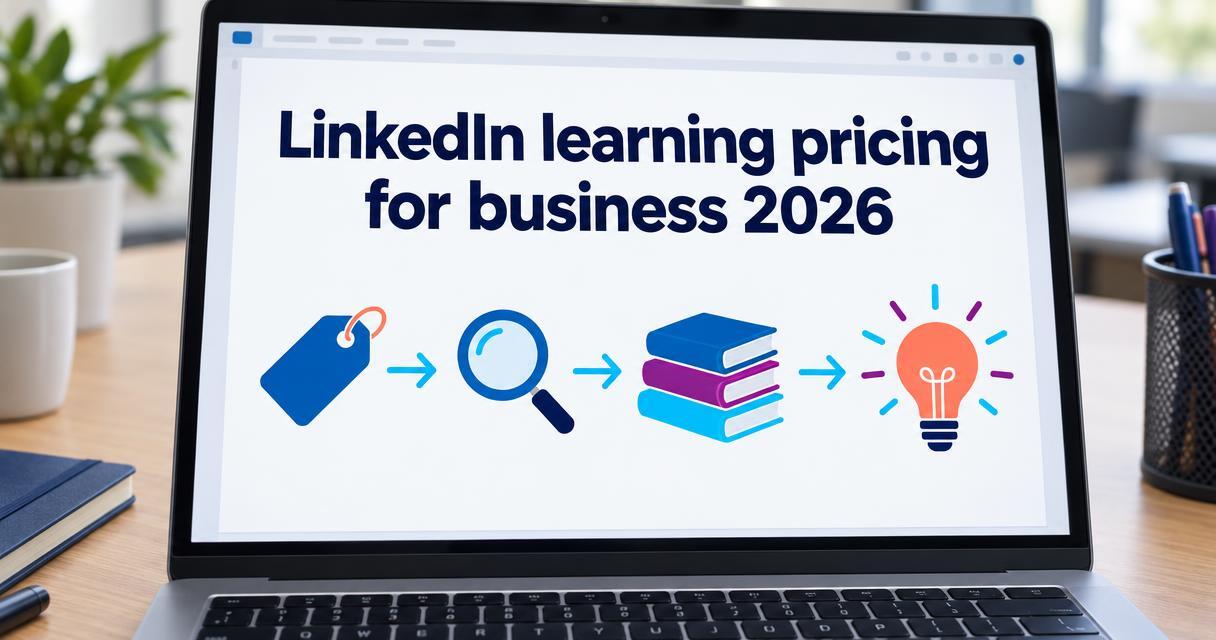
LinkedIn Learning pricing for business starts at US$379.88 per seat annually for teams of up to 20 people, while enterprise plans require a custom quote based on headcount and contract length.
Last reviewed October 2026
Quick answer
- Price: US$379.88 per seat annually for 2 to 20 users; custom pricing for 21 or more users.
- Best for: Organisations looking for a massive off-the-shelf content library with high production value.
- Verdict: It provides excellent general professional development content but lacks the capability tracking and compliance tools required of a complete learning management system.
Predicting software costs is one of the hardest parts of scaling an organisation. HR leaders are under constant pressure to prove the value of their investments. When a vendor hides its enterprise pricing behind a sales wall, it complicates the budgeting process and forces buyers into lengthy negotiation cycles just to secure a baseline figure.
Many professional development platforms operate on this model. They advertise a straightforward rate for small teams and obscure the enterprise costs. This makes it difficult to compare a pure content library against a comprehensive learning management system that actually tracks employee capability.
Without clear pricing benchmarks, businesses risk overpaying for licenses that sit idle. Understanding exactly what you get for your money is the only way to build a learning and development program that genuinely improves team performance.
The platform divides its business offering into two distinct tiers based on headcount. Knowing where your organisation fits will dictate whether you can purchase licenses directly or if you must work through the custom quoting process.
The Teams plan is built for small businesses or specific departments wanting access to general training content. LinkedIn Learning for Teams costs US$379.88 per seat annually for organisations needing 20 or fewer licenses (LinkedIn Learning). When calculating the monthly breakdown, the Teams plan costs approximately US$31.66 per seat per month when billed annually (CompanyLMS).
This tier gives your staff access to a library of more than 22,000 courses (LinkedIn Learning). The courses cover a wide array of topics including software development, leadership, graphic design, and basic compliance. To help businesses evaluate the platform before committing, LinkedIn Learning offers a one-month free trial for its Teams plan (CompanyLMS).
Organisations requiring more than 20 licenses must upgrade to the Enterprise plan. LinkedIn Learning’s Enterprise pricing is custom-quoted, with no public dollar amount listed (LinkedIn Learning). The lack of public pricing means you must contact a sales representative to negotiate a contract.
While the exact number varies based on your negotiation, industry data suggests enterprise buyers generally secure volume discounts that lower the per-seat cost below the standard US$379.88 rate. This plan includes additional features like advanced reporting, custom learning paths, and integration capabilities with your existing human resources systems.
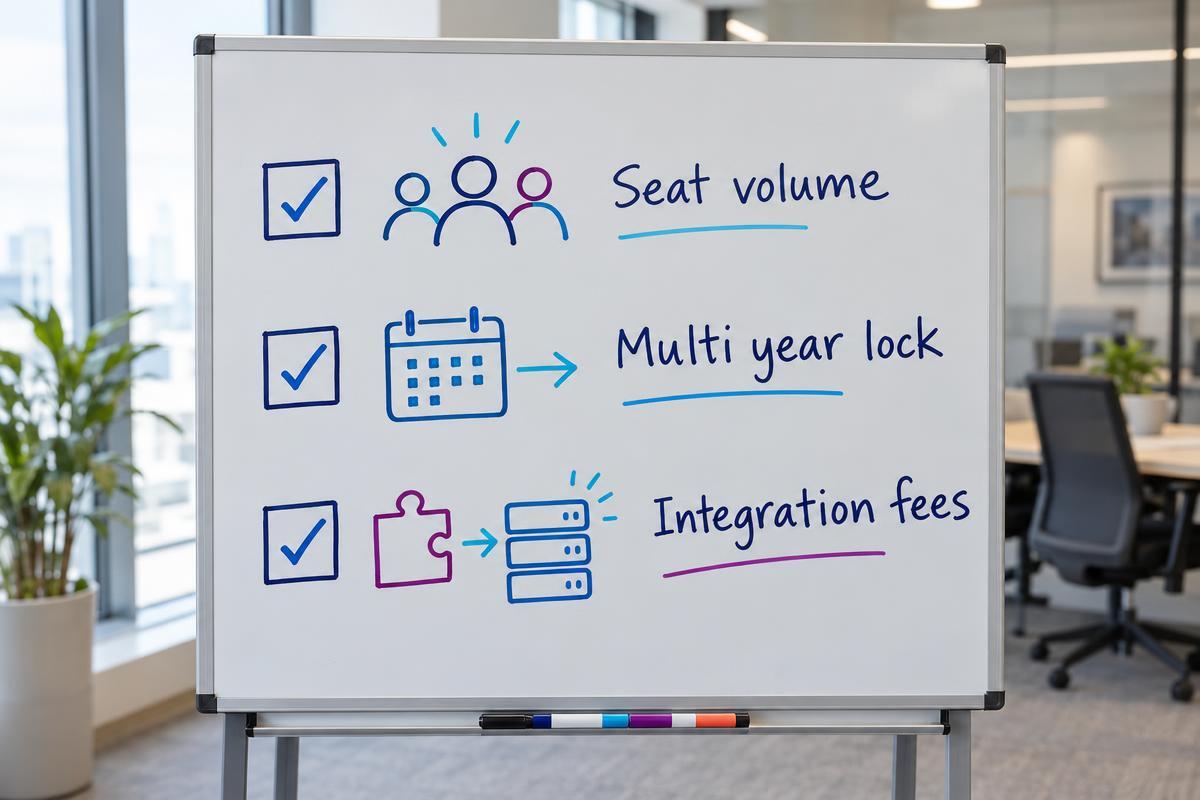
When you enter negotiations for an Enterprise plan, several variables will influence your final quote. The most significant factor is your total headcount. Software vendors reward scale, so purchasing 500 licenses will yield a lower per-seat rate than purchasing 50 licenses.
Contract length also plays a major role in your final price. Committing to a two-year or three-year term often secures a steeper discount. Vendors prefer guaranteed recurring revenue and will typically reduce the annual rate to lock in a longer contract.
Another factor is product bundling. If your organisation already uses LinkedIn Recruiter or LinkedIn Sales Navigator, the sales representative may offer a bundled discount. It pays to audit your company's existing relationship with the vendor before starting the negotiation process.
A common mistake organisations make is confusing a content library with a capability builder. LinkedIn Learning excels at providing high-quality videos on general topics. It is a fantastic resource for an employee who wants to learn Excel shortcuts or watch a seminar on time management.
However, watching a video does not prove that an employee can perform a complex task safely or legally. Content libraries lack the reliable assessment, credentialling, and compliance tracking required in highly regulated industries. If you operate in healthcare, construction, or finance, you need a system that maps specific skills to job roles and maintains audit-ready records of competency.
This is the difference between consuming content and proving capability. Organisations often need a system of record that handles mandatory compliance training and custom assessments, which is why many leaders explore standalone LMS versus an HRIS learning module setups.
For example, the Department of Transport Victoria saved $34M in operational costs over two years with digital licensing and capability tracking through Compono. Compono Develop holds a 4.7 out of 5 rating across millions of learners because it focuses on measurable skill acquisition rather than just content consumption.
When evaluating your budget for 2026, it helps to see how the major players stack up against one another. If you are assessing LinkedIn Learning alternatives, you must consider both the price and the core function of each platform.
| Platform | Starting price (annual) | Core strength | Primary limitation |
|---|---|---|---|
| Compono Develop | $4,800 per year (up to 100 users) | Complete capability tracking and compliance management | Requires you to build or import your own highly specific content |
| LinkedIn Learning | US$379.88 per seat (Teams plan) | Massive library of professional video content | Weak compliance tracking and custom assessment tools |
| Udemy Business | US$360.00 per seat (Teams plan) | Extensive technical and developer course catalogue | Quality varies heavily between different course creators |
| Coursera for Business | US$399.00 per seat | Academic courses from recognised universities | Academic pacing may be too slow for rapid corporate upskilling |
Compono makes Compono Develop. We've included it and kept every entry's strengths and limits honest.
Cost differences between the major content libraries are often marginal at the lower tiers. Compared with Udemy Business Team at $360 per user annually, LinkedIn Learning Teams costs US$19.88 more per seat per year (CompanyLMS). The real financial impact happens at the enterprise level, where bulk discounts and implementation fees alter the total cost of ownership.
Business leaders frequently struggle to prove the return on investment for learning platforms. The default metric is usually the number of videos watched or the hours logged in the system. These vanity metrics look great on a quarterly report but tell you nothing about actual business impact.
True ROI is measured in retention, internal mobility, and performance improvements. Research shows that 94% of employees say they would stay at a company longer if it invested in their learning and development (LinkedIn Learning). When you tie learning initiatives directly to career pathways, turnover drops and engagement rises.
You also need to measure seat utilisation carefully. Buying 500 licenses is a waste of budget if only 100 employees log in regularly. A successful rollout requires a strong internal communication plan, dedicated learning time during work hours, and managers who actively encourage their teams to upskill.
If you decide to proceed with an enterprise quote, you need a strategy before you speak to sales. Start by accurately forecasting your seat requirements. Do not buy licenses for your entire headcount if historical data shows that only half your workforce actively participates in voluntary training.
Always ask about price protection upon renewal. Software vendors frequently increase their prices by 5 to 10 percent at the end of the initial contract term. Negotiate a cap on renewal increases so you are not caught off guard when your budget is set for the following year.
Finally, inquire about hidden costs. Ask whether the vendor charges extra for single sign-on integrations, API access to connect with your corporate LMS, or dedicated customer success support. Getting these details in writing during the initial negotiation will save your finance team significant headaches down the road.
If your organisation needs a platform that goes beyond video libraries to actually track competency and compliance, you need a tool built for measurable capability. Compono Develop allows you to assign targeted learning pathways, assess real skills, and maintain audit-ready records for your entire workforce.
For teams of 2 to 20 people, the platform costs US$379.88 per seat annually. This works out to approximately US$31.66 per user each month. It provides full access to the entire course library and basic administrative reporting.
The Teams plan requires a minimum of two seats. If you only need one license, you will have to purchase an individual Premium subscription, which does not include the administrative dashboard or team reporting features.
Yes, the Enterprise plan supports integration with many major learning management systems. This allows you to host the course catalogue within your own infrastructure, though setting up the API connections may require technical support from both vendors.
The custom quote usually covers the base license cost, but you should always verify if there are additional fees for implementation, premium technical support, or advanced API access. Get all potential charges itemised in your contract before signing.
It depends entirely on your goals. A content library is excellent for general professional development and soft skills training. If you need to track mandatory compliance, assess technical competency, or build custom onboarding pathways, you need a dedicated learning management system.
Looking at Microsoft Viva Glint pricing for 2026? Discover the true costs of standalone tiers, suite bundles, and hidden Microsoft 365 requirements.
The true cost of Tribal Habits in 2026. We break down the Monthly Active User pricing model, hidden costs, and top LMS alternatives for your team.

Lattice lists Performance at US$10, Goals at US$8 and Engagement at US$4 a seat per month, billed annually in USD, with a US$4,000 minimum a year.
 Compono