


 Mathan Allington


How to assess your team’s work personality to identify gaps
 Mathan Allington
How assessing your team’s work personality finds capability gaps, improves collaboration and sharpens hiring decisions, with steps to follow.
A team charter template is a collaborative document that outlines a team's purpose, core goals, behavioural norms and operational processes to ensure everyone works together effectively.
Last reviewed November 2026
Key takeaways
- A team charter moves unsaid expectations out of managers' heads and puts them on paper for everyone to see.
- The best templates cover both process risk (goals and roles) and people insight risk (communication and behaviour).
- Organisations see up to 30 percent better performance when they establish clear, role-based governance.
- You should build the charter collaboratively in a workshop rather than handing it down as a completed mandate.
- A charter is a living document that requires regular review to stay relevant as your team scales.
Most teams do not fail because they lack skills. They fail because expectations live in the dark. Managers assume their direct reports know how to prioritise tasks, how quickly to reply to messages, and how to handle disagreements. When those unsaid rules are broken, friction builds and productivity stalls.
Only about half of U.S. employees strongly agree that they know what is expected of them at work, according to Gallup. That lack of clarity creates a massive drag on performance. A position description tells a person what their job is. A team charter tells the group how they will actually do that work together.
Traditional human resources technology manages process risk beautifully. It tracks compliance, records workflows and files away the position descriptions. It rarely handles people insight risk, which is the friction that happens when different work personalities clash over unwritten rules. A solid team charter template captures both sides of the equation. It clarifies the process and sets the boundaries for human behaviour, helping you build a high-performing team.

A blank document can be intimidating. A structured template guides your group through the necessary conversations. To build an effective charter, you need to cover four main areas.
Every charter must start with why the team exists. This is not a list of daily tasks. It is a clear statement of the group's mission and how that mission supports the broader company strategy. When the purpose is clear, people know what matters most.
Teams that establish processes for identifying top-priority work are 4.6 times more likely to be effective and 4.6 times more likely to be productive, a 2024 Atlassian State of Teams report shows. Your template should include a section for top-line goals and the key performance indicators that prove you are hitting them.
Ambiguity breeds duplicated effort and dropped balls. The template must dedicate space to who does what. This goes beyond job titles. It covers decision-making authority and who owns specific outcomes.
Organisations adopting role-based governance saw performance improvements of up to 30 percent, driven by faster decisions, less duplicated work, and stronger engagement, according to a 2024 meta-analysis cited by Talkspirit. When ownership is clear, people spend less time worrying about stepping on toes and more time doing the work.
This section defines your meeting cadence, reporting structures and tool usage. Will you use Slack for urgent requests and email for formal updates? How often do you meet, and what is the expected agenda?
For remote and hybrid teams, this section is vital. It establishes asynchronous communication rules, expected response times, and core working hours when everyone needs to be online.
This is where process meets people insight. Your charter must outline how the team will communicate, share feedback and handle conflict. It sets the baseline for psychological safety, ensuring people feel comfortable speaking up without fear of punishment.
Employees in low-psychological-safety environments are more than twice as likely to be actively job-hunting as those in high-safety environments, at 41 percent versus 19 percent, found the American Psychological Association in 2024. A strong charter normalises healthy debate and respects different communication styles, which helps you build teams with work personality insights.
To move from theory to practice, here is what a filled-in template looks like for a mid-market marketing team.
| Charter Section | Agreed Team Details |
|---|---|
| Purpose | To drive qualified business leads and build market awareness through data-led campaigns. |
| Core Goals | Generate 500 qualified leads per quarter. Launch two major product campaigns annually. |
| Roles | Sarah owns campaign strategy. David owns content execution. Emma holds final sign-off on design. |
| Communication | Slack for quick questions (reply within 4 hours). Asana for project tracking. No internal emails. |
| Meeting Cadence | 15-minute daily stand-up at 9:30 AM. One-hour sprint planning every second Monday. |
| Behavioural Norms | Assume positive intent. Challenge the idea, not the person. Cameras on for strategy calls. |
This format is simple, clear and impossible to misinterpret. Everyone knows what they are doing and how they are expected to behave.
You cannot write a charter in a vacuum and email it to your team. People support what they help create. You need to gather the group and build the document together in a structured workshop.
Share a blank template a few days before the meeting. Ask everyone to think about past projects that went well and ones that stalled. This prompts them to consider the behaviours and processes they want to replicate or avoid.
Start with the purpose and goals. These are usually the easiest to agree on. Then move into roles and responsibilities. Use a whiteboard to map out where responsibilities overlap and agree on clear boundaries.
The hardest part is behavioural norms. Ask the team direct questions. How do we want to handle missed deadlines? What is our rule for contacting people after hours? Write the answers down exactly as the team agrees to them. If you notice tension, address it gently. A charter only works if it reflects reality.
A charter is not a set-and-forget document. As new people join and company goals shift, the charter must adapt. Review it quarterly to ensure the communication rules and roles still make sense.
You can check the health of your charter adoption through regular feedback. An employee engagement action plan gives you the framework to measure how well the team is sticking to their agreed norms. You might use pulse survey questions to ask if people feel meetings are productive or if expectations remain clear.
When you measure engagement alongside behavioural data, you get the full picture. Compono Engage is an employee engagement platform that measures workplace sentiment across 12 validated culture dimensions. It helps leaders track whether their team charter is actually improving the employee experience. Businesses using these insights effectively often report up to 8 percent lower turnover, backed by a 4.8 out of 5 rating on Capterra. It shows you the gap between the culture you wrote down and the culture your people actually experience.
Process tools track what your team does, but they cannot tell you how your people work together. Compono helps you measure engagement, understand team changing and keep your workplace culture aligned with your business goals.
A project charter defines the scope, budget and timeline for a specific piece of work. A team charter defines the purpose, roles and behavioural norms of the people doing the work. The project charter ends when the project ships, while the team charter remains active as long as the team exists.
The entire team should write it collaboratively. While a manager or team leader often helps the workshop and holds the pen, the rules and norms must be agreed upon by the group. Mandated charters rarely stick because the team feels no ownership over the rules.
You should review the document every three to six months. You also need to revisit it whenever the team experiences a major change, such as a new manager stepping in, several new hires joining, or a significant shift in company strategy. Regular reviews keep the document aligned with how the team actually works.
Address the behaviour by referencing the agreed document, not the person. When you have a charter, you can say that the team agreed to specific response times or feedback rules. This turns a subjective criticism into an objective conversation about agreements the whole team made.

How assessing your team’s work personality finds capability gaps, improves collaboration and sharpens hiring decisions, with steps to follow.

A free personality test for teams is only the first step. How to turn behavioural insights into better collaboration and stronger team performance.
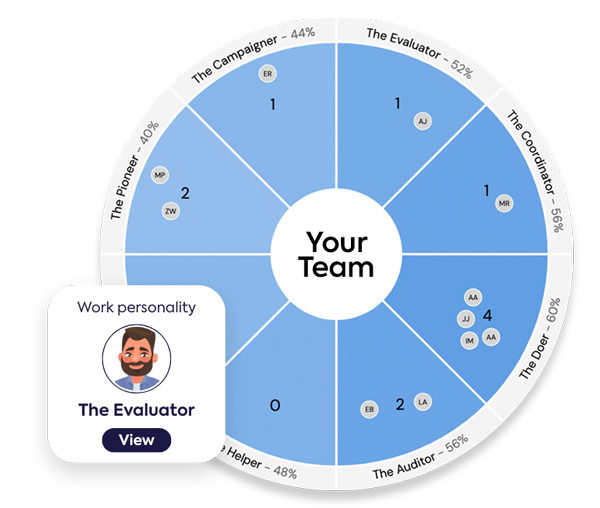
The four steps to roll out a work personality test: pick a validated tool, prepare the team, run it, apply the results. Free 2-minute assessment...
 Compono