


Skip to the main content.

Hey Compono!

A coach that actually gets you.

Get 10 minutes free, then $15 a month. Cancel anytime.

Get Started ≫

3 min read

4 steps to implement a Work Personality test for your team

4 steps to implement a Work Personality test for your team
6:33

Implementing a work personality test takes four steps: choose a test that is validated for workplace use, set clear objectives and prepare your team, run the assessment and analyse the results, then apply the insights to how you assign work and build teams. Most teams can complete the whole rollout inside a fortnight.

Last reviewed July 2026.

Why use a work personality test?

CVs and interviews tell you what someone has done. A work personality test tells you how they actually work: their natural strengths, blind spots, communication preferences and motivations. For a manager, that is the difference between assigning work by job title and assigning it by how each person does their best work.

The practical benefits show up in four places:

  • Better collaboration, because people understand how their colleagues prefer to work
  • Better role fit, because tasks get matched to strengths rather than availability
  • Better retention, because people who feel seen and well used stay longer
  • Faster conflict resolution, because differences get named before they become disputes

Step 1: Choose the right work personality test

Not all tests are built equally. Three things matter when you evaluate options:

  • Proven validity. The test should be evidence-backed and built for workplace behaviour, not general personality curiosity.
  • Alignment to your goals. Make sure it gives you insight into the things you actually want to change: team collaboration, leadership styles or culture fit.
  • Ease of use. If it takes an hour and produces a 40-page report nobody reads, it will not get used. Quick to complete and easy to interpret wins.

Well-known options include Myers-Briggs and DiSC, which are popular for self-awareness. Compono's Work Personality assessment is built specifically for the workplace: it identifies which of eight work personality types a person leads with (Doer, Auditor, Helper, Advisor, Pioneer, Campaigner, Evaluator or Coordinator), based on behavioural science and designed for team decisions rather than personal reflection.

Want to try it first? Take the free Work Personality assessment. It is 4 questions and takes about 2 minutes, and you will get your own type before you roll it out to the team.

Step 2: Set clear objectives and prepare your team

Before rolling out the test, tell your team why you are doing it. People need confidence that the assessment is about self-awareness and collaboration, not evaluation.

  • For individuals: explain what they will gain, such as recognising their natural strengths and working better with colleagues.
  • For managers: show how results help with task assignment, mentorship and getting ahead of team friction.
  • Set expectations: be explicit about timelines, how results will be used, and how they will not be used (no punitive measures, no performance reviews).

Transparency up front is what separates a rollout people engage with from one they quietly resist.

Step 3: Conduct the tests and analyse the results

Once your team is on board, keep the rollout simple:

  • Create a testing window. Give the team a specific timeframe to complete the assessment. A short one works fine; the assessment itself takes about 2 minutes.
  • Track participation. Follow up with anyone who needs a reminder.
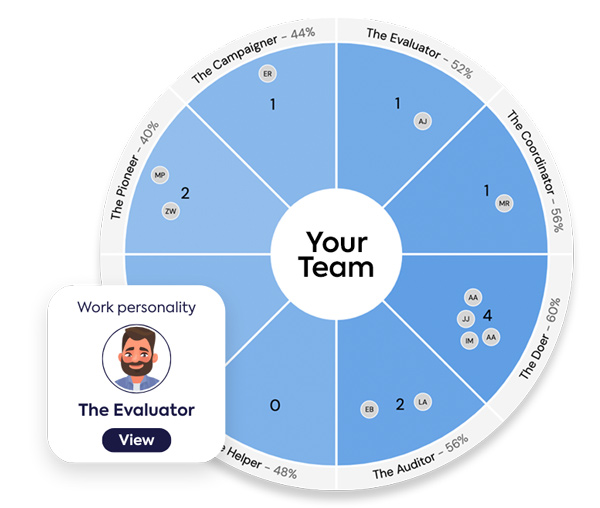
  • Consolidate results. Build an overview of your team's profiles so you can see the shape of the whole team, not just individuals.

Each profile shows a person's work style, communication preferences, motivators and potential blind spots. The patterns are where it gets useful. Campaigners thrive in creative work like brainstorming and pitching but may need support with structured execution. Doers excel at task completion but can default to routine methods. Advisors are natural communicators and mentors, well suited to work that needs empathy and collaboration.

Step 4: Apply insights to drive change

An assessment is only as valuable as what you do with it. Four ways to put the results to work:

  • Design complementary pairings. Match Pioneers (creative risk-takers) with Evaluators (data-driven problem solvers) so bold ideas get pressure-tested before they ship.
  • Assign to strengths. Helpers shine in roles requiring team cohesion; Coordinators keep deadlines and deliverables on track.
  • Get ahead of conflict. Map likely clash points from the blind spots in each profile, and use that knowledge to mediate early.
  • Run team workshops. Sessions built around understanding personality differences turn the results from a report into a shared language.

The teams that get lasting value treat this as an operating rhythm, not a one-off event. Revisit the team map when membership changes, and use it whenever you form a project team. A platform like Compono Engage keeps the team-level view current, connecting work personalities to culture and engagement data so you can see how the team is actually functioning.

Work Personality

Find out how your team really works

Discover your work personality in about 2 minutes, then map the eight types across your whole team.

Take the Free Assessment

Frequently asked questions

How long does a work personality test take?

It varies by tool. Compono's free Work Personality assessment is 4 questions and takes about 2 minutes, which makes team-wide rollout realistic even for busy teams. Longer instruments exist, but completion rates drop as time demands rise.

What are the eight work personality types?

Compono's framework identifies eight types: Doer, Auditor, Helper, Advisor, Pioneer, Campaigner, Evaluator and Coordinator. Each describes a distinct way of working, with its own strengths, blind spots and preferred ways of collaborating.

Can a personality test be used for performance reviews?

No, and you should say so explicitly before rollout. Work personality results describe how someone works best, not how well they perform. Using them punitively destroys the trust the whole exercise depends on.

How often should we re-run a work personality assessment?

Work personality is fairly stable, so you do not need to retest people often. The useful rhythm is revisiting the team map whenever membership changes, a new team forms, or you are planning a significant project.

Related

How to fix a dysfunctional team and boost performance

1 min read

How to fix a dysfunctional team and boost performance

To fix a dysfunctional team, find the cause before you treat the symptoms. Most dysfunction traces back to one of four sources: broken trust, avoided...

Read More
Team effectiveness assessment tools for high performance

1 min read

Team effectiveness assessment tools for high performance

Team effectiveness assessment tools measure how well a team's mix of work personalities, culture, and engagement supports performance. The best ones...

Read More
Full Research: What Personality Traits Reveal About Leadership Potential (and What Surprised Us)

1 min read

Full Research: What Personality Traits Reveal About Leadership Potential (and What Surprised Us)

June 2025 | Insight from Compono’s Work Personality Research What kind of personality makes a great leader? Do strategic thinkers rise to the top?...

Read More

