

.webp)

 Rudy Crous


Leadership Styles and Your Personality
 Mathan Allington
How personality shapes leadership style, how each of the eight work personalities tends to lead, and how to flex your style for the people you manage.
-1.png)
June 2025 | Insight from Compono’s Work Personality Research
What kind of personality makes a great leader? Do strategic thinkers rise to the top? Are people-driven types better suited to influence others? And what happens when visionaries are stuck in entry-level roles?
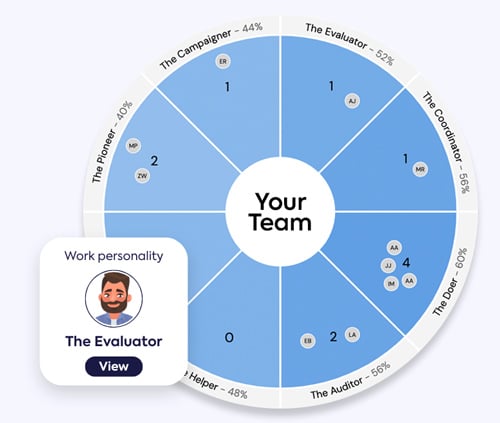
To explore these questions, we analysed over 220 responses from professionals across various industries using our Work Personality framework. Each respondent was categorised by one of eight personality types (e.g., Pioneer, Campaigner, Evaluator), and we mapped these against their current job level, from Intern to Executive Leadership.
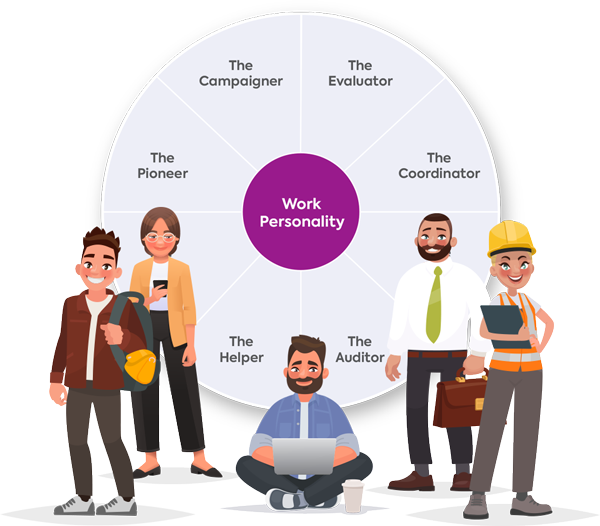
The patterns tell a powerful story about how personality shapes career progression—and how organisations can use this insight to design roles, coach talent more effectively, and build effective teams.
The most common personality across all levels? The Pioneer. Known for strategic thinking, innovation, and a future-focused mindset, Pioneers showed up consistently, not just in the boardroom, but also among interns and junior employees.
This is both encouraging and concerning.
It suggests organisations are attracting ambitious change-oriented individuals even at the start of their careers. But it also raises a red flag: Are these strategic minds being challenged and supported? Pioneers need autonomy, vision, and meaningful problems to solve. Without that, they disengage or leave.
If you’re hiring entry-level talent, and you see strong Pioneer traits, it may be time to rethink what “junior” really means.
Second in prominence were Campaigners — energetic, persuasive, emotionally intelligent. Notably, they dominate Executive Leadership roles. Their ability to connect, inspire, and lead cultural or commercial change makes them particularly well-suited to senior positions where people and momentum matter.
This aligns with a broader trend: leadership today demands more than operational excellence. It requires empathy, storytelling, and influence - qualities Campaigners bring in abundance.
In middle management, we saw a blend of Evaluators, Advisors, Helpers, and Doers. These are roles that often require balancing risk, execution, and collaboration, making it the perfect zone for personalities with analytical, reliable, or service-oriented strengths.
These individuals are the glue that holds organisations together and are often under-recognised, but essential for delivering outcomes at scale.
Visionaries at the bottom.
The high number of Pioneers at junior levels was unexpected. If you’re not tracking this, you risk talent loss or underperformance due to misalignment between personality and role design.
Helpers and Doers are underrepresented at the top.
While critical for execution, these practical personalities are rare in senior leadership. This may reflect an organisational bias toward strategic or charismatic traits, but it also highlights a development opportunity. Great leadership isn't just about vision, it's about getting things done.
Map personality to role design.
A Doer thrives on execution. A Campaigner thrives on connection. A Pioneer thrives on possibility. Role fit matters - not just for engagement, but for performance.
Don’t let strategy stagnate.
If your Pioneers and Campaigners are stuck in reactive, low-autonomy roles, you're sitting on untapped potential. Coach them up or give them space to lead.
Rebalance your leadership bench.
Vision without execution is a dead end. Check whether your senior team has enough Doers, Evaluators, and Helpers to land the strategy.
Personality isn’t destiny, but it is a strong signal.
When you understand the natural patterns in how people think, act, and lead, you can align talent to tasks more effectively, build stronger teams, and shape a healthier culture.
As our data shows, leadership potential isn’t always where you expect it — but it’s always worth unlocking.
How personality shapes leadership style, how each of the eight work personalities tends to lead, and how to flex your style for the people you manage.

The latest work personality statistics from Australia, and how matching natural preferences to daily tasks lifts team morale and retention.
The real performance drivers at work are fit, safety and team balance. What each one changes, and how work personality fits in.
 Compono