

 Mathan Allington
How to run a talent review meeting that drives real
 Mathan Allington
To run a talent review meeting that reduces bias and builds succession plans. Get practical agendas, HR facilitation scripts, and legal guardrails.

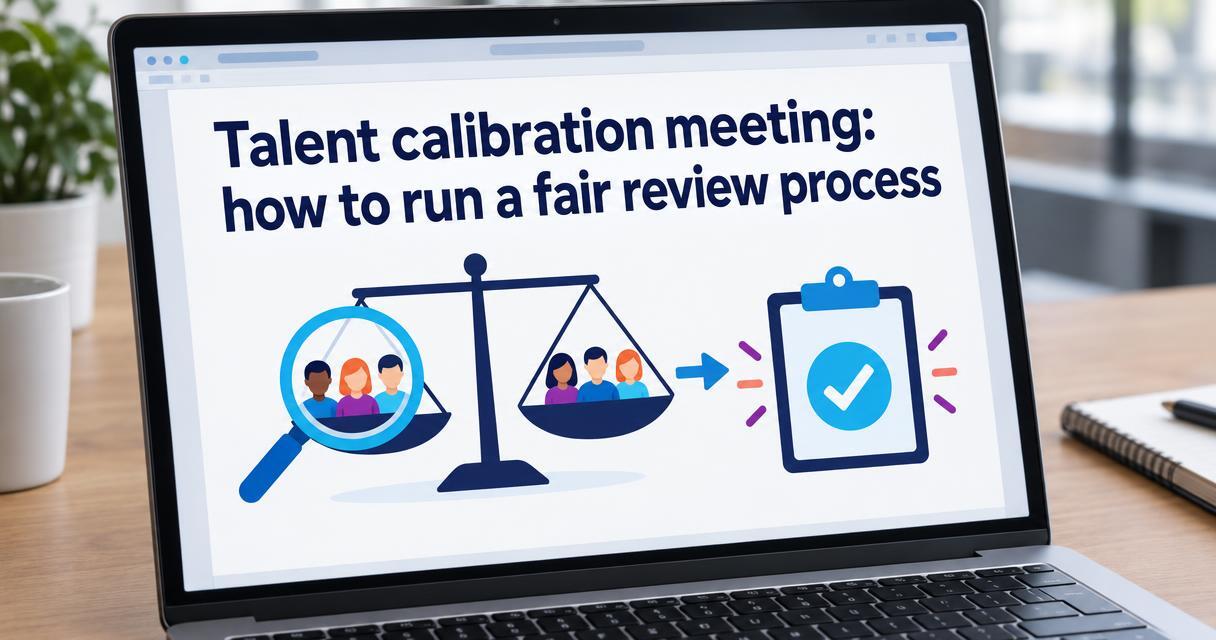
A talent calibration meeting is a structured discussion where managers and HR leaders review proposed employee performance ratings together to ensure everyone is evaluated fairly against the same standard.
Last reviewed November 2026
Key takeaways
- Talent calibration meetings align managers on performance standards to remove individual rater bias.
- Preparation is critical for success, requiring managers to submit provisional ratings and evidence before the meeting begins.
- Live bias auditing during the session helps catch recency bias and halo effects before they impact compensation.
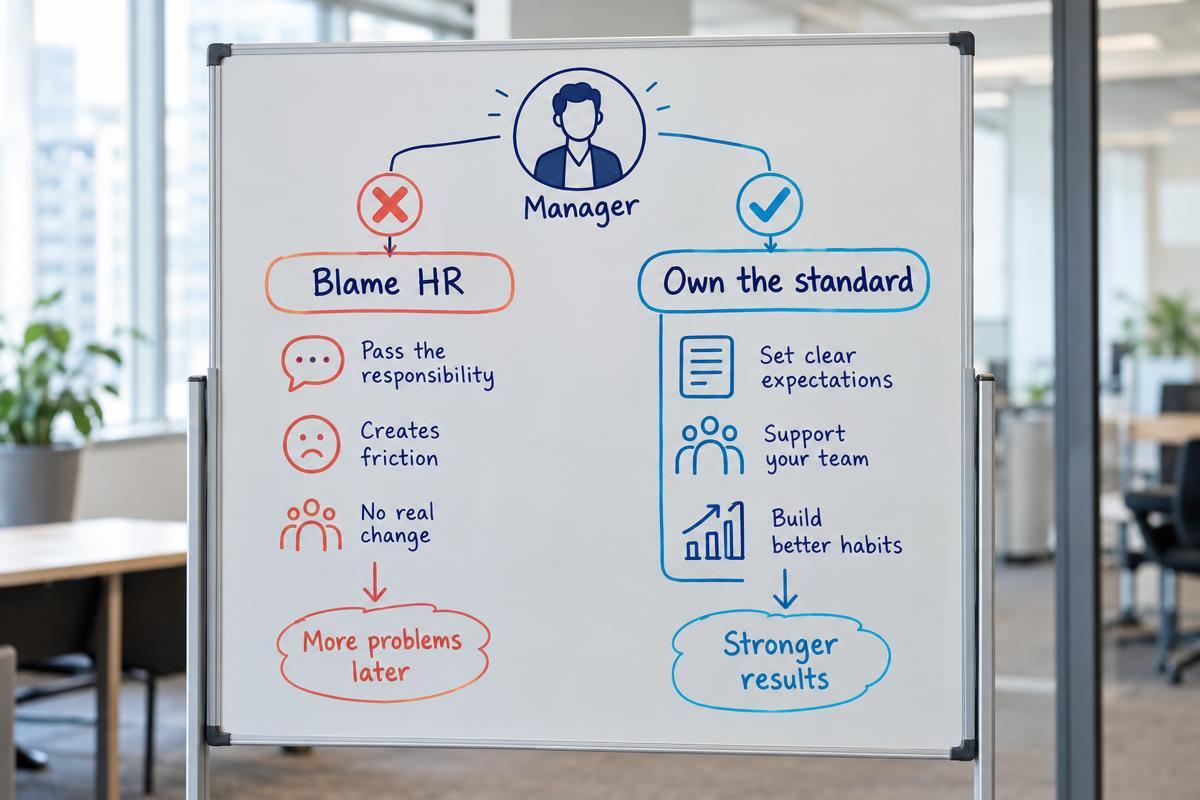
- Managers must own the final rating in employee conversations rather than blaming the calibration committee.
Managers often dread performance reviews. Employees usually like them even less. The core problem is that a rating often says more about the manager giving it than the employee receiving it.
A study of more than 4,000 managers found that idiosyncratic rater effects accounted for 53% to 62% of rating variance, while employees' actual measured performance accounted for only 21% to 25% (Journal of Applied Psychology study summarized by StaffCircle). This inconsistency destroys trust. It is no surprise that only 22% of employees strongly agree that their performance review process is fair and transparent (Gallup, 2024 research).
To fix this problem, you need to bring people leaders together to compare their evaluations. According to the Talent Strategy Group's 2026 Performance Management Report, 84.7% of organisations hold performance calibration meetings. These sessions force managers to justify their scores with evidence. When done well, calibration protects your culture, ensures equitable pay and keeps high performers engaged. When done poorly, it becomes an administrative headache that breeds resentment.
A successful talent calibration meeting requires clear roles. If everyone shows up just to defend their own team, the meeting devolves into an argument. You need a structured approach where every participant understands their specific job.
The HR leader acts as the facilitator and bias auditor. Your job is to keep the conversation moving, challenge subjective statements and ensure the standard is applied equally. People managers present their provisional ratings and provide concrete evidence for their decisions. They must be open to adjusting their scores based on peer feedback. Finally, an executive sponsor acts as the tie-breaker. They provide the strategic business context and make the final call when managers cannot agree.
You can map these discussions using visual tools like a nine-box grid to plot performance against potential. This visual alignment helps the committee spot inconsistencies quickly, such as a manager who rates their entire team as top talent.
Time is always tight. If you let managers ramble about every single employee, the meeting will take days. A disciplined agenda keeps the conversation focused on the ratings that actually need calibration.
| Time allocation | Agenda item | Goal |
|---|---|---|
| 10 minutes | Ground rules and standard setting | Review the rating definitions and confirm the objective criteria. |
| 30 minutes | Review the outliers | Discuss the highest and lowest performers to establish the benchmark. |
| 40 minutes | Review borderline cases | Focus on employees sitting on the edge of two rating bands. |
| 10 minutes | Final review and next steps | Confirm final ratings and discuss communication plans. |
You do not need to spend time discussing employees who are clearly meeting expectations with solid evidence. Focus the room on the anomalies. This is especially important for remote and hybrid teams. Proximity bias often causes managers to rate office-based staff higher simply because they see them more often. By forcing a discussion around objective evidence, you ensure hybrid workers are judged on their output rather than their visibility.
Bringing managers into a room does not automatically eliminate bias. In fact, a Harvard Business Impact 2024 analysis found that calibration meetings can introduce bias as readily as they remove it through dominance changing and centrality bias (Harvard Business Impact Education, 2024). A loud manager might bully a quiet manager into lowering a score, or the committee might lump everyone into the middle to avoid tough conversations.
HR leaders must run a live bias audit during the session. Listen for the halo effect, where a manager lets one great project excuse a year of poor communication. Watch out for recency bias, where an employee's mistake last week ruins their annual rating. When a manager makes a subjective claim, ask them for a specific metric or behavioural example. This approach moves the focus from personal opinions to observable data, which is essential when why proficiency levels matter becomes a debate point for promotion.
Proper documentation during this phase is critical. Logging the business reasons for rating adjustments in your HR system protects the organisation from discrimination claims. It proves that decisions were based on objective criteria rather than personal preference.
The calibration meeting is only half the battle. The real test happens when managers have to deliver the ratings to their direct reports. The most common point of failure is when a manager's provisional high rating gets lowered by the committee.
Weak managers will pass the blame. They will tell the employee they fought for a top score but HR or senior leadership rejected it. This destroys leadership credibility and damages aligning culture and performance across the business. Managers must own the final calibrated rating as a united front.
Give your managers concrete talk tracks. If an employee asks why they did not receive the top score, the manager should say something like this: "We reviewed performance across the entire department to ensure fairness. While your project delivery was excellent, the benchmark for the highest rating requires leading cross-functional initiatives. Let us look at feedback good examples and build a plan to get you there next year." This frames the rating around the objective standard rather than office politics.
Subjective ratings only tell half the story. The Compono Develop platform helps you track actual employee capability and map proficiency levels so your managers arrive at calibration sessions with hard data rather than gut feelings. When you combine process management with real people insight, your performance reviews finally become fair, transparent and actionable.
Disagreements are a normal and healthy part of the talent calibration process. When managers clash over a rating, the HR facilitator must steer the conversation back to objective evidence and documented performance metrics. If a consensus still cannot be reached, the executive sponsor makes the final decision based on broader business context.
A standard talent calibration meeting should run for 60 to 90 minutes. Any longer and participants experience decision fatigue, which leads to rubber-stamping ratings just to end the meeting. If you have a large department, schedule multiple focused sessions rather than one massive marathon meeting.
Yes. Transparency builds trust. You should openly communicate to all staff that manager ratings go through a peer review process to guarantee fairness and eliminate bias. Employees who know their rating was reviewed by a committee are often more likely to accept the outcome as objective.
Remote and hybrid workers are highly vulnerable to proximity bias. To calibrate them fairly, the committee must strictly enforce the rule that only documented output and measurable results count as evidence. You must actively challenge managers who use vague terms like "presence" or "visibility" as performance indicators.
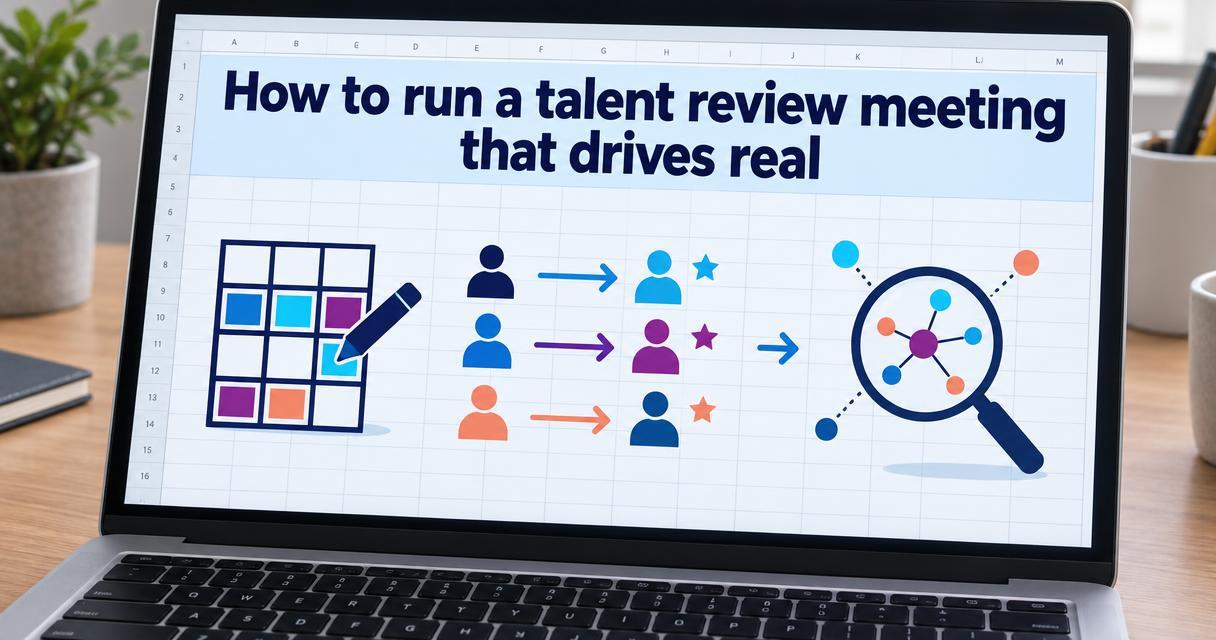
To run a talent review meeting that reduces bias and builds succession plans. Get practical agendas, HR facilitation scripts, and legal guardrails.
To assess employee potential accurately using objective capability data, psychometrics and structured frameworks. See how it works.

The biases that distort performance appraisals (recency, halo, leniency, similarity and more), what each looks like in a review, and how to reduce...