

 Mathan Allington
Succession planning software: building your future leadership
 Mathan Allington
How succession planning software maps bench strength, matches future leaders to roles with personality data, and flags the roles left uncovered.

To assess employee potential accurately, you must measure a person's capability to adapt, learn and lead in future roles rather than just reviewing their past performance.
Last reviewed November 2026
Key takeaways
- Past performance does not guarantee future leadership capability or agility in new roles.
- Subjective manager nominations introduce bias and lower the accuracy of your talent pipeline.
- Objective data from psychometric assessments and capability frameworks reveals true leadership potential.
- Transparent rubrics help neutralise favouritism during team calibration meetings and succession planning.
Most organisations fall into a predictable trap when they look for their next generation of leaders. They look at their top performers, assume those results will transfer to a completely different set of responsibilities, and promote them. The outcome is often a brilliant individual contributor struggling in a management role they were never suited for.
This happens because we rely on subjective opinions instead of objective data. A 2025 High-Potential Talent Findings report by the Talent Strategy Group found that 91% of HR professionals and 88% of business leaders use performance ratings or manager recommendations when identifying high-potential employees. Most HR systems manage the process risk of talent reviews by digitising the paperwork, but they ignore the people insight risk. They cannot tell you if a candidate actually has the behavioural makeup to succeed.
When you confuse performance with potential, you misallocate your development budget and risk burning out your best staff. You need a structured way to evaluate who is actually ready for the next challenge.
Performance is a measure of what someone has already achieved in their current environment. It tells you they understand their current job, meet their targets and work well within their existing team. Potential is a measure of capacity. It tells you how well someone will handle complexity, ambiguity and entirely new responsibilities.
| Focus Area | Performance | Potential |
|---|---|---|
| Timeframe | Past and present results | Future capacity and scale |
| Metric | KPIs and current targets | Learning agility and emotional intelligence |
| Environment | Known tasks and existing teams | Ambiguity and new responsibilities |
The gap between the two is staggering. According to research from Zenger Folkman, cited in a Sigma Assessment Systems article, more than 40% of employees designated as high potentials scored below average on leadership effectiveness in 360-degree assessments, while 12% scored in the bottom quartile. Being great at a job does not make someone great at leading the people who do that job.
To fix this, you have to separate your evaluation criteria. You can read more about separating these concepts and figuring out how to open up employee potential, but the core lesson is that past results only form one piece of the puzzle.
When you assess employee potential, you are looking for specific behavioural markers that indicate a person can scale with your business. While frameworks vary, most rely on three core pillars: ability, aspiration and agility.
Ability covers the cognitive and emotional intelligence required to take on more complex problems. Aspiration measures whether the person actually wants to lead or take on broader responsibilities. Many top performers are perfectly happy in their current lane, and pushing them into management without their buy-in is a fast track to turnover.
Agility is arguably the most important pillar. Learning agility is the ability to absorb new information quickly, discard outdated methods and apply fresh thinking to unfamiliar situations. It is a far better predictor of future success than rigid historical tenure.
If manager nominations are flawed, you need systems that bring objectivity to your talent decisions. This is where capability frameworks and psychometric data become vital.
Despite the available science, adoption remains low. The same 2025 Talent Strategy Group report shows that only 45% of HR professionals and 30% of business leaders use psychometric assessments to identify high-potential talent. By ignoring behavioural science, companies leave their talent pipelines to chance.
Tools like the 9-box grid are popular for plotting performance against potential, but they only work if the inputs are objective. To populate these grids accurately, modern teams use a Skills Gap Analysis Calculator and structured behavioural assessments. Compono Develop acts as a central hub for these talent decisions, feeding objective data into your skills matrices so you can see exactly where your capability gaps lie.
Even with the best tools, human bias creeps into talent calibration meetings. Managers naturally advocate for people who think like them or who make their own jobs easier. This creates a pipeline of cloned leadership styles and marginalises diverse talent.
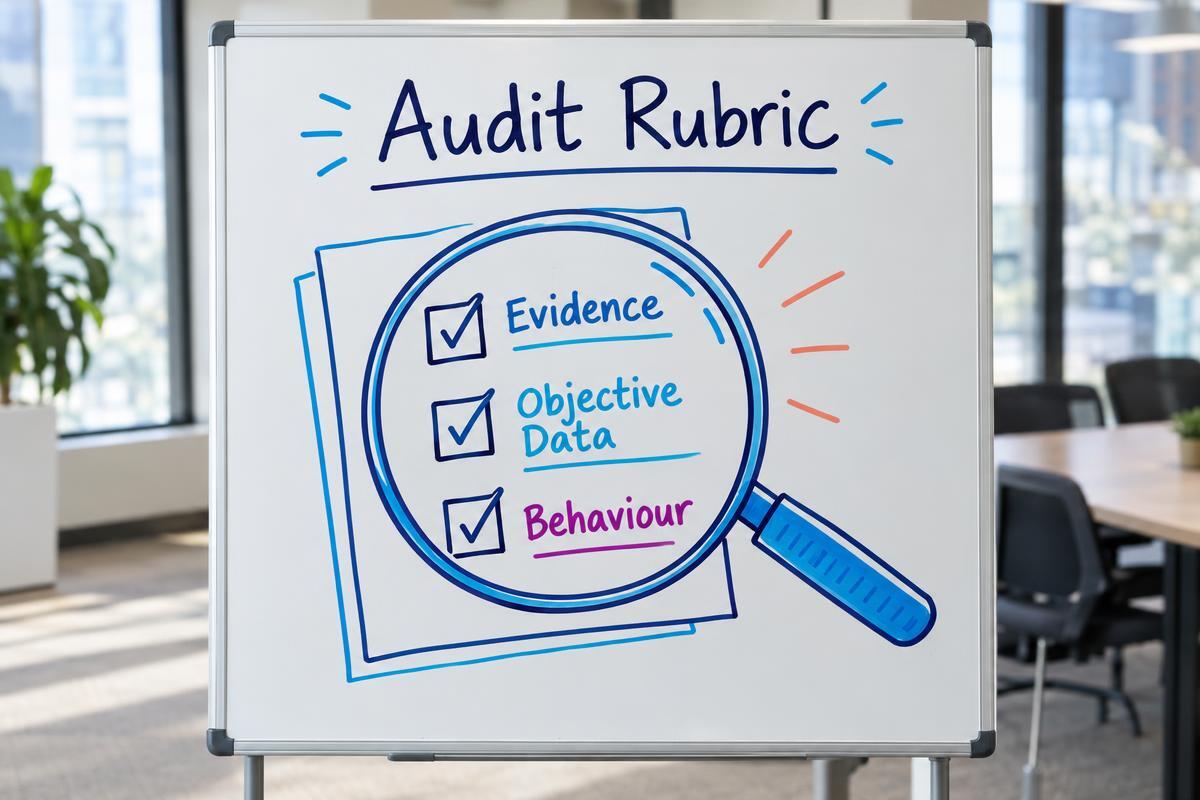
To neutralise this, start a transparent audit rubric for all talent reviews. Require managers to provide specific, documented evidence of a candidate demonstrating learning agility or working through ambiguity. If the only justification is that the person hit their sales quota, the nomination should be challenged.
You can also use data to spot trends that managers miss. For example, looking at what personality traits reveal about leadership potential can help you uncover hidden talent in your organisation. When you cross-reference this data with objective capability assessments, you build a defensible, science-backed pipeline.
Identifying potential is only the first step. Once you know who your high-potential employees are, you must give them the right environment to grow. Organisations report being accurate in predicting employee potential only 44% of the time, on average, according to the Talent Strategy Group 2025 Potential Report. A major reason for this failure rate is poor post-assessment development.
High-potential talent needs stretch assignments that test their agility without overwhelming them. These assignments should map directly back to the capability gaps identified during their assessment. If someone needs to build strategic thinking skills, put them on a cross-functional project instead of just giving them a harder version of their daily work.
You also need to manage the pressure that comes with the label. Regular coaching and clear communication help prevent burnout. When you understand how to predict employee success through ongoing support, your talent program becomes a sustainable engine for growth.
Most platforms only track who finished their training. Compono helps you measure real capability and make objective talent decisions that fill your leadership pipeline.
You measure employee potential by combining objective performance data with behavioural assessments and capability frameworks. Instead of relying solely on manager opinions, use tools that evaluate a person's learning agility, emotional intelligence and motivation to take on complex leadership roles.
High performance means an employee excels at their current responsibilities and hits their targets. High potential means an employee has the capacity, agility and desire to handle broader, more complex roles in the future. Someone can be a high performer without having the potential or desire to move into management.
The 9-box grid is controversial because its inputs are often subjective. When managers plot employees on the grid using gut feelings rather than objective assessment data, the tool reinforces unconscious bias and creates inaccurate talent pipelines. It only works when backed by real capability data.
You can reduce bias by requiring managers to use a standardised audit rubric during talent calibration meetings. Ask for specific evidence of learning agility and leadership capability, and support these discussions with psychometric data rather than relying entirely on observational feedback.

How succession planning software maps bench strength, matches future leaders to roles with personality data, and flags the roles left uncovered.

How to choose capability assessment software in Wellington, and how tracking skills and work personality builds a more adaptable workforce.

A four-step way to find skill gaps in your team, how to tell a skill gap from a performance problem, and what to do once you know which is which.
 Compono