

.webp)

 Mathan Allington


1 min read
Choosing the right HCM software Australia for your team
 Mathan Allington
HCM software is one system for the whole employee lifecycle, holding hiring, onboarding, payroll and time, performance, learning and engagement...
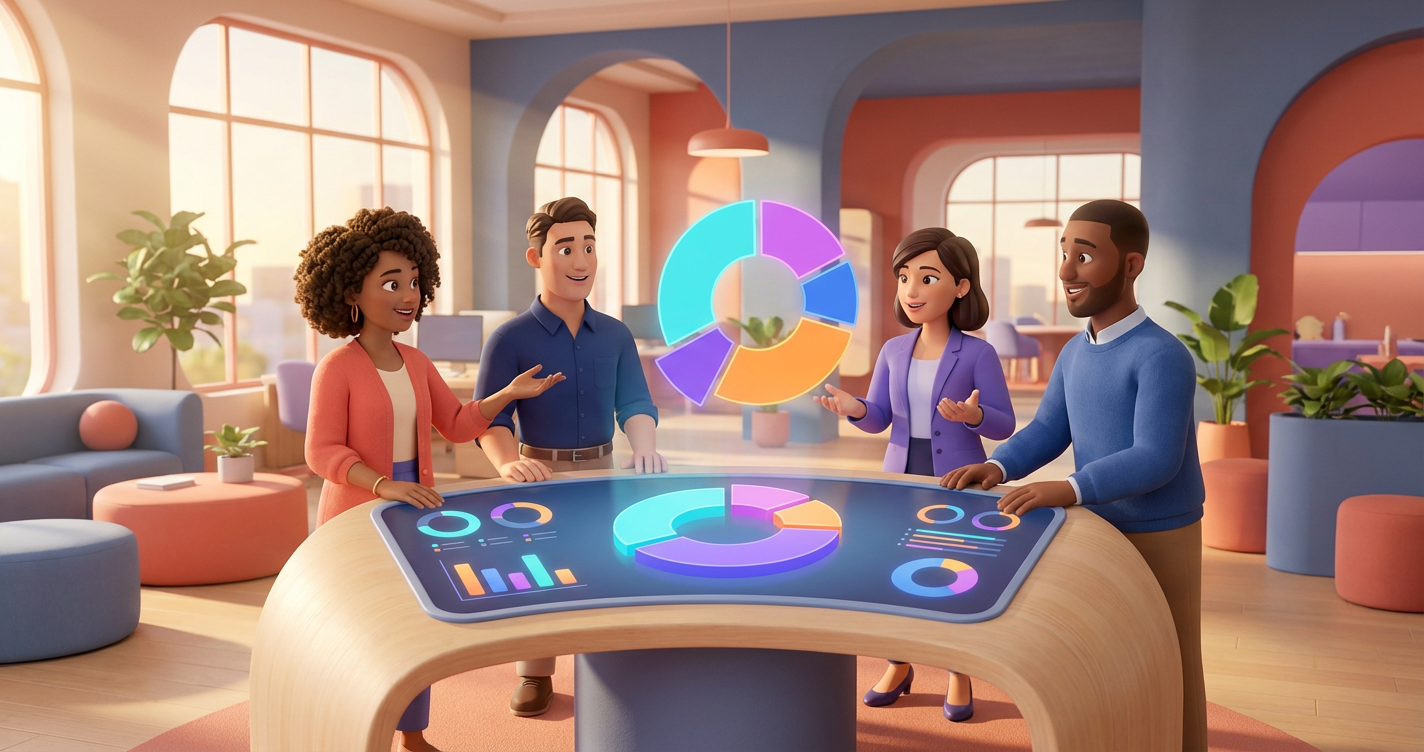
Talent management software is one system for hiring, engaging, developing and retaining people, built on a shared record of each employee so every stage works from the same evidence. The coverage matters more than the category name: check that the product handles recruitment, engagement measurement and capability development, and that it tells you something about how your people work rather than only what they have completed.
Last reviewed September 2026
Key takeaways
- Talent management software should cover the employee lifecycle in one record, from recruitment through to development and succession.
- Talent optimisation and talent strategy are marketing labels for overlapping products. Compare capabilities, not category names.
- Mid-sized organisations usually choose between an integrated suite and a people-data platform sitting alongside core HR and payroll.
- The feature that changes decisions is assessment: evidence about how someone works, not a tidier record of what they have done.
Most products in this category group their features into four areas. Recruitment and selection, which covers job advertising, applicant tracking, assessment and offers. Engagement and culture measurement, which covers surveys, sentiment and team health. Learning and development, which covers courses, capability frameworks and progression. Workforce planning, which covers succession, internal mobility and reporting across the other three.
The difference between products is rarely whether a module exists. It is how deep each one goes, and whether they genuinely share data. A suite where the hiring module and the learning module keep separate employee records gives you the same fragmentation you had before, with a single invoice attached.
Two risks sit behind all of this. Process risk is the admin one: records, compliance, onboarding steps, review cycles. Most HR tech handles it well. People insight risk is the other one: wrong hires, strong performers who quietly disengage, training that does not build the capability you actually need. A system that only reduces the first risk leaves the expensive half of the problem untouched.
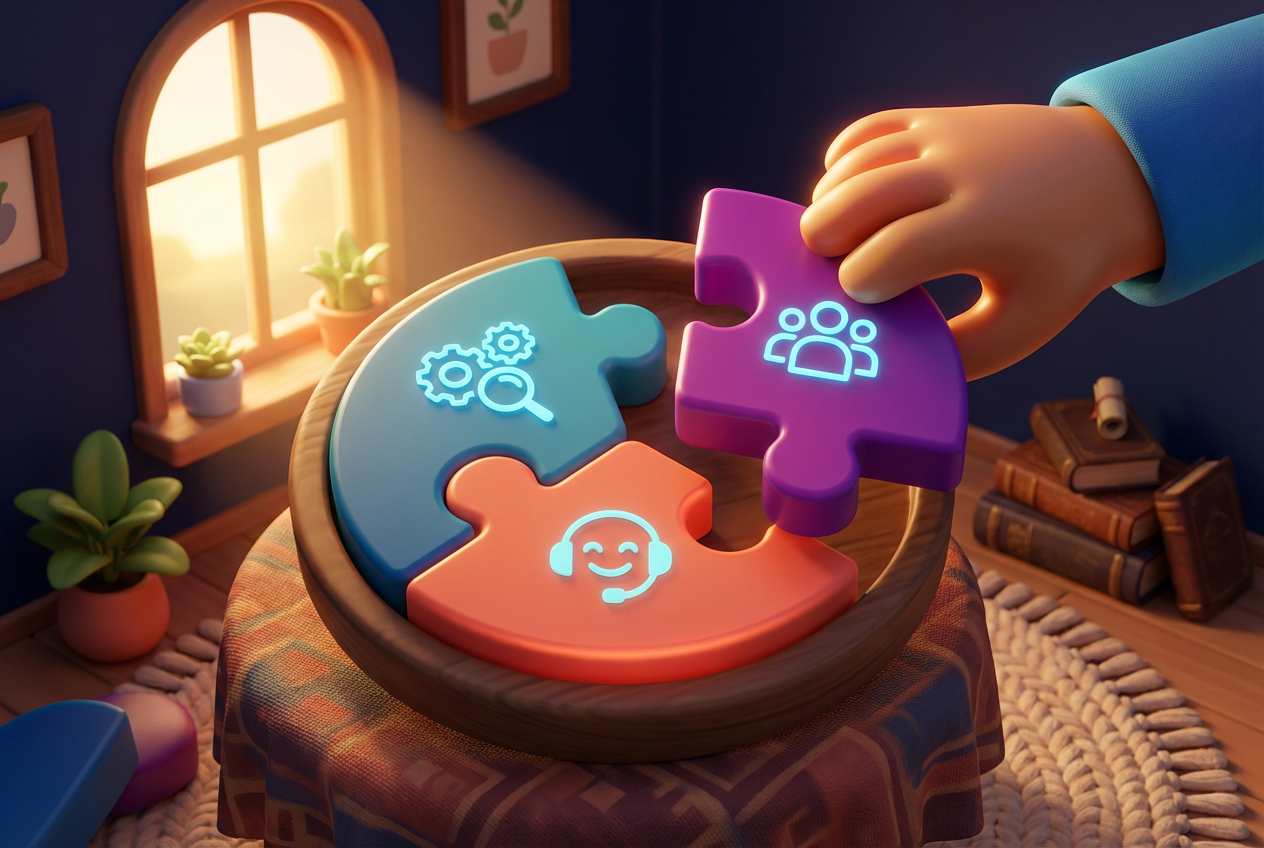
Integrated talent management software means one vendor, one data model and one login across the lifecycle. A point-tool stack means a specialist applicant tracking system, a specialist survey platform and a specialist learning system, joined by integrations you maintain.
Integration is worth real money when you need to answer questions that cross stages. Which hiring sources produce people who are still engaged at 12 months. Whether the teams with the lowest engagement scores are the ones missing a particular mix of work styles. Those questions are close to unanswerable when the data sits in four vendors and a spreadsheet.
Point tools still win when one stage is badly broken and the rest is fine. If hiring is your only real problem, a specialist system you can run next month beats a lifecycle platform you will implement over two quarters. If you are weighing up where core HR sits in all this, the difference between an applicant tracking system and an HRIS is the distinction to get straight before you shortlist.
These three labels describe heavily overlapping products, and the naming tells you more about the vendor's positioning than about the feature set.
Talent management software is the broadest term and usually signals lifecycle coverage: hire, develop, review, retain.
Talent optimisation software normally leans on matching. The emphasis is on fitting people to roles and teams using assessment data, and on diagnosing why a team underperforms when everyone on it is individually capable.
Talent strategy software usually emphasises the planning layer: workforce modelling, capability gaps, succession depth and reporting that a people leader can take to a board.
Ignore the label on the website and write down the four or five decisions you want the system to improve. Then ask each vendor to show you that decision being made in their product, with data, not in a slide.
Two features separate a system that tidies your admin from one that improves outcomes.
The first is assessment at the point of hire. A CV tells you what someone has been allowed to do. It does not tell you how they work, what motivates them, or whether they will still be performing in a year. Compono Hire assesses candidates on organisational fit, skills and qualifications together, so a shortlist arrives with evidence behind the ranking rather than a neat pile of resumes.
The second is a shared view of how people work. Compono uses eight work personalities: Doer, Auditor, Helper, Advisor, Pioneer, Campaigner, Evaluator and Coordinator. Read at team level, that becomes organisational design rather than seat filling. A team stuck for new ideas often turns out to be full of Doers and Auditors with no Pioneer anywhere near it. A team that generates ideas and finishes nothing usually has the opposite problem. The same work personality data gives managers something closer to a user manual for the people they lead: a Helper does their best work in a supportive, collaborative setting, while an Evaluator wants a logical problem and a clear measure of success.
Development then stops being a generic program. A Campaigner may need structure around routine work. A Coordinator may need practice at changing plans mid-flight. Tailored pathways get used. Catalogue-wide compulsory training mostly gets clicked through.
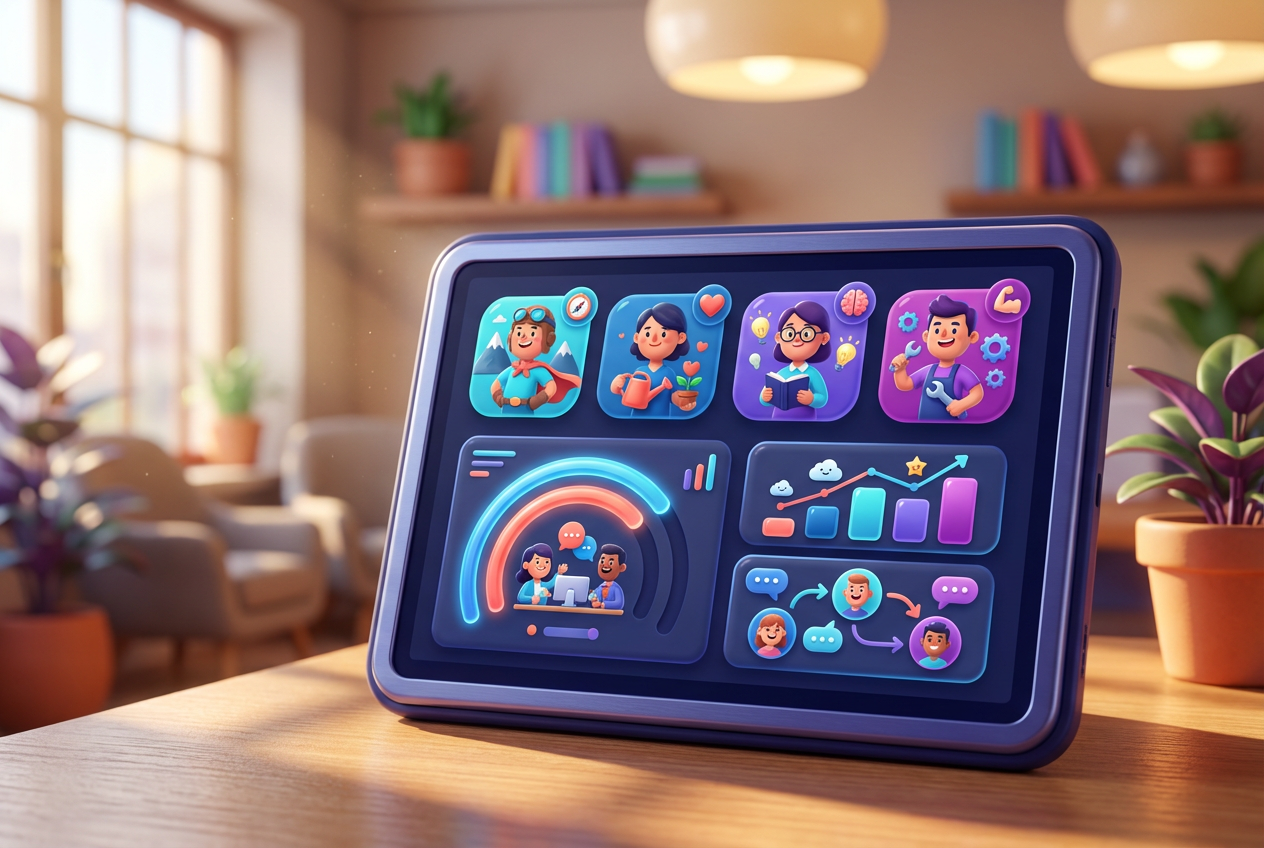
For organisations roughly between 100 and 1,000 employees, the shortlist almost always narrows to one of four shapes. Which one fits depends on whether your worst problem is administrative or human.
| Approach | What it typically includes | Best suited to | Watch for |
|---|---|---|---|
| Integrated talent suite | Recruitment, performance, learning and succession in one product on one employee record | Organisations replacing several disconnected tools at once | Module depth varies. The learning or assessment piece is often thinner than the hiring piece |
| HRIS with talent modules | Core HR, payroll and leave, with lighter hiring, review and learning add-ons | Teams whose first problem is admin, records and compliance | Talent modules are often built to tick a procurement box rather than to change a hiring decision |
| Best-of-breed point tools | A specialist ATS, a specialist survey tool and a specialist LMS joined by integrations | Teams with one clear weakness and the appetite to own integrations | Lifecycle reporting becomes a manual job and every renewal is a separate negotiation |
| People-data platform | Lifecycle coverage plus assessment of how people work, so hiring, engagement and development read the same profile | Organisations where retention and team performance, not paperwork, are the problem | You still need core HR and payroll somewhere, so check the integration story early |
Mid-sized organisations often get more out of this category than enterprises do, because they have outgrown spreadsheets but still have a culture close enough to protect deliberately. The constraint is people, not licence cost: a two-person HR team cannot run a configuration-heavy enterprise suite, however good the demo looked. Sizing that honestly is the single most useful thing you can do before you talk to vendors, and our guide to HR software for the mid-market works through the trade-offs in more detail.
Four questions separate vendors quickly, and all four are uncomfortable to answer with a slide.
Write the answers down before the second meeting. If you want the requirements in a format procurement will accept, the HR tech requirements builder turns your priorities into a structured list you can send to every vendor, which also makes the responses comparable.
Compono brings hiring, engagement and development onto one people record, so the insight that ranks a shortlist is the same insight a manager uses two years later. It is the wrong choice if what you actually need first is payroll and leave administration. See how the HR software platform fits together before you decide where it sits in your stack.
Talent management built on people data, so every stage of the lifecycle works from the same insight.
Talk to usIt is software that manages the employee lifecycle in one system: recruitment and selection, engagement and culture measurement, learning and development, and workforce planning. The useful versions add insight into how people work, so hiring, engagement and development decisions all draw on the same profile.
Largely, yes. Talent optimisation usually signals a stronger emphasis on assessment and on matching people to roles and teams, while talent management is the broader lifecycle term. Compare the capabilities you need rather than the category label a vendor has chosen.
For 100 to 1,000 employees, the realistic shortlist is an integrated talent suite or a people-data platform sitting alongside your existing core HR and payroll. Choose by your worst problem. Administrative mess points to the suite or HRIS route, while retention and team performance problems point to the assessment-led route.
An HRIS is the system of record for employment data: contracts, pay, leave and compliance. Talent management software is about selection, engagement, capability and progression. Many organisations run both and integrate them, because each does a job the other treats as an add-on.
It helps when it identifies what drives engagement for each person and acts on it early. Understanding someone's work personality, tailoring their development and spotting a drop in team sentiment before exit interviews do is how these systems earn their cost. A system that only stores records will not move retention on its own.

1 min read
HCM software is one system for the whole employee lifecycle, holding hiring, onboarding, payroll and time, performance, learning and engagement...
1 min read
Last reviewed August 2026 HCM (human capital management) software manages the whole employee lifecycle, from recruitment and onboarding through pay,...
1 min read
Human capital management (HCM) software runs the full employee lifecycle, from hiring through development to exit, while talent management software...